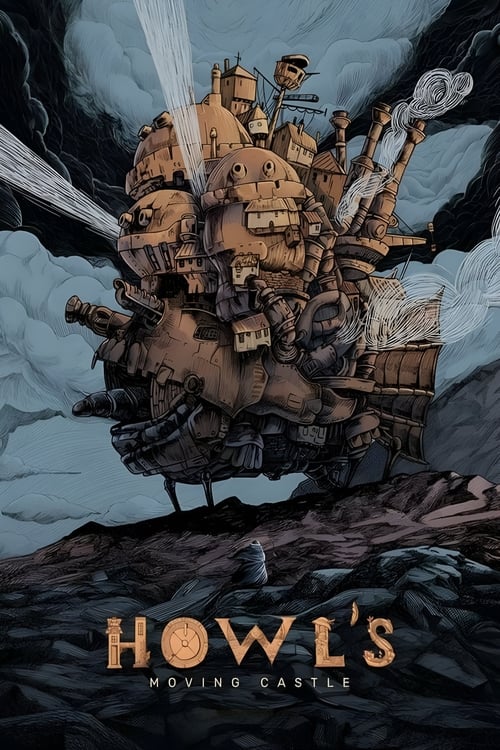
Howl's Moving Castle - Review
Howl's Moving Castle: A Whimsical Masterpiece with a Powerful Heart
Studio Ghibli's Howl's Moving Castle, released in 2004, isn't just an animated film; it's a swirling kaleidoscope of imagination, a poignant exploration of self-acceptance, and a powerful anti-war statement wrapped in a breathtakingly beautiful package. Directed by the legendary Hayao Miyazaki, this film transports viewers to a fantastical world brimming with magic, wonder, and a surprising amount of heart. But does this adaptation of Diana Wynne Jones' beloved novel live up to the hype? Let's delve into the intricacies of this cinematic marvel and uncover its strengths, weaknesses, and enduring appeal.
Plot: A Journey of Transformation and Resistance
The narrative of Howl's Moving Castle begins with Sophie Hatter, a modest and unassuming young milliner resigned to a life of quiet routine. Her mundane existence is shattered when she encounters the dashing, enigmatic wizard Howl. This brief encounter draws the ire of the Witch of the Waste, who, fueled by jealousy and spite, curses Sophie, transforming her into an elderly woman. Unable to reveal her true identity, Sophie embarks on a journey to break the curse, leading her to Howl's infamous moving castle.
Inside the castle, Sophie finds herself entangled in a peculiar household consisting of Markl, Howl's young apprentice, and Calcifer, a fire demon bound to the castle's hearth by a magical contract. As Sophie cleans and organizes the chaotic castle, she forms unexpected bonds with its inhabitants and gradually begins to find her voice and inner strength. However, the looming shadow of war threatens to engulf their fantastical world. Howl, known for his magical prowess, is summoned to fight for the king, but he vehemently opposes the senseless conflict, choosing instead to use his magic to subtly undermine the war efforts.
The plot is a complex tapestry woven with elements of romance, adventure, and political commentary. While the core narrative follows Sophie's quest to break her curse and Howl's resistance to the war, numerous subplots and character arcs add depth and richness to the story. The pacing is generally well-managed, although some may find the middle act slightly meandering as it focuses on establishing the relationships within the castle. The ending, while emotionally satisfying, can feel somewhat rushed, leaving some questions unanswered and plot threads unresolved. However, this ambiguity is often a hallmark of Miyazaki's work, inviting viewers to contemplate the deeper themes and draw their own conclusions.
Characters: Flawed, Compelling, and Endearing
The characters in Howl's Moving Castle are arguably its greatest strength. Each character is meticulously crafted with their own unique quirks, motivations, and internal struggles. They are not simply archetypes but complex individuals grappling with their own insecurities and desires.
Sophie Hatter
Sophie's transformation from a timid, self-deprecating young woman into a confident, assertive elderly woman is the heart of the film. The curse, rather than diminishing her, ironically liberates her, allowing her to express her true feelings and challenge societal expectations. As an old woman, she feels less constrained by the pressures of youth and beauty, enabling her to speak her mind and take risks. Her relationship with Howl is a slow burn, built on mutual respect, understanding, and a gradual acceptance of each other's flaws. Sophie's unwavering kindness and genuine concern for others make her a truly endearing and inspiring protagonist.
Howl
Howl is a captivating enigma. He is a powerful wizard renowned for his beauty and magical abilities, but beneath the surface lies a deep-seated insecurity and a fear of commitment. He uses his charm and magic to evade responsibility and maintain his freedom. However, Sophie's presence in his life forces him to confront his fears and take a stand against the war. His transformation throughout the film is subtle but significant, as he learns to embrace vulnerability and prioritize the well-being of others over his own selfish desires. His flamboyant personality and dramatic flair provide much of the film's humor and charm.
Calcifer
Calcifer, the fire demon bound to Howl, is a scene-stealer. He is sarcastic, witty, and fiercely loyal to Howl, despite their often-contentious relationship. Calcifer's energy powers the castle and he is a constant source of light and warmth. His dependence on Howl and Sophie adds a layer of vulnerability to his otherwise fiery persona. His character provides both comic relief and emotional depth, making him a fan favorite.
The Witch of the Waste
Initially portrayed as a menacing antagonist, the Witch of the Waste undergoes a significant transformation as the story progresses. Stripped of her magical powers, she becomes a harmless, even pitiable, old woman. This transformation highlights the film's theme of inner beauty and challenges the audience to reconsider their initial judgments. The Witch of the Waste serves as a cautionary tale about the dangers of vanity and the importance of embracing one's true self.
Markl
Markl, Howl's young apprentice, provides a youthful perspective and adds a sense of innocence to the story. He is eager to learn magic and often mimics Howl's mannerisms, creating humorous situations. Markl's genuine affection for Sophie and Howl contributes to the film's heartwarming atmosphere.
Direction and Cinematography: A Visual Feast
Hayao Miyazaki's direction is nothing short of masterful. He seamlessly blends fantasy and reality, creating a world that is both whimsical and grounded. His attention to detail is evident in every frame, from the intricate designs of the characters' clothing to the breathtaking landscapes that serve as the backdrop for the story. Miyazaki's ability to convey complex emotions through visual storytelling is unparalleled. The film is filled with moments of stunning beauty and profound emotion, achieved through subtle gestures, expressive animation, and evocative music.
The cinematography is equally impressive. The film is visually stunning, with vibrant colors, fluid animation, and meticulously crafted backgrounds. The moving castle itself is a marvel of engineering, a chaotic yet captivating structure that embodies the film's themes of transformation and adaptability. The aerial sequences are particularly breathtaking, showcasing the beauty of the film's world and providing a sense of freedom and adventure. The use of light and shadow is also noteworthy, creating a sense of depth and atmosphere that enhances the emotional impact of the story.
Performances: Voices that Breathe Life
The voice acting in Howl's Moving Castle is exceptional, both in the original Japanese and the English dub. The actors bring depth and nuance to their characters, making them feel real and relatable. The English dub, directed by Pete Docter, features a stellar cast, including Jean Simmons as the elderly Sophie, Christian Bale as Howl, Emily Mortimer as young Sophie, and Billy Crystal as Calcifer. Each actor delivers a memorable performance, capturing the essence of their character and adding their own unique flair.
Jean Simmons' portrayal of the elderly Sophie is particularly noteworthy. She perfectly captures Sophie's vulnerability, resilience, and growing confidence. Christian Bale's performance as Howl is equally impressive. He conveys Howl's charm, insecurity, and ultimately, his growing maturity. Billy Crystal's comedic timing and energetic delivery make Calcifer a truly unforgettable character.
Themes and Messages: War, Beauty, and Self-Acceptance
Howl's Moving Castle is not just a visually stunning fantasy film; it also explores profound themes and delivers powerful messages about war, beauty, and self-acceptance. The film is a scathing critique of the futility and destructiveness of war. Miyazaki portrays war as a senseless conflict driven by vanity and greed, with devastating consequences for innocent civilians. Howl's resistance to the war is a central theme, highlighting the importance of standing up for what is right, even in the face of overwhelming pressure.
The film also challenges conventional notions of beauty. Sophie's transformation into an elderly woman forces her to confront her own insecurities about her appearance. However, as she embraces her older self, she discovers a newfound sense of confidence and inner beauty. The film suggests that true beauty lies not in outward appearances but in inner strength, kindness, and compassion. Howl's obsession with his own appearance is also explored, highlighting the dangers of vanity and the importance of accepting oneself for who one is.
Self-acceptance is a recurring theme throughout the film. Each character struggles with their own insecurities and flaws, but ultimately, they learn to accept themselves and each other for who they are. Sophie learns to embrace her age and find her voice. Howl learns to overcome his fears and commit to something greater than himself. The Witch of the Waste learns to let go of her vanity and find peace in simplicity. The film suggests that self-acceptance is essential for happiness and fulfillment.
Comparison to Other Films and Works
Howl's Moving Castle shares thematic and stylistic similarities with other Studio Ghibli films, particularly Spirited Away and Princess Mononoke. Like Spirited Away, it features a young protagonist who is thrust into a fantastical world and must navigate unfamiliar challenges. Both films explore themes of transformation, self-discovery, and the importance of staying true to oneself. Like Princess Mononoke, Howl's Moving Castle is a powerful anti-war statement, condemning the senseless violence and destruction caused by human conflict. Both films also feature strong female characters who challenge traditional gender roles.
Howl's Moving Castle also draws inspiration from European folklore and fairy tales. The moving castle itself is reminiscent of the wandering castles found in many folk tales. The characters of Sophie and Howl are classic fairy tale archetypes, representing the ordinary girl and the charming prince, respectively. However, Miyazaki subverts these archetypes, giving his characters depth, complexity, and agency.
Compared to Diana Wynne Jones' novel, the film takes significant liberties with the plot and characters. While the core narrative remains the same, many of the subplots and character relationships are altered or omitted. Some fans of the book may be disappointed by these changes, but Miyazaki's adaptation ultimately creates a unique and compelling story that stands on its own merits.
Positive Aspects
- Stunning animation and visual design
- Complex and compelling characters
- Powerful anti-war message
- Exploration of themes of beauty and self-acceptance
- Excellent voice acting
- Masterful direction by Hayao Miyazaki
- Evocative and memorable musical score by Joe Hisaishi
Constructive Criticism
- The plot can be somewhat convoluted and meandering
- The ending feels rushed and leaves some questions unanswered
- Some fans of the book may be disappointed by the changes made to the story
- The film's pacing may not appeal to all viewers
Conclusion
Howl's Moving Castle is a cinematic masterpiece that transcends the boundaries of animation. It is a visually stunning, emotionally resonant, and thought-provoking film that will captivate audiences of all ages. While it may not be a perfect adaptation of Diana Wynne Jones' novel, it is a remarkable achievement in its own right, showcasing Hayao Miyazaki's unparalleled talent for storytelling and visual artistry. The film's themes of war, beauty, and self-acceptance are timeless and relevant, making it a film that will continue to resonate with viewers for years to come. Despite some minor flaws, Howl's Moving Castle is an essential addition to any film lover's collection.