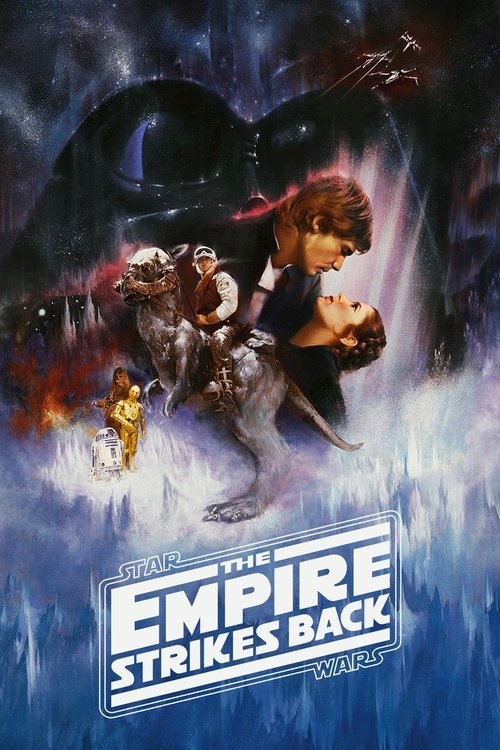
The Empire Strikes Back - Review
A Darker Shade of Hope: A Review of "The Empire Strikes Back"
In 1977, George Lucas unleashed a space opera that captured the imaginations of millions, a vibrant tapestry of heroism, adventure, and the eternal struggle between good and evil. But lightning rarely strikes twice, they say. Yet, in 1980, Lucas proved the naysayers wrong, delivering not just a sequel, but a cinematic masterpiece that dared to delve into the shadows, to challenge our heroes, and to leave us gasping for air amidst the icy vacuum of space. "The Empire Strikes Back" isn't just a continuation of the Star Wars saga; it's a bold, operatic descent into darkness, a crucible where hope is forged anew in the fires of despair. It’s a film that continues to resonate, challenge, and inspire decades after its release, cementing its place as one of the greatest sequels ever made.
Plot: From Triumphant Rebellion to Crushing Defeat
The film picks up three years after the destruction of the Death Star. The Rebel Alliance, while victorious in that pivotal battle, is now a hunted and scattered force, constantly evading the relentless pursuit of the Galactic Empire. The story unfolds across multiple interwoven plotlines, each contributing to the film's overall sense of mounting tension and impending doom.
On the ice planet Hoth, the Rebels have established a secret base, a temporary sanctuary amidst the unforgiving landscape. But their respite is short-lived. A probe droid, dispatched by Darth Vader, discovers their location, leading to a devastating Imperial assault. This sequence, a masterclass in action filmmaking, showcases the sheer power of the Empire's military might, forcing the Rebels to abandon their base in disarray.
Meanwhile, Luke Skywalker, haunted by visions and driven by a desire to become a Jedi Knight, embarks on a perilous journey to Dagobah, a swamp planet shrouded in mystery. There, he seeks out Yoda, the legendary Jedi Master, who reluctantly agrees to train him. Luke's training sequences, steeped in Eastern philosophy and filled with mystical imagery, are a stark contrast to the film's more action-oriented segments. They explore the inner workings of the Force, the importance of discipline and self-control, and the dangers of succumbing to fear and anger.
Han Solo, Princess Leia, Chewbacca, and C-3PO, fleeing the Imperial forces, seek refuge in Cloud City, a seemingly utopian metropolis governed by Lando Calrissian, an old friend of Han's. However, their hopes for sanctuary are shattered when Lando, under duress from Darth Vader, betrays them. This betrayal, a shocking twist that underscores the ruthlessness of the Empire, leads to Han's capture and imprisonment, a devastating blow to the Rebel Alliance. The Cloud City sequence is a masterclass in suspense, creating a palpable sense of unease and dread.
The film culminates in a dramatic confrontation between Luke Skywalker and Darth Vader. Ignoring Yoda's warnings, Luke rushes to Cloud City to rescue his friends, walking straight into Vader's trap. The ensuing lightsaber duel, set against the backdrop of Cloud City's industrial depths, is a visceral and emotionally charged battle. It is during this fight that Vader delivers the film's most iconic line, a revelation that shatters Luke's world and forever alters the course of the saga: "No, I am your father." This moment, a shocking and unforgettable twist, leaves the audience reeling and fundamentally changes our understanding of the characters and their motivations.
Characters: Tested and Transformed
The characters in "The Empire Strikes Back" are not the same naive idealists we met in "A New Hope." They have been tempered by experience, hardened by conflict, and forced to confront the harsh realities of war.
Luke Skywalker: Luke's journey in this film is one of intense self-discovery and painful growth. He is no longer the wide-eyed farm boy yearning for adventure. He is a young man grappling with the immense responsibility of becoming a Jedi Knight, struggling to control his emotions, and haunted by visions of the future. Mark Hamill delivers a nuanced and emotionally resonant performance, capturing Luke's vulnerability and determination with equal measure. His confrontation with Vader is a turning point, forcing him to confront his own lineage and the dark side within himself.
Han Solo: Han's roguish charm and cynical exterior are slowly chipped away throughout the film, revealing a deeper capacity for love and sacrifice. His growing affection for Leia is evident, culminating in their iconic exchange: "I love you." "I know." Harrison Ford imbues Han with a newfound vulnerability, showcasing the character's internal conflict between his self-serving instincts and his loyalty to his friends.
Princess Leia: Leia, ever the strong and resourceful leader, is forced to confront the limitations of her own power. She witnesses the devastation of Hoth, the betrayal of Lando, and the capture of Han, all of which take a heavy toll. Carrie Fisher delivers a powerful and nuanced performance, showcasing Leia's resilience and her unwavering commitment to the Rebel cause. Her blossoming romance with Han adds a layer of complexity to her character, revealing a vulnerability beneath her stoic exterior.
Darth Vader: Vader is more menacing and imposing than ever in "The Empire Strikes Back." He is a relentless hunter, driven by a singular purpose: to capture Luke Skywalker and turn him to the dark side. His presence is a constant source of dread, casting a long shadow over the entire film. The revelation of his parentage adds a layer of tragic complexity to his character, transforming him from a purely evil villain into a figure of immense internal conflict.
Yoda: Yoda, the enigmatic Jedi Master, is a welcome addition to the Star Wars universe. His wisdom, his unconventional training methods, and his quirky personality provide a much-needed dose of levity amidst the film's darker themes. Frank Oz's puppetry and voice work bring Yoda to life, creating a character that is both wise and endearing.
Lando Calrissian: Lando's introduction adds a layer of moral ambiguity to the Star Wars universe. He is a charismatic and resourceful gambler who is ultimately forced to make a difficult choice: betray his friends or risk the destruction of his city. Billy Dee Williams delivers a smooth and charming performance, making Lando a memorable and complex character.
Direction and Cinematography: A Visual Masterpiece
Irvin Kershner's direction is masterful, striking a perfect balance between action, suspense, and character development. He builds upon the foundation laid by George Lucas in "A New Hope," but injects a darker, more mature sensibility into the film. The pacing is impeccable, seamlessly transitioning between the various plotlines and maintaining a constant sense of momentum. Kershner's collaboration with cinematographer Peter Suschitzky results in a visually stunning film. The stark landscapes of Hoth, the mystical swamps of Dagobah, and the futuristic cityscapes of Cloud City are all rendered with breathtaking detail. The use of practical effects, combined with groundbreaking visual effects, creates a sense of realism that still holds up today. The lightsaber duels are particularly well-choreographed and visually striking, capturing the intensity and danger of these iconic battles. The framing and composition of shots are deliberate and impactful, enhancing the emotional resonance of key scenes.
Themes and Messages: The Price of Hope
"The Empire Strikes Back" is a film rich in thematic depth, exploring complex ideas about family, destiny, the nature of good and evil, and the price of hope. The film challenges the simplistic morality of "A New Hope," presenting a more nuanced and ambiguous view of the universe.
Family and Lineage: The revelation of Vader's parentage is the film's most shocking and impactful thematic element. It forces Luke to confront his own identity and his connection to the dark side. The film explores the complexities of family relationships, the burden of legacy, and the potential for redemption.
Destiny vs. Free Will: The film raises questions about the extent to which our lives are predetermined. Are Luke and Vader destined to follow a specific path, or do they have the power to choose their own destinies? The film suggests that while we may be influenced by our past and our lineage, we ultimately have the power to make our own choices.
The Nature of Good and Evil: "The Empire Strikes Back" challenges the simplistic notion that good and evil are always clearly defined. The film explores the gray areas of morality, suggesting that even the most virtuous individuals are capable of making mistakes, and that even the most villainous characters may have a glimmer of humanity within them.
The Price of Hope: The film underscores the idea that hope is not free. It requires sacrifice, resilience, and a willingness to endure hardship. The Rebel Alliance suffers a devastating defeat in "The Empire Strikes Back," but their spirit is not broken. They continue to fight, even in the face of overwhelming odds, because they believe in a better future.
Comparison to Other Films and Works
"The Empire Strikes Back" stands apart from its predecessor, "A New Hope," in its darker tone and more complex themes. While "A New Hope" is a classic hero's journey, "The Empire Strikes Back" is a more nuanced and introspective exploration of the characters and their motivations. The film's visual style and thematic depth also set it apart from many other science fiction films of the era. Its influence can be seen in countless subsequent works, from "The Lord of the Rings" to "Battlestar Galactica." The film's willingness to challenge expectations and embrace complexity helped to elevate the science fiction genre to new heights. Kershner’s direction, focusing on character development and emotional resonance, is a clear departure from Lucas’s more action-oriented approach in "A New Hope." This shift in directorial style is arguably what allows "The Empire Strikes Back" to achieve its profound impact.
Positive Aspects
- Compelling Story: The plot is intricate and engaging, with multiple interwoven storylines that keep the audience on the edge of their seats.
- Strong Character Development: The characters are complex and well-developed, undergoing significant transformations throughout the film.
- Stunning Visuals: The film's visual effects and cinematography are groundbreaking, creating a believable and immersive world.
- Memorable Music: John Williams' score is iconic and unforgettable, enhancing the emotional impact of the film.
- Iconic Moments: The film is filled with memorable moments, including the Battle of Hoth, Yoda's training of Luke, and the revelation of Vader's parentage.
- Thematic Depth: The film explores complex themes about family, destiny, and the nature of good and evil.
Constructive Criticism
- Pacing Issues: While generally well-paced, the Dagobah sequences can feel slightly slow at times, particularly for viewers who are more interested in the action-oriented aspects of the film.
- Cliffhanger Ending: The film ends on a cliffhanger, leaving many questions unanswered. While this is effective in building anticipation for the next installment, it can also be frustrating for some viewers.
- Some Dialogue Can Be Cheesy: While much of the dialogue is well-written, some lines can feel a bit cheesy or clichéd, particularly in the romantic exchanges between Han and Leia. This is a minor issue, but it can occasionally detract from the film's overall impact.
Conclusion
"The Empire Strikes Back" is not just a great sequel; it is a cinematic masterpiece that transcends its genre. It is a film that dares to explore the darker side of the Star Wars universe, challenging our heroes and forcing them to confront their own limitations. With its compelling story, strong character development, stunning visuals, and profound thematic depth, "The Empire Strikes Back" remains a timeless classic that continues to resonate with audiences of all ages. It's a film that proves that sequels can not only meet the standards of their predecessors but exceed them, creating a truly unforgettable cinematic experience. It is, without a doubt, one of the greatest science fiction films ever made.
Rating: 10/10