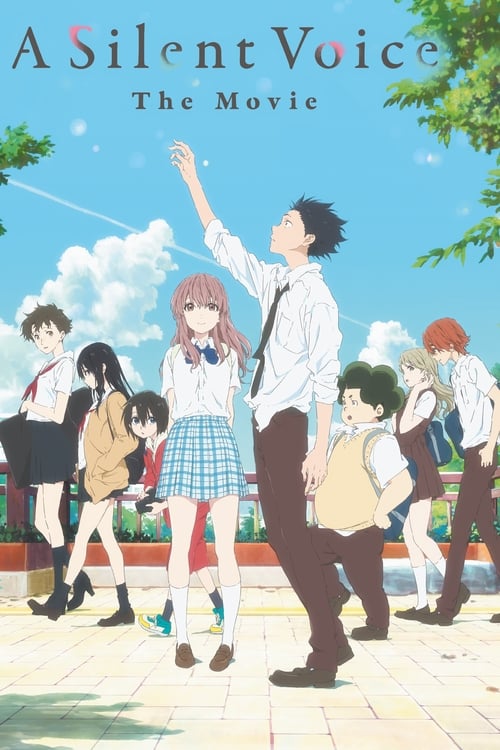
A Silent Voice: The Movie - Review
A Silent Voice: A Symphony of Regret, Redemption, and the Fragility of Connection
A Silent Voice (Japanese: 聲の形, Hepburn: Koe no Katachi, lit. "The Shape of Voice"), released in 2016 and directed by Naoko Yamada, is not merely an animated film; it is a deeply affecting and emotionally resonant experience that lingers long after the credits roll. It tackles complex themes of bullying, disability, guilt, suicide, and the arduous path towards self-forgiveness and genuine connection with unflinching honesty and remarkable sensitivity. More than a simple tale of redemption, it's a profound exploration of the human condition, exposing our capacity for both cruelty and compassion, and highlighting the importance of empathy and understanding in a world often deaf to the suffering of others. The film is a masterclass in visual storytelling, subtle character development, and emotionally charged narratives, setting a high bar for animated dramas and leaving an indelible mark on the hearts of its audience.
Plot: A Ripple Effect of Pain and a Quest for Atonement
The film's narrative structure is both straightforward and intricately layered. It begins by throwing us headfirst into the chaotic world of elementary school, where Shouya Ishida, a rambunctious and restless boy, finds himself increasingly frustrated by the arrival of Shouko Nishimiya, a deaf girl trying her best to integrate into the class. Shouya, unable to understand Shouko's disability and driven by a need for attention and a misguided sense of superiority, becomes her primary tormentor. He pulls out her hearing aids, mocks her attempts to communicate, and generally makes her life a living hell. This bullying escalates to the point where Shouko is forced to transfer schools, leaving Shouya branded as the sole culprit.
The consequences of Shouya's actions are swift and brutal. He is ostracized by his classmates, becoming a target himself. The film deftly portrays the shifting tides of schoolyard dynamics, where yesterday's bully becomes today's victim. The isolation and guilt that Shouya experiences throughout middle school and high school form the core of the film's emotional weight. He becomes withdrawn, unable to look people in the eye, and burdened by an overwhelming sense of self-loathing. He meticulously plans his suicide, saving up money and preparing to right what wrongs he can before ending his life. However, his plan is interrupted when he decides to seek out Shouko, driven by a desperate desire to apologize and perhaps, find a way to redeem himself.
The reunion between Shouya and Shouko is fraught with tension and awkwardness. Shouya's attempts to communicate with Shouko using sign language, which he has painstakingly learned, are initially met with skepticism and a mixture of hope and fear. As they begin to reconnect, the film introduces a cast of supporting characters, each grappling with their own insecurities, past regrets, and desires for connection. These characters, including Shouya's former classmates and Shouko's family, add depth and complexity to the narrative, highlighting the ripple effect of Shouya's initial actions and the challenges of rebuilding trust after betrayal.
The central conflict of the film revolves around Shouya's struggle to forgive himself and to help Shouko find a way to forgive him. It's a delicate dance of vulnerability and self-discovery, marked by moments of profound tenderness and heartbreaking setbacks. The film doesn't shy away from the complexities of mental health, exploring themes of depression, anxiety, and suicidal ideation with sensitivity and nuance. The climax of the film, a dramatic accident during a festival, serves as a catalyst for both Shouya and Shouko to confront their deepest fears and insecurities, ultimately leading to a tentative but hopeful resolution.
Characters: Flawed Humans Seeking Redemption
The strength of A Silent Voice lies in its deeply human and relatable characters, each flawed and struggling with their own internal battles. Shouya Ishida is a particularly compelling protagonist, evolving from a callous bully into a remorseful and introspective young man. His journey of self-discovery is the emotional heart of the film. We witness his profound regret and his desperate attempts to atone for his past actions, even as he grapples with the lingering effects of his own trauma.
Shouko Nishimiya is equally compelling, portrayed as a gentle and forgiving soul who has endured years of bullying and discrimination. Despite her suffering, she maintains a remarkable sense of empathy and a desire to connect with others. Her disability is not simply a plot device; it is an integral part of her identity, shaping her experiences and influencing her interactions with the world. The film avoids portraying her as a victim, instead showcasing her resilience and her unwavering spirit.
The supporting characters, while not as central as Shouya and Shouko, are equally well-developed and contribute significantly to the film's overall impact. Characters like Tomohiro Nagatsuka, Shouya's loyal and overweight friend, and Miki Kawai, a seemingly perfect classmate who harbors her own secrets and insecurities, add depth and complexity to the narrative. Even characters who initially appear unsympathetic, such as Naoka Ueno, a former classmate who continues to harbor resentment towards Shouko, are given moments of vulnerability that reveal their own internal struggles.
The character dynamics are particularly well-executed. The relationships between Shouya and his former classmates are fraught with tension and mistrust, reflecting the lasting impact of his past actions. The evolving friendship between Shouya and Shouko is the emotional core of the film, a testament to the power of forgiveness and the possibility of redemption. The film also explores the complexities of family relationships, particularly the bond between Shouko and her younger sister, Yuzuru, who fiercely protects her from further harm.
Direction: Visual Storytelling and Emotional Nuance
Naoko Yamada's direction is masterful, employing a variety of visual techniques to enhance the film's emotional impact. The use of close-ups, particularly on the characters' eyes, allows us to glimpse their inner thoughts and feelings. The film also makes extensive use of body language and nonverbal communication, conveying a wealth of information through subtle gestures and expressions. This is particularly effective in depicting Shouko's experiences as a deaf person, highlighting the challenges she faces in communicating with others and the importance of visual cues.
The film's pacing is deliberate, allowing the story to unfold gradually and organically. Yamada takes her time to develop the characters and their relationships, creating a sense of intimacy and emotional investment. The use of flashbacks is particularly effective in revealing the events of the past and shedding light on the characters' motivations. The film also utilizes symbolism and metaphor to enhance its thematic resonance. The recurring motif of the "X" marks over the faces of people Shouya cannot look at symbolizes his isolation and his inability to connect with others.
Yamada's direction is also notable for its sensitivity and restraint. The film tackles difficult topics such as bullying and suicide with nuance and empathy, avoiding sensationalism or exploitation. The film doesn't offer easy answers or simplistic solutions, instead acknowledging the complexities of human relationships and the challenges of overcoming trauma. Yamada's skillful direction allows the audience to connect with the characters on a deep emotional level, fostering empathy and understanding.
Cinematography: A Visual Feast of Light and Shadow
The cinematography in A Silent Voice is visually stunning, characterized by its vibrant colors, meticulous attention to detail, and masterful use of light and shadow. The film's color palette is particularly striking, with warm and inviting tones used to depict moments of joy and connection, and cooler, more muted tones used to convey feelings of sadness and isolation. The lighting is carefully crafted to enhance the emotional impact of each scene, creating a sense of atmosphere and mood.
The film's animation style is both realistic and expressive, capturing the nuances of human emotion with remarkable accuracy. The character designs are distinctive and memorable, reflecting their individual personalities and experiences. The backgrounds are richly detailed, creating a sense of immersion and realism. The film also incorporates a variety of visual effects, such as the use of bokeh and lens flare, to enhance its visual appeal.
The cinematography is particularly effective in depicting the film's setting, a small town in Japan. The film captures the beauty of the natural landscape, as well as the charm of the town's architecture and streetscapes. The film also uses visual cues to convey a sense of time and place, grounding the story in a specific cultural context.
Performances: Voices that Resonate with Truth
The voice acting in A Silent Voice is exceptional, bringing the characters to life with depth and authenticity. Miyu Irino delivers a powerful and nuanced performance as Shouya Ishida, capturing his evolution from a callous bully to a remorseful and introspective young man. Saori Hayami is equally impressive as Shouko Nishimiya, conveying her vulnerability and resilience with remarkable sensitivity. The supporting cast is also excellent, each actor bringing their own unique talents to their respective roles.
The film's sound design is also noteworthy, particularly in its depiction of Shouko's deafness. The film uses a variety of techniques, such as muffled sounds and visual cues, to convey her experiences as a hearing-impaired person. The film also incorporates a beautiful and evocative musical score, composed by Kensuke Ushio, which enhances the emotional impact of the story.
The actors' performances are particularly effective in conveying the characters' emotional struggles. The voice acting is nuanced and expressive, capturing the characters' inner thoughts and feelings with remarkable accuracy. The actors also do a great job of conveying the characters' relationships, creating a sense of intimacy and connection.
Themes and Messages: Empathy, Forgiveness, and the Power of Connection
A Silent Voice is a film rich in themes and messages, exploring complex issues such as bullying, disability, guilt, suicide, and the importance of empathy and forgiveness. The film's central theme is the power of connection and the importance of reaching out to others, even when it's difficult. The film suggests that true connection requires vulnerability, empathy, and a willingness to confront our own flaws and insecurities.
The film also explores the theme of forgiveness, both self-forgiveness and the forgiveness of others. Shouya's journey is one of self-discovery and atonement, as he grapples with the guilt and shame of his past actions. The film suggests that forgiveness is not always easy, but it is essential for healing and moving forward. The film also highlights the importance of forgiving others, even when they have hurt us deeply.
Another important theme of the film is the representation of disability. The film portrays Shouko's deafness with sensitivity and nuance, avoiding stereotypes and clichés. The film highlights the challenges she faces in communicating with others, but also celebrates her resilience and her unique perspective on the world. The film encourages viewers to be more understanding and empathetic towards people with disabilities.
The film also touches upon the issue of suicide, exploring the factors that can lead someone to consider ending their life. The film doesn't glorify or romanticize suicide, instead portraying it as a tragic and complex issue. The film suggests that reaching out for help and seeking support from others can be crucial in preventing suicide.
Comparison to Other Films and Works
A Silent Voice shares thematic similarities with other films that explore issues of bullying, disability, and redemption, such as Wonder (2017) and The Perks of Being a Wallflower (2012). However, A Silent Voice distinguishes itself through its unique animation style, its nuanced character development, and its unflinching portrayal of difficult topics. The film's focus on the perspective of the bully, rather than the victim, also sets it apart from many other films in this genre.
In terms of animation style and thematic resonance, A Silent Voice can be compared to other works by Kyoto Animation, the studio behind the film. Kyoto Animation is known for its visually stunning and emotionally resonant animated works, such as Clannad (2007-2008) and Violet Evergarden (2018). Like these works, A Silent Voice explores complex themes with sensitivity and nuance, and features beautifully animated characters and backgrounds.
Naoko Yamada's direction in A Silent Voice also shares similarities with her previous works, such as Tamako Market (2013) and Liz and the Blue Bird (2018). Yamada is known for her masterful use of visual storytelling and her ability to convey complex emotions through subtle gestures and expressions. Her direction in A Silent Voice is particularly effective in capturing the characters' inner thoughts and feelings, and in creating a sense of intimacy and emotional investment.
Positive Aspects: A Masterpiece of Emotional Storytelling
A Silent Voice is a remarkable film that excels in numerous areas. Its strengths include:
- Compelling Narrative: The story is deeply engaging and emotionally resonant, exploring complex themes with sensitivity and nuance.
- Well-Developed Characters: The characters are flawed and relatable, each struggling with their own internal battles.
- Masterful Direction: Naoko Yamada's direction is exceptional, employing a variety of visual techniques to enhance the film's emotional impact.
- Stunning Cinematography: The film's animation style is visually stunning, characterized by its vibrant colors, meticulous attention to detail, and masterful use of light and shadow.
- Exceptional Voice Acting: The voice acting is nuanced and expressive, bringing the characters to life with depth and authenticity.
- Meaningful Themes: The film explores important themes such as bullying, disability, guilt, suicide, and the importance of empathy and forgiveness.
Constructive Criticism: A Few Minor Imperfections
While A Silent Voice is a near-perfect film, there are a few minor areas where it could have been improved:
- Pacing Issues: The film's pacing can feel uneven at times, with certain scenes feeling rushed while others drag on. A more consistent pacing would have enhanced the overall flow of the narrative.
- Overabundance of Characters: The film introduces a large cast of supporting characters, some of whom feel underdeveloped and contribute little to the overall plot. Streamlining the cast would have allowed for more focus on the core characters and their relationships.
- Melodramatic Moments: While the film generally avoids melodrama, there are a few moments that feel overly sentimental or contrived. A more restrained approach would have enhanced the film's overall impact.
Conclusion: A Must-See Animated Masterpiece
A Silent Voice is a powerful and emotionally resonant film that deserves to be seen by a wide audience. It tackles difficult topics with sensitivity and nuance, offering a profound exploration of the human condition. The film's stunning animation, exceptional voice acting, and meaningful themes make it a truly unforgettable experience. Despite a few minor imperfections, A Silent Voice is a masterpiece of emotional storytelling that will stay with you long after the credits roll.
Rating: 9.5/10