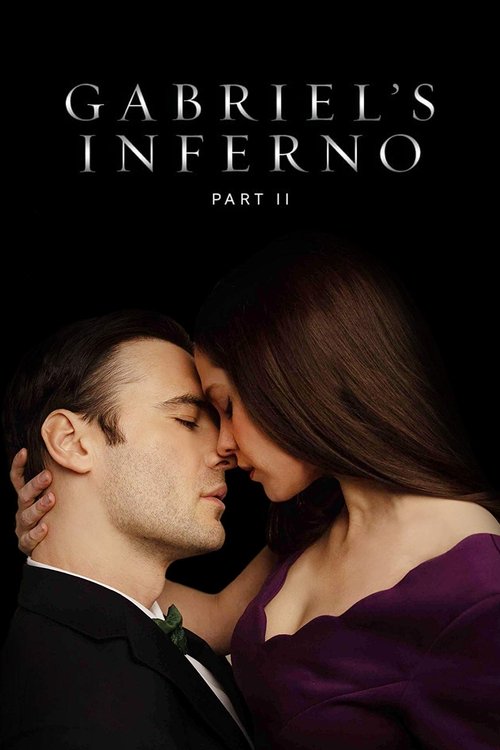
Gabriel's Inferno: Part II - Review
Gabriel's Inferno: Part II - A Tormented Romance Rekindled?
Gabriel's Inferno: Part II, the second installment in the film adaptation of Sylvain Reynard's erotic romance novel, picks up right where its predecessor left off: with Professor Gabriel Emerson reeling from the revelation of Julia Mitchell's true identity and desperately trying to win back her affections. While the first film introduced us to the passionate but troubled dynamic between the two leads, this sequel delves deeper into their pasts, explores themes of forgiveness and redemption, and attempts to navigate the complexities of second chances. However, does Part II successfully elevate the source material, or does it succumb to the pitfalls of its genre? Let's delve into the inferno and find out.
Plot: A Race Against Time and Heartbreak
The plot of Gabriel's Inferno: Part II is primarily driven by Gabriel's relentless pursuit of Julia. He's finally pieced together the fragmented memories of their shared past and understands the profound impact he had on her life, both positive and devastating. Julia, understandably hurt and distrustful, is determined to move on, seeking solace in her studies and the support of her friends. The film follows Gabriel as he attempts to prove his genuine remorse and earn her forgiveness, often resorting to grand gestures and heartfelt declarations of love.
A significant portion of the narrative revolves around flashbacks that illuminate Gabriel and Julia's previous encounters. These scenes provide crucial context for their present-day relationship, revealing the innocence and vulnerability of their initial connection and the tragic circumstances that led to their separation. We see Gabriel as a young, troubled scholar, grappling with his own demons and struggling to control his darker impulses. Julia, on the other hand, is portrayed as a bright and compassionate young woman, initially drawn to Gabriel's intellect and enigmatic nature.
The introduction of new characters, such as Christa, Julia's supportive friend, and Paul, a potential romantic interest for Julia, adds further complications to the already tense dynamic. Paul's presence serves as a catalyst for Gabriel, forcing him to confront the possibility of losing Julia forever. The film also touches upon the academic world, showcasing Gabriel's expertise in Dante and his interactions with colleagues and students. While these elements provide a backdrop to the central romance, they sometimes feel underdeveloped and contribute to a slightly uneven pacing.
The central conflict arises from Julia's justified reluctance to trust Gabriel. She remembers the pain he inflicted upon her and struggles to reconcile the man he is now with the boy who broke her heart. This internal conflict is portrayed effectively, and it prevents the film from becoming a simple tale of redemption. Julia's agency and her refusal to be easily swayed are crucial to the story's emotional resonance.
Characters: Flawed Souls Seeking Redemption
Gabriel's Inferno: Part II hinges on the performances of its two leads, Giulio Berruti as Gabriel Emerson and Melanie Zanetti as Julia Mitchell. Berruti delivers a more nuanced performance than in the first film, showcasing Gabriel's vulnerability and genuine remorse. He effectively portrays the internal struggle of a man grappling with his past mistakes and desperately trying to atone for them. While his portrayal can occasionally veer into melodrama, Berruti manages to convey the depth of Gabriel's love and his unwavering commitment to Julia.
Zanetti shines as Julia Mitchell, bringing a quiet strength and resilience to the character. She effectively communicates Julia's inner turmoil, her desire for happiness, and her fear of being hurt again. Zanetti's performance is particularly compelling in scenes where Julia confronts Gabriel, demanding honesty and accountability for his past actions. She avoids portraying Julia as a damsel in distress, instead presenting her as a complex and independent woman who is determined to protect her heart.
The supporting characters, while not as fully developed, serve to enhance the central narrative. Christa, played by Julia Bolton, provides a much-needed voice of reason and support for Julia. Her friendship adds a layer of warmth and authenticity to the film. Paul, portrayed by James Andrew Fraser, is a charming and considerate character who offers Julia a safe and stable alternative to the tumultuous relationship with Gabriel. However, his character feels somewhat underdeveloped and serves primarily as a plot device to fuel Gabriel's jealousy.
One of the film's strengths is its exploration of Gabriel's character arc. He is not simply a reformed bad boy; he is a flawed individual who continues to grapple with his inner demons. His journey towards redemption is not linear, and he makes mistakes along the way. This complexity makes him a more relatable and believable character, despite his occasionally over-the-top gestures.
Direction and Cinematography: A Visual Feast?
Barbara Stepansky returns as director for Gabriel's Inferno: Part II, maintaining the visual style established in the first film. The film is visually appealing, with lush scenery, elegant costumes, and a romantic atmosphere. The use of lighting and color is effective in creating a sense of intimacy and passion, particularly in the scenes between Gabriel and Julia.
The cinematography, however, can sometimes feel overly stylized, bordering on melodramatic. The frequent use of slow-motion and close-ups, while intended to heighten the emotional impact, can occasionally feel excessive and distracting. The film relies heavily on visual cues to convey the characters' emotions, which can sometimes overshadow the performances themselves.
The pacing of the film is somewhat uneven. The flashbacks, while providing crucial context, can disrupt the flow of the narrative. Some scenes feel rushed, while others drag on unnecessarily. This inconsistent pacing can make it difficult to fully immerse oneself in the story.
The film's use of music is generally effective, enhancing the romantic and dramatic moments. However, the soundtrack occasionally veers into generic territory, lacking the distinctiveness and emotional depth that could have elevated the overall experience.
Themes and Messages: Forgiveness, Redemption, and Second Chances
Gabriel's Inferno: Part II explores several key themes, including forgiveness, redemption, and the possibility of second chances. The film argues that even those who have made terrible mistakes are capable of change and deserving of forgiveness. However, it also acknowledges that forgiveness is not easily earned and requires genuine remorse and a commitment to making amends.
The theme of redemption is central to Gabriel's character arc. He is a man haunted by his past actions, seeking to atone for the pain he has caused. His journey towards redemption is fraught with challenges, but he perseveres, driven by his love for Julia and his desire to become a better person.
The film also explores the complexities of trust and the challenges of rebuilding a broken relationship. Julia's reluctance to trust Gabriel is understandable, given his past behavior. The film suggests that trust is earned over time through consistent actions and genuine commitment.
Another significant theme is the power of love to heal and transform. Gabriel's love for Julia motivates him to confront his inner demons and strive for personal growth. Julia's love, in turn, has the potential to help Gabriel overcome his past traumas and find peace.
However, the film's message can sometimes feel simplistic, particularly in its portrayal of forgiveness. While the film acknowledges the pain and trauma caused by Gabriel's past actions, it ultimately suggests that love can conquer all, potentially minimizing the long-term impact of abuse and betrayal. This aspect of the film may be problematic for some viewers.
Performances: Strengths and Weaknesses
As mentioned earlier, Giulio Berruti and Melanie Zanetti deliver commendable performances as Gabriel and Julia. Berruti effectively portrays Gabriel's internal struggle and his unwavering devotion to Julia. Zanetti shines as Julia, bringing a quiet strength and resilience to the character.
However, both actors are occasionally hampered by the film's melodramatic tendencies. Some scenes require them to deliver overly emotional lines and engage in exaggerated gestures, which can detract from the authenticity of their performances.
The supporting cast is generally competent, but their characters are not as fully developed as Gabriel and Julia. Julia Bolton provides a solid performance as Christa, offering a much-needed voice of reason and support. James Andrew Fraser is charming as Paul, but his character feels somewhat underdeveloped.
Overall, the performances in Gabriel's Inferno: Part II are a mixed bag. While Berruti and Zanetti deliver strong performances, they are occasionally undermined by the film's melodramatic tendencies and the lack of depth in the supporting characters.
Comparison to Similar Films/Previous Works
Gabriel's Inferno: Part II can be compared to other erotic romance films such as Fifty Shades of Grey and After. Like these films, it features a passionate but troubled relationship between two attractive individuals, exploring themes of love, desire, and redemption. However, Gabriel's Inferno distinguishes itself through its more intellectual and literary approach, drawing heavily on Dante's Inferno for its themes and imagery.
Compared to the first film in the series, Gabriel's Inferno: Part II is a more mature and nuanced work. It delves deeper into the characters' pasts, explores more complex themes, and features stronger performances from the lead actors. However, it also suffers from some of the same flaws as its predecessor, including uneven pacing, melodramatic tendencies, and underdeveloped supporting characters.
Director Barbara Stepansky has a consistent style that is evident in both films. She creates a visually appealing and romantic atmosphere, but her direction can sometimes feel overly stylized. The actors' performances benefit from her guidance, but the films could benefit from a more subtle and nuanced approach to storytelling.
Positive Aspects
- Strong performances from Giulio Berruti and Melanie Zanetti
- Exploration of complex themes such as forgiveness, redemption, and second chances
- Visually appealing cinematography and elegant costumes
- Effective use of music to enhance the romantic and dramatic moments
Constructive Criticism
- Uneven pacing and occasional melodramatic tendencies
- Underdeveloped supporting characters
- Simplistic portrayal of forgiveness
- Overly stylized cinematography
Conclusion
Gabriel's Inferno: Part II is a flawed but ultimately engaging erotic romance film. It features strong performances from its lead actors, explores complex themes, and creates a visually appealing atmosphere. However, it also suffers from uneven pacing, melodramatic tendencies, and underdeveloped supporting characters. While it may not appeal to all viewers, fans of the genre and those who enjoyed the first film are likely to find it a worthwhile watch. The film successfully builds upon the foundation laid by its predecessor and leaves the audience eager to see how Gabriel and Julia's story will conclude in the final installment.