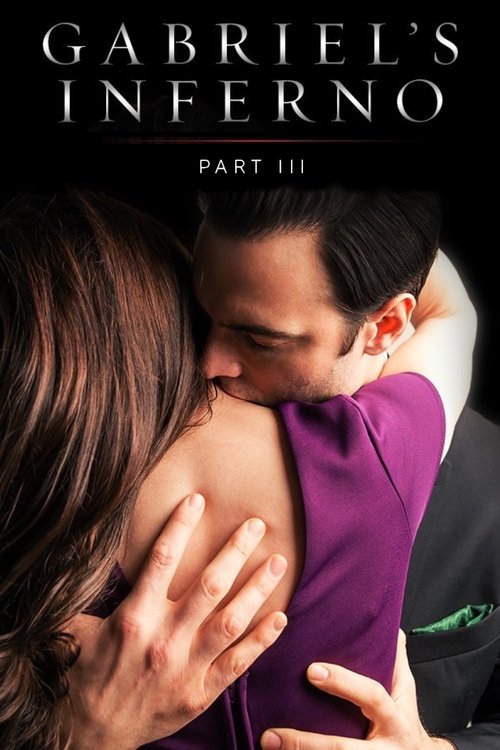
Gabriel's Inferno: Part III - Review
Gabriel's Inferno: Part III - A Fiery Conclusion or a Lingering Ember?
Gabriel's Inferno: Part III arrives not with a bang, but with a sigh. After the tumultuous journey of passion, redemption, and academic intrigue that characterized the first two installments, this final chapter promises closure. But does it deliver a satisfying resolution to Gabriel and Julia's story, or does it merely tread water, leaving viewers with a lingering sense of incompleteness? Let's delve into the burning heart of this erotic romance drama to see if it truly earns its place in the inferno of compelling cinematic adaptations.
Plot: Navigating the Calm After the Storm
Part III picks up immediately after the dramatic cliffhanger of Part II. Julia, reeling from the revelation of her pregnancy and the lingering anxieties stemming from Gabriel's past, struggles to adjust to the idea of motherhood. Gabriel, ever the reformed rake, is determined to prove himself worthy of her love and support. The plot, however, shifts away from the overt melodrama and suspense of the previous films and settles into a more domestic, character-driven narrative. We witness Gabriel and Julia navigating the challenges of impending parenthood, attending prenatal appointments, preparing their home, and confronting their individual fears and insecurities.
While the shift in tone is understandable, aiming for a more mature and realistic portrayal of their relationship, it also results in a slower pace. The film meanders through scenes of domestic bliss and minor conflicts, lacking the dramatic tension that propelled the earlier installments. The external threats and antagonists that plagued Gabriel and Julia in the past are largely absent, replaced by internal struggles and anxieties. This focus on internal conflict is not inherently negative, but it requires a more nuanced and compelling exploration of the characters' psyches, which, unfortunately, the film only partially achieves.
A subplot involving Gabriel's ongoing academic pursuits and his attempts to secure a prestigious fellowship provides a mild dose of professional drama, but it feels somewhat disconnected from the central romantic narrative. Similarly, Julia's continued healing from her traumatic past is addressed, but in a way that feels perfunctory rather than deeply explored. The film touches upon important themes of forgiveness, acceptance, and personal growth, but often does so in a superficial manner, relying on exposition rather than genuine emotional resonance.
Characters: Growth and Stagnation in Paradise
Gabriel Emerson, portrayed once again by Giulio Berruti, continues his transformation from a brooding, self-destructive intellectual to a loving and devoted partner. Berruti's performance is generally solid, conveying Gabriel's vulnerability and his unwavering commitment to Julia. However, the script often relies on repetitive declarations of love and regret, hindering Berruti's ability to fully explore the complexities of Gabriel's inner turmoil. We see glimpses of the old Gabriel – the possessive, controlling academic – but these moments are quickly overshadowed by his newfound devotion, leaving the audience wanting a more nuanced exploration of his character's evolution.
Melanie Zanetti reprises her role as Julia Mitchell, and she delivers a commendable performance, capturing Julia's quiet strength and her unwavering belief in Gabriel's redemption. Julia's character arc, however, feels somewhat stagnant in Part III. While she grapples with her anxieties about motherhood and her past trauma, her development as an individual feels overshadowed by her role as Gabriel's muse and anchor. The film focuses primarily on her relationship with Gabriel, neglecting to explore her own aspirations and desires beyond their shared future. This is a missed opportunity, as Julia's character had the potential to evolve into a more independent and empowered figure.
The supporting characters, including Christa and Paul, are relegated to brief appearances, serving primarily as sounding boards for Gabriel and Julia's anxieties. Their roles are underdeveloped, and their presence feels more like a nod to the source material than an integral part of the narrative. The absence of significant antagonists further diminishes the dramatic stakes, leaving the central relationship as the sole focus of the film.
Direction and Cinematography: A Visual Feast, But Lacking Fire
Tosca Musk returns as director, maintaining the visually appealing aesthetic that characterized the previous films. The cinematography is lush and romantic, with stunning shots of Florence and carefully curated settings that evoke a sense of timeless elegance. The use of light and shadow is particularly effective, creating a visually rich and atmospheric experience. The film is undeniably beautiful to look at, but the visual splendor often feels like a substitute for genuine emotional depth.
Musk's direction is competent, but it lacks the spark and innovation that could have elevated the film beyond its predictable narrative. The pacing is uneven, with moments of languid contemplation interspersed with brief bursts of dramatic tension. The film often relies on visual metaphors and symbolic imagery, but these elements feel somewhat heavy-handed and lack the subtlety that would have made them more impactful. The sex scenes, while tastefully executed, lack the raw passion and emotional intensity that defined the earlier installments. They feel more like obligatory inclusions than integral parts of the narrative, contributing little to the overall character development or plot progression.
The soundtrack, while featuring some beautiful classical pieces, is often used in an overly sentimental manner, further amplifying the film's melodramatic tendencies. A more nuanced and restrained approach to the music could have enhanced the emotional impact of the scenes, but instead, the soundtrack often feels manipulative and intrusive.
Themes and Messages: Love, Redemption, and the Weight of the Past
Gabriel's Inferno: Part III continues to explore the central themes of love, redemption, and the transformative power of forgiveness. The film emphasizes the importance of communication and understanding in a relationship, highlighting the challenges of overcoming past traumas and building a shared future. It also touches upon the themes of parenthood, responsibility, and the anxieties associated with creating a new life.
However, the film's exploration of these themes often feels superficial and predictable. The messages are delivered in a straightforward manner, lacking the depth and complexity that would have made them more thought-provoking. The film's reliance on clichés and sentimental tropes undermines its attempt to portray a realistic and nuanced portrayal of a romantic relationship. While the film ultimately affirms the power of love and forgiveness, it does so in a way that feels somewhat uninspired and formulaic.
The concept of redemption, central to Gabriel's character arc, is explored, but not with the necessary grit. We are told he has changed, but the film doesn't fully showcase the depth of his struggles and the lasting impact of his past transgressions. This makes his transformation feel somewhat incomplete and undermines the emotional weight of his journey.
Comparison to Similar Films and Previous Works
The Gabriel's Inferno trilogy, as a whole, shares similarities with other erotic romance adaptations such as Fifty Shades of Grey and After. However, Gabriel's Inferno distinguishes itself through its emphasis on intellectualism and its incorporation of Dante Alighieri's Inferno as a metaphorical framework for the characters' journey. Part III, in particular, diverges from the more overtly sensual and melodramatic tone of its predecessors, opting for a more subdued and character-driven approach.
Comparing Part III to the previous installments of the series, it is clear that the film suffers from a lack of dramatic tension and a slower pace. While the earlier films were propelled by external conflicts and shocking revelations, Part III relies primarily on internal struggles and domestic scenarios. This shift in focus may appeal to viewers who prefer a more intimate and character-driven narrative, but it also diminishes the overall excitement and intrigue of the series.
Tosca Musk's direction remains consistent throughout the trilogy, maintaining a visually appealing aesthetic and a focus on the romantic relationship between Gabriel and Julia. However, her direction in Part III feels somewhat restrained, lacking the spark and innovation that could have elevated the film beyond its predictable narrative. The actors deliver solid performances, but they are often constrained by the limitations of the script, which relies on repetitive dialogue and superficial character development.
Positive Aspects: Aesthetically Pleasing and Comforting
Despite its shortcomings, Gabriel's Inferno: Part III does possess some redeeming qualities. The film is undeniably beautiful to look at, with stunning cinematography and carefully curated settings that evoke a sense of timeless elegance. The performances of Giulio Berruti and Melanie Zanetti are commendable, and their chemistry remains palpable. The film also offers a comforting and familiar narrative for fans of the series, providing a sense of closure and resolution to Gabriel and Julia's story.
The film's emphasis on the importance of communication and understanding in a relationship is also a positive aspect, offering a valuable message about the challenges of overcoming past traumas and building a shared future. The film's portrayal of Gabriel's transformation from a flawed and self-destructive individual to a loving and devoted partner is also commendable, highlighting the power of redemption and the transformative potential of love.
Constructive Criticism: Lacking Depth and Dramatic Tension
However, Gabriel's Inferno: Part III ultimately falls short of its potential due to its lack of depth, dramatic tension, and originality. The plot meanders through domestic scenarios and superficial conflicts, failing to engage the audience on a deeper emotional level. The characters' development feels stagnant, and the supporting characters are underdeveloped. The direction is competent but uninspired, and the soundtrack is often overly sentimental.
The film's reliance on clichés and sentimental tropes undermines its attempt to portray a realistic and nuanced portrayal of a romantic relationship. The messages are delivered in a straightforward manner, lacking the depth and complexity that would have made them more thought-provoking. The absence of significant antagonists and external conflicts diminishes the dramatic stakes, leaving the central relationship as the sole focus of the film. This narrow focus, while understandable, ultimately results in a less compelling and engaging cinematic experience.
Conclusion: A Gentle Flicker, Not a Raging Fire
Gabriel's Inferno: Part III is a visually appealing but ultimately underwhelming conclusion to the trilogy. While it offers a sense of closure for fans of the series, it lacks the dramatic tension, emotional depth, and originality that would have made it a truly memorable film. The performances are solid, but the script limitations prevent the actors from fully exploring the complexities of their characters. The direction is competent, but uninspired. The themes are explored, but superficially.
The film's strengths lie in its aesthetic appeal and its comforting narrative, but its weaknesses outweigh its positive aspects. Gabriel's Inferno: Part III is a gentle flicker, not a raging fire. It provides a sense of resolution, but it fails to ignite the passion and excitement that characterized the earlier installments.
Rating: 5.5/10