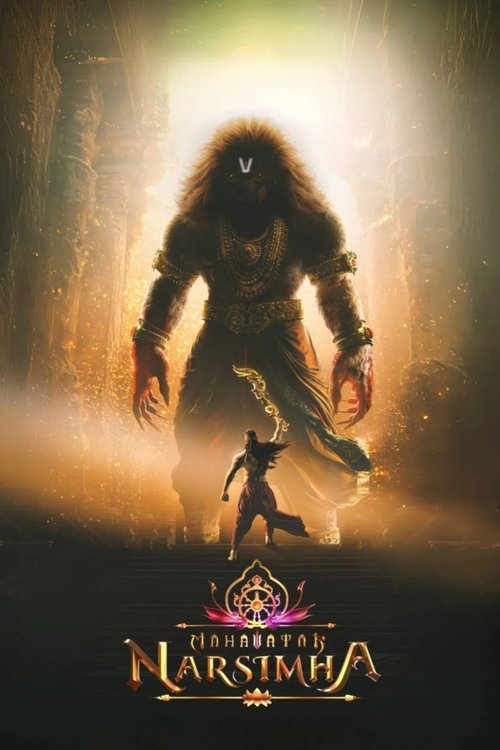
Mahavatar Narsimha - Review
Mahavatar Narsimha: A Roaring Triumph of Mythology and Animation
The year is 2025. The silver screen trembles. Not from explosions or alien invasions, but from the earth-shattering roar of Narsimha. "Mahavatar Narsimha," the animated epic released on July 25th, has arrived, and it's not just a film; it's an experience. A visual feast woven with the timeless threads of Hindu mythology, this film tackles a well-known story with fresh perspective and breathtaking artistry. Buckle up, because this is a deep dive into a cinematic marvel that both honors its source material and boldly forges its own path.
Plot: A Timeless Tale Reimagined
The story of Hiranyakashyap and Prahlad is etched in the collective consciousness of India. A demon king, consumed by ego and a thirst for power, declares himself a god, demanding worship from all. His own son, Prahlad, a beacon of unwavering devotion to Vishnu, refuses. This sets the stage for a conflict that transcends the personal and becomes a battle between good and evil, faith and tyranny. "Mahavatar Narsimha" doesn't simply retell this familiar tale; it enriches it. The writers have meticulously crafted a narrative that explores the motivations of each character, adding layers of complexity to their actions. Hiranyakashyap isn't just a one-dimensional villain; we see glimpses of his past, hints of the traumas that fueled his descent into darkness. Prahlad isn't just a passive devotee; he's a young boy grappling with the weight of his beliefs in a world that rejects them. The film expands on lesser-known aspects of the story, adding depth and nuance. The curse that granted Hiranyakashyap his boon, the intricacies of his reign, and the subtle influences of celestial forces are all explored with care and attention to detail.
The pacing is expertly managed. The film avoids the trap of rushing through crucial plot points, allowing each scene to breathe and resonate with the audience. The build-up to Narsimha's appearance is masterful, creating a palpable sense of anticipation that culminates in a truly awe-inspiring moment. However, the film does occasionally suffer from exposition dumps, particularly in the early act. While necessary to establish the complex mythology, these moments can feel a bit clunky and slow down the momentum. Despite this minor flaw, the overall plot is a compelling and engaging journey that stays true to the spirit of the original story while adding its own unique flavor.
Characters: Beyond Archetypes
The strength of "Mahavatar Narsimha" lies not just in its visual spectacle, but also in its well-developed characters. Each character is given a distinct personality and motivation, making them feel relatable and believable, even within the fantastical setting.
- Hiranyakashyap: Voiced with chilling intensity by veteran actor Om Puri (in one of his final performances, digitally restored), Hiranyakashyap is a formidable antagonist. He's not just evil for the sake of it; he's driven by a deep-seated fear of vulnerability and a desperate need for control. The film delves into his past, revealing the injustices he suffered and the events that shaped his worldview. This added dimension makes him a more compelling and sympathetic character, even as we condemn his actions.
- Prahlad: Young actor Rohan Mehra delivers a standout performance as Prahlad. He captures the character's innocence, unwavering faith, and quiet strength with remarkable skill. Prahlad's devotion to Vishnu is not portrayed as blind obedience, but as a genuine expression of love and understanding. He's a child who possesses wisdom beyond his years, and Rohan Mehra embodies this quality perfectly.
- Vishnu: The divine presence of Vishnu is felt throughout the film, even before his dramatic appearance as Narsimha. His voice, provided by Amitabh Bachchan, is both comforting and commanding, conveying a sense of divine power and unwavering compassion. The film subtly explores the concept of Vishnu's avatars, hinting at the cyclical nature of his interventions in the world.
- Kayadhu: Hiranyakashyap's wife and Prahlad's mother, Kayadhu, is a complex and tragic figure. Torn between her love for her husband and her concern for her son, she represents the internal conflict that many face when caught between opposing forces. Her character arc is one of the most emotionally resonant in the film.
The supporting characters, such as the demonic courtiers and the celestial beings, are also well-defined and contribute to the richness of the film's world. Each character, no matter how small, serves a purpose in advancing the plot and exploring the film's themes.
Direction: A Visionary Approach
Director Anjali Sharma has crafted a visually stunning and emotionally resonant film. Her vision is evident in every frame, from the intricate character designs to the breathtaking landscapes. She masterfully blends traditional storytelling techniques with modern animation technology, creating a film that feels both timeless and contemporary.
Sharma's direction is particularly effective in the action sequences. The battles between Hiranyakashyap's forces and the celestial beings are dynamic and visually arresting, showcasing the power and grandeur of the mythological world. The climactic confrontation between Narsimha and Hiranyakashyap is a tour de force of animation, capturing the raw ferocity and divine justice of the moment. However, some of the dialogue scenes could have benefited from more dynamic camera work. While the performances are strong, the static shots occasionally make these scenes feel a bit stagey.
Despite this minor criticism, Sharma's direction is a triumph. She has successfully translated a complex and culturally significant story to the screen in a way that is both entertaining and respectful. Her passion for the material is evident in every aspect of the film, making "Mahavatar Narsimha" a true labor of love.
Cinematography: A Feast for the Eyes
The animation in "Mahavatar Narsimha" is nothing short of spectacular. The level of detail is astounding, from the intricate textures of the characters' clothing to the lush vegetation of the landscapes. The film's visual style is a unique blend of traditional Indian art and modern animation techniques, creating a look that is both familiar and innovative.
The use of color is particularly striking. The film employs a vibrant palette, with rich reds, golds, and blues dominating the screen. These colors not only enhance the visual appeal of the film but also contribute to its emotional impact. The warm colors associated with Vishnu and Prahlad evoke feelings of peace and serenity, while the dark colors associated with Hiranyakashyap create a sense of foreboding and menace.
The visual effects are seamlessly integrated into the animation, creating a believable and immersive world. The celestial beings glow with divine light, the demonic forces crackle with dark energy, and Narsimha's transformation is a breathtaking display of power. The cinematography is a crucial element in the film's success, elevating it from a simple animated movie to a true visual masterpiece.
Performances: A Stellar Voice Cast
The voice acting in "Mahavatar Narsimha" is exceptional. The cast, comprised of some of India's most talented actors, brings the characters to life with depth and emotion. As mentioned before, Om Puri's portrayal of Hiranyakashyap is chillingly effective, capturing the character's arrogance, cruelty, and underlying vulnerability. Rohan Mehra delivers a nuanced and believable performance as Prahlad, conveying the character's innocence, faith, and quiet strength. Amitabh Bachchan lends his iconic voice to Vishnu, imbuing the character with a sense of divine authority and compassion.
The supporting cast is equally impressive, with each actor bringing their own unique talents to their respective roles. The chemistry between the actors is palpable, making the relationships between the characters feel genuine and believable. The voice acting is a crucial element in the film's success, adding depth and emotion to the already compelling narrative.
Themes and Messages: Faith, Duty, and the Triumph of Good
"Mahavatar Narsimha" is more than just a visually stunning action film; it's a story with profound themes and messages. At its core, the film explores the power of faith, the importance of duty, and the ultimate triumph of good over evil.
Prahlad's unwavering devotion to Vishnu is a testament to the power of faith. Despite facing persecution and ridicule, he never wavers in his beliefs. His faith is not blind obedience, but a genuine expression of love and understanding. The film suggests that faith can be a source of strength and resilience in the face of adversity.
The film also explores the concept of duty. Hiranyakashyap believes it is his duty to protect his kingdom and maintain his power, even if it means sacrificing his own son. Prahlad, on the other hand, believes it is his duty to remain true to his faith, even if it means defying his father. The film suggests that true duty lies in upholding moral principles and standing up for what is right, even when it is difficult.
Ultimately, "Mahavatar Narsimha" is a story about the triumph of good over evil. The film demonstrates that even the most powerful and tyrannical forces can be overcome by the unwavering faith and righteous actions of individuals. The appearance of Narsimha is a symbol of divine justice, a reminder that good will always prevail in the end.
Comparison to Other Films
"Mahavatar Narsimha" can be compared to other animated mythological epics, such as "Ramayana: The Legend of Prince Rama" and "Baahubali: The Lost Legends." However, "Mahavatar Narsimha" distinguishes itself through its unique visual style, its nuanced character development, and its exploration of complex themes. While "Ramayana: The Legend of Prince Rama" is a classic of Indian animation, it lacks the visual polish and emotional depth of "Mahavatar Narsimha." "Baahubali: The Lost Legends," while visually impressive, is primarily aimed at a younger audience and lacks the thematic complexity of "Mahavatar Narsimha."
Director Anjali Sharma's previous work includes several critically acclaimed animated shorts and documentaries. "Mahavatar Narsimha" represents a significant step up in scale and ambition, showcasing her growth as a filmmaker. The film demonstrates her ability to handle complex narratives, create compelling characters, and deliver stunning visuals. Compared to her earlier work, "Mahavatar Narsimha" is a more mature and sophisticated film, showcasing her artistic vision and technical expertise.
Positive Aspects
- Stunning animation and visual effects
- Compelling characters with nuanced motivations
- Exceptional voice acting performances
- Masterful direction by Anjali Sharma
- Exploration of profound themes and messages
- Respectful and engaging adaptation of a classic mythological tale
Constructive Criticism
- Occasional exposition dumps slow down the pacing
- Some dialogue scenes could benefit from more dynamic camera work
- The film's length may be daunting for some viewers
Conclusion
"Mahavatar Narsimha" is a cinematic triumph. It's a visually stunning, emotionally resonant, and intellectually stimulating film that will captivate audiences of all ages. Director Anjali Sharma has crafted a masterpiece that honors the source material while forging its own unique path. The film's compelling characters, exceptional performances, and profound themes make it a truly unforgettable experience. Despite a few minor flaws, "Mahavatar Narsimha" is a must-see for fans of animation, mythology, and great storytelling. It's a film that will stay with you long after the credits roll, prompting reflection and inspiring awe.