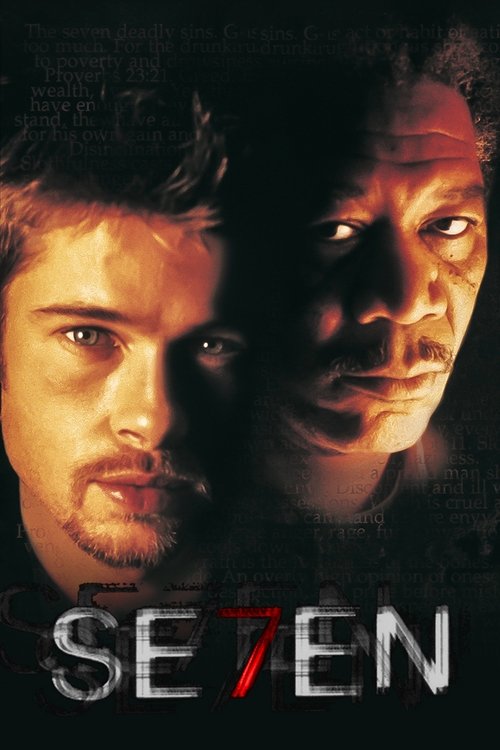
Se7en - Review
Se7en: A Descent into the Abyss of Humanity
David Fincher's Se7en, released in 1995, isn't just a thriller; it's a masterclass in psychological horror, a chilling exploration of morality, and a visually stunning descent into the darkest corners of the human psyche. From its opening credits, pulsating with dread, to its unforgettable, gut-wrenching climax, Se7en grips you with an unrelenting intensity that lingers long after the screen fades to black. This isn't a film you simply watch; it's an experience that burrows under your skin, forcing you to confront uncomfortable truths about ourselves and the world we inhabit.
Plot: A Dance Macabre with the Seven Deadly Sins
The film follows the unlikely partnership of Detective William Somerset (Morgan Freeman), a seasoned, world-weary detective on the verge of retirement, and Detective David Mills (Brad Pitt), an ambitious but impulsive young officer eager to make his mark. They are tasked with solving a series of increasingly gruesome murders, each meticulously crafted to represent one of the seven deadly sins: gluttony, greed, sloth, lust, pride, envy, and wrath. As they delve deeper into the investigation, Somerset's methodical approach and intellectual understanding of human depravity clash with Mills' more reactive and emotionally driven nature. This dynamic tension not only fuels the narrative but also provides a compelling commentary on the different ways we confront evil.
The plot unfolds with a deliberate pacing, mirroring Somerset's calculated approach to the case. Each crime scene is meticulously staged, offering clues not only to the killer's identity but also to his twisted philosophy. The victims are not random; they are chosen for their embodiment of the sin they are forced to represent. This meticulousness creates a sense of dread and anticipation, as the audience, along with the detectives, struggles to decipher the killer's next move. The script, penned by Andrew Kevin Walker, is sharp, intelligent, and unflinchingly dark, refusing to offer easy answers or comforting resolutions. It's a narrative that challenges the viewer to confront the uncomfortable reality of human potential for cruelty and the insidious nature of evil.
Characters: Contrasting Philosophies in a Morally Bankrupt World
The strength of Se7en lies not just in its plot but also in its richly developed characters. Somerset and Mills are not simply plot devices; they are fully realized individuals with their own flaws, strengths, and motivations. Their contrasting personalities and philosophies create a compelling dynamic that drives the narrative forward.
Detective William Somerset (Morgan Freeman)
Somerset is the moral compass of the film, a man who has seen too much darkness and is weary of the world's inherent depravity. He is intelligent, contemplative, and deeply empathetic, qualities that allow him to understand the killer's motivations, even if he cannot condone them. Freeman's performance is masterful, conveying a sense of quiet resignation and profound sadness. Somerset is a man haunted by the evil he has witnessed, and his desire to retire is not simply about escaping the job but about escaping the darkness that threatens to consume him.
Detective David Mills (Brad Pitt)
Mills, in contrast, is impulsive, hot-headed, and driven by a naive sense of justice. He is eager to make a difference and believes in the power of action. Pitt's portrayal of Mills is raw and energetic, capturing the character's youthful idealism and his growing disillusionment with the world. Mills' anger and frustration often lead him to make rash decisions, which ultimately have devastating consequences.
John Doe (Kevin Spacey)
The killer, known only as John Doe, is a chillingly intelligent and meticulously planned individual. He sees himself as a righteous messenger, punishing those who embody the seven deadly sins. Doe is not simply a psychopath; he is a twisted philosopher who believes he is cleansing the world of its moral decay. Spacey's performance, although brief, is incredibly impactful. He portrays Doe with a chilling calmness and unwavering conviction, making him one of the most memorable and terrifying villains in cinematic history. The delayed reveal of Doe's character adds to the suspense and allows the audience to piece together his motivations and twisted logic.
Tracy Mills (Gwyneth Paltrow)
Tracy, Mills' wife, provides a much-needed element of humanity and warmth to the film. She is kind, compassionate, and concerned about her husband's well-being. Paltrow's performance is subtle but effective, portraying Tracy as a woman struggling to adapt to a new city and a new life, while also grappling with the darkness that surrounds her. She represents the innocence and hope that are threatened by the pervasive evil in the film.
Direction: Fincher's Masterful Control of Atmosphere and Tension
David Fincher's direction is nothing short of masterful. He creates a relentlessly bleak and oppressive atmosphere that permeates every frame of the film. The perpetually overcast skies, the grimy streets, and the dilapidated buildings contribute to a sense of decay and moral corruption. Fincher uses a variety of techniques, including close-ups, slow-motion shots, and disorienting camera angles, to create a sense of unease and suspense. He understands the power of suggestion, often showing just enough to allow the audience's imagination to fill in the gaps, making the violence all the more disturbing.
Fincher's attention to detail is evident in every aspect of the film, from the meticulously designed crime scenes to the carefully chosen music. He creates a world that is both familiar and unsettling, a reflection of our own society's darker aspects. The film's pacing is deliberate, allowing the tension to build gradually, culminating in the unforgettable climax. Fincher's direction is not just about telling a story; it's about creating an experience that is both visceral and intellectually stimulating.
Cinematography: A Visual Representation of Moral Decay
The cinematography, by Darius Khondji, is crucial to the film's overall impact. The dark, muted color palette reflects the bleakness of the story and the moral decay of the world. The use of shadows and low-key lighting creates a sense of mystery and foreboding. The camera often lingers on the details of the crime scenes, emphasizing the brutality and depravity of the crimes. The rain, a constant presence throughout the film, symbolizes the cleansing that Doe seeks to bring about, but also the overwhelming sense of despair that permeates the city.
Khondji's cinematography is not just aesthetically pleasing; it is integral to the film's storytelling. The visual style reinforces the themes of darkness, corruption, and the struggle between good and evil. The film's visuals are as unsettling and disturbing as the crimes themselves, creating a truly immersive and unforgettable experience.
Performances: A Symphony of Talent
The performances in Se7en are uniformly excellent. Morgan Freeman delivers a career-defining performance as Somerset, imbuing the character with a quiet dignity and profound sadness. Brad Pitt captures the youthful idealism and growing disillusionment of Mills. Kevin Spacey, despite limited screen time, delivers a chillingly effective portrayal of John Doe. Gwyneth Paltrow provides a much-needed element of humanity and warmth as Tracy. The supporting cast is also strong, adding depth and texture to the film's world.
The chemistry between Freeman and Pitt is palpable, creating a believable and compelling partnership. Their contrasting personalities and philosophies provide a dynamic tension that drives the narrative forward. The actors' performances are nuanced and believable, making the characters feel like real people grappling with extraordinary circumstances.
Themes and Messages: Exploring the Depths of Human Nature
Se7en is a film that explores a number of complex and disturbing themes, including the nature of evil, the corruption of society, and the struggle between good and evil. The film challenges the viewer to confront uncomfortable truths about ourselves and the world we inhabit. It questions the possibility of redemption in a morally bankrupt society and explores the consequences of unchecked ambition and righteous indignation.
The film's exploration of the seven deadly sins is not simply a plot device; it is a commentary on the flaws and failings of human nature. The sins are not presented as abstract concepts but as tangible manifestations of human depravity. The film suggests that these sins are not simply isolated acts but are interconnected and contribute to the overall decay of society.
Se7en also raises questions about the nature of justice and the role of law enforcement. Somerset and Mills are both committed to upholding the law, but they approach their work from different perspectives. Somerset believes in the importance of understanding the criminal mind, while Mills is more focused on punishing the guilty. The film suggests that neither approach is entirely sufficient and that true justice is often elusive.
Comparison to Other Films and Works
Se7en shares similarities with other crime thrillers, such as The Silence of the Lambs and Kiss the Girls, in its focus on a serial killer and the psychological investigation of their crimes. However, Se7en distinguishes itself through its relentlessly bleak atmosphere, its exploration of complex philosophical themes, and its unforgettable ending.
In comparison to other David Fincher films, Se7en can be seen as a precursor to his later works, such as Zodiac and Gone Girl, in its exploration of dark subject matter, its meticulous attention to detail, and its unflinching portrayal of human depravity. Se7en established Fincher as a master of the psychological thriller and paved the way for his future success.
Brad Pitt's performance in Se7en can be compared to his later roles in films such as Fight Club and Inglourious Basterds, in its intensity and commitment. Se7en marked a turning point in Pitt's career, establishing him as a serious actor capable of tackling complex and challenging roles.
Positive Aspects
- Masterful direction by David Fincher
- Excellent performances from the entire cast, particularly Morgan Freeman and Brad Pitt
- Compelling and thought-provoking plot
- Stunning cinematography and visual style
- Effective use of atmosphere and tension
Constructive Criticism
- The film's unrelenting bleakness may be overwhelming for some viewers.
- The ending, while impactful, is undeniably disturbing and may not be satisfying for all audiences.
- The character of Tracy Mills, while sympathetic, is somewhat underdeveloped.
Conclusion
Se7en is a cinematic masterpiece, a dark and disturbing thriller that will stay with you long after the credits roll. It is a film that challenges you to confront uncomfortable truths about yourself and the world, and it does so with intelligence, skill, and unwavering conviction. While its bleakness may be overwhelming for some, its artistic merit and thought-provoking themes are undeniable. Se7en is not just a great thriller; it is a profound and unforgettable cinematic experience.
Rating: 9.5/10