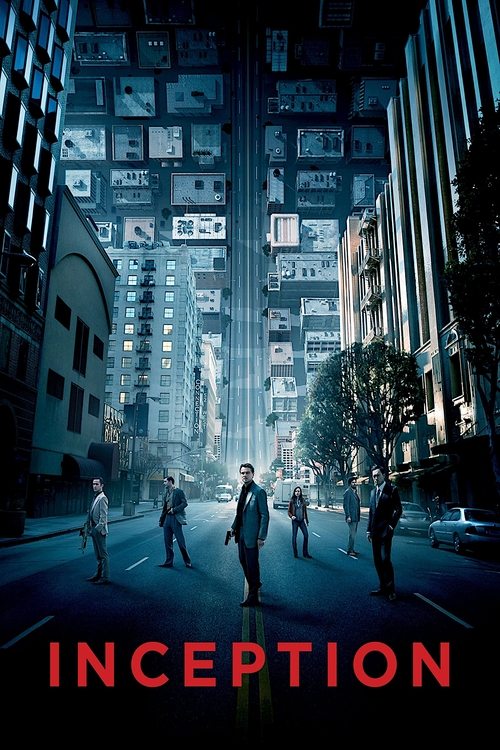
Inception - Review
Inception: A Mind-Bending Masterpiece That Lingers Long After the Credits Roll
Christopher Nolan's Inception, released in 2010, isn't just a film; it's an experience. It's a labyrinthine journey into the depths of the human subconscious, a high-octane heist movie wrapped in a philosophical exploration of reality, memory, and the power of ideas. Few films have captured the collective imagination quite like Inception, sparking endless debates and solidifying Nolan's reputation as a visionary filmmaker. But does it truly live up to the hype? Let's delve into the dream within a dream to find out.
The Labyrinthine Plot: A Heist in the Subconscious
The plot of Inception is notoriously complex, and rightfully so. It centers around Dom Cobb (Leonardo DiCaprio), a skilled "extractor" who steals secrets from the minds of his targets while they dream. However, Cobb is offered a chance at redemption: instead of stealing an idea, he must plant one – a process known as "inception." The target is Robert Fischer Jr. (Cillian Murphy), the heir to a powerful energy conglomerate. If Cobb and his team can successfully convince Fischer to dissolve his father's company, Cobb will be able to return home to his children, whom he hasn't seen in years due to being framed for his wife's death.
The team consists of a diverse group of specialists: Arthur (Joseph Gordon-Levitt), Cobb's right-hand man and the meticulous planner; Ariadne (Elliot Page), a talented architect who designs the dream worlds; Eames (Tom Hardy), a forger who can impersonate anyone within the dream; Yusuf (Dileep Rao), a chemist who provides the sedatives needed for shared dreaming; and Saito (Ken Watanabe), a wealthy businessman who commissions the inception and provides the resources.
The core of the film involves the team navigating multiple layers of dreams within dreams – a dangerous and disorienting process. Each layer has its own set of rules and challenges, and the deeper they go, the more unstable the dreams become. The threat of "limbo," a shared, unconstructed dream space where the subconscious runs wild, looms large. Furthermore, Cobb is haunted by the projection of his deceased wife, Mal (Marion Cotillard), who sabotages his missions and represents his unresolved guilt and grief.
The brilliance of the plot lies not just in its complexity but also in its tight construction. Nolan meticulously lays out the rules of the dream world, establishing clear stakes and consequences for the characters. While the constant shifting between dream levels can be confusing at times, the film rarely loses its grip on the audience. The action sequences are seamlessly integrated into the narrative, each one serving a specific purpose and advancing the plot. The climax, which takes place simultaneously across multiple dream levels, is a masterclass in suspense and visual storytelling.
Characters: Haunted Souls and Skilled Professionals
Inception is not primarily a character-driven film, but the characters are nonetheless well-developed and compelling. They serve as anchors in the swirling chaos of the dream world, providing emotional resonance and grounding the fantastical elements in relatable human experiences.
Dom Cobb (Leonardo DiCaprio): Cobb is the emotional core of the film. He is a brilliant but deeply flawed individual, haunted by the memory of his wife and driven by the desire to return to his children. DiCaprio delivers a nuanced and powerful performance, portraying Cobb's vulnerability, his determination, and his internal struggles with remarkable depth. He is the anchor, the one we're rooting for, even as we understand the darkness that consumes him.
Mal (Marion Cotillard): Mal is not a typical villain; she is a manifestation of Cobb's guilt and grief, a projection of his subconscious that sabotages his missions. Cotillard's performance is mesmerizing, portraying Mal as both seductive and terrifying. She embodies the destructive power of unresolved trauma and the seductive allure of escaping reality.
Arthur (Joseph Gordon-Levitt): Arthur is the voice of reason and the meticulous planner. Gordon-Levitt brings a quiet intensity to the role, providing a crucial counterpoint to Cobb's more impulsive nature. He is the dependable lieutenant, the one who keeps the operation on track.
Ariadne (Elliot Page): Ariadne is the architect who designs the dream worlds. She is also the audience surrogate, asking the questions that we are all thinking and helping to make sense of the complex rules of the dream world. Page delivers a strong performance, portraying Ariadne as intelligent, resourceful, and empathetic.
Eames (Tom Hardy): Eames is the charismatic forger who can impersonate anyone within the dream. Hardy brings a playful energy to the role, providing much-needed moments of levity in the midst of the intense action. He's the charming rogue, adding a dash of wit and unpredictability to the team.
Robert Fischer Jr. (Cillian Murphy): Fischer is the target of the inception, a vulnerable and conflicted individual who is struggling to come to terms with his father's death. Murphy portrays Fischer with a subtle vulnerability, making him a sympathetic character despite being the target of the heist.
While the supporting characters are well-defined, the film's focus remains firmly on Cobb and his internal struggles. The other characters primarily serve to support his journey and to provide exposition about the dream world.
Direction and Cinematography: A Visual Spectacle
Christopher Nolan's direction is masterful. He expertly balances the complex narrative with stunning visuals, creating a film that is both intellectually stimulating and visually breathtaking. The film's action sequences are innovative and memorable, defying the laws of physics in ways that are both thrilling and believable within the context of the dream world. The rotating hallway fight scene, the zero-gravity combat, and the avalanche chase are all iconic moments that showcase Nolan's ability to craft visually stunning and action-packed sequences.
Wally Pfister's cinematography is equally impressive. He uses a variety of techniques to create a sense of disorientation and unreality, including slow-motion, time dilation, and unconventional camera angles. The film's color palette is muted and desaturated, reflecting the dreamlike atmosphere. The use of practical effects is particularly noteworthy, adding a sense of realism and tangibility to the fantastical elements.
The editing, by Lee Smith, is crucial to maintaining the film's momentum and clarity. Smith seamlessly weaves together the various dream levels, creating a sense of simultaneity and urgency. The pacing is expertly controlled, building tension gradually and culminating in a thrilling climax.
Themes and Messages: Reality, Memory, and the Power of Ideas
Inception is not just a heist movie; it is also a deeply philosophical film that explores profound themes about reality, memory, and the power of ideas. The film raises questions about the nature of consciousness, the reliability of perception, and the influence of the subconscious on our waking lives.
One of the central themes of the film is the subjective nature of reality. The dream world is a malleable space where anything is possible, and the characters are constantly questioning what is real and what is not. The film suggests that reality is not a fixed entity but rather a construct of our minds, shaped by our memories, beliefs, and desires.
Memory is another key theme. Cobb is haunted by the memory of his wife, and his inability to let go of the past threatens to destroy his mission. The film explores the power of memory to shape our identities and to influence our actions. It also raises questions about the reliability of memory and the potential for it to be manipulated or distorted.
The power of ideas is perhaps the most important theme of the film. The entire plot revolves around the idea of planting an idea in someone's mind. The film suggests that ideas have the power to change the world, to shape our destinies, and to inspire us to achieve great things. It also acknowledges the potential for ideas to be used for destructive purposes, as evidenced by Mal's influence on Cobb's subconscious.
The film's ambiguous ending, with the spinning top neither clearly falling nor continuing to spin, perfectly encapsulates these themes. It leaves the audience to question whether Cobb is truly back in reality or still trapped in a dream, forcing us to confront the uncertainties of our own perceptions and the power of our own beliefs.
Comparisons: Similar Films and Nolan's Previous Work
Inception has been compared to a variety of other films, including The Matrix, Eternal Sunshine of the Spotless Mind, and Memento. Like The Matrix, Inception explores the nature of reality and the possibility of escaping from a simulated world. Like Eternal Sunshine of the Spotless Mind, it delves into the complexities of memory and the pain of loss. And like Memento, it employs a non-linear narrative structure to create a sense of disorientation and suspense.
However, Inception is ultimately a unique and original work that stands apart from these other films. It combines elements of science fiction, action, and thriller genres in a way that is both intellectually stimulating and emotionally engaging. It also benefits from Nolan's distinctive directorial style, which is characterized by complex narratives, stunning visuals, and thought-provoking themes.
Inception shares several similarities with Nolan's previous films, particularly The Prestige and Memento. All three films explore themes of deception, identity, and the subjective nature of reality. They also employ non-linear narrative structures and feature morally ambiguous characters. However, Inception is arguably Nolan's most ambitious and visually spectacular film to date.
Positive Aspects
- Originality: Inception is a truly original film that pushes the boundaries of cinematic storytelling.
- Visual Spectacle: The film's visual effects are stunning and innovative.
- Intriguing Plot: The complex plot keeps the audience engaged and guessing until the very end.
- Strong Performances: The cast delivers exceptional performances, particularly Leonardo DiCaprio and Marion Cotillard.
- Thought-Provoking Themes: The film explores profound themes about reality, memory, and the power of ideas.
- Masterful Direction: Christopher Nolan's direction is flawless, balancing complex storytelling with stunning visuals.
Constructive Criticism
- Complexity: The plot can be confusing at times, especially for viewers who are not familiar with the concept of shared dreaming.
- Emotional Distance: While the characters are well-developed, the film's focus on plot can sometimes create a sense of emotional distance.
- Pacing: The film's exposition-heavy first act can feel a bit slow.
- Over-Reliance on Exposition: At times, the film relies too heavily on dialogue to explain the rules of the dream world. A more visual approach could have been more effective.
Conclusion
Inception is a cinematic triumph, a mind-bending thriller that will stay with you long after the credits roll. While its complexity may be daunting for some, the film's stunning visuals, strong performances, and thought-provoking themes make it a truly unforgettable experience. It's a film that demands multiple viewings, each time revealing new layers of meaning and complexity. Christopher Nolan has crafted a masterpiece that deserves its place among the greatest science fiction films of all time. While it has minor pacing issues and relies on exposition a bit much, the overall impact is undeniable. It's a film that not only entertains but also challenges our perceptions of reality.
Rating: 9.5/10