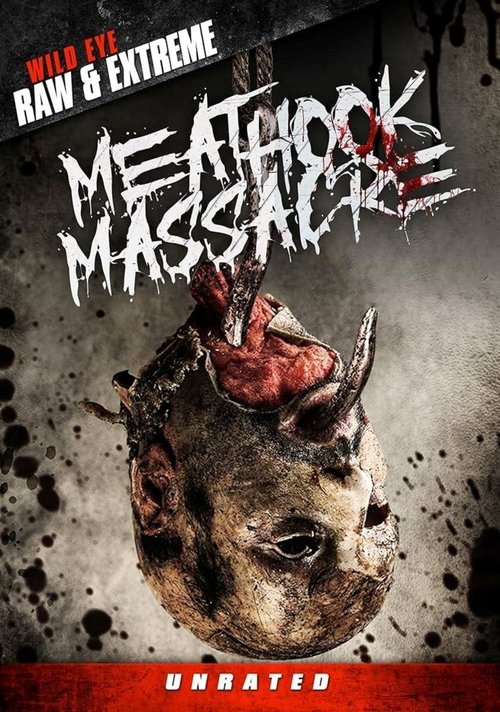
The Meathook Massacre - Review
The Meathook Massacre (2025): A Symphony of Carnage or Just Another Chain in the Horror Grindhouse?
The horror landscape, often a graveyard of tired tropes and jump-scare clichés, occasionally births a beast of genuine terror. "The Meathook Massacre," released on July 20th, 2025, attempts to claw its way into the pantheon of slasher classics. Directed by newcomer Anya Petrova, and promising a visceral, unflinching descent into the depravity of rural madness, does it succeed, or does it simply become another forgettable entry in the already overflowing subgenre of backwoods horror? Let's sharpen our knives and dissect this bloody offering.
Plot: A Familiar Road to Ruin
The plot, at its core, is undeniably familiar. Three young women – Sarah (played by the promising newcomer, Emily Carter), Beth (the pragmatic and skeptical character, portrayed by veteran horror actress, Jessica Davies), and Chloe (the free-spirited and naive one, played by rising star, Maya Rodriguez) – are en route to a music festival. Classic horror setup: a remote location, a broken-down car, and a desperate search for help. Their misfortune leads them to the doorstep of the Sawyer-esque family, led by the hulking, meathook-wielding Bubba (a truly terrifying performance by physical actor, Boris Volkov). What follows is a relentless game of cat and mouse, a desperate fight for survival against a family of inbred maniacs whose depravity knows no bounds.
While the narrative foundation is hardly groundbreaking, Petrova attempts to add layers of tension and dread through pacing and atmosphere. The initial scenes of carefree camaraderie amongst the women are effective in establishing their personalities and making the inevitable violence more impactful. The gradual escalation of unease, from the unsettling silence of the backroads to the increasingly bizarre and menacing signs of habitation, is well-handled. However, the film occasionally stumbles into predictable territory, relying on jump scares that feel more obligatory than organic to the story. The reliance on classic horror tropes, while understandable given the genre's history, sometimes prevents the film from forging its own unique identity.
Characters: Meat for the Grinder or Something More?
The characters in "The Meathook Massacre" are, for the most part, archetypal. Sarah, the de facto leader, is the resourceful and determined one. Beth, the voice of reason, is understandably skeptical of their situation. And Chloe, the innocent and vulnerable one, serves as the emotional core of the group. While these archetypes are familiar, the actors manage to imbue them with enough personality to make them relatable and, crucially, worth rooting for.
Emily Carter shines as Sarah, displaying a compelling blend of fear and determination. Her transformation from a carefree concert-goer to a hardened survivor is believable and engaging. Jessica Davies brings a much-needed dose of cynicism and pragmatism to Beth, providing a counterpoint to Sarah's unwavering optimism. Maya Rodriguez, as Chloe, effectively portrays the character's vulnerability, making her plight all the more harrowing.
However, the film's antagonists, while visually striking and undeniably menacing, suffer from a lack of depth. Bubba, the meathook-wielding brute, is a terrifying presence, but his motivations remain largely unexplored. The other members of the family, each more grotesque and deranged than the last, are similarly underdeveloped. While their actions are certainly horrifying, their lack of backstory or discernible personality makes them feel more like caricatures than fully realized characters. This lack of depth in the antagonists ultimately diminishes the film's impact, as the audience is left with a sense of disgust rather than genuine fear or understanding.
Direction: Petrova's Promising Debut
Anya Petrova's direction is arguably the film's strongest asset. She demonstrates a clear understanding of horror conventions, but also a willingness to experiment with visual style and atmosphere. The film's opening scenes are beautifully shot, capturing the vibrant energy of the young women and the scenic beauty of the rural landscape. As the narrative progresses, Petrova skillfully ratchets up the tension, employing claustrophobic camerawork and jarring edits to create a sense of unease and dread. The film's gore effects, while plentiful, are not gratuitous, serving to enhance the horror rather than detract from it. Petrova's use of practical effects is particularly noteworthy, lending a visceral and unsettling quality to the violence.
However, Petrova's inexperience occasionally shows. Some scenes feel rushed or underdeveloped, and the pacing occasionally falters. The film's reliance on jump scares, while effective in the short term, ultimately feels like a crutch. A more nuanced approach to building suspense and dread would have elevated the film to a higher level. Nevertheless, "The Meathook Massacre" is a promising debut for Petrova, showcasing her talent for visual storytelling and her understanding of the horror genre.
Cinematography: Painting a Picture of Rural Decay
The cinematography, handled by veteran cinematographer, David Miller, is a standout element of "The Meathook Massacre." Miller masterfully captures the stark beauty and inherent danger of the rural setting. The film's color palette is muted and desaturated, lending a sense of decay and hopelessness to the proceedings. The use of natural light is particularly effective, creating a sense of realism that enhances the film's overall impact. The shots of the dilapidated farmhouse, bathed in the eerie glow of twilight, are particularly memorable, evoking a sense of dread and foreboding.
Miller also employs creative camerawork to heighten the tension and suspense. Low-angle shots are used to emphasize the imposing size and menace of Bubba, while close-ups of the victims' faces convey their fear and desperation. The use of shaky-cam during the chase sequences adds to the sense of chaos and disorientation. Overall, the cinematography is a major asset to "The Meathook Massacre," creating a visually compelling and unsettling experience.
Performances: A Mixed Bag of Screams and Scares
The performances in "The Meathook Massacre" are a mixed bag. As mentioned earlier, Emily Carter, Jessica Davies, and Maya Rodriguez deliver solid performances as the three young women. They manage to create believable and relatable characters, making their plight all the more harrowing. Boris Volkov's portrayal of Bubba is undeniably terrifying, conveying the character's brute strength and unbridled rage. However, the supporting cast, particularly the actors portraying the other members of the Sawyer-esque family, are less successful. Their performances often feel exaggerated and cartoonish, detracting from the film's overall sense of realism.
The film also suffers from some questionable dialogue. While the actors do their best with what they are given, some of the lines feel clichéd and uninspired. A more nuanced and realistic approach to dialogue would have significantly improved the film's overall quality.
Themes and Messages: More Than Just Blood and Guts?
While "The Meathook Massacre" is primarily a horror film, it does touch upon some interesting themes. The film can be interpreted as a commentary on the dangers of isolation and the depravity that can fester in the absence of civilization. The Sawyer-esque family represents a twisted and distorted version of the American dream, a cautionary tale about the consequences of unchecked greed and violence. The film also explores the themes of survival and resilience, as the three young women are forced to confront their deepest fears and fight for their lives.
However, these themes are not explored in great depth. The film is primarily concerned with delivering a visceral and shocking experience, and the thematic elements often feel secondary. A more nuanced and thoughtful exploration of these themes would have elevated the film to a higher level of intellectual engagement.
Comparisons: Chainsaw Massacre's Shadow
It's impossible to discuss "The Meathook Massacre" without drawing comparisons to Tobe Hooper's seminal classic, "The Texas Chain Saw Massacre." Both films feature a group of young people who stumble upon a family of deranged killers in a remote rural setting. Both films rely on practical effects and a gritty, realistic aesthetic to create a sense of terror. And both films explore the themes of isolation, depravity, and survival.
However, "The Meathook Massacre" falls short of matching the sheer brilliance and originality of "The Texas Chain Saw Massacre." While Petrova's film is competently made and undeniably disturbing, it lacks the visceral power and unsettling atmosphere of Hooper's masterpiece. The characters in "The Texas Chain Saw Massacre" are more memorable and nuanced, and the film's thematic exploration is more profound. "The Meathook Massacre" feels more like a homage to "The Texas Chain Saw Massacre" than a truly original work of horror.
Compared to Petrova's previous short films, which were more psychological thrillers, "The Meathook Massacre" is a significant departure into the realm of gore and visceral horror. While she shows promise in this new direction, her previous works demonstrated a greater understanding of subtlety and character development, elements that are somewhat lacking in this latest offering.
Positive Aspects: A Feast for Gorehounds
- Strong direction from Anya Petrova, showcasing her talent for visual storytelling and atmosphere.
- Excellent cinematography, capturing the stark beauty and inherent danger of the rural setting.
- Solid performances from Emily Carter, Jessica Davies, and Maya Rodriguez.
- Effective use of practical effects, lending a visceral and unsettling quality to the violence.
- A satisfyingly brutal and unrelenting experience for fans of the slasher genre.
Constructive Criticism: Sharpening the Blade
- The plot is overly familiar and relies on tired horror tropes.
- The antagonists lack depth and are more like caricatures than fully realized characters.
- The film occasionally relies on jump scares that feel more obligatory than organic.
- The dialogue is often clichéd and uninspired.
- The thematic exploration is superficial.
Conclusion: A Decent Slice of Horror, But Not a Masterpiece
"The Meathook Massacre" is a competently made and undeniably disturbing horror film. Anya Petrova demonstrates a clear understanding of the genre, and the film's visual style and atmosphere are effective in creating a sense of dread. However, the film's reliance on familiar tropes, underdeveloped characters, and superficial thematic exploration prevent it from reaching its full potential. While it will undoubtedly satisfy fans of the slasher genre, it ultimately falls short of matching the brilliance and originality of its predecessors. This film is a decent slice of horror, but not a masterpiece.
Rating: 6.5/10