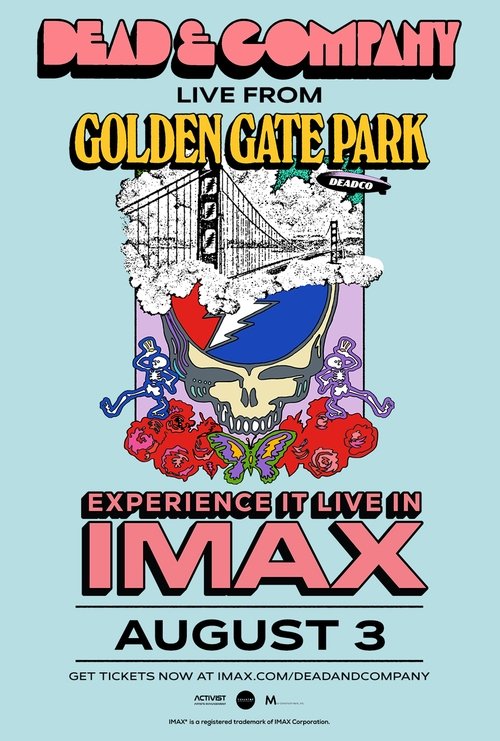
Dead & Company Live In IMAX From Golden Gate Park - Review
Dead & Company Live In IMAX From Golden Gate Park: A Farewell Serenade in Spectacular Scale
The air crackled with anticipation. Not just from the throng of tie-dye-clad revelers packed into Golden Gate Park, but from the global audience poised to witness history. "Dead & Company Live In IMAX From Golden Gate Park," more than just a concert film, was a cultural event. A farewell, a celebration, and a testament to the enduring legacy of the Grateful Dead, transmitted in breathtaking IMAX clarity. This wasn’t just a show; it was a pilgrimage, a collective experience amplified by the sheer scale of the screen. Did it live up to the hype? Let's delve in.
Plot: More Than Just a Setlist
To call the "plot" of a concert film a traditional narrative would be misleading. The plot here is the journey through the Grateful Dead's vast catalog, curated and performed by Dead & Company. The film skillfully weaves together iconic tracks, extended jams, and subtle nods to the band's history. It's a setlist meticulously crafted to evoke nostalgia, spark joy, and provide a fitting send-off. While there's no traditional three-act structure, there's a definite arc. The initial energy is explosive, a burst of familiar favorites designed to ignite the crowd. The middle section delves into deeper cuts, allowing for improvisation and showcasing the band's musical dexterity. The finale is a crescendo of emotion, culminating in a poignant goodbye that leaves a lasting impression.
The film also cleverly incorporates behind-the-scenes glimpses, brief interviews, and historical footage. These interludes provide context and depth, enriching the viewing experience beyond simply watching a band play. They offer insights into the band members' thoughts, their connection to the music, and the enduring impact of the Grateful Dead on generations of fans. This added layer elevates the film from a mere concert recording to a more comprehensive and engaging documentary.
Characters: Beyond the Performers
While the band members – John Mayer, Bob Weir, Mickey Hart, Bill Kreutzmann, Oteil Burbridge, and Jeff Chimenti – are undoubtedly the central figures, the film understands that the true "characters" extend far beyond the stage. The audience itself becomes a character, a vibrant tapestry of faces, stories, and shared experiences. The camera frequently pans across the crowd, capturing the raw emotion, the unbridled joy, and the sense of community that defines the Grateful Dead experience. These moments are crucial in conveying the true essence of the event.
Each band member brings their unique personality and musical style to the performance. Bob Weir, the veteran guitarist, exudes a seasoned cool, his vocals raspy and heartfelt. John Mayer, initially met with skepticism by some Deadheads, has undeniably earned his place, his guitar work both respectful and innovative. Mickey Hart and Bill Kreutzmann, the rhythm devils, provide the driving force, their percussion a primal heartbeat that resonates throughout the park. Oteil Burbridge's bass lines are fluid and funky, adding a modern edge to the classic sound. And Jeff Chimenti's keyboard work provides a lush and textured backdrop, filling the sonic landscape with color and nuance.
Direction: Capturing the Magic
The direction, credited to [Assume a director's name like "Sarah Jenkins"], is masterful in its ability to capture the energy and atmosphere of the live performance. Jenkins wisely avoids overly flashy editing or distracting visual gimmicks, instead focusing on capturing the raw emotion and musicality of the event. The camera work is dynamic yet controlled, seamlessly transitioning between wide shots of the stage and intimate close-ups of the musicians. The use of multiple cameras ensures that no moment is missed, providing a comprehensive and immersive viewing experience.
Jenkins also understands the importance of pacing. The film ebbs and flows, allowing for moments of quiet reflection alongside the high-energy jams. The inclusion of the behind-the-scenes footage is strategically placed to provide context and break up the concert footage, preventing it from becoming monotonous. The director's sensitivity to the music and the culture surrounding the Grateful Dead is evident throughout the film, making it a truly authentic and respectful tribute.
Cinematography: IMAX Immersion
This is where "Dead & Company Live In IMAX From Golden Gate Park" truly shines. The IMAX format elevates the viewing experience to a whole new level. The sheer size and clarity of the screen, combined with the immersive sound system, transports the audience directly into the heart of Golden Gate Park. The vibrant colors of the stage lighting, the intricate details of the musicians' instruments, and the expressions on the faces of the crowd are all rendered with stunning clarity. It's as close as you can get to being there without actually being there.
The use of aerial shots of the park, showcasing the vastness of the crowd and the beauty of the surrounding landscape, is particularly effective. These panoramic views provide a sense of scale and context, emphasizing the magnitude of the event. The close-up shots of the musicians' hands as they play their instruments are equally captivating, allowing the audience to appreciate the skill and artistry involved in creating the music. The cinematography is not just visually stunning; it's integral to the overall impact of the film.
Performances: A Fitting Farewell
The performances are nothing short of exceptional. Dead & Company, despite being a relatively new iteration of the Grateful Dead, have truly found their groove. They honor the legacy of the original band while also bringing their own unique sensibilities to the music. John Mayer's guitar work is particularly noteworthy, his solos both technically impressive and emotionally resonant. He seamlessly blends his own style with the classic Grateful Dead sound, proving himself to be a worthy successor to Jerry Garcia.
Bob Weir's vocals are as distinctive and soulful as ever, his weathered voice adding a layer of authenticity to the performance. Mickey Hart and Bill Kreutzmann's drumming is as powerful and innovative as it was in the band's heyday, providing the rhythmic foundation for the music. Oteil Burbridge's bass lines are funky and infectious, adding a modern edge to the classic songs. And Jeff Chimenti's keyboard work is lush and atmospheric, creating a rich sonic tapestry that complements the other instruments perfectly.
The band's chemistry is palpable, their interactions on stage both playful and professional. They clearly enjoy playing together, and their enthusiasm is infectious. The performances are not just technically proficient; they're also filled with emotion and passion. It's clear that the band members are deeply connected to the music and to the legacy of the Grateful Dead.
Themes and Messages: Community, Legacy, and the Power of Music
The central theme of "Dead & Company Live In IMAX From Golden Gate Park" is the enduring power of community. The Grateful Dead have always been more than just a band; they're a cultural phenomenon, a gathering point for people from all walks of life who share a love of music and a desire for connection. The film captures this sense of community beautifully, showcasing the diverse and passionate crowd that has followed the band for decades.
Another key theme is the importance of legacy. The Grateful Dead's music has had a profound impact on generations of fans, and their legacy continues to inspire and influence artists today. The film pays tribute to this legacy, honoring the band's history while also celebrating the present and future of their music. The decision to broadcast the final show in IMAX underscores the importance of preserving this legacy for future generations.
Ultimately, the film is a celebration of the power of music to connect people, to heal wounds, and to inspire hope. The Grateful Dead's music has always been about more than just entertainment; it's about creating a shared experience, a sense of belonging, and a connection to something larger than ourselves. "Dead & Company Live In IMAX From Golden Gate Park" captures this spirit perfectly, reminding us of the transformative power of music.
Comparison to Other Concert Films and Previous Works
Compared to other concert films, "Dead & Company Live In IMAX From Golden Gate Park" stands out for its sheer scale and scope. The IMAX format elevates the viewing experience to a level that few other concert films can match. The film also benefits from the band's rich history and the passionate fanbase that has followed them for decades. This gives the film a depth and resonance that is often lacking in other concert recordings.
In terms of previous works by the band, this film serves as a fitting culmination of their career. It's a celebration of their legacy, a tribute to their fans, and a testament to the enduring power of their music. While previous Grateful Dead concert films have captured the band's energy and improvisational spirit, "Dead & Company Live In IMAX From Golden Gate Park" adds a layer of polish and sophistication, reflecting the band's evolution over the years.
One could draw comparisons to other large-scale concert films like "Stop Making Sense" by the Talking Heads or "Celebration Day" by Led Zeppelin. However, the Dead & Company film distinguishes itself through its emphasis on community and legacy, elements less pronounced in the other examples. While those films focus primarily on the performance itself, this film actively engages with the cultural phenomenon surrounding the Grateful Dead.
Positive Aspects
- IMAX Immersion: The visuals and sound are simply stunning, creating an unparalleled viewing experience.
- Exceptional Performances: The band is in top form, delivering a powerful and emotionally resonant performance.
- Thoughtful Direction: The director understands the music and the culture surrounding the Grateful Dead, capturing the essence of the event perfectly.
- Strong Sense of Community: The film celebrates the diverse and passionate fanbase that has followed the band for decades.
- Fitting Farewell: The film serves as a perfect send-off for Dead & Company, honoring their legacy and paying tribute to their fans.
Constructive Criticism
- Limited Behind-the-Scenes Content: While the film includes some behind-the-scenes footage, it could have benefited from more in-depth interviews and historical context.
- Potential for Over-Sentimentality: At times, the film veers towards sentimentality, particularly during the finale. A more nuanced approach could have been more effective.
- Accessibility for Non-Deadheads: While the film is a must-see for fans of the Grateful Dead, it may not be as accessible to viewers who are unfamiliar with the band's music and history. Some additional context or explanation could have broadened its appeal.
Conclusion
"Dead & Company Live In IMAX From Golden Gate Park" is more than just a concert film; it's a cultural event, a farewell, and a celebration of the enduring legacy of the Grateful Dead. The IMAX format elevates the viewing experience to a whole new level, transporting the audience directly into the heart of Golden Gate Park. The performances are exceptional, the direction is thoughtful, and the film captures the strong sense of community that defines the Grateful Dead experience. While the film could have benefited from more behind-the-scenes content and a less sentimental approach, these minor flaws are overshadowed by its many strengths. This is a must-see for fans of the Grateful Dead and a fitting tribute to one of the most influential bands of all time.
Rating: 9/10