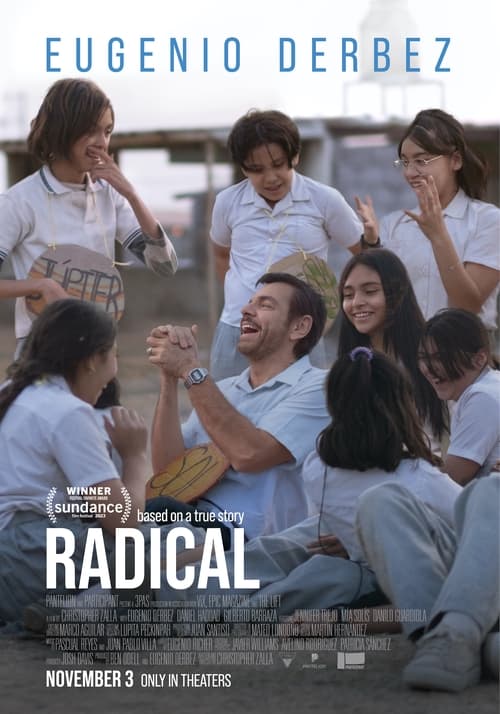
Radical - Review
Radical: A Spark of Hope in the Darkness - A Movie Review
In a world saturated with superhero spectacles and CGI-laden blockbusters, it's easy to forget the power of a simple, human story. Radical, a 2023 drama directed by Christopher Zalla, dares to strip away the artifice and present a raw, unflinching look at the challenges faced by children in a marginalized community, and the transformative potential of one teacher who refuses to give up on them. More than just a feel-good inspirational tale, Radical is a potent reminder of the importance of education, empathy, and the unwavering belief in the potential of every individual, regardless of their circumstances. Prepare to be moved, challenged, and ultimately, inspired.
Plot Summary: A Fight for Potential
The film is set in Matamoros, Mexico, a border town grappling with poverty, violence, and a deep-seated sense of hopelessness. At the heart of the story is the José Urbina López Elementary School, a dilapidated institution struggling to provide even the most basic education to its students. Enter Sergio Juárez Correa (Eugenio Derbez), a new teacher with a radical (pun intended) approach to pedagogy. He rejects the traditional rote memorization methods, opting instead for a student-centered, inquiry-based learning environment. He encourages critical thinking, creativity, and self-discovery, empowering his students to take ownership of their education.
Sergio's unconventional methods are met with resistance from the school administration, who are more concerned with maintaining order and meeting standardized testing requirements. However, Sergio perseveres, believing that his students deserve more than just a passing grade. He sees the potential within them, even in those who are considered "troublemakers" or "slow learners." He connects with them on a personal level, understanding their individual struggles and tailoring his approach to their specific needs.
The film primarily focuses on three students: Paloma (Jennifer Trejo), a brilliant girl with dreams of becoming an astronaut, whose home life is overshadowed by poverty and her father's scavenging for scrap metal; Nico (Danilo Guardiola), a young boy caught up in the dangerous world of drug trafficking, forced to make impossible choices to survive; and Lupe (Mia Fernanda Solis), a quiet and observant girl struggling with anxiety and a lack of confidence. Through Sergio's guidance and encouragement, these students begin to unlock their potential, discovering their passions and finding their voices.
As the school year progresses, Sergio faces numerous challenges, both inside and outside the classroom. He must navigate the bureaucratic obstacles imposed by the administration, contend with the societal pressures that threaten to derail his students' progress, and confront his own personal doubts and insecurities. The climax of the film revolves around the national standardized test, which serves as a crucial test of Sergio's methods and the students' abilities. The results of the test will determine not only the future of the school but also the fate of Sergio's unconventional approach to education.
Character Analysis: Beyond Stereotypes
Radical excels in its character development, presenting nuanced and relatable individuals who defy easy categorization.
Sergio Juárez Correa (Eugenio Derbez)
Eugenio Derbez delivers a career-defining performance as Sergio, a teacher who is both idealistic and flawed. He is not portrayed as a saintly figure but rather as a complex individual struggling to make a difference in a broken system. He is passionate and dedicated but also prone to frustration and self-doubt. Derbez imbues Sergio with a genuine warmth and vulnerability, making him a character that audiences can easily connect with. His comedic timing, honed through years of comedic roles, is subtly employed to lighten the mood in moments of intense drama. Derbez masterfully conveys Sergio's inner turmoil, his unwavering belief in his students, and his determination to fight for their future.
Paloma (Jennifer Trejo)
Jennifer Trejo shines as Paloma, a young girl with an insatiable thirst for knowledge and a boundless imagination. Despite the hardships she faces at home, she remains optimistic and determined to achieve her dreams. Trejo portrays Paloma with a remarkable maturity and resilience, capturing the character's intelligence, vulnerability, and unwavering spirit. Her performance is particularly poignant in scenes where she struggles to reconcile her academic aspirations with the harsh realities of her environment.
Nico (Danilo Guardiola)
Danilo Guardiola delivers a powerful performance as Nico, a young boy forced to navigate the treacherous world of drug trafficking. He is torn between his loyalty to his family and his desire for a better life. Guardiola portrays Nico with a quiet intensity, conveying the character's inner conflict and the weight of his responsibilities. His performance is a stark reminder of the devastating impact of poverty and violence on children.
Lupe (Mia Fernanda Solis)
Mia Fernanda Solis portrays Lupe with a delicate sensitivity, capturing the character's anxiety and lack of confidence. Lupe's journey is one of self-discovery, as she learns to overcome her fears and embrace her potential. Solis's performance is subtle yet impactful, highlighting the importance of nurturing and encouragement in helping children overcome their insecurities.
The supporting characters, including the school principal, the other teachers, and the students' parents, are also well-developed and contribute to the film's overall authenticity. They represent the various perspectives and challenges that exist within the community, adding depth and complexity to the narrative.
Direction and Cinematography: Capturing the Essence of Matamoros
Christopher Zalla's direction is masterful, creating a film that is both emotionally resonant and visually compelling. He avoids sentimentality, opting instead for a realistic portrayal of the challenges faced by the characters. He skillfully balances the dramatic moments with moments of levity, creating a film that is both heartbreaking and uplifting. Zalla's direction is particularly effective in capturing the atmosphere of Matamoros, conveying the sense of poverty, violence, and hopelessness that permeates the community. He uses long takes and close-ups to immerse the viewer in the characters' experiences, allowing them to feel their pain, their joy, and their hope.
The cinematography, by Mateo Londono, is stunning, capturing the beauty and the harshness of the Mexican landscape. He uses natural light to create a sense of realism, and his compositions are carefully crafted to convey the emotions of the characters. The camera often lingers on the faces of the students, capturing their expressions of curiosity, determination, and despair. The use of color is also effective, with the vibrant colors of the Mexican culture contrasting with the drabness of the school and the surrounding environment. The cinematography enhances the film's overall emotional impact, creating a visual experience that is both beautiful and haunting.
Performances: A Triumph of Authenticity
As mentioned earlier, Eugenio Derbez delivers a career-defining performance as Sergio. His portrayal of the unconventional teacher is both heartwarming and believable. The child actors, particularly Jennifer Trejo, Danilo Guardiola, and Mia Fernanda Solis, are equally impressive, delivering authentic and emotionally resonant performances. Their performances are a testament to Zalla's ability to elicit natural and nuanced performances from his cast. The supporting actors also contribute to the film's overall authenticity, creating a believable and engaging ensemble.
The performances are not just about acting; they are about embodying the characters and their experiences. The actors immerse themselves in their roles, conveying the characters' emotions with a raw and honest intensity. Their performances are a major reason why Radical is such a powerful and moving film.
Themes and Messages: Education, Hope, and the Power of Potential
Radical explores several important themes, including the importance of education, the power of hope, and the potential that lies within every individual. The film argues that education is not just about memorizing facts and passing tests; it is about fostering critical thinking, creativity, and self-discovery. It is about empowering students to take ownership of their education and to become active participants in their own learning. The film also highlights the importance of empathy and understanding in education. Sergio's success is due in large part to his ability to connect with his students on a personal level, understanding their individual struggles and tailoring his approach to their specific needs.
The film also explores the theme of hope in the face of adversity. Despite the challenges they face, the characters in Radical never give up on their dreams. They believe in the power of education to transform their lives and to create a better future for themselves. The film is a testament to the resilience of the human spirit and the ability to find hope even in the darkest of times.
Ultimately, Radical is a film about the potential that lies within every individual, regardless of their circumstances. The film argues that every child has the potential to succeed, if given the opportunity and the support they need. It is a call to action, urging viewers to invest in education and to believe in the power of human potential.
Comparison to Other Films and Works
Radical shares thematic similarities with other films that explore the transformative power of education, such as Stand and Deliver (1988), Dead Poets Society (1989), and Freedom Writers (2007). Like these films, Radical features a dedicated teacher who challenges the status quo and inspires their students to reach their full potential. However, Radical distinguishes itself by its realistic portrayal of the challenges faced by students in a marginalized community. The film does not shy away from depicting the poverty, violence, and systemic inequalities that affect the characters' lives. This realism adds a layer of authenticity and urgency to the film's message.
Eugenio Derbez, known primarily for his comedic roles, delivers a performance that is a departure from his previous work. While he has demonstrated dramatic range in films like Instructions Not Included (2013), Radical showcases a new level of depth and nuance in his acting. His portrayal of Sergio is both heartwarming and believable, proving that he is capable of tackling complex and challenging roles.
Christopher Zalla's previous work, including his debut film Sangre de mi Sangre (2007), also explores themes of immigration, poverty, and the challenges faced by marginalized communities. Radical builds upon these themes, offering a more optimistic and hopeful perspective on the potential for change.
Positive Aspects and Constructive Criticism
Positive Aspects:
- Powerful and Moving Story: The film's narrative is both inspiring and heartbreaking, leaving a lasting impression on the viewer.
- Exceptional Performances: The cast delivers outstanding performances, particularly Eugenio Derbez and the child actors.
- Realistic Portrayal: The film accurately depicts the challenges faced by students in a marginalized community, avoiding sentimentality and cliché.
- Thought-Provoking Themes: The film explores important themes about education, hope, and the power of human potential.
- Stunning Cinematography: The film's visuals are both beautiful and haunting, enhancing the overall emotional impact.
Constructive Criticism:
- Predictable Narrative Beats: While the story is compelling, it follows a somewhat predictable formula for inspirational teacher dramas. Some viewers might find the plot points familiar.
- Simplified Solutions: The film occasionally simplifies the complex challenges faced by the characters, suggesting that the problems can be solved through education alone. While education is undoubtedly important, it is not a panacea for all societal ills.
- Limited Exploration of Systemic Issues: While the film acknowledges the systemic inequalities that affect the characters' lives, it could have delved deeper into the root causes of these problems.
Conclusion and Rating
Radical is a powerful and moving film that will stay with you long after the credits roll. It is a testament to the transformative power of education, the importance of hope, and the potential that lies within every individual. While the film has its flaws, its strengths far outweigh its weaknesses. Eugenio Derbez delivers a career-defining performance, and the child actors are equally impressive. Christopher Zalla's direction is masterful, and the cinematography is stunning. Radical is a film that deserves to be seen and discussed, a reminder of the importance of investing in education and believing in the power of human potential.
Rating: 9/10