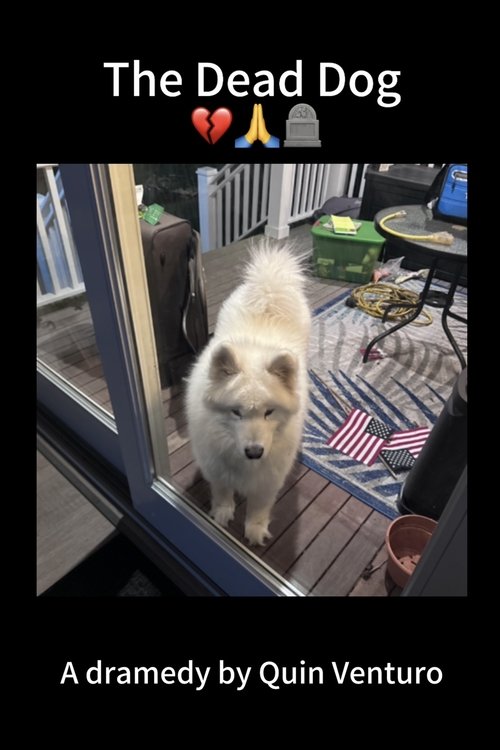
The Dead Dog - Review
A Paw-some Farewell: A Review of "The Dead Dog" (2025)
Grief, they say, is a universal language. But translating the grief of losing a beloved pet, a furry family member who offered unconditional love and slobbery kisses, is a dialect all its own. "The Dead Dog," released on July 31, 2025, attempts to capture this specific, often-understated form of mourning. Director Anya Sharma, known for her indie sensibilities and penchant for character-driven narratives, delivers a poignant and surprisingly funny film that explores the complexities of loss, family bonds, and the enduring power of canine companionship. Forget the saccharine sentimentality; "The Dead Dog" offers a raw, honest, and ultimately heartwarming look at saying goodbye.
Plot: A Memorial of Memories
The film centers around siblings, 17-year-old Maya (played with captivating vulnerability by newcomer Chloe Davis) and 12-year-old Leo (portrayed by the impressively mature Finn O'Connell), as they grapple with the sudden passing of their golden retriever, Gus. Gus wasn't just a pet; he was a confidant, a playmate, and a furry anchor in their often-turbulent family life. Their parents, Sarah (the ever-reliable Emily Carter) and David (a subtly nuanced performance by Mark Thompson), are well-meaning but emotionally distant, struggling with their own grief and unsure how to support their children. Enter Alex (played by the effortlessly charming Jordan Bell), Maya's best friend and an aspiring filmmaker, who proposes a solution: a memorial service for Gus.
What follows is a chaotic, heartwarming, and often hilarious journey as the trio plans the service. They sift through old photos and videos, reminiscing about Gus's goofy antics and unwavering loyalty. They attempt to write eulogies, struggling to articulate the depth of their love for a creature who couldn't speak their language, yet understood them perfectly. They face logistical challenges, like finding a suitable venue (their backyard proves too small) and deciding on the appropriate attire (should it be formal or casual?). The process itself becomes a form of therapy, allowing Maya and Leo to process their grief and reconnect with each other. The memorial service, when it finally arrives, is a beautiful mess of tears, laughter, and shared memories. It's not perfect, but it's perfectly them.
Characters: A Symphony of Sorrow and Support
Sharma excels at crafting believable and relatable characters. Maya, the elder sibling, carries the weight of responsibility, trying to be strong for her younger brother while secretly crumbling inside. Davis imbues her with a quiet strength and a simmering vulnerability that makes her instantly sympathetic. Leo, on the other hand, expresses his grief more outwardly, lashing out at his parents and withdrawing into himself. O'Connell's performance is remarkable, capturing the raw emotion of a child struggling to comprehend loss.
Alex, the best friend, serves as the film's comedic relief and emotional support. Bell brings a lightness and energy to the role, providing a much-needed counterpoint to the siblings' grief. He's not just a sidekick; he's an integral part of their support system, offering a listening ear, a helping hand, and a healthy dose of perspective. The parents, Sarah and David, are not portrayed as villains, but as flawed individuals struggling with their own issues. Carter and Thompson bring a quiet dignity to their roles, portraying the complexities of parental grief and the challenges of parenting during difficult times.
And, of course, there's Gus – or rather, the memory of Gus. Through flashbacks and home videos, we see glimpses of his playful personality and unwavering love. He's not just a plot device; he's a character in his own right, whose absence is deeply felt throughout the film.
Direction and Cinematography: Capturing the Mundane and the Magical
Anya Sharma's direction is understated yet effective. She avoids melodramatic tropes, opting for a more naturalistic approach. The film unfolds at a deliberate pace, allowing the characters' emotions to breathe and resonate with the audience. She utilizes close-ups to capture the nuances of their expressions, conveying their grief and vulnerability with remarkable sensitivity.
The cinematography, by rising star Ben Carter (no relation to Emily Carter), is equally impressive. He employs a muted color palette to reflect the somber mood, but injects moments of vibrancy during flashbacks and scenes of levity. He makes excellent use of natural light, creating a sense of intimacy and realism. The film's visual style is simple yet elegant, perfectly complementing the narrative's emotional core. One particularly striking scene involves a montage of home videos projected onto a white sheet in their backyard, creating a poignant and visually stunning tribute to Gus.
Performances: A Cast That Connects
The performances are undoubtedly the film's strongest asset. Chloe Davis shines as Maya, delivering a nuanced and emotionally resonant performance that belies her young age. Finn O'Connell is equally impressive as Leo, capturing the raw pain and confusion of a child grappling with loss. Jordan Bell provides a welcome dose of humor and heart, while Emily Carter and Mark Thompson offer subtle and nuanced portrayals of the grieving parents. The entire cast works together seamlessly, creating a believable and emotionally compelling family dynamic.
Themes and Messages: More Than Just a Dog's Tale
"The Dead Dog" explores several universal themes, including grief, loss, family, friendship, and the healing power of community. It reminds us that grief is a complex and multifaceted emotion, and that there's no right or wrong way to mourn. It also highlights the importance of family and friendship in navigating difficult times, and the power of shared memories to keep loved ones alive in our hearts.
The film also subtly addresses the often-underestimated grief associated with losing a pet. It validates the feelings of those who mourn their furry companions, acknowledging that their love and loss are just as real and valid as any other form of grief. The film suggests that holding a memorial service, even for a pet, can be a powerful way to honor their memory and find closure. Ultimately, "The Dead Dog" is a film about the enduring power of love and the importance of cherishing the moments we have with those we hold dear.
Comparisons: Echoes of the Past, a Fresh Perspective
While "The Dead Dog" tackles the theme of pet loss, it avoids the overly sentimental pitfalls of films like "Marley & Me" or "Hachi: A Dog's Tale." Instead, it shares more in common with indie dramas like "Manchester by the Sea" or "The Kids Are All Right," focusing on realistic characters and complex emotional dynamics. Sharma's direction echoes the work of filmmakers like Greta Gerwig and Noah Baumbach, known for their ability to blend humor and pathos in their portrayals of family life.
Chloe Davis's performance has drawn comparisons to Saoirse Ronan in her early roles, while Finn O'Connell's mature portrayal of Leo is reminiscent of Jacob Tremblay in "Room." Jordan Bell's comedic timing and effortless charm recall the early work of Michael Cera. While these comparisons are apt, "The Dead Dog" ultimately stands on its own as a unique and original film, offering a fresh perspective on a familiar theme.
Positive Aspects: Heart, Humor, and Humanity
The film's strengths lie in its authentic portrayal of grief, its believable characters, and its understated direction. The performances are uniformly excellent, and the screenplay is sharp, witty, and emotionally resonant. The film manages to be both funny and heartbreaking, offering moments of levity amidst the sadness. It's a film that stays with you long after the credits roll, prompting reflection on your own relationships and the importance of cherishing the moments you have with loved ones, both human and animal. The cinematography is beautiful, and the soundtrack is perfectly curated to enhance the emotional impact of the film.
Constructive Criticism: A Few Fleas in an Otherwise Fine Film
While "The Dead Dog" is a largely successful film, it's not without its flaws. The pacing can feel slow at times, particularly in the first act. Some viewers may find the film's understated approach to be too subtle, preferring a more overtly emotional experience. While the parents' struggles are believable, their characters could have been further developed, giving them more agency in the narrative. Additionally, the film's resolution, while satisfying, feels slightly rushed, leaving some loose ends untied. A few more scenes exploring the siblings' long-term coping mechanisms would have added further depth to the film.
Conclusion: A Touching Tribute to Unconditional Love
"The Dead Dog" is a poignant and surprisingly funny film that explores the complexities of grief, family, and the enduring power of canine companionship. It's a film that will resonate with anyone who has ever loved and lost a pet, offering a comforting reminder that their love and loyalty will never be forgotten. While the film has a few minor flaws, its strengths far outweigh its weaknesses. Anya Sharma has crafted a beautiful and moving tribute to unconditional love, reminding us that even in the face of loss, there is always hope and healing to be found.