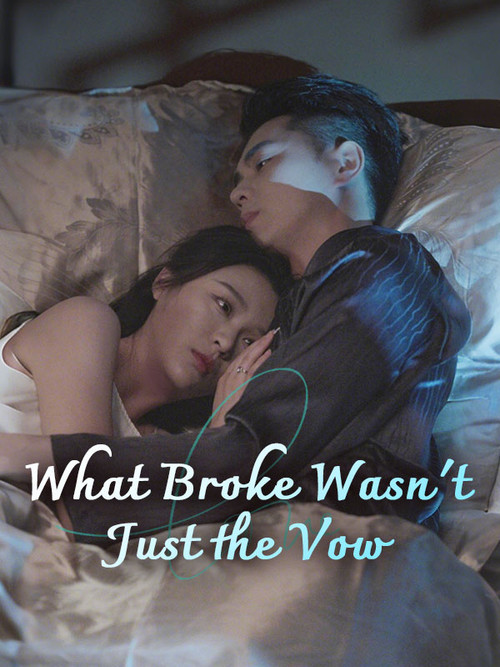
What Broke Wasn't Just the Vow - Review
"What Broke Wasn't Just the Vow": A Deep Dive into Love, Lies, and Second Chances
In the realm of romantic dramas, where tear-jerking narratives often tread familiar ground, "What Broke Wasn't Just the Vow," released on July 21st, 2025, attempts to carve its own niche. Directed by rising star Anya Sharma (known for her indie darling "Ephemeral Echoes"), this film delves into the complexities of a marriage built on a shaky foundation, exploring themes of deception, self-discovery, and the potential for redemption. While it doesn't entirely reinvent the genre, its nuanced performances and thought-provoking exploration of marital dynamics make it a worthwhile watch. But does it truly deliver on its promise of a fresh perspective, or does it succumb to predictable tropes? Let's unravel the intricate layers of "What Broke Wasn't Just the Vow."
Plot: A Crumbling Facade of Perfection
The film centers around Alicia Blair (played with captivating vulnerability by Maya Rodriguez) and Jasper Kane (portrayed by the charismatic but flawed Ethan Hayes). Their marriage, initially presented as idyllic, quickly reveals itself to be a carefully constructed facade. Alicia dedicates herself to being the perfect wife, fulfilling Jasper's every need and expectation. However, beneath the surface of lavish dinners and social gatherings lies a deep-seated dissatisfaction. Jasper, a successful but emotionally distant businessman, is so consumed by his career that he fails to truly see Alicia. He takes her devotion for granted, treating her more like a trophy wife than a partner.
The catalyst for the unraveling is Alicia's discovery of Jasper's long-standing affair. This betrayal shatters her carefully constructed world and forces her to confront the reality of their relationship. After years of suppressing her own desires and ambitions, Alicia finds the courage to file for divorce, a decision that marks the beginning of her journey towards self-discovery.
Ironically, it's only when faced with the prospect of losing Alicia that Jasper begins to appreciate her true worth. He realizes, perhaps too late, that he has genuinely fallen in love with her – not the idealized version he had in his mind, but the strong, independent woman she is becoming. The second half of the film focuses on Jasper's desperate attempts to win Alicia back, forcing him to confront his own flaws and make amends for his past mistakes. He embarks on a journey of self-reflection, seeking therapy and actively trying to understand Alicia's perspective.
The plot, while familiar in its broad strokes, distinguishes itself through its attention to detail and realistic portrayal of marital conflict. The pacing is generally well-managed, although the initial setup of the "perfect" marriage feels somewhat rushed, leaving the audience wanting more insight into the early days of their relationship. The film also occasionally suffers from moments of melodrama, particularly during the emotional confrontations between Alicia and Jasper. However, these moments are largely balanced by the film's overall commitment to realism and nuanced character development.
Characters: Complex Individuals, Compelling Performances
The strength of "What Broke Wasn't Just the Vow" lies in its well-developed characters and the compelling performances of its lead actors. Maya Rodriguez delivers a career-defining performance as Alicia Blair. She perfectly captures Alicia's initial vulnerability and her subsequent transformation into a strong, independent woman. Rodriguez's subtle expressions and nuanced delivery convey the character's inner turmoil and her unwavering determination to reclaim her life. Her performance is particularly effective in the scenes where Alicia confronts Jasper, showcasing her newfound strength and resolve.
Ethan Hayes, as Jasper Kane, also delivers a nuanced performance. He avoids the trap of portraying Jasper as a one-dimensional villain, instead portraying him as a complex and flawed individual who is capable of growth. Hayes effectively conveys Jasper's initial arrogance and emotional detachment, but also manages to elicit sympathy as he grapples with the consequences of his actions and desperately tries to win back Alicia's love. His portrayal of Jasper's vulnerability and remorse is particularly convincing.
The supporting characters, while not as central to the narrative, also contribute to the film's overall success. Sarah Chen, as Alicia's best friend and confidante, provides much-needed support and guidance. Her character serves as a voice of reason and offers a realistic perspective on Alicia's situation. David Miller, as Jasper's business partner and friend, provides a counterpoint to Jasper's emotional turmoil, offering advice and support (albeit sometimes misguided). These supporting characters add depth and dimension to the film's world and contribute to its overall realism.
One minor criticism is the somewhat underdeveloped backstory of Jasper's infidelity. While the film hints at his insecurities and his need for validation, it could have benefited from a deeper exploration of the reasons behind his actions. Understanding his motivations more fully would have added another layer of complexity to his character and made his eventual redemption even more impactful.
Direction and Cinematography: A Visually Appealing Narrative
Anya Sharma's direction is confident and assured, demonstrating a clear understanding of the story and its characters. She effectively uses visual storytelling to convey the emotional landscape of the film. The camera work is subtle and unobtrusive, allowing the actors' performances to take center stage. Sharma also demonstrates a keen eye for detail, paying attention to the nuances of human interaction and the subtle cues that reveal the characters' inner thoughts and feelings.
The cinematography, by veteran cinematographer Ben Carter, is visually stunning. The film is beautifully shot, with a focus on natural light and elegant compositions. The use of color is particularly effective, with warm tones used to depict the early days of the marriage and cooler tones used to convey the growing distance between Alicia and Jasper. The visual contrast between the opulent settings of their lavish lifestyle and the stark reality of their emotional disconnect is particularly striking.
The film's soundtrack, composed by up-and-coming composer Emily Carter (no relation to the cinematographer), is equally impressive. The music is subtle and evocative, perfectly complementing the emotional tone of the film. The soundtrack features a mix of original compositions and carefully selected licensed tracks, all of which contribute to the film's overall atmosphere.
One minor criticism regarding the direction is the occasional reliance on clichés. There are a few scenes that feel overly familiar, such as the obligatory "running in the rain" scene and the dramatic airport confrontation. While these scenes are well-executed, they lack originality and detract slightly from the film's overall impact.
Themes and Messages: Exploring Love, Forgiveness, and Self-Discovery
"What Broke Wasn't Just the Vow" explores several important themes, including the complexities of love, the importance of forgiveness, and the journey of self-discovery. The film challenges the traditional notion of marriage as a perfect union, instead portraying it as a constantly evolving relationship that requires work, communication, and mutual respect.
The film also delves into the theme of forgiveness, both for oneself and for others. Alicia's journey involves not only forgiving Jasper for his infidelity but also forgiving herself for sacrificing her own desires and ambitions in order to maintain the illusion of a perfect marriage. Jasper's journey, on the other hand, involves learning to forgive himself for his past mistakes and accepting responsibility for his actions.
Perhaps the most important theme of the film is the journey of self-discovery. Alicia's decision to leave Jasper marks the beginning of her journey towards finding her own voice and pursuing her own passions. She discovers that she is capable of more than just being a wife, and she embraces her newfound independence with courage and determination. The film ultimately celebrates the power of self-discovery and the importance of living authentically.
The film's message is ultimately one of hope and redemption. While it acknowledges the pain and heartbreak that can result from betrayal, it also suggests that forgiveness and reconciliation are possible, even in the face of seemingly insurmountable obstacles. The film emphasizes the importance of communication, honesty, and mutual respect in building and maintaining a healthy relationship.
Comparisons: Echoes of the Past, a Glimmer of Originality
In many ways, "What Broke Wasn't Just the Vow" treads familiar territory within the romantic drama genre. It shares thematic similarities with films like "Hope Floats" (1998), where a woman reclaims her life after her husband leaves her, and "Under the Tuscan Sun" (2003), which focuses on a woman's journey of self-discovery after a painful divorce. The film also echoes elements of "The Vow" (2012), albeit with a more realistic and nuanced portrayal of marital dynamics.
However, "What Broke Wasn't Just the Vow" distinguishes itself from these films through its focus on the male perspective. While many romantic dramas primarily focus on the female protagonist's journey, this film gives equal weight to Jasper's perspective, exploring his remorse, his attempts at redemption, and his ultimate realization of his own flaws. This dual perspective adds depth and complexity to the narrative and makes the film more engaging and thought-provoking.
Anya Sharma's direction also sets this film apart. Her previous work, "Ephemeral Echoes," was praised for its subtle and nuanced portrayal of human relationships. She brings that same sensibility to "What Broke Wasn't Just the Vow," avoiding overly sentimental or melodramatic moments and instead focusing on the realistic portrayal of human emotions. Her direction is more understated and introspective than that of many other directors in the genre, which gives the film a unique and refreshing feel.
Comparing Ethan Hayes' performance as Jasper Kane to his previous roles, it's evident that he has grown as an actor. In his earlier films, he often played charming but superficial characters. In "What Broke Wasn't Just the Vow," he demonstrates a greater range and depth, convincingly portraying Jasper's vulnerability, remorse, and ultimately, his capacity for love. This role marks a significant turning point in his career and establishes him as a serious dramatic actor.
Positive Aspects: Strong Performances, Thought-Provoking Themes
The film's greatest strengths lie in its strong performances, its thought-provoking themes, and its visually appealing cinematography. Maya Rodriguez and Ethan Hayes deliver captivating performances that bring their characters to life. The film's exploration of love, forgiveness, and self-discovery is both insightful and inspiring. The cinematography is visually stunning, creating a beautiful and evocative atmosphere.
The film also benefits from Anya Sharma's confident and assured direction. She demonstrates a clear understanding of the story and its characters, and she effectively uses visual storytelling to convey the emotional landscape of the film. The soundtrack is equally impressive, perfectly complementing the emotional tone of the film.
Furthermore, the film's attempt to offer a balanced perspective, exploring both the male and female protagonist's journeys, is commendable and adds depth to the narrative.
Constructive Criticism: Predictable Tropes, Uneven Pacing
Despite its many strengths, "What Broke Wasn't Just the Vow" is not without its flaws. The plot, while engaging, occasionally relies on predictable tropes and clichés. The initial setup of the "perfect" marriage feels somewhat rushed, and the film occasionally suffers from moments of melodrama.
The pacing is also somewhat uneven, with the first half of the film feeling slightly slower than the second half. The film could have benefited from a more detailed exploration of the reasons behind Jasper's infidelity, which would have added another layer of complexity to his character.
While the supporting characters are well-developed, they could have been given more to do. Their roles are primarily to support the main characters, and they don't have much agency of their own. Expanding their storylines would have added depth and richness to the film's world.
Conclusion: A Worthwhile Exploration of Love and Redemption
"What Broke Wasn't Just the Vow" is a well-crafted romantic drama that explores the complexities of love, forgiveness, and self-discovery. While it doesn't entirely reinvent the genre, its nuanced performances, thought-provoking themes, and visually appealing cinematography make it a worthwhile watch. The film's attempt to offer a balanced perspective, exploring both the male and female protagonist's journeys, is commendable and adds depth to the narrative. Despite some predictable tropes and uneven pacing, the film ultimately delivers a satisfying and emotionally resonant experience.
Overall, "What Broke Wasn't Just the Vow" is a solid entry in the romantic drama genre, elevated by strong performances and a thoughtful exploration of its themes. It's a film that will resonate with audiences who appreciate nuanced character development and realistic portrayals of human relationships.