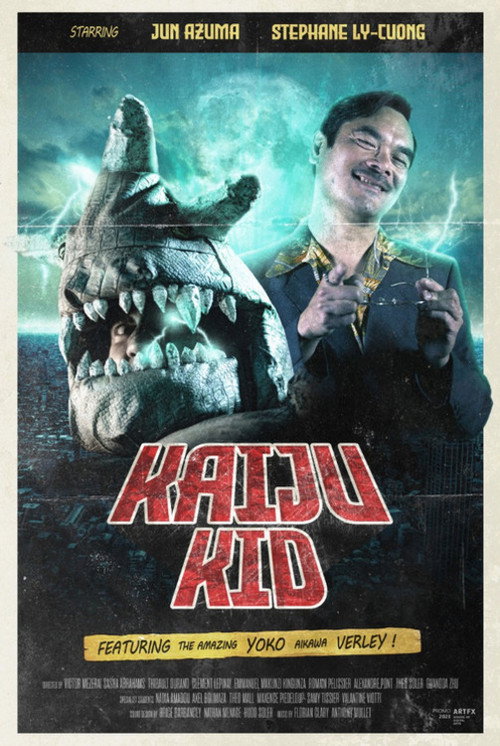
Kaiju Kid - Review
Kaiju Kid: A Hilariously Heartfelt Roar of Redemption
Kaiju Kid, released on July 11th, 2025, isn't just another monster movie; it's a surprisingly poignant and laugh-out-loud funny exploration of ambition, perseverance, and the unexpected dignity found in the most outlandish of professions. Director Akira Sato, known for his previous works like the critically acclaimed drama "Silent Echoes" and the quirky comedy "Ramen Rhapsody," takes a bold leap into the world of tokusatsu, and the result is a delightful and deeply human story that transcends its genre trappings. Forget the city-stomping spectacle you might expect; Kaiju Kid focuses on the man inside the monster, and his desperate, often hilarious, journey to reclaim his fleeting moment of glory.
Plot: From Zero to Almost-Hero (and Back Again)
The film opens in 1974 Tokyo, a vibrant backdrop of post-war reconstruction and burgeoning pop culture. We're immediately introduced to Hiroshi (played with endearing vulnerability by Kenji Tanaka), a struggling actor whose resume consists mostly of bit parts and humiliating commercials. His luck seemingly changes when he lands the role of Krokodor, a fearsome kaiju terrorizing a miniature cityscape. However, Hiroshi's performance is… less than stellar. He's clumsy, unconvincing, and ultimately, a complete disaster. After a grueling and comical day of shooting, punctuated by the director's increasingly exasperated shouts, Hiroshi is unceremoniously fired.
Devastated and humiliated, Hiroshi wallows in self-pity, drowning his sorrows in cheap sake and lamenting his failed dreams. But a spark of hope ignites when he learns that auditions are being held to find his replacement. Fueled by a potent cocktail of wounded pride and a desperate desire to prove himself, Hiroshi vows to win back the role of Krokodor. He embarks on a rigorous training regimen, attempting to master the art of kaiju movement and menace. This is where the film truly shines, with a series of comedic montages showcasing Hiroshi's increasingly absurd training methods. He practices roaring in the shower, stomping through parks (much to the annoyance of picnicking families), and even seeks advice from a retired sumo wrestler, who offers cryptic pronouncements on the "inner beast."
However, Hiroshi's journey isn't just about physical transformation. He also grapples with his own insecurities and self-doubt. He questions his talent, his worth, and whether he's truly cut out for the demanding world of acting. Along the way, he encounters a colorful cast of characters who offer both encouragement and obstacles. There's Akari (Yumi Sato), a young and ambitious aspiring actress who sees potential in Hiroshi despite his obvious flaws. She becomes his unlikely training partner and confidante, offering him unwavering support and a much-needed dose of reality. Then there's Kenzo (Tetsuo Nakamura), the seasoned veteran actor who plays the heroic protagonist in the kaiju show. Kenzo initially dismisses Hiroshi as a joke, but gradually comes to respect his dedication and determination. The film skillfully weaves these supporting characters into Hiroshi's narrative, creating a rich and engaging ensemble cast.
The audition sequence itself is a masterclass in comedic timing and awkward hilarity. Hiroshi faces stiff competition from a diverse group of aspiring kaiju, each with their own unique (and often bizarre) interpretations of the role. He stumbles, he sweats, he almost sets the miniature cityscape on fire – but through it all, he refuses to give up. The climax of the film is not a grand battle between monsters, but a deeply personal and emotional moment of self-discovery for Hiroshi. He realizes that the role of Krokodor isn't just about stomping and roaring; it's about embodying a character, conveying emotion, and connecting with the audience. Whether he wins back the role or not becomes almost secondary to the profound transformation he undergoes throughout his journey.
Characters: More Than Just Rubber Suits
Kaiju Kid excels in its character development. Hiroshi is not simply a comedic buffoon; he's a deeply flawed but ultimately relatable character. Kenji Tanaka delivers a nuanced performance, capturing both the humor and the vulnerability of a man struggling to find his place in the world. His comedic timing is impeccable, but he also manages to convey the underlying sadness and desperation that drives Hiroshi's quest.
Akari, played by Yumi Sato, is a breath of fresh air. She's not just a romantic interest; she's a strong and independent character who provides Hiroshi with much-needed support and guidance. Her own ambitions and struggles are subtly explored, adding depth and complexity to her character. Tetsuo Nakamura as Kenzo, the veteran actor, provides a counterpoint to Hiroshi's naiveté. He initially appears jaded and cynical, but gradually reveals a hidden well of empathy and wisdom. The supporting cast is equally well-developed, each character contributing to the film's overall charm and emotional resonance.
Direction and Cinematography: A Love Letter to Tokusatsu
Akira Sato's direction is masterful. He seamlessly blends comedy, drama, and a touch of nostalgia, creating a film that is both entertaining and thought-provoking. He pays homage to the tokusatsu genre without resorting to parody or cheap imitation. The film's visual style is vibrant and energetic, capturing the colorful and chaotic atmosphere of 1970s Tokyo. The cinematography, by Hiroki Ito, is particularly noteworthy. He uses a variety of techniques to create a sense of scale and grandeur, even within the confines of the miniature cityscape. The action sequences are well-choreographed and visually engaging, capturing the energy and excitement of classic kaiju films. The film also makes clever use of archival footage and behind-the-scenes glimpses of the tokusatsu production process, adding a layer of authenticity and historical context.
Performances: Tanaka Shines Brightly
As mentioned earlier, Kenji Tanaka's performance as Hiroshi is the heart and soul of the film. He brings a perfect balance of humor and pathos to the role, making Hiroshi both relatable and endearing. Yumi Sato delivers a strong and nuanced performance as Akari, providing a grounded and realistic counterpoint to Hiroshi's eccentricities. Tetsuo Nakamura is excellent as Kenzo, the seasoned veteran actor, conveying both his cynicism and his hidden empathy. The supporting cast is uniformly strong, each actor bringing their own unique talents to the film. The chemistry between the actors is palpable, creating a sense of camaraderie and authenticity.
Themes and Messages: Finding Dignity in the Absurd
Kaiju Kid explores several important themes, including the pursuit of dreams, the importance of perseverance, and the unexpected dignity found in the most unconventional of professions. The film challenges the notion of success and failure, suggesting that true fulfillment comes not from achieving external goals, but from embracing one's passions and pursuing them with dedication and integrity. It also celebrates the power of human connection, highlighting the importance of friendship, mentorship, and support in overcoming adversity.
The film's message is ultimately one of hope and resilience. It reminds us that even in the face of rejection and disappointment, it's possible to find meaning and purpose in life. It also suggests that even the most seemingly insignificant roles can have a profound impact on others. Hiroshi's journey to become Krokodor is not just about personal ambition; it's about contributing to something larger than himself, entertaining audiences, and bringing joy to their lives. The film subtly critiques the often-harsh and unforgiving nature of the entertainment industry, while simultaneously celebrating the passion and dedication of the people who work within it.
Comparisons: Echoes of the Past, a Fresh Perspective
While Kaiju Kid is a unique film in its own right, it draws inspiration from a variety of sources. It shares thematic similarities with films like "Mr. Mom" (1983) and "School of Rock" (2003), which explore the themes of personal transformation and finding unexpected fulfillment in unconventional roles. It also pays homage to classic tokusatsu films like "Godzilla" (1954) and "Ultraman" (1966), capturing the spirit of those films while offering a fresh and contemporary perspective.
Akira Sato's direction is reminiscent of the works of Yasujiro Ozu and Akira Kurosawa, particularly in his use of subtle humor and his focus on human relationships. Kenji Tanaka's performance is reminiscent of the comedic stylings of Toshiro Mifune, but with a more vulnerable and relatable edge.
Positive Aspects: A Monster of a Good Time
Kaiju Kid is a thoroughly enjoyable film on many levels. Its strengths include: * Compelling Story: The plot is engaging, well-paced, and full of unexpected twists and turns. * Well-Developed Characters: The characters are complex, relatable, and beautifully acted. * Masterful Direction: Akira Sato's direction is both stylish and insightful. * Stunning Cinematography: Hiroki Ito's cinematography captures the vibrant atmosphere of 1970s Tokyo. * Excellent Performances: The entire cast delivers outstanding performances, particularly Kenji Tanaka as Hiroshi. * Thematic Depth: The film explores important themes of ambition, perseverance, and the search for meaning. * Humor and Heart: The film is both laugh-out-loud funny and deeply moving. * Nostalgia Done Right: The film pays homage to the tokusatsu genre without resorting to cheap imitation or parody.
Constructive Criticism: Minor Flaws in a Giant's Footprint
While Kaiju Kid is a fantastic film, it's not without its minor flaws: * Pacing Issues: The second act occasionally drags slightly, particularly during the training montages. While these scenes are humorous, they could have been trimmed down to maintain a more consistent pace. * Predictable Elements: Some of the plot points are somewhat predictable, particularly the romantic subplot between Hiroshi and Akari. * Underdeveloped Antagonist: While Kenzo serves as a kind of antagonist initially, his character arc is somewhat rushed, and his motivations could have been explored in greater depth. * Limited Kaiju Action: Those expecting a monster-mash extravaganza might be disappointed. The focus is squarely on Hiroshi's personal journey, and the actual kaiju action is relatively limited. However, this is arguably a strength of the film, as it allows the filmmakers to explore the human side of the tokusatsu genre.
Conclusion: A Must-See for Film Fans of All Stripes
Kaiju Kid is a delightful and surprisingly profound film that will appeal to a wide range of audiences. Whether you're a die-hard fan of tokusatsu, a lover of quirky comedies, or simply someone looking for a heartwarming and inspiring story, this film is sure to entertain and move you. Akira Sato has crafted a truly special film that celebrates the human spirit and reminds us that even in the most absurd of circumstances, it's possible to find meaning, purpose, and a whole lot of laughter.
Kaiju Kid is a resounding success, a film that roars with heart and humor. Don't miss it!