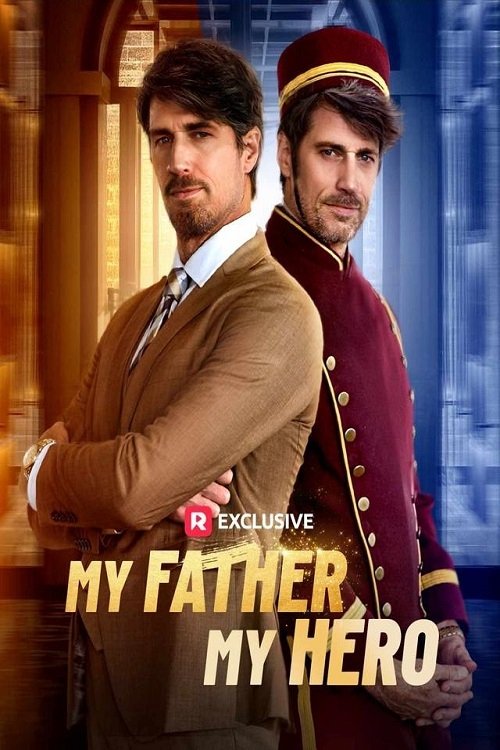
My Father, My Hero - Review
My Father, My Hero: A Redemption Story Wrapped in Corporate Intrigue
In a cinematic landscape often dominated by superhero spectacles and fantastical adventures, "My Father, My Hero," released on July 16th, 2025, offers a refreshing, albeit familiar, take on the classic amnesia trope. Director Anya Sharma, known for her character-driven dramas, crafts a compelling narrative of loss, redemption, and the rediscovery of familial bonds, set against the backdrop of corporate power struggles. While the premise might seem predictable, Sharma's nuanced direction, coupled with stellar performances, elevates the film beyond its genre conventions, making it a worthwhile watch for those seeking a thought-provoking and emotionally resonant experience.
Plot: A Fall From Grace and a Journey Back
The film centers around Warren Davis (played with captivating vulnerability by veteran actor Alistair Finch), the once-unassailable chairman of the Davis Group, a sprawling hospitality empire. In a dramatic opening sequence, Warren, during a heated argument on his yacht, falls overboard and suffers a severe head injury, resulting in complete amnesia. Was it an accident? Or was something more sinister at play? The film cleverly plants seeds of doubt early on, adding a layer of suspense to the unfolding drama.
Washing ashore with no memory of his past life, Warren is taken in by a kind-hearted local fisherman. He eventually finds work as a porter at the Grand Majestic Hotel, the flagship property of the Davis Group – the very hotel he founded. Here, the film's central conflict takes shape. Warren, now a nameless, unassuming employee, is subjected to the condescending treatment and outright disdain of his former colleagues, including his own son, Ethan Davis (portrayed with chilling ambition by newcomer Liam Hayes). Ethan, desperate to solidify his control over the Davis Group, views his father's disappearance as a fortunate opportunity and is ruthless in his pursuit of power.
The film masterfully portrays the stark contrast between Warren's past and present. We see flashbacks of his opulent lifestyle, his demanding personality, and his strained relationship with his family. These glimpses into the past serve to highlight the humbling experience Warren undergoes as he navigates the unfamiliar world of manual labor and faces the consequences of his past actions. As Warren slowly begins to piece together fragments of his memory, he also starts to connect with the people around him, forming genuine relationships based on mutual respect and understanding – something he had often neglected in his previous life.
The plot thickens as Warren's past begins to catch up with him. Whispers of his return circulate within the Davis Group, threatening Ethan's carefully constructed empire. A corporate investigation is launched, and Warren finds himself caught in a web of deceit and betrayal. The final act is a thrilling culmination of all the simmering tensions, culminating in a dramatic confrontation between father and son, where Warren must not only reclaim his identity but also confront the consequences of his past mistakes and fight for the future of his family.
Characters: Complexities and Compelling Performances
"My Father, My Hero" boasts a cast of richly developed characters, each with their own motivations and flaws. Alistair Finch delivers a career-defining performance as Warren Davis. He seamlessly transitions from the arrogant, detached chairman to the vulnerable, empathetic porter, capturing the inner turmoil of a man grappling with his lost identity. Finch's ability to convey both the strength and fragility of Warren is truly remarkable.
Liam Hayes shines as Ethan Davis, the ambitious and ruthless son. Hayes avoids portraying Ethan as a one-dimensional villain, instead, he imbues him with a sense of vulnerability and desperation. We see glimpses of the son who yearned for his father's approval, making his descent into ruthlessness all the more tragic. Ethan's actions are driven by a desire to prove himself, but his ambition ultimately blinds him to the true value of family and loyalty.
Supporting characters also add depth and nuance to the narrative. Sarah Chen (played by rising star Mei Lin), a compassionate housekeeper at the Grand Majestic, becomes Warren's confidante and friend. Lin brings warmth and authenticity to her role, providing a much-needed source of hope and kindness in Warren's life. Similarly, David Miller (played by veteran character actor James O'Connell), a long-time employee of the Davis Group who secretly harbors resentment towards Warren, adds a layer of moral ambiguity to the story. O'Connell's portrayal of David is nuanced and compelling, showcasing the complexities of loyalty and betrayal.
The casting choices are particularly strong, with each actor perfectly embodying their respective roles. The chemistry between Finch and Hayes is palpable, adding weight to the emotional core of the film. The supporting cast also delivers memorable performances, creating a believable and engaging ensemble.
Direction and Cinematography: A Visual Masterpiece
Anya Sharma's direction is masterful, skillfully weaving together the various threads of the narrative. She employs a measured pace, allowing the characters and their relationships to develop organically. Sharma's attention to detail is evident in every scene, from the opulent interiors of the Davis Group headquarters to the humble surroundings of Warren's new life. She uses flashbacks effectively, providing crucial context without disrupting the flow of the story.
The cinematography, helmed by the acclaimed Darius Khondji, is breathtaking. Khondji captures the beauty of the coastal setting with stunning visuals, contrasting the serene landscapes with the harsh realities of Warren's situation. The use of light and shadow is particularly effective in conveying the emotional state of the characters. The opulent settings of Warren's former life are bathed in warm, inviting light, while the scenes depicting his struggles as a porter are often shrouded in shadow, reflecting his isolation and despair.
The visual storytelling is further enhanced by the film's score, composed by the renowned Hans Zimmer. Zimmer's score is both evocative and understated, perfectly complementing the emotional tone of the film. The music swells during moments of high drama, underscoring the tension and suspense, while also providing moments of quiet reflection during Warren's personal journey of self-discovery.
Themes and Messages: Redemption, Family, and the Price of Success
"My Father, My Hero" explores several profound themes, most notably the themes of redemption, family, and the price of success. Warren's journey is ultimately a story of redemption. He must confront the consequences of his past actions and learn to value the things that truly matter in life. His amnesia serves as a catalyst for change, allowing him to shed his former arrogance and embrace a more humble and compassionate existence.
The film also examines the complex dynamics of family relationships. The strained relationship between Warren and Ethan is at the heart of the story. Ethan's resentment towards his father stems from a lack of attention and approval, leading him down a path of ambition and ruthlessness. The film suggests that true success lies not in material wealth or corporate power, but in the strength of familial bonds and the ability to forgive past transgressions.
Furthermore, the film subtly critiques the cutthroat world of corporate ambition. The Davis Group is portrayed as a place where loyalty is fleeting and betrayal is commonplace. The pursuit of power and wealth comes at a high price, often sacrificing personal relationships and ethical principles. The film suggests that true leadership is not about dominating others, but about inspiring them and fostering a sense of community.
Comparisons: Echoes of the Past, a Fresh Perspective
The premise of "My Father, My Hero" inevitably draws comparisons to other films that explore the amnesia trope, such as "Regarding Henry" and "The Majestic." However, Sharma's film distinguishes itself through its focus on corporate intrigue and the complex father-son relationship. Unlike "Regarding Henry," which centers on a lawyer's moral awakening, "My Father, My Hero" delves into the darker side of corporate power and the consequences of unchecked ambition.
In terms of Sharma's previous work, "My Father, My Hero" shares thematic similarities with her critically acclaimed film "The Inheritance," which also explored the dynamics of a wealthy family grappling with issues of legacy and betrayal. However, "My Father, My Hero" is a more ambitious and visually stunning film, showcasing Sharma's growth as a director.
Alistair Finch's performance in "My Father, My Hero" can be compared to his role in "The King's Ransom," where he played a ruthless businessman who ultimately finds redemption. However, Finch's portrayal of Warren Davis is more nuanced and vulnerable, showcasing his versatility as an actor.
Positive Aspects: A Triumph of Storytelling and Performance
"My Father, My Hero" is a triumph of storytelling and performance. Anya Sharma's direction is confident and assured, guiding the audience through a complex and emotionally resonant narrative. Alistair Finch delivers a career-defining performance, capturing the vulnerability and resilience of Warren Davis. The supporting cast is equally strong, adding depth and nuance to the story. The cinematography is breathtaking, and the score is both evocative and understated.
The film's exploration of themes such as redemption, family, and the price of success is both thought-provoking and emotionally resonant. The film's message of forgiveness and the importance of human connection is particularly relevant in today's increasingly disconnected world.
Constructive Criticism: A Few Missed Opportunities
While "My Father, My Hero" is a compelling and well-crafted film, it is not without its flaws. The pacing occasionally feels slow, particularly in the second act. The film could have benefited from a tighter edit, streamlining some of the subplots and focusing more on the central conflict between Warren and Ethan.
Additionally, the film's resolution feels somewhat rushed. While the confrontation between father and son is dramatic, it lacks the emotional depth that the rest of the film possesses. The ending could have been more satisfying if it had allowed for a more nuanced exploration of the characters' reconciliation.
Finally, while the film does a good job of portraying the world of corporate intrigue, it could have delved deeper into the ethical dilemmas faced by the characters. The film hints at corruption and wrongdoing within the Davis Group, but it never fully explores these issues, leaving the audience wanting more.
Conclusion: A Worthwhile Cinematic Experience
Despite its minor flaws, "My Father, My Hero" is a compelling and emotionally resonant film that is well worth watching. Anya Sharma's direction is masterful, and Alistair Finch delivers a career-defining performance. The film's exploration of themes such as redemption, family, and the price of success is both thought-provoking and emotionally resonant. While the premise might seem familiar, the film's nuanced character development and stunning visuals elevate it beyond its genre conventions. "My Father, My Hero" is a testament to the power of storytelling and the enduring importance of human connection.
Rating: 8.5/10