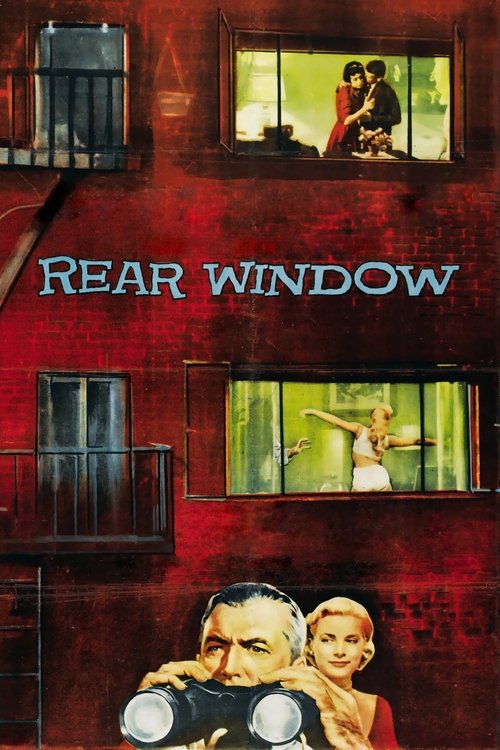
Rear Window - Review
Alfred Hitchcock's "Rear Window": A Masterclass in Suspense and Voyeurism
Alfred Hitchcock, the master of suspense, delivered a cinematic masterpiece in 1954 with "Rear Window." More than just a thriller, it's a complex exploration of voyeurism, paranoia, and the human desire to peek behind closed doors. The film locks us in with Jeff Jeffries, a sidelined photographer confined to his apartment, as he becomes increasingly convinced that his neighbor has committed murder. But is he simply projecting his own anxieties onto the lives of others, or is there genuine evil lurking across the courtyard? This review delves into the intricate layers of "Rear Window," analyzing its plot, characters, direction, cinematography, performances, themes, and its enduring legacy in the world of cinema.
Plot: A Suspenseful Slow Burn
The plot of "Rear Window" is deceptively simple. Jeff Jeffries (James Stewart), a seasoned photographer, is stuck in his Greenwich Village apartment with a broken leg. Bored and restless, he begins observing his neighbors through his rear window. He witnesses snippets of their lives: a lonely spinster, a struggling composer, a newlywed couple, a dancer, and Lars Thorwald (Raymond Burr), a jewelry salesman with a nagging wife. As days turn into weeks, Jeff's attention becomes fixated on the Thorwalds. He notices Mrs. Thorwald's increasingly frail state and Lars's suspicious behavior, including multiple late-night trips with a large suitcase. When Mrs. Thorwald disappears, Jeff becomes convinced that Lars has murdered her.
Initially, his nurse, Stella (Thelma Ritter), and his sophisticated girlfriend, Lisa Fremont (Grace Kelly), dismiss his suspicions as the ramblings of a bored invalid. However, Jeff's relentless observation and growing paranoia eventually pique their interest. Lisa, driven by her love for Jeff and a desire to prove her adventurous spirit, becomes increasingly involved in his investigation. They gather evidence, analyze Thorwald's movements, and even attempt to contact the police. The tension builds steadily as Jeff and Lisa delve deeper into the mystery, placing themselves in ever-increasing danger. The film culminates in a nail-biting confrontation between Jeff and Thorwald, proving that Jeff's suspicions were, in fact, tragically accurate.
Characters: Compelling and Flawed
The characters in "Rear Window" are richly drawn and psychologically complex, each contributing to the film's overall themes and impact.
Jeff Jeffries (James Stewart)
Jeff is the protagonist, a cynical and restless photographer who is forced to confront his own fears and limitations. His injury has not only confined him physically but also emotionally. He uses his observations of his neighbors as a way to avoid confronting his own commitment issues with Lisa. While he initially appears detached and judgmental, his growing conviction about the murder reveals a deeper sense of justice and a willingness to risk everything to uncover the truth. Stewart delivers a nuanced performance, portraying Jeff's vulnerability, intelligence, and growing desperation with remarkable skill.
Lisa Fremont (Grace Kelly)
Lisa is Jeff's sophisticated and glamorous girlfriend, a high-society woman who initially seems ill-suited for Jeff's adventurous lifestyle. However, as the film progresses, she proves her resourcefulness, courage, and unwavering love for Jeff. She transforms from a seemingly superficial socialite into a daring investigator, willing to put herself in harm's way to help Jeff. Kelly's performance is captivating, showcasing Lisa's intelligence, wit, and unwavering loyalty. She challenges Jeff's preconceived notions about her and ultimately proves herself to be his equal in every way.
Stella (Thelma Ritter)
Stella is Jeff's wisecracking and pragmatic nurse, providing both comic relief and a voice of reason. She is skeptical of Jeff's suspicions but also deeply concerned for his well-being. Stella serves as a grounding force, offering practical advice and a cynical perspective on marriage and relationships. Ritter's performance is a standout, injecting humor and warmth into the film while also providing a moral compass for Jeff.
Lars Thorwald (Raymond Burr)
Thorwald is the enigmatic and menacing neighbor who becomes the prime suspect in Jeff's murder investigation. Burr's portrayal is chillingly understated, conveying a sense of quiet desperation and underlying rage. His subtle gestures and expressions create an atmosphere of unease, making him a truly unsettling presence. He is not overtly villainous, which adds to the ambiguity and suspense of the film.
The supporting characters, from Miss Lonelyhearts to the composer, each contribute to the tapestry of urban life that Jeff observes. They are not mere background figures but rather fully realized individuals with their own stories and struggles, adding depth and complexity to the film's themes.
Direction: Hitchcock's Masterful Control
Alfred Hitchcock's direction in "Rear Window" is nothing short of masterful. He creates a claustrophobic and suspenseful atmosphere by confining the majority of the action to Jeff's apartment. The film is a brilliant example of Hitchcock's ability to build tension through meticulous planning, precise camera work, and subtle details. He uses the limited space to his advantage, turning Jeff's apartment into a stage for a voyeuristic drama.
Hitchcock's use of point-of-view shots is particularly effective, placing the audience directly in Jeff's perspective and making them complicit in his voyeurism. We see what he sees, feel what he feels, and become just as obsessed with the lives of his neighbors. He masterfully manipulates the audience's emotions, creating a sense of unease and suspense that permeates the entire film. Hitchcock's attention to detail is evident in every aspect of the production, from the meticulously designed set to the carefully crafted performances. He creates a world that is both familiar and unsettling, drawing the audience into Jeff's paranoia and making them question their own perceptions of reality.
Cinematography: A Visual Symphony of Suspicion
Robert Burks's cinematography in "Rear Window" is crucial to the film's success, creating a visually stunning and suspenseful experience. The use of Technicolor is particularly striking, adding vibrancy and depth to the images. The lighting is carefully controlled to create a sense of realism and to heighten the tension. The courtyard is often bathed in shadows, creating an atmosphere of mystery and foreboding. The camera movements are deliberate and precise, guiding the audience's eye and emphasizing key details.
The long shots of the courtyard establish the setting and allow the audience to observe the various characters in their daily routines. The close-ups of Jeff's face reveal his growing obsession and paranoia. The use of binoculars and telescopes further enhances the voyeuristic element of the film. The cinematography is not merely functional but rather an integral part of the storytelling, contributing to the film's overall atmosphere of suspense and unease. Burks's work perfectly complements Hitchcock's direction, creating a visual symphony of suspicion and paranoia.
Performances: Stellar Cast Brings Characters to Life
The performances in "Rear Window" are uniformly excellent, with each actor bringing their character to life with depth and nuance.
James Stewart delivers one of his finest performances as Jeff Jeffries. He perfectly captures Jeff's cynicism, restlessness, and growing paranoia. Stewart's ability to convey a range of emotions with subtle facial expressions is remarkable. He makes Jeff a relatable and sympathetic character, despite his flaws.
Grace Kelly is luminous as Lisa Fremont. She brings elegance, intelligence, and courage to the role. Kelly's transformation from a sophisticated socialite to a daring investigator is believable and compelling. She shares excellent chemistry with Stewart, creating a believable and engaging romantic relationship.
Thelma Ritter steals every scene she's in as Stella. Her sharp wit and pragmatic advice provide both comic relief and a grounded perspective. Ritter's performance is a masterclass in comedic timing and understated acting.
Raymond Burr is perfectly cast as the enigmatic Lars Thorwald. His understated performance creates an atmosphere of unease and suspicion. Burr's subtle gestures and expressions convey a sense of quiet desperation and underlying rage.
The supporting cast is equally strong, each contributing to the film's overall success. The performances are natural and believable, adding to the film's realism and impact.
Themes and Messages: Voyeurism, Paranoia, and the Human Condition
"Rear Window" is a film rich in themes and messages, exploring the darker aspects of human nature and the complexities of modern life.
Voyeurism
The most prominent theme is voyeurism, the act of observing others without their knowledge or consent. The film raises questions about the ethics of voyeurism and the inherent human desire to peek behind closed doors. Jeff's voyeurism is initially presented as a harmless pastime, a way to alleviate his boredom. However, as he becomes more involved in the lives of his neighbors, his voyeurism takes on a more sinister quality. The film suggests that voyeurism can be a dangerous and addictive activity, blurring the lines between observation and intrusion.
Paranoia
Paranoia is another key theme, as Jeff's suspicions about Thorwald grow into an all-consuming obsession. The film explores the psychological effects of isolation and confinement, suggesting that these conditions can lead to heightened anxiety and irrational fears. Jeff's paranoia is fueled by his own insecurities and anxieties about his relationship with Lisa. He projects his own fears and desires onto the lives of his neighbors, creating a distorted view of reality.
The Human Condition
The film also offers a glimpse into the human condition, showcasing the diversity and complexity of urban life. The various characters in the courtyard represent different aspects of the human experience, from loneliness and despair to love and happiness. The film suggests that everyone has their own secrets and struggles, hidden behind the facade of everyday life.
The Nature of Relationships
The film explores the complexities of relationships, particularly the challenges of commitment and communication. Jeff's reluctance to commit to Lisa reflects his fear of losing his independence and freedom. The film suggests that relationships require trust, understanding, and a willingness to compromise. The relationships between the various neighbors also offer insights into the different forms that love and companionship can take.
Comparison to Other Films and Works
"Rear Window" can be compared to other Hitchcock films that explore themes of voyeurism and paranoia, such as "Psycho" and "Vertigo." Like "Psycho," "Rear Window" uses suspense and misdirection to create a sense of unease. Like "Vertigo," "Rear Window" explores the psychological effects of obsession and the dangers of projecting one's own desires onto others.
The film also shares similarities with other films that explore the theme of voyeurism, such as Brian De Palma's "Body Double" and Michael Powell's "Peeping Tom." However, "Rear Window" stands apart for its masterful direction, compelling performances, and its exploration of the ethical implications of voyeurism.
James Stewart's performance in "Rear Window" can be compared to his other collaborations with Hitchcock, such as "Vertigo" and "The Man Who Knew Too Much." In all three films, Stewart plays a flawed and complex character who is forced to confront his own fears and limitations.
Positive Aspects and Constructive Criticism
Positive Aspects
- Masterful direction by Alfred Hitchcock
- Compelling performances by James Stewart, Grace Kelly, and Thelma Ritter
- Suspenseful plot with a satisfying resolution
- Stunning cinematography and visual design
- Rich themes and messages that resonate with audiences today
Constructive Criticism
- The film's pacing may be slow for some viewers.
- Jeff's initial reluctance to commit to Lisa may be frustrating for some viewers.
- The film's depiction of women may be seen as somewhat stereotypical by modern audiences.
Conclusion and Rating
"Rear Window" is a cinematic masterpiece that continues to captivate audiences with its suspenseful plot, compelling characters, and thought-provoking themes. Alfred Hitchcock's masterful direction, combined with stellar performances and stunning cinematography, make this film a timeless classic. While the pacing may be slow for some viewers, the film's overall impact is undeniable. "Rear Window" is a must-see for any fan of suspense thrillers and a testament to the genius of Alfred Hitchcock.
Rating: 10/10