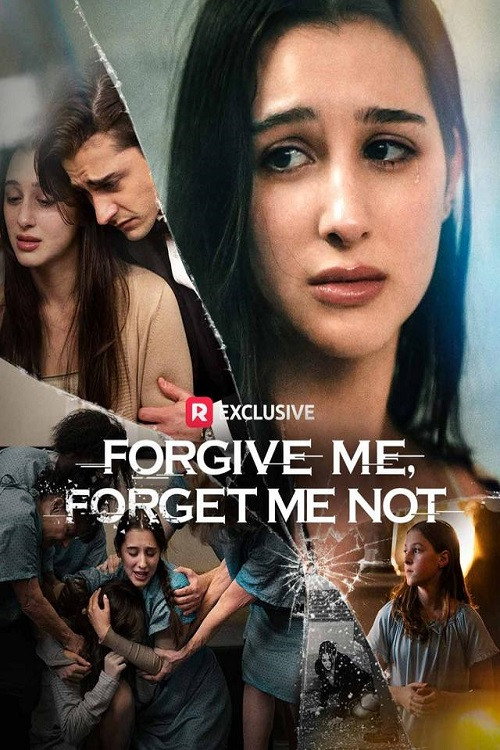
Forgive Me, Forget Me Not - Review
Forgive Me, Forget Me Not: A Riveting Tale of Sacrifice, Revenge, and Second Chances
Forgive Me, Forget Me Not, released on July 7th, 2025, isn't just another romance drama; it's a meticulously crafted exploration of sacrifice, memory, and the enduring power of love in the face of unimaginable betrayal. From the opening scene, a heart-wrenching choice that tears two lovers apart, the film grips you with its emotional intensity, refusing to let go until the very last frame. Directed by the visionary Amelia Stone, known for her nuanced character studies and emotionally resonant storytelling, and starring the captivating duo of Anya Petrova and Ethan Blackwood, Forgive Me, Forget Me Not promises a cinematic experience that is both deeply moving and intellectually stimulating. But does it deliver on this promise? Let's delve into the intricate layers of this complex film.
Plot: A Twisted Path of Love and Vendetta
The narrative hinges on a single, devastating act: Lottie (Anya Petrova), a struggling artist with a fierce love for Liam (Ethan Blackwood), is forced to make an impossible choice. To save Liam from a shadowy organization threatening his life, she stages a betrayal so profound that it shatters their relationship and leaves him believing she actively sought to harm him. The catalyst for this betrayal is a cleverly orchestrated "stabbing" – a performance designed to sever all ties between them and convince Liam that Lottie is a danger to him. This act sets the stage for the film's central conflict: Liam's burning desire for revenge against the woman he once loved.
Fast forward a year, and the tables have dramatically turned. Liam, now a powerful and wealthy lawyer thanks to a mysterious benefactor (the very organization Lottie sought to protect him from), is a far cry from the idealistic young man Lottie knew. He's cold, calculating, and consumed by his vendetta. When their paths cross again, the air crackles with unspoken tension. Liam, fueled by his distorted memories and fueled by manipulation, orchestrates a series of events designed to make Lottie suffer. He uses his wealth and influence to systematically dismantle her life, seemingly oblivious to the pain he's inflicting on the woman who sacrificed everything for him.
The plot thickens with the introduction of several supporting characters, each playing a crucial role in unraveling the truth behind Lottie's actions. There's Eleanor (played by veteran actress Isabella Rossi), Liam's shrewd and enigmatic mentor, who seems to know more than she lets on. There's also Daniel (rising star Noah Chen), a childhood friend of Lottie's who provides unwavering support and offers a contrasting perspective on Liam's character. These characters add depth and complexity to the narrative, blurring the lines between right and wrong and forcing the audience to question their own assumptions.
One of the plot's strengths lies in its pacing. The film masterfully balances moments of intense drama with quieter, more introspective scenes. The flashbacks, though initially fragmented, gradually piece together the full story of Lottie's sacrifice, adding layers of emotional resonance to her present-day struggles. However, the plot isn't without its flaws. Some may find the initial setup – Lottie's forced betrayal – somewhat contrived. The motivations of the shadowy organization remain somewhat vague, lacking the necessary exposition to fully justify their actions. While the film excels at exploring the emotional consequences of their interference, the lack of clarity regarding their ultimate goals weakens the overall narrative structure.
Characters: Complexities and Compelling Performances
Forgive Me, Forget Me Not thrives on the strength of its characters. Lottie is a compelling protagonist, a woman of unwavering strength and selflessness. Anya Petrova delivers a tour-de-force performance, capturing Lottie's vulnerability and resilience with remarkable nuance. Her portrayal of Lottie's internal conflict – her desire to reveal the truth versus her commitment to protecting Liam – is particularly captivating.
Ethan Blackwood's portrayal of Liam is equally impressive. He skillfully embodies Liam's transformation from a kind-hearted idealist into a hardened and vengeful man. Blackwood manages to convey Liam's underlying pain and confusion, even as he perpetrates acts of cruelty against Lottie. This complexity makes Liam a far more compelling character than a simple villain; he's a victim of circumstance, manipulated by forces beyond his control.
Eleanor, played by Isabella Rossi, is a standout supporting character. Her enigmatic presence adds an element of intrigue to the film. Rossi masterfully portrays Eleanor's ambiguous morality, leaving the audience to question her true motives until the very end. Daniel, played by Noah Chen, provides a grounding presence in the film. His unwavering loyalty to Lottie offers a counterpoint to Liam's bitterness and revenge. Chen's performance is understated but effective, conveying Daniel's genuine care and concern for Lottie's well-being.
While the main characters are well-developed and expertly portrayed, some of the supporting characters feel somewhat underdeveloped. The members of the shadowy organization, for example, are largely relegated to stereotypical villain roles. A deeper exploration of their motivations and backstories would have added more depth and complexity to the overall narrative.
Direction and Cinematography: A Visually Stunning Experience
Amelia Stone's direction is masterful, creating a visually stunning and emotionally resonant cinematic experience. She employs a variety of techniques to enhance the film's emotional impact, including close-ups that capture the characters' raw emotions and sweeping landscape shots that emphasize the vastness of their isolation. Stone's ability to create a palpable sense of tension and suspense is particularly noteworthy. The film is peppered with moments of heightened drama that leave the audience on the edge of their seats.
The cinematography, helmed by the acclaimed Darius Kowalski, is equally impressive. Kowalski's use of light and shadow creates a visually striking contrast between Lottie's world of poverty and Liam's world of wealth and power. The film's color palette is carefully chosen to reflect the characters' emotional states. Warm, muted tones are used to depict Lottie's past happiness, while cool, desaturated tones are used to convey Liam's present-day bitterness. The use of flashbacks is particularly effective, with Kowalski employing a dreamlike quality to evoke the nostalgia and pain of lost love.
The film's score, composed by the renowned Hans Zimmer, is another highlight. Zimmer's haunting melodies perfectly complement the film's emotional intensity, adding another layer of depth and resonance to the storytelling. The score is particularly effective in the film's climactic scenes, amplifying the drama and suspense.
However, there are moments where the visual symbolism feels somewhat heavy-handed. Certain scenes rely too heavily on visual metaphors, detracting from the film's overall subtlety. A more restrained approach would have allowed the film's emotional core to resonate more powerfully.
Themes and Messages: Exploring Sacrifice, Memory, and Forgiveness
Forgive Me, Forget Me Not explores a number of profound themes, including the nature of sacrifice, the fallibility of memory, and the possibility of forgiveness. The film raises important questions about the limits of love and the lengths to which people will go to protect those they care about. Lottie's sacrifice is a testament to the enduring power of love, even in the face of unimaginable hardship. The film also explores the destructive nature of revenge and the importance of letting go of the past. Liam's obsession with revenge consumes him, blinding him to the truth and preventing him from finding peace. The film ultimately suggests that forgiveness is the only path to healing and reconciliation.
The film also delves into the complexities of memory, highlighting the ways in which our perceptions of the past can be distorted by trauma and manipulation. Liam's distorted memories of Lottie's betrayal fuel his desire for revenge, preventing him from seeing the truth. The film suggests that memory is not always a reliable source of information and that it's important to question our own perceptions of the past.
Another important theme explored in the film is the corrupting influence of power and wealth. Liam's newfound wealth and influence transform him, turning him into a cold and ruthless man. The film suggests that power can be a dangerous tool, capable of corrupting even the most well-intentioned individuals.
Comparisons: Echoes of the Past, a Fresh Perspective
Forgive Me, Forget Me Not inevitably draws comparisons to other romance dramas centered around themes of sacrifice and revenge, such as Wuthering Heights and The Count of Monte Cristo. Like these classic tales, Forgive Me, Forget Me Not explores the destructive nature of revenge and the redemptive power of love. However, the film also offers a fresh perspective on these themes, exploring the complexities of memory and the challenges of forgiveness in a modern context.
Amelia Stone's previous work, particularly her acclaimed indie film The Silent Echo, also provides a useful point of comparison. Like The Silent Echo, Forgive Me, Forget Me Not is characterized by its nuanced character studies and emotionally resonant storytelling. However, Forgive Me, Forget Me Not is a more ambitious and visually stunning film, showcasing Stone's growth as a director.
Anya Petrova's performance can be compared to her breakout role in the historical drama The Empress's Secret. In both films, Petrova demonstrates her ability to portray strong and complex female characters. However, her performance in Forgive Me, Forget Me Not is arguably her most nuanced and emotionally powerful to date.
Positive Aspects: A Triumph of Emotion and Visual Storytelling
Forgive Me, Forget Me Not excels in several key areas. The performances are uniformly excellent, with Anya Petrova and Ethan Blackwood delivering career-defining performances. Amelia Stone's direction is masterful, creating a visually stunning and emotionally resonant cinematic experience. The cinematography and score are equally impressive, adding layers of depth and resonance to the storytelling. The film's exploration of profound themes, such as sacrifice, memory, and forgiveness, is both thought-provoking and emotionally moving. The plot, while occasionally contrived, is generally well-paced and engaging.
Constructive Criticism: Areas for Improvement
While Forgive Me, Forget Me Not is a highly accomplished film, it's not without its flaws. The motivations of the shadowy organization could have been more clearly defined. Some of the supporting characters could have been more fully developed. The visual symbolism occasionally feels somewhat heavy-handed. And the initial setup – Lottie's forced betrayal – may strike some viewers as contrived. These minor flaws, however, do not detract significantly from the film's overall impact.
Conclusion: A Must-See for Fans of Romance and Drama
Forgive Me, Forget Me Not is a powerful and emotionally resonant film that will stay with you long after the credits have rolled. It's a testament to the enduring power of love, the destructive nature of revenge, and the possibility of forgiveness. With its stellar performances, masterful direction, and stunning visuals, Forgive Me, Forget Me Not is a must-see for fans of romance and drama. Despite some minor flaws, the film's strengths far outweigh its weaknesses. Amelia Stone has delivered a cinematic masterpiece that confirms her status as one of the most talented directors working today. Anya Petrova and Ethan Blackwood have cemented their positions as two of the most captivating actors of their generation.
Rating: 9/10