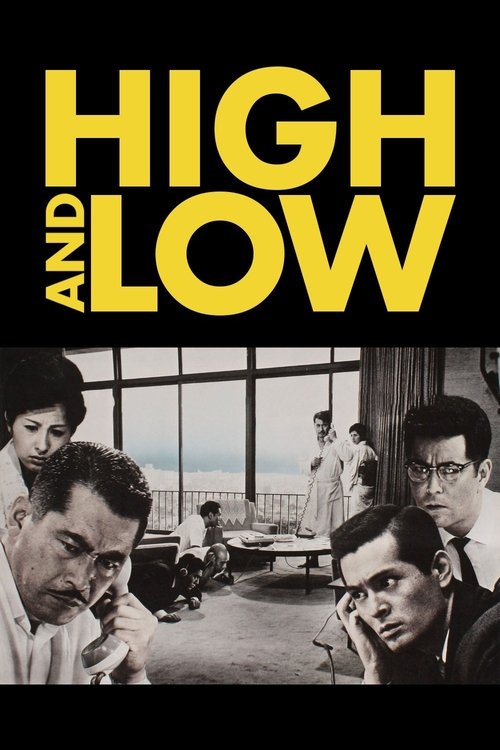
High and Low - Review
High and Low: A Masterclass in Moral Conflict and Visual Storytelling
Akira Kurosawa’s High and Low, released in 1963, isn't just a crime thriller; it's a searing exploration of societal strata, moral responsibility, and the agonizing choices individuals face when confronted with unimaginable circumstances. The film, a gripping adaptation of Ed McBain’s novel "King's Ransom," transcends its genre trappings to become a potent commentary on postwar Japan and the burgeoning economic divide that threatened to fracture its social fabric. From its meticulously crafted opening sequence to its devastating climax, High and Low grips the viewer in a vise of suspense while simultaneously forcing them to confront uncomfortable truths about wealth, poverty, and the human condition. Prepare to be captivated, disturbed, and deeply moved.
Plot: A Descent into Moral Complexity
The film opens in the opulent home of Kingo Gondo (Toshiro Mifune), a wealthy and ambitious shoe executive. Gondo, poised to seize control of his company and revolutionize its shoe production, is interrupted by a phone call – a ransom demand. The kidnapper, however, has made a mistake. Instead of abducting Gondo's son, Jun, he has kidnapped Shinichi, the son of Gondo’s loyal chauffeur, Aoki (Tatsuya Nakadai). The ransom? A staggering 30 million yen – a sum that would cripple Gondo's takeover bid and potentially ruin him financially.
What follows is a descent into moral complexity. Gondo, initially resolute in his refusal to pay, is forced to confront the weight of his decision. He wrestles with the agonizing reality that saving a child's life would mean sacrificing his own ambition and potentially condemning his company and its employees to financial ruin. The police, led by the steadfast Inspector Tokura (Kenjiro Ishiyama), launch a relentless investigation, meticulously piecing together clues and navigating the labyrinthine streets of Yokohama in their pursuit of the elusive kidnapper.
The film is sharply divided into two distinct halves. The first half is primarily confined to Gondo's hilltop mansion, a visual representation of his elevated social status. This section unfolds with a deliberate, almost theatrical pace, emphasizing the agonizing deliberations and moral quandaries that Gondo faces. The second half plunges into the gritty underbelly of Yokohama, a stark contrast to the pristine environment of Gondo's home. This shift in setting mirrors the descent into the kidnapper's depraved world and the increasingly desperate measures taken by the police to apprehend him.
Characters: Mirrors of Societal Division
High and Low boasts a cast of compelling characters, each representing a distinct facet of Japanese society.
Kingo Gondo (Toshiro Mifune)
Mifune delivers a powerhouse performance as Kingo Gondo, a man of immense wealth and ambition, yet ultimately driven by a strong moral compass. Gondo is not simply a caricature of a ruthless businessman; he is a complex individual grappling with an impossible choice. Mifune masterfully portrays Gondo's internal conflict, his initial reluctance to pay the ransom gradually giving way to a profound sense of responsibility and compassion. He is a man torn between his own self-interest and the well-being of an innocent child, and Mifune embodies this struggle with raw intensity and nuanced emotion.
Inspector Tokura (Kenjiro Ishiyama)
Inspector Tokura, played with unwavering dedication by Kenjiro Ishiyama, is the embodiment of justice and unwavering commitment to his duty. He represents the unwavering dedication of the Japanese police force and their commitment to upholding the law. Tokura is not a flashy or charismatic character, but his quiet determination and meticulous approach to the investigation provide a crucial counterpoint to Gondo's emotional turmoil. He is a symbol of order and stability in a society grappling with the corrosive effects of greed and inequality.
Aoki (Tatsuya Nakadai)
Aoki, Gondo's chauffeur, is a humble and hardworking man whose life is unexpectedly thrown into chaos when his son is kidnapped. Tatsuya Nakadai portrays Aoki with a quiet dignity and profound sense of anguish. He is a symbol of the working class, vulnerable to the whims of fate and dependent on the goodwill of those in positions of power. Aoki's unwavering faith in Gondo and his profound gratitude for his employer's eventual sacrifice highlight the complex relationship between the social classes.
The Kidnapper (Tsutomu Yamazaki)
The kidnapper, whose name is never explicitly revealed, is a deeply disturbed and embittered young doctor working at a local hospital. Tsutomu Yamazaki delivers a chilling and unforgettable performance as the film’s antagonist. He is not simply a villain motivated by greed; he is a product of societal inequality, driven to desperate measures by a sense of resentment and alienation. The kidnapper's motives are complex and unsettling, reflecting the darker side of human nature and the potential for social unrest in a rapidly changing society. His visual representation is a descent into squalor and addiction, a stark contrast to the polished image of Gondo.
Direction: Kurosawa's Masterful Command
Akira Kurosawa's direction in High and Low is nothing short of masterful. He seamlessly blends elements of crime thriller, social commentary, and character study to create a film that is both gripping and thought-provoking. Kurosawa's meticulous attention to detail is evident in every aspect of the film, from the carefully chosen locations to the precisely choreographed camera movements. His use of visual symbolism and dramatic irony elevates the film beyond the confines of its genre, transforming it into a profound meditation on morality and social justice.
Kurosawa's use of color is particularly striking. The first half of the film, set in Gondo's pristine home, is bathed in bright, vibrant colors, reflecting the affluence and optimism of the upper class. In contrast, the second half, which takes place in the grimy streets of Yokohama, is characterized by muted, desaturated tones, reflecting the poverty and despair of the lower class. This visual contrast effectively underscores the film's central theme of societal division.
Kurosawa's use of long takes and deep focus allows the viewer to fully immerse themselves in the film's world, creating a sense of immediacy and realism. He masterfully builds suspense through subtle visual cues and carefully timed reveals, keeping the audience on the edge of their seats throughout the film's duration. He also uses close-ups to great effect, revealing the inner turmoil of his characters and drawing the viewer into their emotional struggles.
Cinematography: A Visual Symphony of Opposites
The cinematography in High and Low, expertly handled by Asakazu Nakai and Takao Saito, is a visual symphony of contrasts. The film's visual style is deliberately divided into two distinct halves, mirroring the film's thematic concerns. The first half is characterized by static camera shots, carefully composed frames, and a sense of claustrophobia, reflecting the confinement of Gondo's moral dilemma. The second half is more dynamic, with handheld camera movements, tracking shots, and a sense of urgency, reflecting the frantic pace of the police investigation.
The use of light and shadow is also particularly effective. The brightly lit interiors of Gondo's home contrast sharply with the dimly lit streets of Yokohama, creating a visual representation of the stark inequalities that exist within Japanese society. The film's climactic sequence, set in a smoky, neon-lit drug den, is a visual masterpiece, capturing the depravity and despair of the underworld with chilling realism.
The use of widescreen format (Tohoscope) is also significant. Kurosawa utilizes the wide frame to showcase the vastness of Gondo's mansion and the sprawling cityscape of Yokohama, emphasizing the physical and social distance between the upper and lower classes.
Performances: A Showcase of Japanese Acting Talent
High and Low features a stellar cast of Japanese actors, each delivering a memorable and nuanced performance.
Toshiro Mifune, as previously mentioned, is simply brilliant as Kingo Gondo. His portrayal of a man wrestling with an impossible choice is both powerful and deeply moving. Kenjiro Ishiyama is equally impressive as Inspector Tokura, embodying the unwavering dedication and quiet determination of the Japanese police force. Tatsuya Nakadai delivers a poignant performance as Aoki, the humble and hardworking chauffeur whose son is caught in the crossfire. And Tsutomu Yamazaki is chillingly effective as the kidnapper, portraying a deeply disturbed and embittered young man driven to desperate measures by a sense of resentment and alienation.
The supporting cast is equally strong, each actor bringing a sense of authenticity and realism to their respective roles. The ensemble work is seamless, creating a cohesive and believable world.
Themes and Messages: A Social Commentary
High and Low is more than just a crime thriller; it is a profound social commentary on postwar Japan. The film explores themes of:
Social Inequality
The stark contrast between Gondo's opulent lifestyle and the kidnapper's impoverished existence highlights the growing economic divide in Japanese society. The film suggests that this inequality can breed resentment and alienation, leading to desperate acts of violence.
Moral Responsibility
Gondo's decision to pay the ransom raises profound questions about moral responsibility. Is he obligated to sacrifice his own ambition to save a child's life? The film suggests that true morality lies in putting the needs of others before one's own self-interest.
Justice and the Law
Inspector Tokura's unwavering commitment to justice underscores the importance of upholding the law, even in the face of overwhelming odds. The film suggests that justice is not always easy to achieve, but it is always worth fighting for.
The Human Condition
High and Low explores the complexities of the human condition, revealing both the best and worst aspects of human nature. The film suggests that even in the face of adversity, individuals are capable of great acts of compassion and self-sacrifice.
Comparison to Other Films and Works
High and Low can be compared to other crime thrillers that explore themes of social inequality and moral responsibility, such as Sidney Lumet's "Serpico" (1973) and Bong Joon-ho's "Parasite" (2019). However, Kurosawa's film stands apart due to its unique visual style, its complex characters, and its profound social commentary.
In Kurosawa's filmography, High and Low is often compared to "Stray Dog" (1949), another crime drama that explores the dark underbelly of postwar Japan. However, High and Low is a more mature and sophisticated work, with a more complex plot and a deeper exploration of moral themes. It also shares thematic similarities with "Ikiru" (1952), where a bureaucrat confronts his own mortality and decides to make a meaningful contribution to society, highlighting the importance of individual action in the face of systemic problems.
Mifune's performance in High and Low can be compared to his other iconic roles in Kurosawa's films, such as his portrayal of the samurai in "Seven Samurai" (1954) and "Yojimbo" (1961). However, Gondo is a more nuanced and complex character than many of Mifune's previous roles, allowing him to showcase a wider range of emotions.
Positive Aspects
- Gripping and suspenseful plot
- Complex and well-developed characters
- Masterful direction by Akira Kurosawa
- Stunning cinematography
- Powerful performances by the entire cast
- Profound social commentary
- Excellent pacing and editing
- Memorable and iconic scenes
Constructive Criticism
- The first half of the film, while necessary for character development, can feel slightly slow-paced for some viewers.
- The film's focus on the upper class (Gondo) may alienate some viewers who are more interested in the plight of the working class.
- The kidnapper's motives, while understandable, could have been explored in greater depth.
Conclusion
High and Low is a cinematic masterpiece that continues to resonate with audiences decades after its release. It is a gripping and suspenseful crime thriller that is also a profound social commentary on postwar Japan. Akira Kurosawa's masterful direction, the stunning cinematography, and the powerful performances by the entire cast combine to create a film that is both unforgettable and deeply moving. While the pacing in the first half might be slightly slow for some, the film's overall impact is undeniable. High and Low is a must-see for any serious film enthusiast.