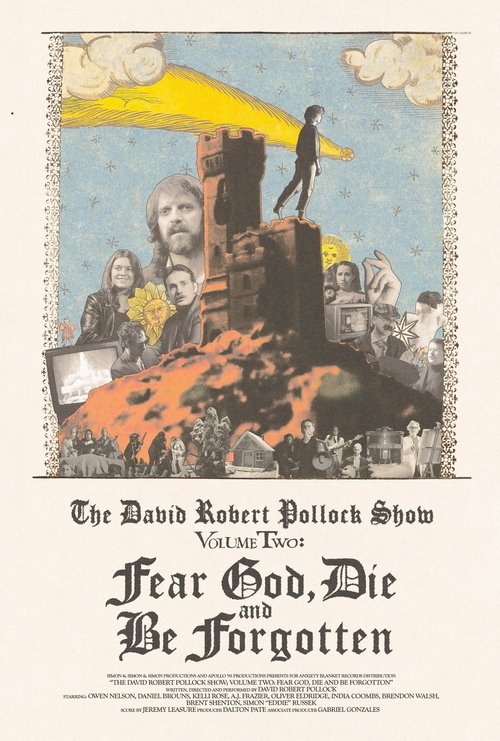
The David Robert Pollock Show: Fear God, Die And Be Forgotten - Review
"The David Robert Pollock Show: Fear God, Die And Be Forgotten": A Hilariously Horrific Descent into the Absurd
In a cinematic landscape increasingly dominated by predictable sequels and formulaic reboots, it's a rare and exhilarating experience to encounter a film as genuinely audacious and unsettling as "The David Robert Pollock Show: Fear God, Die And Be Forgotten." This isn't your typical horror-comedy; it's a twisted, surreal, and surprisingly poignant exploration of desperation, faith, and the lengths we'll go to when faced with oblivion. Buckle up, because this show is about to get very, very dark.
Plot: When the Show Must Go On… to Hell
The premise is deceptively simple: David Robert Pollock, the eccentric and beloved host of a late-night talk show, has vanished without a trace. His disappearance coincides with a string of unsettling events: crew members going missing, strange symbols appearing on set, and an overall sense of creeping dread. As the network pressures the remaining staff to keep the show afloat, desperation sets in. Led by the show's frazzled producer, Brenda (played with masterful anxiety by Sarah Chen), the team stumbles upon a forbidden ritual – a desperate attempt to summon David back, or at least, to find out what happened to him. What follows is a chaotic descent into the occult, blurring the lines between reality and nightmare, comedy and abject terror.
The plot unfolds with a deliberate sense of unease, gradually ratcheting up the tension. Initially, the horror is subtle, relying on unsettling imagery and psychological suspense. As the ritual progresses, the film embraces its comedic side, with darkly humorous situations arising from the crew's ineptitude and the sheer absurdity of their situation. The script, penned by the director himself, Mark Olsen, is sharp and witty, filled with quotable lines and moments of genuine laugh-out-loud humor. However, Olsen never forgets the horror at the heart of the story, maintaining a constant undercurrent of dread that prevents the comedy from undermining the film's darker themes.
The narrative structure is cleverly constructed. We're given fragmented glimpses into David Robert Pollock's past, hints of his eccentric personality and the strange events leading up to his disappearance. These flashbacks are interwoven with the present-day chaos, creating a sense of mystery and building suspense. The pacing is excellent, allowing the tension to build gradually before unleashing a torrent of supernatural mayhem in the film's final act.
Characters: Desperate Souls Dancing with the Devil
The strength of "The David Robert Pollock Show" lies not only in its plot but also in its well-developed and relatable characters. Brenda, the producer, is the emotional anchor of the film. Her initial skepticism slowly crumbles under the weight of mounting evidence, forcing her to confront her own beliefs and make impossible choices. Sarah Chen delivers a career-defining performance, capturing Brenda's vulnerability, determination, and growing desperation with remarkable nuance.
The supporting cast is equally impressive. There's Mark, the cynical head writer, played with sardonic wit by David Lee. He provides much of the film's comedic relief, but beneath his sarcastic exterior lies a deep-seated fear and a surprising loyalty to the show and its missing host. Emily, the young and impressionable intern, is drawn into the occult ritual with wide-eyed curiosity, representing the film's exploration of faith and belief. Her journey from naive believer to horrified witness is both heartbreaking and compelling.
Even the absent David Robert Pollock becomes a character in his own right. Through flashbacks and anecdotes, we get a sense of his larger-than-life personality, his eccentric humor, and his unsettling obsession with the macabre. His presence looms large over the entire film, even in his absence, fueling the crew's desperation and driving the narrative forward.
Direction and Cinematography: A Visually Haunting Masterpiece
Mark Olsen's direction is masterful. He creates a distinct visual style that perfectly complements the film's tone. The use of shadows and lighting is particularly effective, creating a sense of unease and foreboding. The camera work is dynamic, moving seamlessly between intimate character moments and sweeping panoramic shots that showcase the film's unsettling atmosphere. Olsen's ability to blend horror and comedy is truly remarkable, creating a film that is both terrifying and hilarious in equal measure.
The cinematography, handled by veteran horror cinematographer Anya Petrova, is stunning. She employs a variety of techniques to create a visually unsettling experience. The use of slow zooms, distorted perspectives, and unsettling color palettes contributes to the film's overall sense of dread. The special effects, while not overly gratuitous, are incredibly effective, particularly in the film's climactic scenes. The creature design is both terrifying and original, adding another layer of horror to the already unsettling narrative.
The film's production design is also noteworthy. The set of "The David Robert Pollock Show" is meticulously crafted, creating a believable and immersive environment. The use of practical effects and minimal CGI enhances the film's realism, making the horror all the more palpable.
Performances: A Stellar Ensemble Cast
As mentioned previously, Sarah Chen delivers a standout performance as Brenda. Her portrayal of a woman on the verge of a nervous breakdown is both believable and captivating. David Lee provides excellent comedic relief as Mark, while also showcasing the character's underlying vulnerability. Emily Carter, as the intern Emily, perfectly captures the character's naivete and growing horror. The entire ensemble cast works together seamlessly, creating a believable and engaging dynamic that draws the audience into the story.
While David Robert Pollock is largely absent from the screen, his presence is felt throughout the film. The actors who portray him in flashbacks do an excellent job of capturing his eccentric personality and unsettling charisma. His performance, though limited, is crucial to the film's overall success.
Themes and Messages: Faith, Desperation, and the Price of Fame
"The David Robert Pollock Show: Fear God, Die And Be Forgotten" is more than just a horror-comedy; it's a thought-provoking exploration of several complex themes. One of the central themes is the nature of faith. The film explores the different ways in which people find meaning and purpose in their lives, whether through traditional religion, belief in the supernatural, or simply through their work. The crew's desperate attempt to summon David back raises questions about the limits of faith and the dangers of blindly following belief systems.
Another key theme is desperation. The film examines the lengths to which people will go when faced with losing everything. The crew's decision to engage in the occult ritual is driven by their fear of unemployment, their loyalty to David, and their desire to keep the show alive. The film suggests that desperation can lead people to make choices they would never otherwise consider, with potentially disastrous consequences.
The film also touches upon the price of fame. David Robert Pollock's obsession with the macabre and his eccentric behavior suggest that his success may have come at a cost. The film hints at a darker side to his personality, suggesting that his fame may have contributed to his disappearance and the events that follow.
Comparisons and Influences: A Unique Blend of Horror and Comedy
"The David Robert Pollock Show: Fear God, Die And Be Forgotten" draws inspiration from a variety of sources, blending elements of classic horror films with modern comedic sensibilities. It shares thematic similarities with films like "Event Horizon," exploring the dangers of tampering with the unknown. Its blend of horror and comedy is reminiscent of films like "Shaun of the Dead" and "Tucker & Dale vs Evil," but with a darker and more unsettling tone.
Mark Olsen's previous work, particularly his independent horror film "The Whispering Pines Massacre," demonstrates his ability to create atmospheric and suspenseful narratives. "The David Robert Pollock Show" represents a significant step forward for Olsen, showcasing his growth as a director and his ability to blend genres seamlessly. Sarah Chen's performance in this film is a departure from her previous comedic roles, demonstrating her versatility as an actress.
Positive Aspects: A Triumph of Horror-Comedy
There is much to admire about "The David Robert Pollock Show: Fear God, Die And Be Forgotten." The plot is engaging and unpredictable, the characters are well-developed and relatable, the direction and cinematography are masterful, and the performances are stellar. The film's blend of horror and comedy is expertly executed, creating a unique and unforgettable cinematic experience. The themes and messages are thought-provoking and relevant, adding depth and meaning to the film's already compelling narrative.
Constructive Criticism: Minor Imperfections in a Masterpiece
While "The David Robert Pollock Show" is a truly remarkable film, it is not without its minor imperfections. The pacing in the second act occasionally falters, with certain scenes feeling slightly drawn out. The film's ending, while satisfying, could have been slightly more ambiguous, leaving the audience with more to ponder. However, these minor flaws are easily overlooked in light of the film's overall brilliance.
Conclusion: A Must-See for Horror and Comedy Fans
"The David Robert Pollock Show: Fear God, Die And Be Forgotten" is a triumph of horror-comedy, a film that is both terrifying and hilarious, thought-provoking and entertaining. Mark Olsen has crafted a truly unique and unforgettable cinematic experience, showcasing his talent as a director and writer. Sarah Chen delivers a career-defining performance, leading a stellar ensemble cast. This film is a must-see for fans of horror, comedy, and anyone who appreciates bold and original filmmaking.