color blind - Review
"Color Blind" (2025): A Harrowing Dive into Mandatory Emotion
In a cinematic landscape increasingly dominated by sequels and safe bets, Color Blind, released on July 18th, 2025, arrives as a stark and unsettling breath of fresh air. Director Anya Sharma, known for her unflinching exploration of societal anxieties, delivers a film that is both deeply personal and universally resonant. Color Blind isn't just a movie; it's an experience, a visceral journey into a world where the past is constantly being re-evaluated and where emotions are not just felt but mandated. Be warned, though: this isn't a feel-good film. It's a challenging, often disturbing, but ultimately rewarding exploration of memory, identity, and the dangers of enforced conformity.
Plot: Recontextualizing Reality, Enduring Emotional Assault
The film centers on Alba (played with stunning intensity by rising star Lena Reyes), a historian tasked with "recontextualizing" historical narratives within the Unified Collective, a society that prioritizes social harmony above all else. This recontextualization isn't about uncovering hidden truths; it's about reshaping the past to fit the present's utopian ideals. Alba, initially a dedicated member of the Collective, begins to question the ethics of her work as she's forced to rewrite events and downplay uncomfortable truths. Her doubts are further amplified when she discovers evidence of a suppressed historical event – a rebellion against the Collective's early formation.
As Alba delves deeper, she's subjected to "Emotional Calibration," a process designed to ensure citizens maintain the prescribed emotional state. This isn't subtle manipulation; it's a brutal, invasive procedure that forces individuals to experience specific emotions at designated times. Alba finds herself battling waves of mandated joy, grief, and empathy, each designed to reinforce her loyalty to the Collective. The plot thickens as Alba uncovers a conspiracy within the Collective's leadership, revealing that the "Emotional Calibration" is not just about maintaining order but also about suppressing dissent and consolidating power. The film culminates in a desperate attempt by Alba to expose the truth, risking her own life and sanity in the process. The ending, deliberately ambiguous, leaves the audience pondering the true cost of societal harmony and the enduring power of individual resistance.
Characters: Broken Souls in a Harmonized World
The strength of Color Blind lies in its complex and nuanced characters. Lena Reyes delivers a career-defining performance as Alba. She perfectly captures Alba's initial idealism, her growing disillusionment, and her eventual defiance. Reyes' portrayal is raw and vulnerable, making Alba a relatable and sympathetic protagonist, even as she grapples with morally ambiguous choices.
Supporting Reyes is veteran actor Elias Vance as Director Thorne, the enigmatic leader of the Emotional Calibration program. Vance portrays Thorne as a man driven by a genuine belief in the Collective's ideals, yet blinded by his own ambition and control. He's not a mustache-twirling villain; he's a complex character who believes he's acting in the best interests of society, even as his methods become increasingly ruthless.
Other notable characters include Kai (played by newcomer Maya Sharma), Alba's childhood friend and colleague, who represents the unquestioning loyalty to the Collective. Kai's unwavering belief in the system provides a stark contrast to Alba's growing doubts, highlighting the film's central theme of conformity versus individuality. There's also Elias (David Chen), a former historian who was deemed "emotionally unstable" and exiled to the periphery of society. Elias serves as Alba's mentor and guide, providing her with crucial information and encouragement as she navigates the treacherous landscape of the Collective. While the supporting characters are well-developed, the film wisely keeps its focus on Alba's internal and external struggles.
Direction: Anya Sharma's Masterful Control
Anya Sharma's direction is nothing short of masterful. She creates a visually stunning and emotionally immersive world that is both beautiful and terrifying. The film's pacing is deliberate, allowing the audience to fully absorb the atmosphere and the characters' emotional states. Sharma's use of symbolism is particularly effective. The Collective's sterile, monochromatic architecture represents the suppression of individuality, while flashes of vibrant color symbolize the suppressed emotions and memories that Alba is fighting to preserve. Sharma doesn't shy away from depicting the brutality of the Emotional Calibration process, but she does so with restraint, focusing on the psychological impact rather than gratuitous violence. Her ability to balance the film's intellectual themes with its emotional core is what makes Color Blind such a powerful and thought-provoking experience.
Cinematography: A Visual Symphony of Control and Rebellion
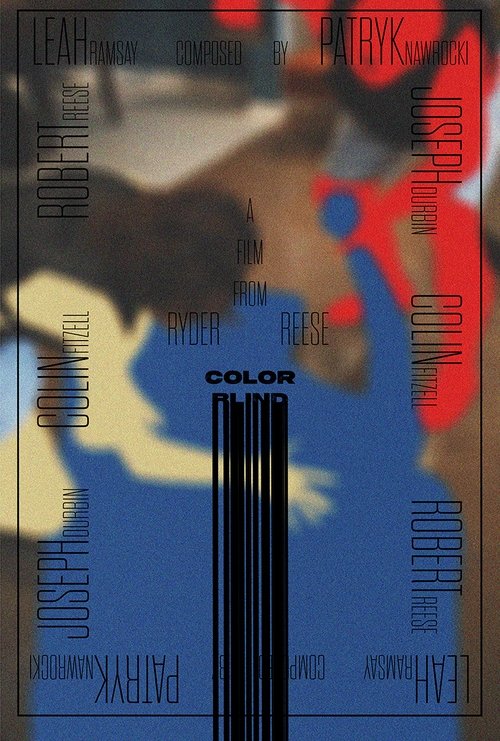
The cinematography, helmed by the renowned cinematographer Isabelle Moreau, is a visual masterpiece. Moreau utilizes a stark contrast between the Collective's controlled environment and the hidden pockets of rebellion. The Collective's world is depicted in muted tones, dominated by greys, whites, and blues, reflecting the suppression of individual expression. In contrast, the scenes depicting Alba's memories and the hidden resistance are filled with vibrant colors, symbolizing the richness and complexity of human emotion.
Moreau's use of close-ups is particularly effective in conveying the characters' internal struggles. The camera lingers on Alba's face as she undergoes Emotional Calibration, capturing the pain, confusion, and defiance in her eyes. The use of long, sweeping shots emphasizes the vastness and power of the Collective, highlighting the individual's insignificance in the face of overwhelming control. The lighting is also carefully considered, with harsh, artificial light used to depict the Collective's sterile environment and soft, natural light used to depict the hidden pockets of humanity. The visual language of Color Blind is as compelling as the narrative itself, adding layers of depth and meaning to the film's themes.
Performances: Lena Reyes's Breakthrough Performance
As mentioned earlier, Lena Reyes delivers a breakthrough performance as Alba. She embodies the character's intellectual curiosity, emotional vulnerability, and unwavering determination. Reyes's ability to convey a wide range of emotions, from joy and empathy to fear and anger, is truly remarkable. Her performance is both subtle and powerful, drawing the audience into Alba's internal struggles and making them feel her pain and confusion.
Elias Vance is equally compelling as Director Thorne. He avoids the trap of portraying Thorne as a one-dimensional villain, instead crafting a complex and nuanced character who is driven by a genuine belief in the Collective's ideals. Vance's performance is both chilling and sympathetic, making Thorne a fascinating and unsettling figure. The supporting cast is also strong, with Maya Sharma and David Chen delivering memorable performances. However, it is Reyes and Vance who truly anchor the film, their performances elevating Color Blind from a thought-provoking concept to a deeply moving and emotionally resonant experience.
Themes and Messages: Conformity, Memory, and the Price of Harmony
Color Blind explores a multitude of complex themes, chief among them being the dangers of enforced conformity and the importance of preserving individual memory and identity. The film argues that societal harmony should not come at the expense of individual freedom and expression. The Collective's attempts to control emotions and rewrite history highlight the dangers of totalitarianism and the importance of critical thinking.
The film also explores the power of memory and its role in shaping individual identity. Alba's struggle to uncover the truth about the past is a testament to the importance of remembering and learning from history. Color Blind suggests that suppressing uncomfortable truths can lead to a distorted understanding of the present and a dangerous disregard for the future. The film also touches upon the themes of free will, personal responsibility, and the ethical implications of technological advancements. By exploring these complex themes, Color Blind encourages viewers to question their own beliefs and values and to consider the kind of society they want to live in.
Comparisons: Echoes of Dystopian Classics, a Unique Vision
Color Blind inevitably draws comparisons to other dystopian classics such as 1984, Brave New World, and Equilibrium. Like these films, Color Blind explores the dangers of totalitarian control and the suppression of individual freedom. However, Sharma's film distinguishes itself through its focus on the manipulation of emotions and the recontextualization of history. While 1984 focused on surveillance and thought control, and Brave New World focused on social engineering through pleasure, Color Blind explores the more insidious and subtle methods of control through emotional manipulation and historical revisionism.
Sharma's previous work, particularly her debut film The Echo Chamber, also explored themes of social manipulation and the erosion of individual identity. However, Color Blind is a more ambitious and mature work, showcasing Sharma's growth as a filmmaker. The film's visual style and thematic depth are reminiscent of films like Blade Runner 2049, but Color Blind ultimately forges its own unique path, offering a fresh and relevant perspective on the dangers of conformity in the 21st century.
Positive Aspects: A Triumph of Vision and Execution
Color Blind is a triumph on many levels. Anya Sharma's direction is masterful, creating a visually stunning and emotionally immersive world. Lena Reyes delivers a career-defining performance as Alba, and the supporting cast is equally strong. The cinematography is breathtaking, and the film's score is hauntingly beautiful. Most importantly, Color Blind is a thought-provoking and emotionally resonant film that will stay with you long after the credits roll. The film's exploration of complex themes is both timely and relevant, making it a must-see for anyone interested in dystopian fiction or social commentary.
Constructive Criticism: Minor Imperfections in a Near-Perfect Film
While Color Blind is a remarkable film, it is not without its minor imperfections. The pacing, while deliberate, may feel slow to some viewers. The film's ambiguous ending, while thought-provoking, may leave some feeling unsatisfied. Additionally, the film's exploration of certain themes, such as the ethical implications of technological advancements, could have been more fully developed. However, these are minor criticisms in the context of an otherwise exceptional film. Some may also find the premise slightly derivative of other dystopian works, but the execution and thematic nuances elevate it beyond simple imitation.
Conclusion: A Must-See for Thoughtful Viewers
Color Blind is not a film for the faint of heart. It's a challenging, disturbing, and ultimately rewarding experience that will leave you questioning the nature of reality and the price of societal harmony. Anya Sharma has crafted a visually stunning and emotionally resonant film that is both timely and relevant. Lena Reyes delivers a career-defining performance, and the supporting cast is equally strong. Despite its minor imperfections, Color Blind is a must-see for anyone interested in dystopian fiction, social commentary, or simply a thought-provoking and emotionally engaging cinematic experience.