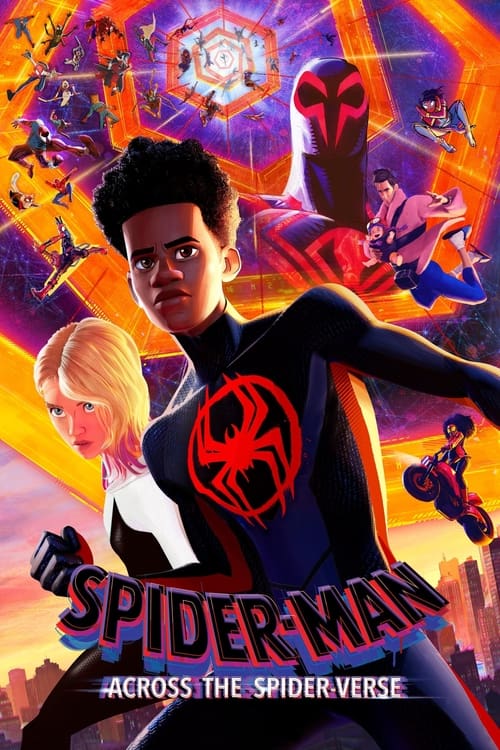
Spider-Man: Across the Spider-Verse - Review
Spider-Man: Across the Spider-Verse - A Multiversal Masterpiece and a Marvelous Mess
Hold on to your webs, folks! Spider-Man: Across the Spider-Verse isn't just a sequel; it's a seismic event in animation and superhero storytelling. Following the groundbreaking success of Spider-Man: Into the Spider-Verse, this film swings even higher, delivering a visual feast, a complex narrative, and a deeply emotional journey that will leave you breathless. However, like a web stretched too thin, the film's ambition occasionally strains its structure, leading to a magnificent, albeit slightly flawed, experience. Buckle up as we dive into the kaleidoscopic world of Miles Morales and the ever-expanding Spider-Verse.
Plot: A Web of Destiny, Choice, and Consequence
The plot of Across the Spider-Verse is significantly more intricate than its predecessor. We rejoin Miles Morales, now a more seasoned Spider-Man, juggling the responsibilities of hero and teenager. Meanwhile, Gwen Stacy, haunted by the events of the first film, finds herself recruited into the Spider-Society, a multiversal team of Spider-People led by Miguel O'Hara, aka Spider-Man 2099. When a new threat, The Spot, emerges with the power to create interdimensional portals, Gwen seeks Miles' help. However, Miles' arrival at the Spider-Society headquarters in Nueva York reveals a stark difference in ideology. Miguel believes in preserving the "canon," a set of predetermined events that must occur in every Spider-Man's life to maintain the stability of the multiverse. Miles, naturally, refuses to accept this rigid fate, especially when he discovers that his own father's life is at risk.
The central conflict revolves around the concept of "canon events" – specific tragedies and milestones that define a Spider-Man's journey. Miguel argues that deviating from these events will unravel the fabric of reality, while Miles believes in the power of choice and the right to defy destiny. This philosophical clash forms the core of the narrative, forcing Miles to confront not only his own limitations but also the very nature of heroism. The Spot, initially a comedic and seemingly inept villain, becomes a formidable threat as he absorbs more and more energy from the multiverse, growing in power and posing a genuine existential threat.
The film's pacing is relentless, propelling the audience through a whirlwind of dimensions, each with its own unique visual style and Spider-Person. While the sheer density of the plot is impressive, it occasionally feels overwhelming. The introduction of numerous new characters, while exciting, can sometimes detract from the central narrative arc of Miles and Gwen. The ending, a deliberate cliffhanger, leaves many questions unanswered and sets the stage for the next installment, but it may frustrate some viewers who prefer a more conclusive resolution.
Characters: A Spider-Verse of Personalities
Across the Spider-Verse excels in its character development, particularly in its exploration of Miles and Gwen. Miles is no longer the wide-eyed kid from the first film; he's a confident, yet still vulnerable, young man grappling with the weight of his responsibilities and the desire to protect his loved ones. His unwavering optimism and determination to forge his own path are both admirable and relatable.
Gwen Stacy receives a significant expansion of her backstory, revealing her complicated relationship with her father, Captain Stacy, and her struggles with guilt and isolation. Her journey is one of self-discovery and acceptance, as she learns to trust others and embrace her role as Spider-Woman. Her bond with Miles remains a central emotional anchor of the film, but their conflicting ideologies create a compelling tension that drives much of the plot.
Miguel O'Hara, Spider-Man 2099, is a fascinating and complex antagonist. Voiced with gravitas by Oscar Isaac, Miguel is driven by a tragic past and a fierce determination to protect the multiverse, even if it means sacrificing individual lives. His rigid adherence to the "canon" stems from his own personal failure, making him a sympathetic, albeit misguided, figure. He's not a villain in the traditional sense, but rather an anti-hero whose methods are morally questionable.
The supporting cast is equally memorable. Spider-Gwen's bandmates, especially Peter Parker (Spider-Punk), provide moments of levity and offer alternative perspectives on the Spider-Man experience. The various other Spider-People, from Spider-Byte to Spider-Man India, add to the film's vibrant tapestry, each with their own unique powers and personalities. Even The Spot, initially a minor villain, undergoes a compelling transformation, evolving from a bumbling buffoon into a genuinely menacing threat.
However, the sheer number of characters introduced can be a double-edged sword. While it expands the scope of the Spider-Verse, it also means that some characters receive less screen time and development than they deserve. The focus on Miles, Gwen, and Miguel inevitably overshadows many of the other Spider-People, leaving their stories feeling somewhat underdeveloped.
Direction and Cinematography: A Visual Symphony of the Spider-Verse
The direction of Across the Spider-Verse, helmed by Joaquim Dos Santos, Kemp Powers, and Justin K. Thompson, is nothing short of breathtaking. The film builds upon the groundbreaking visual style of its predecessor, pushing the boundaries of animation even further. Each dimension is rendered in a distinct art style, reflecting the unique culture and aesthetic of its Spider-Person. From the watercolor-inspired world of Gwen Stacy to the futuristic cyberpunk cityscape of Nueva York, the film is a visual feast for the eyes.
The action sequences are dynamic and inventive, utilizing the full potential of the animated medium. The filmmakers seamlessly blend different animation styles, creating a sense of chaos and energy that perfectly captures the frenetic nature of multiversal travel. The use of comic book panels, thought bubbles, and onomatopoeia further enhances the film's visual language, paying homage to its source material while pushing the boundaries of cinematic storytelling.
The cinematography is equally impressive. The camera angles, framing, and lighting are all meticulously crafted to create a sense of depth and immersion. The use of color is particularly striking, with vibrant hues and contrasting palettes that reflect the emotional state of the characters and the tone of the scene. The film's visual style is not just aesthetically pleasing; it's also integral to the storytelling, enhancing the emotional impact of the narrative.
While the visual style is undeniably stunning, it can occasionally be overwhelming. The sheer amount of detail and visual information on screen can sometimes be distracting, making it difficult to focus on the narrative. However, this is a minor criticism in the face of the film's overall visual brilliance.
Performances: Voices That Bring the Spider-Verse to Life
The voice acting in Across the Spider-Verse is exceptional, with each actor bringing their character to life with nuance and emotion. Shameik Moore delivers another outstanding performance as Miles Morales, capturing his youthful energy, his unwavering optimism, and his growing sense of responsibility. Hailee Steinfeld shines as Gwen Stacy, conveying her vulnerability, her strength, and her complex emotions with remarkable depth. Oscar Isaac is perfectly cast as Miguel O'Hara, imbuing the character with a sense of gravitas and moral ambiguity.
The supporting cast is equally impressive. Jake Johnson returns as Peter B. Parker, providing comic relief and offering a mentor-like figure to Miles. Brian Tyree Henry and Luna Lauren Velez deliver heartfelt performances as Miles' parents, Jefferson Davis and Rio Morales, grounding the film in emotional reality. Jason Schwartzman is hilarious as The Spot, transforming the character from a bumbling buffoon into a genuinely menacing villain. The vocal performances are crucial to the film's success, adding depth and dimension to the characters and enhancing the emotional impact of the narrative.
Themes and Messages: Exploring Identity, Choice, and Destiny
Across the Spider-Verse delves into several complex themes, including identity, choice, and destiny. The film explores the challenges of being a teenager, a superhero, and a person of color in a world that often tries to define you. Miles' struggle to reconcile his dual identities as Miles Morales and Spider-Man is a central theme, as he grapples with the expectations of his family, his community, and the wider world.
The film also examines the concept of choice and the importance of forging your own path. Miles' refusal to accept the "canon" events of the Spider-Man mythos is a powerful statement about the importance of free will and the right to defy destiny. The film argues that we are not bound by predetermined narratives, but rather have the power to shape our own lives and create our own futures.
The theme of destiny is further explored through the character of Miguel O'Hara, who believes that deviating from the "canon" will unravel the fabric of reality. Miguel's perspective highlights the potential consequences of our choices and the importance of considering the impact of our actions on others. However, the film ultimately sides with Miles, arguing that the pursuit of a better future is worth the risk, even if it means challenging established norms and traditions.
Furthermore, the film touches upon the importance of family and community. Miles' relationship with his parents is a central emotional anchor of the film, providing him with support and guidance as he navigates the challenges of being Spider-Man. The film also celebrates the diversity of the Spider-Verse, showcasing a wide range of characters from different backgrounds and cultures. This inclusivity reinforces the message that anyone can be a hero, regardless of their race, gender, or sexual orientation.
Comparison to Other Films and Previous Works
Across the Spider-Verse stands out as a unique and innovative film, but it also draws inspiration from other works in the superhero and animation genres. Its exploration of the multiverse is reminiscent of films like Doctor Strange in the Multiverse of Madness and Everything Everywhere All at Once, but Across the Spider-Verse offers a more nuanced and visually stunning take on the concept.
The film's focus on character development and emotional depth is similar to that of Christopher Nolan's The Dark Knight trilogy, which also explored the psychological toll of being a superhero. However, Across the Spider-Verse offers a more optimistic and hopeful perspective, emphasizing the importance of community and the power of human connection.
Compared to Spider-Man: Into the Spider-Verse, the sequel is significantly more ambitious in scope and complexity. While the first film focused on introducing the concept of the Spider-Verse and establishing Miles Morales as a compelling protagonist, Across the Spider-Verse delves deeper into the mythology of Spider-Man, exploring the themes of choice, destiny, and the responsibility that comes with great power. The sequel also boasts a more visually stunning and dynamic animation style, pushing the boundaries of what is possible in the animated medium.
Positive Aspects
- Visually Stunning Animation: The film's animation is groundbreaking, pushing the boundaries of what is possible in the animated medium.
- Compelling Characters: Miles Morales and Gwen Stacy are complex and relatable characters, whose journeys resonate with audiences of all ages.
- Intricate Plot: The film's plot is ambitious and thought-provoking, exploring the themes of choice, destiny, and the responsibility that comes with great power.
- Exceptional Voice Acting: The voice acting is outstanding, with each actor bringing their character to life with nuance and emotion.
- Inclusivity and Diversity: The film celebrates the diversity of the Spider-Verse, showcasing a wide range of characters from different backgrounds and cultures.
Constructive Criticism
- Overwhelming Plot: The sheer density of the plot can sometimes be overwhelming, making it difficult to focus on the central narrative arc.
- Too Many Characters: The introduction of numerous new characters, while exciting, can detract from the development of the main characters.
- Cliffhanger Ending: The deliberate cliffhanger ending may frustrate some viewers who prefer a more conclusive resolution.
- Occasional Visual Overload: The sheer amount of detail and visual information on screen can sometimes be distracting.
Conclusion
Spider-Man: Across the Spider-Verse is a triumph of animation and superhero storytelling. It's a visually stunning, emotionally resonant, and intellectually stimulating film that will leave you breathless. While its ambition occasionally strains its structure, the film's strengths far outweigh its weaknesses. It's a must-see for fans of Spider-Man, animation, and superhero movies in general. The film's exploration of identity, choice, and destiny is both timely and relevant, making it a powerful and thought-provoking experience.
Despite the minor pacing issues and the cliffhanger ending, Across the Spider-Verse is a masterpiece of modern animation and a bold step forward for the superhero genre. It's a film that will stay with you long after the credits roll, prompting you to question your own choices and the nature of your own destiny. Just be prepared to wait for the next chapter!