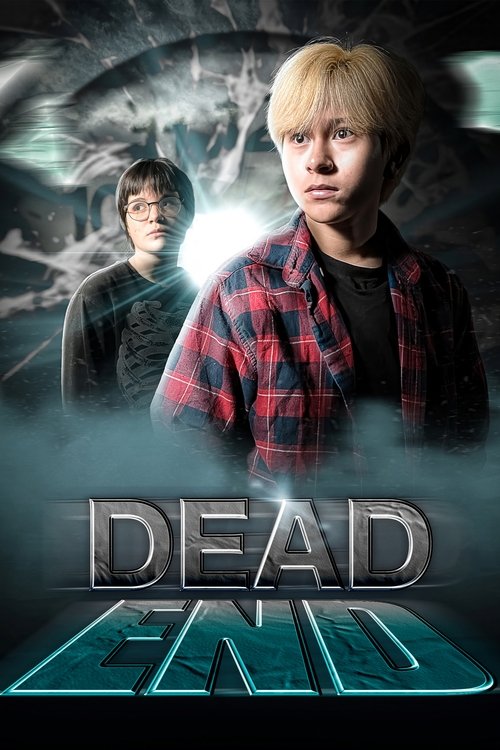
Dead End - Review
Dead End: A Haunting Exploration of Grief and Acceptance
Dead End, released on July 12th, 2025, is not your typical time-loop thriller. While it shares DNA with films like Groundhog Day and Edge of Tomorrow, director Anya Sharma crafts a deeply personal and emotionally resonant story about grief, guilt, and the arduous journey towards acceptance. This isn't just about escaping a temporal anomaly; it's about confronting the demons that haunt us long after the credits roll. Dead End grips you from the opening scene and refuses to let go, leaving you pondering its profound themes long after the screen fades to black.
Plot: A Temporal Trap of Trauma
The film centers on Michael, a seemingly ordinary fifteen-year-old whose life is irrevocably shattered when his best friend, Alex, is killed in a car accident. Michael, behind the wheel, survives the crash, but the weight of guilt and survivor's remorse crushes him. The next morning, he wakes up to find himself reliving the same day, a cruel twist of fate that offers him a chance to prevent Alex's death. What begins as a desperate attempt to rewrite history quickly descends into a nightmarish cycle of pain, frustration, and increasingly bizarre events. The time loop isn’t a simple repetition; each iteration subtly alters, introducing unsettling hallucinations and escalating the stakes. The more Michael tries to change the past, the more distorted reality becomes.
Sharma masterfully uses the time loop mechanism to explore Michael's internal turmoil. Each reset forces him to confront his actions, his regrets, and the raw, unbearable pain of loss. The plot doesn't rely solely on action sequences or intricate sci-fi explanations. Instead, it prioritizes the emotional journey of its protagonist. The mystery surrounding the loop's origin is deliberately ambiguous, leaving the audience to interpret it as a manifestation of Michael's psychological state. Is it a supernatural curse? A coping mechanism gone awry? The film wisely refrains from providing a definitive answer, allowing the viewer to engage with the story on a deeper, more personal level.
However, the film's pacing falters slightly in the middle act. Some of the repeated scenes, while thematically relevant, feel a bit repetitive and could have been trimmed for a tighter narrative. The introduction of the increasingly surreal hallucinations, while visually striking, occasionally veers into the realm of the overly bizarre, momentarily distracting from the core emotional narrative. Nevertheless, the compelling performances and the underlying emotional weight consistently pull the audience back in.
Characters: Broken Souls on a Path to Healing
The strength of Dead End lies in its well-developed and relatable characters. Michael, portrayed with remarkable vulnerability by newcomer Ethan Hayes, is the emotional anchor of the film. Hayes perfectly captures the character's initial optimism, his desperate hope to undo the tragedy, and his eventual descent into despair. His performance is nuanced and believable, allowing the audience to empathize with his struggles even as he makes questionable choices.
Alex, played by Maya Rodriguez, despite her limited screen time, leaves a lasting impression. Rodriguez imbues Alex with a vibrant energy and a genuine warmth, making her loss all the more devastating. The flashbacks showcasing Michael and Alex's friendship are particularly effective, highlighting the depth of their bond and solidifying the emotional stakes of the narrative.
Supporting characters, such as Michael's parents, played by seasoned actors Sarah Thompson and David Miller, provide a grounding presence amidst the escalating chaos. Their portrayal of grief-stricken parents struggling to cope with their own loss while supporting their son is both heartbreaking and realistic. Thompson, in particular, delivers a powerful performance as a mother desperately trying to hold her family together in the face of unimaginable tragedy.
One minor criticism is the underdevelopment of a few supporting characters. While Michael's parents are well-defined, other figures who briefly enter the time loop feel somewhat underdeveloped and their motivations remain unclear. Further exploration of these characters could have added another layer of complexity to the narrative.
Direction: A Masterclass in Atmosphere and Tension
Anya Sharma's direction is nothing short of masterful. She creates a palpable sense of dread and unease, skillfully blending elements of psychological thriller and supernatural horror. The film's atmosphere is thick with tension, enhanced by the unsettling sound design and the claustrophobic cinematography. Sharma's use of visual metaphors is particularly effective, subtly conveying Michael's internal state without resorting to heavy-handed exposition.
Sharma also demonstrates a keen understanding of pacing. She knows when to ramp up the tension with fast-paced sequences and when to slow down and allow the audience to breathe, allowing the emotional weight of the story to sink in. Her ability to balance the thriller elements with the more intimate character moments is what elevates Dead End above other films in the genre.
The direction is not without its flaws. Occasionally, Sharma relies on jump scares that feel somewhat out of place in the otherwise sophisticated and nuanced narrative. While these moments are effective in eliciting a visceral reaction, they detract slightly from the overall atmosphere of suspense and psychological dread.
Cinematography: A Visual Representation of Trauma
The cinematography, helmed by veteran cinematographer Ben Carter, is a crucial component of Dead End's success. Carter utilizes a muted color palette, dominated by grays and blues, to create a somber and unsettling atmosphere. The use of shadows and distorted perspectives further enhances the sense of unease and disorientation.
Carter's camera work is particularly effective in capturing Michael's psychological state. Close-up shots emphasize his vulnerability and emotional turmoil, while wide shots underscore his isolation and sense of helplessness. The visual representation of the hallucinations is also noteworthy, employing creative camera angles and special effects to create a truly disturbing and surreal experience.
One minor critique is the overuse of shaky cam in a few scenes. While this technique is effective in conveying a sense of urgency and chaos, it occasionally becomes distracting and detracts from the overall visual clarity.
Performances: A Cast That Delivers
The performances in Dead End are uniformly excellent. Ethan Hayes delivers a breakout performance as Michael, showcasing a remarkable range of emotions. His portrayal of grief, guilt, and despair is both authentic and heartbreaking. Maya Rodriguez, despite her limited screen time, makes a lasting impression as Alex, imbuing the character with warmth and vitality.
Sarah Thompson and David Miller provide strong supporting performances as Michael's parents, adding depth and emotional resonance to the narrative. The supporting cast, while occasionally underdeveloped, delivers solid performances that contribute to the overall believability of the film.
The casting director deserves praise for assembling such a talented and diverse ensemble. The actors' ability to connect with the material and bring their characters to life is a major reason why Dead End resonates so deeply.
Themes and Messages: Letting Go and Finding Peace
Dead End is a film that grapples with complex and universal themes. At its core, it's a story about grief, guilt, and the arduous journey towards acceptance. The time loop serves as a metaphor for the cyclical nature of grief, the way that loss can trap us in a constant state of pain and regret. The film explores the temptation to cling to the past, to try to rewrite history, and the ultimately futile nature of such endeavors.
The film also examines the importance of letting go. Michael's initial attempts to prevent Alex's death only lead to more pain and suffering. It's only when he accepts the reality of his loss and allows himself to grieve that he is able to break free from the time loop. Dead End suggests that true healing comes not from trying to change the past, but from learning to live with it.
Another important theme is the power of human connection. Michael's relationship with his parents and his memories of Alex provide him with the strength to persevere through the darkest of times. The film emphasizes the importance of support and understanding in overcoming grief and trauma.
The film also subtly touches upon the themes of forgiveness and self-compassion. Michael's guilt over Alex's death is immense, and he struggles to forgive himself for his perceived role in the tragedy. The film suggests that self-forgiveness is an essential part of the healing process and that we must learn to be kind to ourselves, even in the face of our mistakes.
Comparisons: Echoes of the Past, a Unique Voice
Dead End inevitably draws comparisons to other time-loop films, such as Groundhog Day, Edge of Tomorrow, and Happy Death Day. However, while it shares the basic premise of a character trapped in a temporal anomaly, Dead End distinguishes itself through its focus on emotional depth and psychological realism. Unlike many time-loop films, which prioritize action and humor, Dead End is a more introspective and character-driven experience.
The film also bears some resemblance to psychological thrillers like The Sixth Sense and The Machinist, films that explore themes of trauma, guilt, and the blurring of reality and perception. Like these films, Dead End relies on atmosphere, suspense, and strong performances to create a chilling and thought-provoking experience.
Anya Sharma's previous work, the critically acclaimed indie drama Echoes of Silence, also explored themes of grief and loss. Dead End represents a significant step forward for Sharma, showcasing her ability to blend genre elements with nuanced character development and emotional resonance.
Positive Aspects: A Powerful and Moving Experience
Dead End is a powerful and moving film that will stay with you long after the credits roll. The performances are excellent, the direction is masterful, and the themes are both profound and universal. The film's ability to blend elements of psychological thriller and supernatural horror with a deeply personal and emotionally resonant story is what sets it apart from other films in the genre.
The film's cinematography is stunning, creating a somber and unsettling atmosphere that perfectly complements the narrative. The use of visual metaphors is particularly effective, subtly conveying Michael's internal state without resorting to heavy-handed exposition.
Dead End is also a film that encourages reflection and discussion. Its ambiguous ending and its exploration of complex themes make it a rewarding and thought-provoking viewing experience.
Constructive Criticism: Areas for Improvement
While Dead End is a strong film overall, there are a few areas where it could have been improved. The pacing falters slightly in the middle act, and some of the repeated scenes feel a bit repetitive. The introduction of the increasingly surreal hallucinations, while visually striking, occasionally detracts from the core emotional narrative.
The underdevelopment of a few supporting characters is another minor criticism. Further exploration of these characters could have added another layer of complexity to the narrative.
Finally, the occasional reliance on jump scares feels somewhat out of place in the otherwise sophisticated and nuanced narrative.
Conclusion
Dead End is a haunting and emotionally resonant film that explores the complexities of grief, guilt, and acceptance. Anya Sharma has crafted a compelling and thought-provoking story, elevated by strong performances, masterful direction, and stunning cinematography. While the film has a few minor flaws, its strengths far outweigh its weaknesses. Dead End is a must-see for fans of psychological thrillers, supernatural horror, and character-driven dramas. It's a film that will stay with you long after the screen fades to black, prompting reflection on the enduring power of loss and the arduous journey towards healing.
Rating: 8.7/10