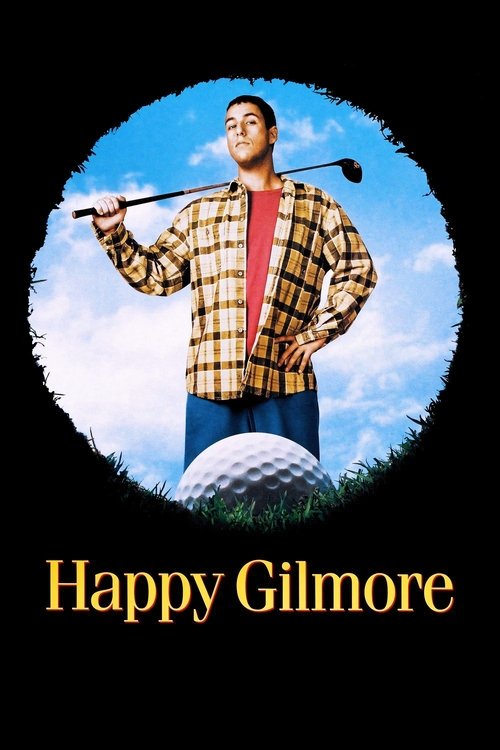
Happy Gilmore - Review
Happy Gilmore: A Hilariously Unconventional Swing at Golfing Glory
Happy Gilmore, released in 1996, isn't just a comedy; it's a cultural touchstone. A film that launched a thousand impressions and solidified Adam Sandler's status as a comedic powerhouse, it's a raucous, absurd, and surprisingly heartwarming story about a failed hockey player who discovers an unlikely talent for golf. But does this blend of slapstick, sports, and sentimentality still hold up after all these years? Let's tee off and find out.
Plot: From Hockey Rink to Golf Course, a Swing for the Ages
The plot of Happy Gilmore is deceptively simple. Happy Gilmore (Adam Sandler), a perpetually angry and talentless hockey player, is about to lose his beloved grandmother's house to foreclosure. In a desperate attempt to raise the $270,000 needed to save her home, Happy discovers he possesses a unique and powerful golf swing. However, his explosive temper and unconventional methods clash violently with the genteel world of professional golf. He enters a local tournament, wins, and sets his sights on the PGA tour, hoping to earn enough prize money to rescue Grandma Gilmore. This journey pits him against the villainous Shooter McGavin (Christopher McDonald), the epitome of golfing snobbery and Happy's rival on and off the green. To complicate matters, Happy develops feelings for Virginia Venit (Julie Bowen), the tour's publicist, who attempts to refine his image and tame his wild behavior.
The film's strength lies not in its intricate plot twists, but in its relentless commitment to comedic chaos. Each scene is carefully constructed to maximize laughs, often at the expense of realism. The narrative is a vehicle for Sandler's signature brand of physical comedy, outrageous outbursts, and surprisingly tender moments. While predictable at times, the plot serves its purpose: to provide a framework for the characters to shine and the jokes to land.
Characters: A Cast of Comedic Gold
Happy Gilmore boasts a memorable cast of characters, each contributing to the film's overall comedic effect.
Happy Gilmore (Adam Sandler)
Happy is the heart and soul of the film. He's a flawed protagonist, driven by anger and a fierce love for his grandmother. Sandler perfectly embodies Happy's childlike innocence and explosive rage. He's not inherently malicious, but his inability to control his temper leads to hilarious and often destructive consequences. Happy's journey is one of self-discovery, learning to channel his anger into his golf game and, more importantly, into becoming a better person.
Shooter McGavin (Christopher McDonald)
Shooter McGavin is the perfect foil to Happy. He's arrogant, entitled, and utterly detestable. McDonald delivers a brilliantly smug performance, making Shooter a villain you love to hate. He's not just a golfing rival; he represents everything Happy despises: elitism, hypocrisy, and a lack of genuine passion. Shooter's over-the-top villainy provides a constant source of conflict and comedic tension.
Virginia Venit (Julie Bowen)
Virginia is the voice of reason in Happy's chaotic world. She's intelligent, compassionate, and determined to help Happy succeed, both on and off the course. Bowen's performance provides a grounding presence, balancing out the film's more outlandish elements. While their romance feels somewhat forced, Virginia's influence on Happy's personal growth is undeniable.
Grandma Gilmore (Frances Bay)
Grandma Gilmore is the film's emotional anchor. She's kind, supportive, and completely oblivious to Happy's often-destructive behavior. Bay's portrayal is endearing and adds a layer of warmth to the film. Her vulnerability and dependence on Happy provide the motivation for his golfing journey.
Chubbs Peterson (Carl Weathers)
Chubbs, Happy's one-handed golf coach, is a fan favorite. Weathers delivers a hilarious and surprisingly poignant performance as the former golfing champion who lost his hand to an alligator. Chubbs's wisdom and guidance help Happy harness his talent and teach him the importance of patience and discipline. His backstory, though absurd, adds depth to his character and provides a valuable lesson about overcoming adversity.
The supporting cast, including Ben Stiller as the sadistic nursing home orderly, add further layers of comedic brilliance. Each character, no matter how small, contributes to the film's overall sense of fun and absurdity.
Direction and Cinematography: Keeping it Simple, Serving the Comedy
Directed by Dennis Dugan, Happy Gilmore doesn't strive for cinematic artistry. The direction is straightforward, focusing on showcasing the comedic performances and physical gags. Dugan understands the film's strengths and allows the actors to shine, particularly Sandler, who improvises many of his lines and physical antics.
The cinematography is equally functional. It's not visually stunning, but it effectively captures the energy and excitement of the golf course. The camera work is often dynamic, following Happy's wild swings and capturing the reactions of the bewildered onlookers. The film's visual style prioritizes clarity and comedic timing over artistic flair. The focus is always on the action and the jokes, ensuring that the audience never misses a beat.
Performances: Sandler at His Finest
Happy Gilmore is undoubtedly Adam Sandler's vehicle. He delivers a career-defining performance, perfectly blending his signature brand of juvenile humor with moments of genuine emotion. His physical comedy is top-notch, and his ability to improvise and react to his co-stars adds a layer of spontaneity to the film. Sandler's performance is both hilarious and surprisingly endearing, making Happy a character you root for despite his flaws.
Christopher McDonald is equally brilliant as Shooter McGavin. He embraces the role of the villain with gusto, creating a character that is both detestable and endlessly entertaining. Julie Bowen provides a strong and grounded performance as Virginia, while Carl Weathers delivers a surprisingly nuanced portrayal of Chubbs. The supporting cast is equally strong, contributing to the film's overall comedic success.
Themes and Messages: More Than Just Slapstick
Beneath the surface of slapstick and outrageous humor, Happy Gilmore explores several surprisingly resonant themes:
The Importance of Family
Happy's unwavering devotion to his grandmother is the driving force behind his actions. He's willing to endure humiliation and hardship to save her home, highlighting the importance of family bonds and the sacrifices we make for those we love.
Overcoming Adversity
Happy's journey is not just about winning a golf tournament; it's about overcoming his anger issues and learning to control his emotions. He faces numerous obstacles, both on and off the course, but he perseveres, demonstrating the importance of resilience and determination.
Challenging the Status Quo
Happy's unconventional approach to golf disrupts the established order of the sport. He challenges the elitism and snobbery of the golfing world, demonstrating that success can come from unexpected places and that passion and determination can triumph over tradition.
Finding Your Purpose
Happy initially lacks direction in his life, drifting from one failed endeavor to another. Through golf, he discovers a talent and a purpose, highlighting the importance of finding something you're passionate about and pursuing it with dedication.
While the film doesn't explicitly preach these themes, they are subtly woven into the narrative, adding depth and meaning to the comedic chaos.
Comparison to Other Films and Works
Happy Gilmore shares similarities with other sports comedies, such as Caddyshack and Major League. Like those films, it uses the backdrop of a sport to explore themes of class conflict, underdog triumph, and the absurdity of human behavior. However, Happy Gilmore distinguishes itself through its unique blend of slapstick, sentimentality, and Sandler's signature comedic style.
The film also reflects Sandler's earlier work on Saturday Night Live, featuring similar characters, comedic sensibilities, and a willingness to push the boundaries of good taste. However, Happy Gilmore represents a more mature and focused effort, showcasing Sandler's ability to craft a compelling narrative around his comedic persona.
Positive Aspects: A Hole-in-One Comedy
Happy Gilmore excels in several key areas:
- Hilarious Performances: Sandler, McDonald, Bowen, and Weathers deliver memorable and quotable performances.
- Relentless Comedy: The film is packed with jokes, gags, and physical humor that keep the audience laughing from beginning to end.
- Memorable Characters: The characters are well-defined and contribute to the film's overall comedic effect.
- Surprisingly Heartwarming: Beneath the surface of slapstick, the film explores themes of family, perseverance, and finding your purpose.
- Cultural Impact: Happy Gilmore has become a cultural phenomenon, spawning countless quotes, memes, and impressions.
Constructive Criticism: A Few Bumps on the Green
While Happy Gilmore is a highly entertaining film, it's not without its flaws:
- Predictable Plot: The narrative is fairly straightforward and predictable, lacking in originality.
- Forced Romance: The romantic subplot between Happy and Virginia feels somewhat contrived and underdeveloped.
- Over-the-Top Humor: Some of the humor may be too juvenile or offensive for some viewers.
- Lack of Subtlety: The film often sacrifices subtlety for the sake of comedic effect, resulting in some moments that feel forced or unnatural.
- Dated Elements: Some of the cultural references and comedic tropes feel dated in the modern era.
Conclusion: A Timeless Comedy Classic
Despite its flaws, Happy Gilmore remains a hilarious and enduring comedy classic. Adam Sandler's performance is a tour de force, and the supporting cast is equally strong. The film's relentless commitment to comedy, coupled with its surprisingly heartwarming themes, makes it a crowd-pleaser that continues to resonate with audiences of all ages. While some of the humor may be dated or offensive to some, the film's overall message of perseverance, family, and challenging the status quo remains timeless.
Happy Gilmore is not just a comedy; it's a cultural phenomenon. It's a film that has launched a thousand impressions, solidified Adam Sandler's status as a comedic icon, and brought laughter to millions of viewers. While it may not be a cinematic masterpiece, it's a genuinely funny and entertaining film that deserves its place in comedic history.
Rating: 8.5/10