Light of the World - Review
"Light of the World": A Luminous Animated Retelling of an Ancient Story
In the landscape of animated films, where superhero sagas and whimsical adventures often dominate, "Light of the World" emerges as a refreshingly different, profoundly moving experience. Released on September 4th, 2025, this ambitious project retells the story of Jesus of Nazareth through the eyes of the Apostle John, reimagining the familiar narrative with stunning animation, evocative music, and a keen focus on the human element. While the story itself is well-trodden, "Light of the World" manages to breathe new life into it, offering a perspective that is both reverent and accessible. But does its artistic ambition translate into a truly compelling and impactful cinematic experience? Let's delve into the radiant depths of this animated masterpiece.
Plot: A Journey of Faith and Transformation
The film opens in a bustling Judea, rife with anticipation for the promised Messiah. Amidst this fervent expectation, we meet John, a young, inquisitive fisherman, disillusioned by the rigid traditions of his time. He witnesses the preaching of John the Baptist, a fiery prophet preparing the way for someone greater. When Jesus arrives, it's not with the fanfare many expected. Instead, he's a humble man with a radical message of love, forgiveness, and compassion. John, along with his brother James, and other soon-to-be disciples like Andrew and Peter, are drawn to Jesus's charisma and the power of his words. The film follows their journey as they grapple with Jesus's teachings, witness miracles, and struggle to understand the true nature of his mission.
The narrative structure is largely episodic, focusing on key moments in Jesus's ministry: the calling of the disciples, the Sermon on the Mount, the healing of the sick, the feeding of the five thousand, and the raising of Lazarus. These events are interwoven with John's personal journey of faith, his doubts, his moments of clarity, and his growing understanding of Jesus's divine purpose. The film culminates, as expected, with the Last Supper, the betrayal by Judas, the crucifixion, and the resurrection. However, "Light of the World" distinguishes itself by focusing on the emotional impact of these events on John and the other disciples, allowing the audience to connect with the story on a deeply personal level.
While the plot adheres closely to the biblical narrative, it does take some creative liberties. Certain events are condensed or reinterpreted to enhance the dramatic flow and emotional resonance. These changes, however, are generally respectful of the source material and serve to deepen the audience's understanding of the characters and their motivations. One particularly effective change is the fleshing out of Judas Iscariot’s character, portraying him not as a purely malevolent figure, but as a conflicted individual driven by a misguided belief that betraying Jesus would force his hand and trigger a revolution against the Roman oppressors.
Characters: Humanizing the Divine
One of the film's greatest strengths lies in its character development. Jesus, voiced with gentle authority and profound empathy by Liam Neeson, is portrayed as both divine and deeply human. He is not a distant, ethereal figure, but a compassionate teacher who understands the struggles and frailties of his followers. Neeson's performance is nuanced and powerful, capturing the essence of Jesus's love, wisdom, and unwavering commitment to his mission.
The Apostle John, our protagonist, is brought to life with youthful energy and earnestness by Tom Holland. Holland perfectly captures John's initial skepticism, his growing faith, and his unwavering loyalty to Jesus. We see the world through John's eyes, sharing his confusion, his doubts, and his ultimate conviction in Jesus's divinity. This perspective allows the audience to connect with the story in a more intimate and relatable way.
The supporting characters are equally well-developed. Peter, the impulsive and often flawed disciple, is portrayed with gruff charm by Bryan Cranston. Mary Magdalene, a woman redeemed by Jesus's love, is given a voice of strength and compassion by Viola Davis. Judas Iscariot, as mentioned earlier, is given a more complex and sympathetic portrayal, adding depth and nuance to his tragic story. Even minor characters, such as Pontius Pilate and Herod Antipas, are given distinct personalities and motivations, enriching the overall narrative.
However, the film does occasionally fall into the trap of relying on archetypes. The Pharisees, for example, are often depicted as uniformly villainous and hypocritical, lacking the nuance and complexity that could have made them more compelling antagonists. While their opposition to Jesus is a central theme of the story, a more balanced portrayal could have added greater depth and realism to the conflict.
Direction and Cinematography: A Visual Feast
Director Brenda Chapman, known for her work on "Brave" and "The Prince of Egypt," brings her signature blend of artistic vision and storytelling expertise to "Light of the World." Chapman's direction is masterful, seamlessly blending moments of quiet intimacy with scenes of grand spectacle. She creates a world that feels both ancient and timeless, immersing the audience in the sights, sounds, and emotions of first-century Judea.
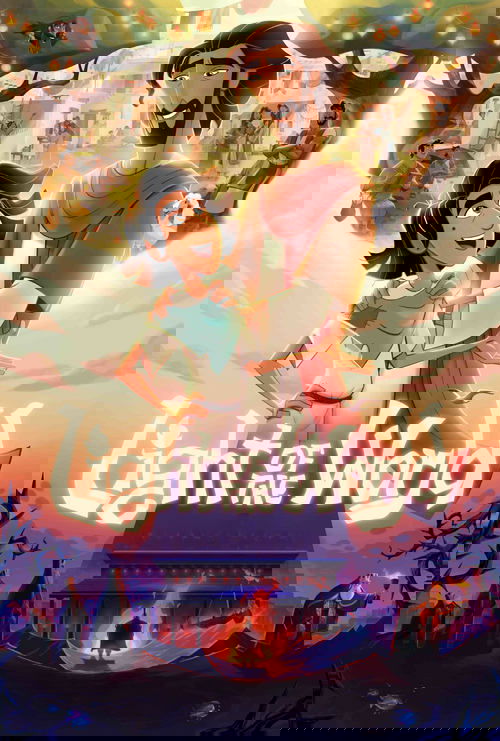
The animation style is a breathtaking fusion of traditional hand-drawn techniques and modern CGI. The characters are expressive and lifelike, their emotions vividly conveyed through subtle facial expressions and body language. The landscapes are stunningly rendered, from the rolling hills of Galilee to the bustling streets of Jerusalem. The film's visual style is reminiscent of classic animated films like "The Prince of Egypt" and "Joseph: King of Dreams," but with a more contemporary sensibility.
The cinematography is equally impressive. The film employs a variety of camera angles and lighting techniques to create mood and atmosphere. Close-ups are used to emphasize the characters' emotions, while wide shots capture the grandeur of the landscapes. The use of light and shadow is particularly effective, creating a sense of both hope and foreboding. The color palette is rich and vibrant, reflecting the beauty and diversity of the natural world. The animation during the miracle scenes is particularly stunning, imbuing these moments with a sense of wonder and awe.
One minor criticism is that the animation style, while beautiful, occasionally feels slightly inconsistent. Some scenes are rendered with a higher level of detail than others, creating a slight sense of visual jarring. However, this is a minor quibble in an otherwise visually stunning film.
Performances: Voices That Resonate
The voice acting in "Light of the World" is uniformly excellent. As previously mentioned, Liam Neeson delivers a powerful and nuanced performance as Jesus, capturing the essence of his love, wisdom, and authority. Tom Holland brings youthful energy and earnestness to the role of John, making him a relatable and sympathetic protagonist. Bryan Cranston imbues Peter with gruff charm and vulnerability, while Viola Davis gives Mary Magdalene a voice of strength and compassion.
The supporting cast is equally strong. Benedict Cumberbatch delivers a chilling performance as Pontius Pilate, conveying his moral ambivalence and political pragmatism. Helena Bonham Carter is delightfully wicked as Herodias, the manipulative queen who demands the head of John the Baptist. The entire cast brings their characters to life with depth and authenticity, enhancing the emotional impact of the story.
The casting choices are particularly noteworthy. Each actor seems perfectly suited to their role, bringing a unique quality to their performance. The chemistry between the actors is also palpable, creating a sense of camaraderie and connection among the disciples.
Themes and Messages: Love, Forgiveness, and Redemption
"Light of the World" explores a number of profound themes, including love, forgiveness, redemption, faith, and sacrifice. The film emphasizes the importance of loving one another, even our enemies, and of forgiving those who have wronged us. It also highlights the transformative power of faith and the importance of standing up for what is right, even in the face of adversity.
The film's central message is one of hope. Despite the suffering and injustice that exist in the world, "Light of the World" reminds us that there is always hope for redemption and renewal. Jesus's message of love and forgiveness offers a path to healing and reconciliation, both for individuals and for society as a whole.
The film also touches on themes of social justice and equality. Jesus's ministry was marked by his compassion for the poor, the marginalized, and the oppressed. He challenged the social hierarchies of his time and advocated for a more just and equitable world. These themes resonate powerfully in today's world, reminding us of the importance of fighting for social justice and equality for all.
However, the film does occasionally shy away from the more controversial aspects of Jesus's teachings. For example, the film downplays the potentially divisive nature of Jesus's claim to be the Son of God, focusing instead on his message of love and compassion. While this approach makes the film more accessible to a wider audience, it also risks sanitizing the story and glossing over some of its more challenging aspects.
Comparison to Other Films
"Light of the World" can be compared to other animated films that explore religious themes, such as "The Prince of Egypt," "Joseph: King of Dreams," and "The Miracle Maker." Like these films, "Light of the World" seeks to bring a familiar story to life for a new generation, using the power of animation to create a visually stunning and emotionally resonant experience.
However, "Light of the World" distinguishes itself from these films in several key ways. First, it is told from the perspective of the Apostle John, giving the story a more intimate and personal feel. Second, it employs a more sophisticated animation style, blending traditional hand-drawn techniques with modern CGI. Third, it delves deeper into the emotional complexities of the characters, exploring their doubts, their fears, and their ultimate faith.
Brenda Chapman's direction also sets "Light of the World" apart. Her experience directing "Brave" and "The Prince of Egypt" gives her a unique understanding of how to tell a compelling story with both visual flair and emotional depth. She brings a sense of gravitas and reverence to the material, while also making it accessible and engaging for a contemporary audience.
Positive Aspects
- Stunning animation and visual effects
- Powerful and nuanced performances by the voice cast
- A compelling and emotionally resonant retelling of a familiar story
- Thought-provoking exploration of themes such as love, forgiveness, and redemption
- Masterful direction by Brenda Chapman
- Effective use of music and sound design
Constructive Criticism
- The animation style occasionally feels inconsistent
- The portrayal of the Pharisees could be more nuanced
- The film occasionally shies away from the more controversial aspects of Jesus's teachings
- Some may find the episodic narrative structure slightly disjointed
Conclusion
"Light of the World" is a triumph of animation and storytelling. It is a visually stunning, emotionally resonant, and thought-provoking film that will appeal to audiences of all ages and backgrounds. While it is not without its minor flaws, the film's strengths far outweigh its weaknesses. It is a testament to the power of animation to bring ancient stories to life in a new and meaningful way. "Light of the World" is not just a movie; it is an experience that will stay with you long after the credits roll. It's a beautiful and moving tribute to a story that has resonated for millennia, presented with reverence and artistic skill.
Rating: 9.5/10