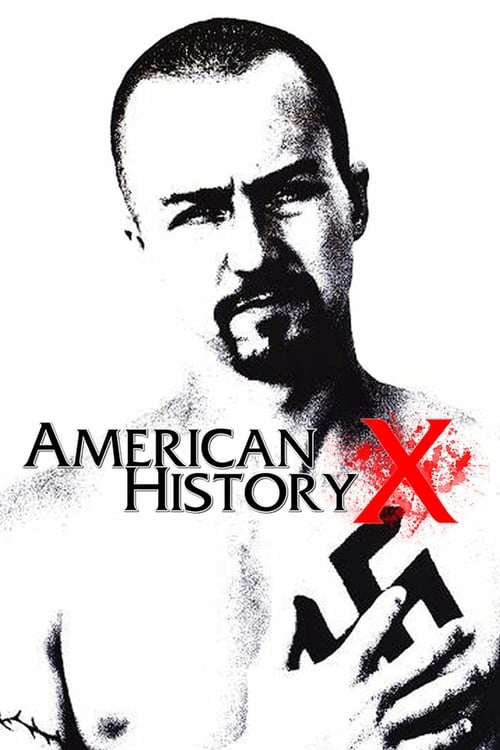
American History X - Review
American History X: A Harrowing Portrait of Hate and Redemption
In the landscape of cinema that dares to confront the darkest corners of the human psyche, few films resonate with the raw, unflinching power of American History X. Released in 1998, this Tony Kaye-directed drama doesn't just explore racism; it dissects its roots, its consequences, and the arduous path to redemption. It's a film that stays with you long after the credits roll, leaving an indelible mark on your conscience. This review delves into the film's intricate layers, examining its compelling narrative, stellar performances, and the unsettling truths it lays bare.
Plot: A Descent into Darkness and a Climb Towards Light
The narrative structure of American History X is masterful, employing a non-linear approach that heightens the film's emotional impact. We are introduced to Danny Vineyard (Edward Furlong), a troubled teenager following in the footsteps of his older brother, Derek (Edward Norton), a former neo-Nazi leader. The film cleverly interweaves the present, where Derek is fresh out of prison and trying to steer Danny away from hate, with flashbacks that reveal Derek's descent into white supremacy. These flashbacks are not merely exposition; they are visceral, disturbing glimpses into the seductive allure of extremist ideologies. We witness Derek's charismatic rise within the movement, fueled by grief, anger, and a pervasive sense of disillusionment. The film doesn't shy away from depicting the brutal violence and hateful rhetoric that characterized Derek's past, making his eventual transformation all the more compelling. The contrast between the Derek of the past and the Derek of the present is stark, creating a powerful tension that drives the narrative forward. The ending, while devastating, underscores the film's central message about the cyclical nature of violence and the enduring power of hate.
Characters: Flawed Humanity and the Search for Meaning
American History X is populated with characters who are deeply flawed, yet undeniably human. This is what makes the film so affecting. It doesn't present caricatures of good and evil, but rather complex individuals grappling with their own demons and searching for meaning in a world that often feels chaotic and unfair.
Derek Vineyard (Edward Norton)
Edward Norton's portrayal of Derek Vineyard is nothing short of iconic. He embodies the character with a chilling intensity, capturing both the terrifying rage of the skinhead leader and the quiet remorse of the reformed ex-convict. Norton's physical transformation is remarkable, but it's his ability to convey the internal struggle within Derek that truly elevates the performance. We see the initial spark of intelligence and charisma that made Derek a natural leader, but also the insidious influence of ideology that twisted those qualities into something destructive. His journey from hate-filled demagogue to a man desperately trying to undo the damage he's caused is the emotional core of the film. Norton's performance is a masterclass in acting, showcasing his range and his ability to inhabit even the most morally ambiguous characters.
Danny Vineyard (Edward Furlong)
Edward Furlong delivers a nuanced performance as Danny, the impressionable younger brother caught in Derek's shadow. Danny is not simply a blank slate; he's a young man struggling to find his own identity in the face of immense pressure from his family and his environment. He idolizes Derek, but he also possesses a spark of curiosity and a yearning for something more than the hate-filled rhetoric he's been taught. Furlong effectively portrays Danny's vulnerability and his internal conflict as he grapples with his brother's past and his own future. His essay, "American History X," serves as a powerful narrative device, allowing us to understand Danny's perspective and his evolving understanding of the world around him.
Cameron Alexander (Stacy Keach)
Stacy Keach is chillingly effective as Cameron Alexander, the manipulative and charismatic leader of the white supremacist organization. Cameron is the embodiment of the insidious nature of hate ideology. He's not a screaming, ranting fanatic, but a calculated and cunning strategist who uses rhetoric and propaganda to recruit and control young people. Keach perfectly captures Cameron's smooth, persuasive demeanor, making him all the more terrifying. He represents the corrupting influence of power and the dangers of unchecked ideology.
Murray (Elliott Gould)
Elliott Gould provides a much-needed counterpoint to the prevailing atmosphere of hate and violence as Murray, Danny's Jewish teacher and Derek's former debate coach. Murray is a voice of reason and compassion, offering Danny a different perspective and challenging his preconceived notions. Gould's performance is understated but powerful, conveying Murray's unwavering belief in the power of education and understanding to overcome prejudice. He represents the possibility of reconciliation and the importance of empathy in a world often divided by hate.
Doris Vinyard (Beverly D'Angelo)
Beverly D'Angelo portrays Doris, Derek and Danny's mother, as a woman struggling to cope with the loss of her husband and the radicalization of her sons. She represents the collateral damage of hate, the family members torn apart by ideological conflict. D'Angelo effectively conveys Doris's grief, her confusion, and her desperate attempts to hold her family together. She is a reminder that hate affects not only its direct targets but also the loved ones of those who perpetrate it.
Direction: A Bold and Uncompromising Vision
Tony Kaye's direction in American History X is both visually striking and emotionally resonant. He employs a variety of techniques to create a powerful and unsettling viewing experience. The use of black and white cinematography in the flashback sequences is particularly effective, lending a stark and timeless quality to Derek's past. These scenes are often visually arresting, capturing the raw energy and violence of the skinhead movement. The use of slow motion and close-ups heightens the emotional intensity of key moments, forcing the audience to confront the brutality of hate. Kaye's direction is uncompromising, refusing to shy away from the uncomfortable realities of racism and violence. He creates a visceral and immersive experience that leaves a lasting impact on the viewer.
Cinematography: Contrasting Worlds and Visual Storytelling
The cinematography, primarily handled by Tony Kaye himself (though he later disowned the final cut and tried to remove his name), is a crucial element in conveying the film's themes. The stark black and white used for the flashback sequences creates a sense of heightened reality, emphasizing the brutality and extremism of Derek's past. The contrast with the color footage of Derek's present, while still often bleak and unsettling, highlights the possibility of change and redemption. The use of close-ups is particularly effective in capturing the characters' emotions, allowing the audience to connect with them on a deeper level. The camera often lingers on Derek's face, revealing the internal turmoil and the slow process of his transformation. The film's visual style is both beautiful and disturbing, reflecting the complex and contradictory nature of the story it tells.
Performances: A Showcase of Acting Prowess
The performances in American History X are uniformly outstanding. As mentioned earlier, Edward Norton's portrayal of Derek Vineyard is a career-defining performance, showcasing his incredible range and his ability to inhabit complex and morally ambiguous characters. Edward Furlong delivers a nuanced and compelling performance as Danny, capturing the vulnerability and confusion of a young man caught in the crossfire of ideological conflict. Stacy Keach is chillingly effective as Cameron Alexander, the manipulative leader of the white supremacist organization. Elliott Gould provides a much-needed voice of reason and compassion as Murray, Danny's teacher. The supporting cast is equally strong, contributing to the film's overall sense of realism and emotional depth.
Themes and Messages: Confronting Hate and Seeking Redemption
American History X is a film that grapples with a number of important themes, including the dangers of hate ideology, the cyclical nature of violence, the importance of education and understanding, and the possibility of redemption. The film doesn't offer easy answers or simplistic solutions, but rather forces the audience to confront these complex issues head-on.
The Dangers of Hate Ideology
The film vividly depicts the destructive power of hate ideology, showing how it can poison individuals, families, and communities. It explores the seductive allure of extremist groups, particularly for young people who are searching for identity and belonging. The film makes it clear that hate is not simply a matter of personal prejudice, but a systemic problem that is perpetuated by social and political forces. It also highlights the importance of challenging and dismantling hate ideologies wherever they exist.
The Cyclical Nature of Violence
American History X emphasizes the cyclical nature of violence, showing how acts of aggression can lead to retaliation and further violence. The film suggests that breaking this cycle requires understanding, empathy, and a willingness to forgive. Derek's journey is a testament to the possibility of breaking free from the cycle of violence, but the film also acknowledges the immense challenges involved.
The Importance of Education and Understanding
The film underscores the importance of education and understanding as tools for combating prejudice and promoting tolerance. Murray, Danny's teacher, represents the power of education to challenge preconceived notions and broaden perspectives. The film suggests that by learning about different cultures and perspectives, we can overcome our biases and build a more just and equitable society.
The Possibility of Redemption
Despite its bleak and often violent subject matter, American History X ultimately offers a message of hope and redemption. Derek's transformation from a hate-filled skinhead to a man seeking to undo the damage he's caused is a testament to the possibility of change. The film suggests that even those who have committed terrible acts can find redemption through remorse, accountability, and a commitment to making amends. However, the film also acknowledges that redemption is not easy and that the scars of the past can linger for a lifetime.
Comparison to Other Films and Works
American History X can be compared to other films that explore themes of racism, violence, and redemption, such as Do the Right Thing, Malcolm X, and Romper Stomper. However, American History X stands out for its unflinching portrayal of white supremacy and its focus on the internal struggle of a former neo-Nazi. While Romper Stomper also delves into the world of skinheads, it lacks the emotional depth and complexity of American History X. Spike Lee's films, like Do the Right Thing, offer a broader perspective on racial tensions in America, while American History X focuses on the specific experiences of a white family grappling with hate and its consequences. In terms of Edward Norton's filmography, American History X is arguably his most powerful and impactful performance, showcasing his ability to embody complex and morally ambiguous characters. It surpasses his other notable roles in terms of sheer emotional intensity and transformative power.
Positive Aspects and Constructive Criticism
American History X is a powerful and important film that deserves to be seen and discussed. Its strengths lie in its compelling narrative, its stellar performances, its unflinching portrayal of hate, and its ultimately hopeful message about the possibility of redemption. However, the film is not without its flaws.
Positive Aspects
- Powerful and Unflinching: The film doesn't shy away from depicting the brutality of racism and violence.
- Stellar Performances: Edward Norton's performance is iconic, and the supporting cast is equally strong.
- Compelling Narrative: The non-linear structure enhances the film's emotional impact.
- Important Themes: The film grapples with important issues such as hate ideology, the cyclical nature of violence, and the possibility of redemption.
- Visually Striking: The cinematography and direction create a powerful and unsettling viewing experience.
Constructive Criticism
- Overly Simplistic at Times: While the film explores complex issues, some of the character motivations and resolutions feel somewhat simplistic. Derek's complete transformation, while believable due to Norton's performance, could be argued to be somewhat rushed.
- Potential for Exploitation: The film's graphic violence could be seen as exploitative by some viewers. While the violence serves a purpose in illustrating the horrors of hate, it could also be interpreted as sensationalizing the issue.
- Limited Perspective: While the film explores the issue of racism from the perspective of a white family, it could benefit from a more nuanced exploration of the experiences of people of color.
- The Ending: While powerful, the ending can be seen as overly bleak and nihilistic, undermining the film's message of hope and redemption for some viewers. The suddenness of Danny's death leaves little room for reflection or catharsis.
Conclusion
American History X remains a potent and relevant film, a stark reminder of the enduring power of hate and the arduous path to redemption. While it's not without its flaws, its unflinching portrayal of racism, its compelling narrative, and its stellar performances make it a must-see for anyone interested in exploring the complexities of human nature. It's a film that challenges viewers to confront their own biases and to consider the consequences of their actions. It's a film that stays with you long after the credits roll, prompting reflection and dialogue about the urgent need to combat hate and promote understanding.