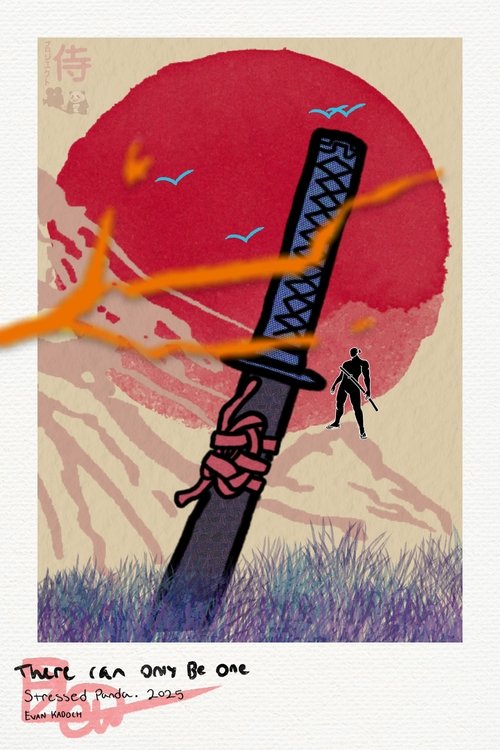
THERE CAN ONLY BE ONE - Review
THERE CAN ONLY BE ONE: A Rotoscoped Ode to Human Artistry in the Age of AI
In a cinematic landscape increasingly dominated by algorithmic content and AI-generated imagery, a defiant spark has ignited in the form of "THERE CAN ONLY BE ONE," a hand-drawn, rotoscoped animated micro-film. Released on August 26th, 2025, this visually stunning and thematically resonant piece isn't just a movie; it's a statement. A battle cry against the homogenization of art, delivered with the grace and ferocity of a samurai duel. Director Anya Sharma, previously known for her experimental short films exploring digital identity, has crafted something truly special here – a testament to the irreplaceable value of human creativity in a world grappling with the rise of artificial intelligence.
Plot: A Duel of Souls
The narrative, while minimalist, is powerfully effective. "THERE CAN ONLY BE ONE" centers on a single, protracted samurai battle. Two warriors, rendered in breathtaking rotoscoped animation, face each other in a desolate, windswept landscape reminiscent of classical Japanese art. Their movements are fluid, precise, and imbued with a weight that only hand-drawn animation can truly capture. There is no exposition, no dialogue, no backstory explicitly provided. The conflict is purely visual, expressed through the clash of steel, the grit of determination etched on their faces, and the emotional intensity conveyed through their every gesture. The ambiguity is deliberate, forcing the viewer to interpret the meaning of the duel. Are they fighting for honor? Survival? Or perhaps, for something far more profound?
The brilliance lies in its simplicity. The absence of a complex plot allows the audience to focus entirely on the artistry of the animation and the underlying themes. Each strike, each parry, each flicker of emotion on the warriors' faces becomes a brushstroke in a larger painting, a visual poem about the struggle for individuality and the preservation of human expression.
Characters: Embodiments of Artistic Ideals
While unnamed and lacking traditional character development, the two samurai serve as potent symbols. They are not merely warriors; they are embodiments of opposing artistic philosophies. One, perhaps representing the old guard, adheres to a traditional, disciplined style. His movements are precise, economical, and deeply rooted in established techniques. The other, younger and more agile, embodies a more modern, experimental approach, blending traditional techniques with innovative flourishes. Their duel becomes a visual representation of the ongoing debate between tradition and innovation, between established art forms and the boundless potential of new creative expressions.
The animation style itself adds another layer of depth to their characterization. The rotoscoping, painstakingly tracing over live-action footage, lends a realism and weight to their movements that would be impossible to achieve with purely computer-generated animation. This grounding in reality further emphasizes the human element at the heart of the film, reminding us that these warriors are not just pixels on a screen, but representations of real people and their creative struggles.
Direction: Sharma's Masterful Hand
Anya Sharma's direction is nothing short of masterful. She understands the power of visual storytelling and uses every frame to its fullest potential. Her previous work exploring digital identity has clearly informed her approach to "THERE CAN ONLY BE ONE," allowing her to create a film that is both visually stunning and deeply meaningful. She doesn't rely on exposition or dialogue to convey her message; instead, she trusts the audience to interpret the symbolism and emotional weight of the animation.
Sharma's use of pacing is particularly effective. The duel unfolds gradually, building tension with each strike and parry. There are moments of intense action interspersed with moments of quiet reflection, allowing the audience to catch their breath and contemplate the significance of what they are witnessing. This deliberate pacing keeps the viewer engaged and invested in the outcome of the battle.
Cinematography: A Painted Battlefield
While technically animation, the "cinematography" of "THERE CAN ONLY BE ONE" deserves special praise. Sharma and her team have created a visually breathtaking world using the rotoscoping technique. The backgrounds, inspired by classical Japanese paintings, are rendered in exquisite detail, creating a sense of depth and atmosphere that is both beautiful and haunting. The lighting is used to dramatic effect, casting long shadows and highlighting the intensity of the duel.
The camera angles and movement are also carefully considered, adding to the film's visual impact. The camera often lingers on the warriors' faces, capturing their expressions of determination, pain, and exhaustion. Close-ups of their hands gripping their swords emphasize the physical and emotional toll of the battle. The overall effect is a visually stunning and emotionally resonant experience that stays with you long after the credits roll.
Performances: Motion as Emotion
While there are no traditional "performances" in the sense of actors delivering lines, the motion capture artists who provided the basis for the rotoscoping deserve immense credit. Their movements are incredibly realistic and expressive, conveying a wide range of emotions without the need for dialogue. The physicality of their performance is what truly brings the characters to life, making them feel like real people engaged in a life-or-death struggle. The animators then build upon this foundation, adding subtle nuances and details that further enhance the emotional impact of the performance. The result is a seamless blend of live-action and animation that is both captivating and deeply moving.
Themes and Messages: Art in the Age of AI
The central theme of "THERE CAN ONLY BE ONE" is the preservation of human artistry in an age increasingly dominated by artificial intelligence. The film argues that while AI may be able to replicate certain aspects of art, it can never truly replace the human element – the passion, emotion, and unique perspective that artists bring to their work. The samurai duel can be interpreted as a metaphor for the ongoing battle between human creativity and algorithmic content. The victor, whoever they may be, will determine the future of art itself.
Another important theme is the balance between tradition and innovation. The two samurai represent different approaches to art, one rooted in established techniques and the other embracing new and experimental methods. The film suggests that both are necessary for the continued evolution of art. Tradition provides a foundation upon which to build, while innovation allows for new and exciting possibilities. The key is to find a balance between the two, honoring the past while embracing the future.
Finally, the film explores the theme of individuality. In a world that often pressures people to conform, "THERE CAN ONLY BE ONE" celebrates the importance of expressing one's unique voice. The samurai are not just warriors; they are individuals with their own distinct styles and approaches to combat. Their duel is a testament to the power of individuality and the importance of fighting for what you believe in.
Comparisons: Echoes of Kurosawa and Beyond
The film's visual style and themes are reminiscent of Akira Kurosawa's samurai films, particularly "Seven Samurai" and "Yojimbo." Like Kurosawa, Sharma uses minimalist storytelling and powerful visuals to convey complex emotions and ideas. The desolate landscapes and the intense, close-quarters combat are also reminiscent of Kurosawa's work.
In terms of animation, "THERE CAN ONLY BE ONE" shares similarities with films like "Waking Life" and "A Scanner Darkly," both of which utilized rotoscoping to create a unique and visually arresting style. However, Sharma's film is arguably more refined and visually stunning than either of those earlier works. Her use of color and lighting is particularly impressive, creating a sense of depth and atmosphere that is rarely seen in rotoscoped animation.
Compared to Sharma's previous work, "THERE CAN ONLY BE ONE" represents a significant step forward. While her earlier short films were experimental and thought-provoking, they lacked the visual polish and emotional depth of this latest work. "THERE CAN ONLY BE ONE" is a testament to Sharma's growth as a filmmaker and her ability to create truly impactful art.
Positive Aspects: A Visual Masterpiece
The film's greatest strength is its visual artistry. The rotoscoped animation is simply breathtaking, creating a world that is both realistic and dreamlike. The attention to detail is remarkable, from the intricate patterns on the warriors' clothing to the subtle expressions on their faces. The lighting and cinematography are also top-notch, adding to the film's visual impact.
The film's themes are also incredibly relevant and thought-provoking. In an age of AI-generated content, "THERE CAN ONLY BE ONE" serves as a powerful reminder of the importance of human creativity and individuality. The film's message is both timely and timeless, resonating with audiences on a deep emotional level.
Finally, the film's minimalist storytelling is a strength. By focusing on a single, protracted samurai duel, Sharma is able to create a sense of intimacy and intensity that would be impossible to achieve with a more complex narrative. The absence of dialogue forces the audience to interpret the film's meaning for themselves, making it a truly engaging and thought-provoking experience.
Constructive Criticism: A Few Minor Quibbles
While "THERE CAN ONLY BE ONE" is a remarkable achievement, it is not without its flaws. The lack of explicit backstory or character development may leave some viewers feeling disconnected from the characters. While the ambiguity is deliberate, it could have been beneficial to provide a little more context to help viewers understand the motivations of the two samurai.
Additionally, the film's minimalist approach may not appeal to all audiences. Some viewers may find the lack of dialogue and complex plot to be off-putting. However, those who are willing to embrace the film's artistic vision will be rewarded with a truly unforgettable experience.
Finally, the film's runtime, while appropriate for a micro-film, may leave some viewers wanting more. The world that Sharma has created is so rich and immersive that it would be fascinating to see it explored in more detail. Perhaps a longer version or a sequel could be in the works?
Conclusion: A Triumph of Human Artistry
"THERE CAN ONLY BE ONE" is a triumph of human artistry in the face of technological advancement. Anya Sharma has crafted a visually stunning and thematically resonant film that celebrates the power of human creativity and individuality. The film's rotoscoped animation is breathtaking, its themes are thought-provoking, and its minimalist storytelling is surprisingly effective. While the lack of explicit backstory and character development may not appeal to all viewers, those who are willing to embrace the film's artistic vision will be rewarded with a truly unforgettable experience. In a world increasingly dominated by AI, "THERE CAN ONLY BE ONE" is a defiant and inspiring reminder that human art still matters.
Rating: 9.5/10