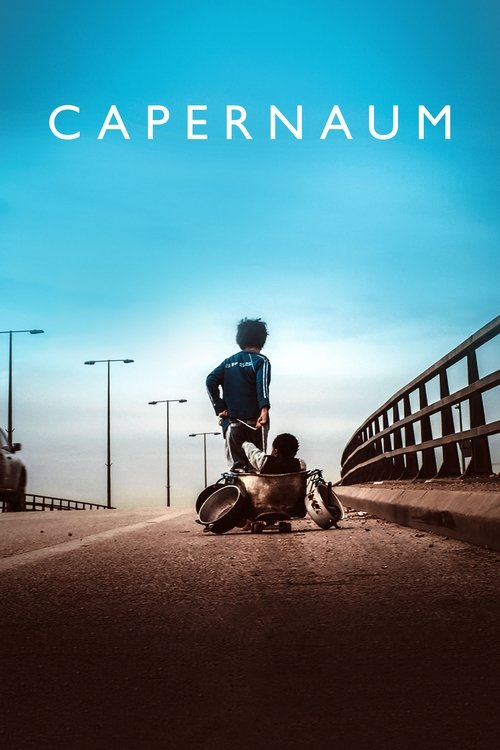
Capernaum - Review
Capernaum: A Gut-Wrenching Masterpiece of Human Resilience
Nadine Labaki's Capernaum isn't just a film; it's an experience. It claws at your conscience, burrows under your skin, and leaves you reeling long after the credits roll. Released in 2018, this Lebanese drama, centered around a young boy named Zain, is a raw, unflinching look at poverty, neglect, and the indomitable spirit of survival. Prepare to be emotionally invested, deeply moved, and profoundly challenged by this unforgettable cinematic journey.
Plot: A Child's Cry for Justice
Capernaum opens with Zain (Zain Al Rafeea), a hardened twelve-year-old, standing before a judge, suing his parents for the crime of bringing him into the world. This audacious act of defiance sets the stage for a story that is both heartbreaking and inspiring. The film then flashes back to Zain's life before his incarceration, revealing the brutal realities of his existence. Living in the slums of Beirut, Zain is forced to work to support his large family, enduring constant hardship and witnessing unspeakable acts of injustice. His days are filled with selling juice, delivering drugs, and caring for his younger siblings, all while navigating the treacherous streets of a city that seems determined to crush him.
The narrative takes a dramatic turn when Zain's beloved younger sister, Sahar, is forcibly married off to an older man. This event serves as a catalyst for Zain's ultimate act of rebellion: running away from home. On the streets, he encounters Rahil, an undocumented Ethiopian migrant worker, and becomes the caretaker of her infant son, Yonas. As Zain struggles to provide for himself and Yonas, he faces a series of escalating challenges, forcing him to make impossible choices in a desperate attempt to survive. The film expertly weaves together Zain's present legal battle with his past experiences, creating a powerful and emotionally resonant narrative that exposes the systemic failures that have shaped his life.
Characters: Faces of Desperation and Hope
The strength of Capernaum lies in its deeply compelling and authentic characters. Each individual is portrayed with nuance and complexity, revealing the humanity that persists even in the most dire circumstances.
Zain: The Embodiment of Resilience
Zain, portrayed by the remarkable Zain Al Rafeea, is the heart and soul of the film. His performance is nothing short of extraordinary, especially considering he was a Syrian refugee himself with no prior acting experience. Zain's character is a complex mix of street smarts, cynicism, and surprising tenderness. He is forced to grow up far too quickly, assuming the responsibilities of an adult while still grappling with the vulnerability of a child. His anger and frustration are palpable, but beneath the hardened exterior lies a deep-seated desire for love and belonging. Zain's unwavering commitment to protecting Sahar and Yonas highlights his inherent goodness and his refusal to be completely broken by the circumstances of his life.
Rahil: A Mother's Unyielding Love
Rahil, played by Yordanos Shiferaw, is another standout character. As an undocumented migrant worker, she faces constant exploitation and the ever-present threat of deportation. Despite her own precarious situation, Rahil's love for her son, Yonas, is fierce and unwavering. She is willing to do anything to protect him, even if it means making incredibly difficult choices. Rahil's character represents the countless marginalized individuals who are forced to live in the shadows, struggling to survive in a world that often seems indifferent to their plight.
The Parents: Victims and Perpetrators
Zain's parents, Souad and Selim, are perhaps the most controversial characters in the film. While their actions are undoubtedly reprehensible, Capernaum avoids simplistic demonization. The film subtly suggests that they are also victims of a system that perpetuates poverty and desperation. Their own lack of education, resources, and opportunities has trapped them in a cycle of neglect and abuse. While their actions are inexcusable, the film invites viewers to consider the complex factors that contribute to their behavior. They are both perpetrators and victims, caught in a web of systemic inequality.
Direction: A Visceral and Authentic Portrayal
Nadine Labaki's direction is masterful. She immerses the viewer in the chaotic and vibrant world of Beirut's slums, creating a visceral and authentic portrayal of life on the margins. Labaki's decision to cast non-professional actors adds to the film's realism and emotional impact. The performances feel raw and unscripted, conveying a sense of truth that is often lacking in more polished productions. Labaki's commitment to authenticity extends beyond the casting choices. She spent years researching and documenting the lives of marginalized communities in Lebanon, ensuring that the film accurately reflects their experiences. Her sensitive and empathetic approach to storytelling allows the audience to connect with the characters on a deeply personal level.
Labaki's direction also shines in her ability to balance the film's bleak subject matter with moments of hope and humanity. Despite the overwhelming challenges that Zain faces, he never loses his spirit or his capacity for kindness. These moments of grace and resilience provide a glimmer of hope amidst the darkness, reminding us of the enduring power of the human spirit.
Cinematography: A Glimpse into a Hidden World
The cinematography in Capernaum is both stunning and unflinching. The film's visuals capture the beauty and the brutality of Beirut's slums with equal measure. The camera often stays close to Zain, immersing the viewer in his perspective and allowing us to experience the world through his eyes. The use of handheld camerawork and natural lighting adds to the film's sense of realism and immediacy. The cinematography doesn't shy away from the harsh realities of poverty, but it also finds moments of beauty and poetry in the everyday lives of its characters. The vibrant colors of the city, the bustling marketplaces, and the intimate moments shared between Zain and Yonas are all captured with a keen eye for detail.
The film's visual language effectively conveys the themes of confinement and oppression. The cramped living spaces, the crowded streets, and the towering buildings that loom over the slums all contribute to a sense of claustrophobia and hopelessness. The camera often frames Zain in a way that emphasizes his smallness and vulnerability, highlighting the power imbalances that shape his life.
Performances: Raw Emotion and Unforgettable Authenticity
The performances in Capernaum are simply extraordinary. As mentioned before, the decision to cast non-professional actors pays off in spades. Zain Al Rafeea's performance as Zain is a revelation. He embodies the character's resilience, anger, and vulnerability with a naturalness that is both heartbreaking and inspiring. Yordanos Shiferaw delivers a equally powerful performance as Rahil, conveying the desperation and unwavering love of a mother struggling to survive. The supporting cast is equally impressive, each actor bringing a unique and authentic voice to their role. The performances in Capernaum are not just acting; they are lived experiences, adding a layer of depth and emotional resonance to the film.
Themes and Messages: A Call for Justice and Compassion
Capernaum tackles a multitude of complex and timely themes, including poverty, child neglect, immigration, and the rights of children. The film is a powerful indictment of systemic inequality and the failure of society to protect its most vulnerable members. It raises important questions about the responsibilities of parents, the role of government, and the need for greater compassion and empathy.
One of the central themes of the film is the importance of childhood. Capernaum highlights the devastating consequences of denying children their basic rights and robbing them of their innocence. Zain's story is a stark reminder that every child deserves a safe, loving, and nurturing environment. The film challenges viewers to consider the long-term impact of poverty and neglect on children's development and well-being.
The film also explores the complexities of immigration and the plight of undocumented workers. Rahil's story sheds light on the exploitation and vulnerability of individuals who are forced to live in the shadows, often without access to basic services or legal protections. Capernaum humanizes the immigrant experience, reminding us that behind every statistic is a person with dreams, hopes, and fears.
Ultimately, Capernaum is a call for justice and compassion. It challenges viewers to confront uncomfortable truths about the world we live in and to consider what we can do to create a more equitable and just society. The film's message is not one of despair, but of hope. It reminds us that even in the darkest of times, the human spirit can endure and that even the smallest act of kindness can make a difference.
Comparison: Similar Films and Previous Works
Capernaum shares thematic similarities with other films that explore poverty, social inequality, and the plight of children. Films like Slumdog Millionaire (2008), City of God (2002), and Bicycle Thieves (1948) all offer unflinching portrayals of life on the margins and the struggles of individuals trying to survive in a harsh world.
In terms of Nadine Labaki's previous work, Capernaum represents a significant departure from her earlier films, which tended to be more lighthearted and comedic. While her previous films, such as Caramel (2007) and Where Do We Go Now? (2011), also dealt with social issues, they did so in a more subtle and humorous way. Capernaum is a much more direct and confrontational film, reflecting Labaki's growing commitment to social justice and her desire to use her platform to raise awareness about the plight of marginalized communities.
Compared to Slumdog Millionaire, Capernaum offers a more grounded and realistic portrayal of poverty. While Slumdog Millionaire is ultimately a feel-good story with a fairy-tale ending, Capernaum is a much more sobering and unflinching look at the realities of life in the slums. Similarly, while City of God is a visually stunning and compelling film, it often relies on sensationalism and violence. Capernaum, on the other hand, focuses on the human stories behind the headlines, offering a more nuanced and empathetic portrayal of its characters.
Positive Aspects: A Triumph of Storytelling and Performance
Capernaum is a triumph of storytelling and performance. The film's raw and authentic portrayal of poverty, neglect, and resilience is both heartbreaking and inspiring. The performances are universally outstanding, particularly Zain Al Rafeea's unforgettable portrayal of Zain. Nadine Labaki's direction is masterful, creating a visceral and immersive cinematic experience. The film's themes are timely and relevant, prompting viewers to confront uncomfortable truths about the world we live in. Capernaum is a film that stays with you long after the credits roll, challenging you to think differently and to act with greater compassion.
Constructive Criticism: A Few Minor Imperfections
While Capernaum is undoubtedly a masterpiece, it is not without its minor imperfections. Some critics have argued that the film is overly sentimental and manipulative, relying too heavily on emotional appeals. While it's undeniable that the film is emotionally charged, I believe that its emotional impact is justified by the subject matter. The film's purpose is to evoke empathy and to raise awareness about the plight of marginalized communities, and it achieves this goal effectively.
Another potential criticism is that the film occasionally veers into melodrama. There are moments when the plot feels somewhat contrived or predictable. However, these moments are relatively few and far between, and they do not detract significantly from the overall impact of the film. The film's strengths far outweigh its weaknesses.
Finally, the film's length (over two hours) might be a deterrent for some viewers. The film's slow pace and unflinching portrayal of hardship can be emotionally draining. However, I believe that the film's length is necessary to fully explore the complexities of its characters and themes. The film's slow pace allows the audience to become fully immersed in Zain's world and to develop a deep connection with him and the other characters.
Conclusion and Rating
Capernaum is a powerful and unforgettable film that will stay with you long after the credits roll. It's a visceral, unflinching, and ultimately hopeful portrayal of human resilience in the face of unimaginable hardship. Despite a few minor imperfections, the film's strengths far outweigh its weaknesses. Nadine Labaki has created a cinematic masterpiece that deserves to be seen and discussed. Capernaum is not just a film; it's a call to action. It's a reminder that we all have a responsibility to create a more just and compassionate world for all children.
Rating: 9.5/10