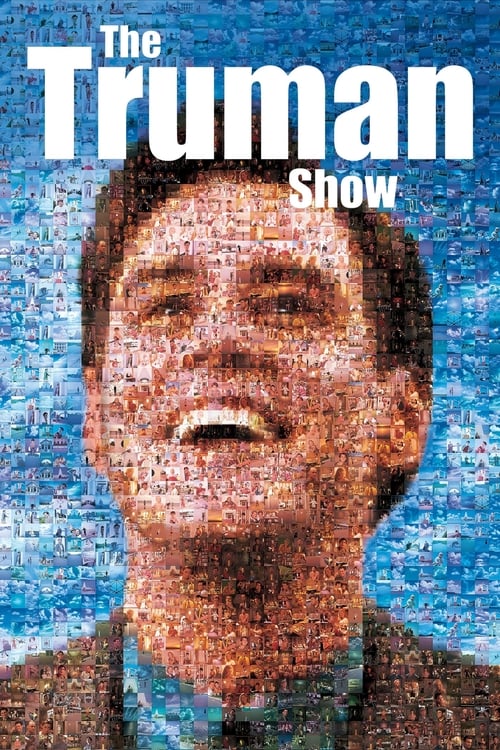
The Truman Show - Review
The Truman Show: Trapped in Paradise, Searching for Reality
Imagine waking up every day to a world meticulously crafted for your comfort, a world where the sun always shines, and everyone you meet is unfailingly pleasant. Sounds idyllic, right? But what if that paradise was a prison, your life a performance, and your very existence a form of entertainment for billions? This is the unsettling reality at the heart of Peter Weir's 1998 masterpiece, The Truman Show, a film that transcends its comedic premise to explore profound questions about reality, free will, and the insatiable human desire for spectacle. More than two decades later, its themes resonate even more powerfully in an era dominated by reality television, social media, and the blurred lines between authenticity and performance. Prepare to delve into the fabricated world of Truman Burbank and uncover the brilliance – and occasional shortcomings – of this cinematic gem.
Plot: From Seahaven to Self-Discovery
The film centers on Truman Burbank (Jim Carrey), a seemingly ordinary man living in the picturesque town of Seahaven. Unbeknownst to him, Seahaven is a gigantic, meticulously constructed set, and Truman is the star of "The Truman Show," a 24/7 reality television program broadcast live to the world. Every aspect of his life, from his childhood to his marriage to Meryl (Laura Linney), is orchestrated by Christof (Ed Harris), the show's creator and director, who controls the weather, the actors, and every event in Truman's life.
The narrative cleverly unfolds, initially presenting Truman as blissfully ignorant. However, subtle cracks begin to appear in the façade. A falling stage light, a fleeting glimpse of his "dead" father, and a mysterious woman named Sylvia (Natascha McElhone) who tries to warn him about the true nature of his world, all plant seeds of doubt in Truman's mind. As Truman grows increasingly suspicious and starts questioning his reality, he embarks on a quest for the truth, challenging the carefully constructed world around him. His attempts to leave Seahaven are consistently thwarted by contrived obstacles, further fueling his suspicions and driving him towards a confrontation with Christof. The climax sees Truman sailing towards the edge of his world, literally bumping into the painted sky of the dome that contains him, and finally facing his creator, Christof, in a powerful and emotionally charged scene. The film concludes with Truman making the ultimate decision: to step out of the only world he has ever known and embrace the uncertainty of the real world.
Characters: Captivity and Control
The Truman Show boasts a cast of memorable characters, each playing a crucial role in Truman's journey of self-discovery.
Truman Burbank (Jim Carrey):
Carrey delivers a career-defining performance, seamlessly blending his comedic talents with a surprising depth of emotional vulnerability. He portrays Truman as an inherently good and optimistic man, whose inherent curiosity and yearning for something more drive him to question the artificial world around him. Carrey masterfully captures Truman's naiveté, his growing suspicion, and his ultimate determination to break free. It's a performance that showcases Carrey's range as an actor and solidifies his status as a dramatic force.
Christof (Ed Harris):
Harris embodies Christof with a chilling blend of paternal affection and manipulative control. He views Truman as his creation, a work of art, and justifies his actions as providing Truman with a safe and predictable life. Harris portrays Christof as a complex character, simultaneously a brilliant artist and a morally bankrupt puppeteer. His unwavering belief in his own vision and his unwavering control over Truman's life make him a compelling and unsettling antagonist.
Meryl Burbank/Hannah Gill (Laura Linney):
Linney shines as Meryl, Truman's wife and an actress in the show. She perfectly captures the Stepford Wife-esque persona required of her role, seamlessly promoting in-show products and maintaining a facade of unwavering happiness. Her performance highlights the artificiality of Truman's world and the emotional toll it takes on those forced to maintain the charade. The forced smiles and almost frantic attempts to keep Truman within the confines of the show showcase Linney's ability to convey subtle unease and underlying desperation.
Marlon/Louis Coltrane (Noah Emmerich):
Emmerich plays Marlon, Truman's best friend and another actor in the show. He is tasked with reassuring Truman and keeping him grounded in the artificial reality. Marlon's role is particularly poignant, as he is forced to betray Truman's trust while simultaneously harboring genuine affection for him. Emmerich delivers a nuanced performance, conveying the internal conflict and moral compromises that come with participating in such a deceptive enterprise.
Sylvia/Lauren Garland (Natascha McElhone):
McElhone portrays Sylvia, the actress who briefly enters Truman's life and attempts to expose the truth about his world. She represents the outside world, the real world, and serves as a catalyst for Truman's growing suspicion. Although her screen time is limited, McElhone's performance is impactful, conveying a sense of urgency and genuine concern for Truman's well-being. She becomes Truman's motivation for escape, the promise of a real connection beyond the fabricated relationships of Seahaven.
Direction and Cinematography: Constructing and Deconstructing Reality
Peter Weir's direction is masterful in creating a world that feels both familiar and unsettling. He expertly balances the comedic elements of the premise with the underlying themes of existentialism and the search for truth. Weir's use of camera angles and framing is particularly effective in highlighting Truman's isolation and the constant surveillance he is under. The film frequently employs "hidden camera" shots, mimicking the style of reality television and further emphasizing Truman's lack of privacy. Weir's direction also excels at building suspense, gradually revealing the cracks in Truman's world and keeping the audience engaged in his quest for the truth.
The cinematography, by Peter Biziou, is crucial in establishing the visual contrast between the artificial world of Seahaven and the unknown reality that lies beyond. Seahaven is presented as a picture-perfect, almost hyper-real town, with bright colors, manicured lawns, and a perpetual sense of sunshine. This artificial perfection is contrasted with the glimpses of the outside world, which appear grainy, realistic, and even somewhat chaotic. The film's visual style effectively reinforces the themes of artificiality and the search for authenticity. The use of wide shots emphasizes the vastness of the set, highlighting Truman's confinement, while close-ups capture his emotional journey and growing awareness of his situation.
Themes and Messages: Reality, Freedom, and the Price of Spectacle
The Truman Show is a film rich in themes and messages that continue to resonate with audiences today.
The Nature of Reality:
The film challenges our perception of reality and questions the authenticity of the world around us. In an era of manufactured consent and curated online personas, The Truman Show serves as a cautionary tale about the potential for manipulation and the importance of questioning the narratives we are presented with. Truman's journey reminds us to be critical of the information we consume and to seek out our own truths.
Free Will vs. Determinism:
The film explores the age-old debate between free will and determinism. Truman's life is meticulously planned and controlled by Christof, raising questions about whether he truly has free will. However, Truman's growing awareness of his situation and his ultimate decision to leave Seahaven demonstrate the power of individual agency and the human desire for freedom. The film suggests that even in the most controlled environments, the human spirit can find a way to break free.
The Ethics of Entertainment:
The Truman Show critiques the voyeuristic nature of reality television and the ethical implications of exploiting individuals for entertainment. The film questions whether it is morally justifiable to create a spectacle out of someone's life, even if they are unaware of it. The film's depiction of the global audience consuming Truman's life as entertainment serves as a commentary on our own complicity in the culture of celebrity and the erosion of privacy in the digital age.
The Search for Meaning:
Ultimately, The Truman Show is a story about the search for meaning and purpose in life. Truman's journey is driven by a deep-seated desire to find something more than the artificial happiness offered by Seahaven. His quest for Sylvia and his yearning for the unknown represent the human need for connection, authenticity, and a life lived on one's own terms. The film suggests that true happiness comes not from manufactured perfection but from embracing the challenges and uncertainties of the real world.
Comparisons: Echoes of the Past, Foreshadowing the Future
The Truman Show shares thematic similarities with several other films and works of literature that explore the nature of reality and the power of manipulation. Its closest relative might be Philip K. Dick's novels, particularly "Time Out of Joint," which also features a protagonist gradually discovering that his reality is a carefully constructed illusion. The film also draws parallels to George Orwell's "1984," in its depiction of constant surveillance and the suppression of individual thought.
In terms of Peter Weir's filmography, The Truman Show shares thematic elements with his earlier film, "Witness," which also explores the clash between different cultures and the struggle for individual freedom. While "Witness" is more grounded and realistic, both films examine the challenges of navigating unfamiliar environments and the importance of staying true to oneself.
Since its release, The Truman Show has become a touchstone for discussions about the impact of reality television and social media on our perception of reality. Films like "The Matrix" and "Eternal Sunshine of the Spotless Mind" have also explored similar themes of simulated realities and the search for authenticity. The term "Truman Show Delusion," a real-life psychiatric condition where individuals believe they are the stars of a reality show, further demonstrates the film's lasting impact on our cultural consciousness.
Strengths and Weaknesses: A Critical Appraisal
The Truman Show is a film of exceptional quality, but it is not without its minor flaws.
Strengths:
- Compelling Narrative: The film's plot is engaging, thought-provoking, and expertly paced, keeping the audience invested in Truman's journey from beginning to end.
- Outstanding Performances: Jim Carrey delivers a career-defining performance, and the supporting cast, including Ed Harris, Laura Linney, and Noah Emmerich, are equally impressive.
- Masterful Direction: Peter Weir's direction is subtle, nuanced, and perfectly suited to the film's themes and tone.
- Thought-Provoking Themes: The film explores profound questions about reality, free will, and the ethics of entertainment, making it a film that stays with you long after the credits roll.
- Visual Storytelling: The cinematography and production design are crucial in creating the artificial world of Seahaven and highlighting the contrast between reality and illusion.
Weaknesses:
- Simplistic Depiction of the Audience: While the film critiques the voyeuristic nature of reality television, its portrayal of the global audience as uniformly uncritical and easily entertained is somewhat simplistic. A more nuanced depiction of the audience's motivations and reactions could have added another layer of complexity to the film.
- Sylvia's Character Development: While Sylvia serves as a crucial catalyst for Truman's journey, her character is somewhat underdeveloped. Her motivations and backstory could have been explored in more detail to make her relationship with Truman more emotionally resonant.
- Occasional Over-the-Top Moments: While the film generally maintains a delicate balance between comedy and drama, there are a few moments where the comedic elements feel slightly forced or out of place. These moments, while infrequent, can detract slightly from the film's overall impact.
Conclusion: A Timeless Masterpiece
Despite its minor flaws, The Truman Show remains a powerful and relevant film that deserves its status as a modern classic. Its exploration of reality, freedom, and the ethics of entertainment continues to resonate with audiences in an era increasingly dominated by manufactured realities and the erosion of privacy. Jim Carrey's performance is a revelation, and Peter Weir's direction is masterful in creating a world that is both familiar and unsettling. The Truman Show is a film that challenges us to question the world around us and to embrace the uncertainties of life with courage and authenticity. It's a film that deserves to be seen and discussed for generations to come.