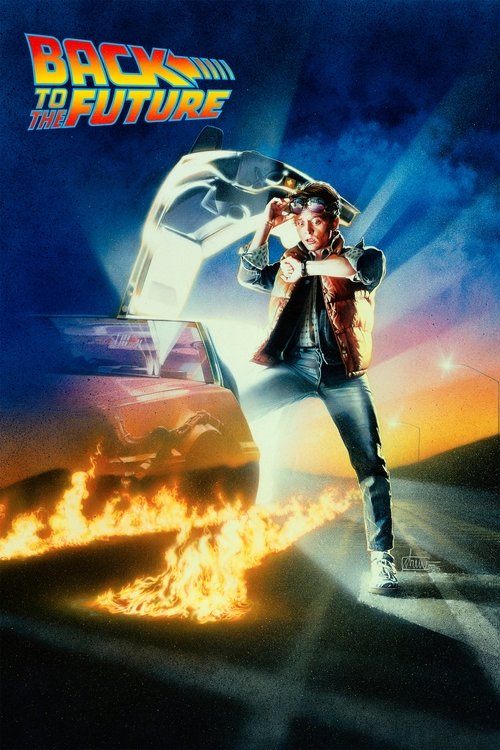
Back to the Future - Review
Back to the Future: A Timeless Classic Review
Hold onto your hats, folks, because we're about to take a trip back in time – not in a DeLorean (though wouldn't that be cool?), but through the lens of cinema to revisit a true masterpiece: Back to the Future. Released in 1985, this film isn't just a nostalgic trip down memory lane; it's a perfectly crafted blend of adventure, comedy, and science fiction that continues to captivate audiences of all ages. But does it still hold up to the test of time? Let's find out.
Plot: A Hilarious and Ingenious Time-Traveling Romp
The premise of Back to the Future is deceptively simple: Marty McFly, a typical 1980s teenager, is accidentally transported back to 1955 in a DeLorean time machine invented by his eccentric scientist friend, Dr. Emmett Brown. However, the consequences of his time travel are anything but simple. Marty inadvertently interferes with his parents' first meeting, jeopardizing his own existence. He must then navigate the unfamiliar social landscape of the 1950s, convince his teenage parents, George and Lorraine, to fall in love, and find a way to get back to 1985 before he fades out of existence.
The genius of the plot lies in its intricate construction. Every action Marty takes in the past has a ripple effect, creating a series of hilarious and suspenseful situations. The script, penned by Robert Zemeckis and Bob Gale, is a masterclass in cause and effect, with each plot point logically flowing from the previous one. The film expertly balances the comedic elements with the more serious consequences of altering the timeline, creating a narrative that is both entertaining and thought-provoking. The ticking clock element – Marty's impending erasure from existence – adds a layer of urgency that keeps the audience on the edge of their seats.
Furthermore, the film cleverly utilizes the fish-out-of-water trope, showcasing Marty's struggles to adapt to the social norms and technological limitations of the 1950s. His attempts to introduce 1980s slang and music often result in comical misunderstandings, further enhancing the film's comedic appeal. The plot is remarkably tight, with few, if any, loose ends. It's a testament to the careful planning and execution of the filmmakers that Back to the Future remains a benchmark for time travel stories.
Characters: Iconic and Endearing
Back to the Future boasts a cast of characters that are not only memorable but also deeply relatable. Each character is well-defined, with their own unique quirks, motivations, and flaws.
Marty McFly (Michael J. Fox)
Marty is the quintessential 1980s teenager: cool, rebellious, and musically inclined. However, beneath his confident exterior lies a vulnerability and a desire to make his mark on the world. Michael J. Fox delivers a charismatic and energetic performance, perfectly capturing Marty's youthful enthusiasm and his growing maturity as he confronts the challenges of time travel. His portrayal of Marty is instantly likable, making it easy for the audience to root for him throughout his adventure.
Dr. Emmett Brown (Christopher Lloyd)
Doc Brown is the eccentric and brilliant inventor who creates the DeLorean time machine. Christopher Lloyd's performance is nothing short of iconic. He imbues Doc with a manic energy and a childlike enthusiasm for science, making him both hilarious and endearing. Doc is not just a plot device; he is a fully realized character with his own backstory and motivations. His unwavering belief in the possibilities of science, even in the face of ridicule, is inspiring.
George McFly (Crispin Glover)
George McFly, Marty's father, is initially portrayed as a timid and bullied individual. Crispin Glover's performance is both awkward and sympathetic, capturing George's insecurities and his lack of self-confidence. George's transformation throughout the film, from a pushover to a confident and assertive individual, is one of the most satisfying character arcs in the movie. His eventual triumph over Biff Tannen is a testament to his newfound courage and self-belief.
Lorraine Baines-McFly (Lea Thompson)
Lorraine, Marty's mother, is initially presented as a somewhat naive and sheltered teenager. Lea Thompson's portrayal captures Lorraine's vulnerability and her initial attraction to Marty. Her journey from a somewhat uncertain young woman to a loving and supportive wife is believable and heartwarming. The film also explores a darker side to Lorraine, hinting at her repressed desires and her potential for rebellion, adding depth to her character.
Biff Tannen (Thomas F. Wilson)
Biff Tannen is the quintessential bully: arrogant, aggressive, and relentlessly cruel. Thomas F. Wilson delivers a memorable performance as the antagonist, making Biff both intimidating and comically inept. Biff's constant torment of George McFly provides a clear source of conflict and fuels George's eventual transformation. Biff's character serves as a symbol of the oppressive forces that George must overcome to achieve his own happiness and success.
Direction: Zemeckis's Masterful Touch
Robert Zemeckis's direction of Back to the Future is nothing short of masterful. He expertly balances the film's various elements – comedy, adventure, science fiction, and romance – creating a cohesive and engaging narrative. Zemeckis's use of visual storytelling is particularly impressive. He uses subtle cues and visual gags to enhance the film's humor and to foreshadow future events. His attention to detail is evident in every frame, from the meticulously recreated 1950s setting to the intricate design of the DeLorean time machine.
Zemeckis's ability to elicit strong performances from his cast is also noteworthy. He allows each actor to bring their own unique talents to their respective roles, resulting in a cast of characters that are both believable and memorable. His direction is dynamic and energetic, keeping the pace of the film moving at a brisk and engaging speed. The film never feels slow or bogged down, even during the more exposition-heavy scenes.
Furthermore, Zemeckis's use of special effects is seamless and effective. The time travel sequences are visually stunning, and the DeLorean is a believable and iconic piece of technology. The special effects never overshadow the story or the characters; instead, they enhance the overall experience and contribute to the film's sense of wonder and excitement.
Cinematography: Capturing the Essence of Two Eras
Dean Cundey's cinematography in Back to the Future is crucial to the film's success. He expertly captures the essence of both the 1980s and the 1950s, creating distinct visual palettes for each era. The 1980s scenes are characterized by bright colors, modern architecture, and a sense of youthful energy. In contrast, the 1950s scenes are more subdued, with a focus on classic cars, diners, and a sense of nostalgic Americana. Cundey's use of lighting is also effective, creating a sense of atmosphere and enhancing the film's dramatic moments.
The camera work is dynamic and engaging, with a mix of static shots, tracking shots, and crane shots that keep the audience visually interested. The film also makes effective use of visual motifs, such as the lightning bolt, which symbolizes the power of time travel and the potential for danger. Cundey's cinematography is not just visually appealing; it also contributes to the film's overall storytelling, helping to establish the setting, enhance the mood, and foreshadow future events.
Performances: A Stellar Ensemble Cast
The success of Back to the Future is due in no small part to the stellar performances of its ensemble cast. Michael J. Fox's portrayal of Marty McFly is a career-defining role, and his charisma and energy are infectious. Christopher Lloyd's performance as Doc Brown is equally iconic, and his manic energy and comedic timing are perfectly suited to the character. Crispin Glover's portrayal of George McFly is both awkward and sympathetic, and his transformation throughout the film is believable and rewarding. Lea Thompson's performance as Lorraine Baines-McFly is nuanced and engaging, and she brings a depth and complexity to the character. Thomas F. Wilson's portrayal of Biff Tannen is both menacing and hilarious, and he makes Biff a truly memorable antagonist.
The chemistry between the actors is also crucial to the film's success. Fox and Lloyd have a natural rapport, and their scenes together are a highlight of the film. The interactions between Fox and his on-screen parents, Glover and Thompson, are also believable and engaging. The cast as a whole works together seamlessly to create a cohesive and believable world.
Themes and Messages: More Than Just a Time Travel Adventure
Back to the Future is more than just a fun time travel adventure; it also explores several important themes and messages. One of the central themes is the importance of self-belief and courage. George McFly's transformation from a timid pushover to a confident and assertive individual is a testament to the power of self-belief. The film also emphasizes the importance of family and the impact that parents have on their children's lives. Marty's journey back in time allows him to see his parents in a new light and to appreciate the sacrifices they made for him.
The film also touches on the theme of destiny versus free will. Does Marty's presence in the past alter the course of history, or is everything predetermined? The film leaves this question open to interpretation, but it suggests that individuals have the power to shape their own destinies. Furthermore, the film explores the dangers of unchecked power and the importance of using technology responsibly. Doc Brown's initial enthusiasm for time travel is tempered by his realization that it could be used for nefarious purposes, leading him to destroy the time machine at the end of the film.
Comparison: A Unique Blend of Genres
Back to the Future stands out from other time travel films due to its unique blend of genres. While films like The Time Machine (1960) and Planet of the Apes (1968) focus on the more serious and philosophical implications of time travel, Back to the Future embraces a more lighthearted and comedic approach. The film also draws inspiration from classic coming-of-age stories, such as Rebel Without a Cause (1955) and American Graffiti (1973), exploring the themes of identity, rebellion, and the search for belonging.
Compared to Zemeckis's previous works, such as Romancing the Stone (1984), Back to the Future demonstrates a significant leap in terms of visual effects and storytelling complexity. The film also shares some thematic similarities with Zemeckis's later films, such as Forrest Gump (1994), which also explores the themes of destiny, free will, and the impact of historical events on individual lives.
Positive Aspects: A Masterpiece of Entertainment
Back to the Future is a masterpiece of entertainment, offering a perfect blend of adventure, comedy, science fiction, and heart. The film's plot is ingenious, the characters are iconic, the direction is masterful, the cinematography is stunning, and the performances are stellar. The film also explores important themes and messages, making it more than just a simple popcorn flick. Back to the Future is a film that can be enjoyed by audiences of all ages and backgrounds, and it continues to resonate with viewers decades after its initial release.
Constructive Criticism: Minor Imperfections
While Back to the Future is a near-perfect film, it is not without its minor imperfections. Some critics have argued that the film's plot relies too heavily on coincidence and that some of the characters are somewhat stereotypical. Additionally, the film's portrayal of women has been criticized for being somewhat limited, with Lorraine Baines-McFly initially presented as a somewhat passive and naive character. However, these criticisms are relatively minor and do not detract significantly from the overall quality of the film. Furthermore, the film's sequels, while entertaining, do not quite capture the magic and originality of the first film.
Conclusion and Rating
Back to the Future is a timeless classic that continues to delight and inspire audiences. Its clever plot, memorable characters, and masterful direction make it a must-see for any film enthusiast. While it may have a few minor flaws, its strengths far outweigh its weaknesses. Back to the Future is a film that will be enjoyed for generations to come.
Rating: 10/10