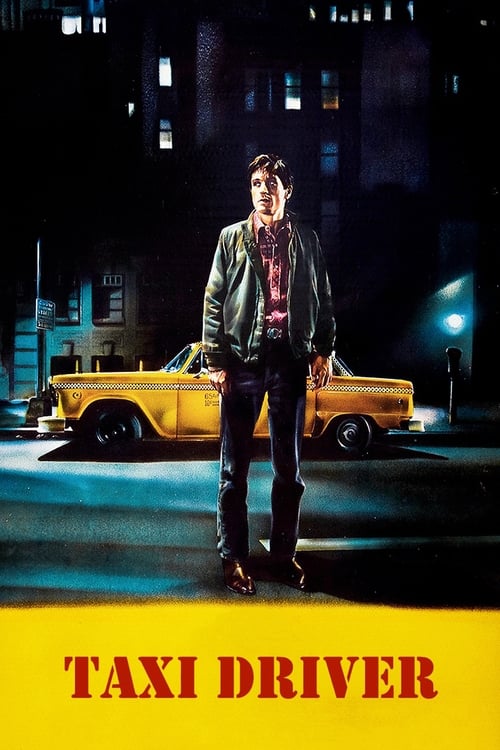
Taxi Driver - Review
Taxi Driver: A Descent into Urban Hell and Moral Ambiguity
Martin Scorsese's Taxi Driver, released in 1976, is not merely a film; it's a visceral plunge into the psyche of a man teetering on the edge of sanity, a stark portrait of urban decay, and a chilling exploration of moral ambiguity. More than four decades after its release, it continues to resonate with unsettling power, its themes of alienation, loneliness, and the seductive allure of violence remaining disturbingly relevant. Prepare to be both captivated and deeply disturbed as we delve into the dark heart of Scorsese's masterpiece.
Plot: A Slow Burn into Madness
The narrative follows Travis Bickle (Robert De Niro), a 26-year-old Vietnam War veteran plagued by insomnia and a deep-seated sense of unease. He takes a job as a night-time taxi driver in the grimy, neon-lit streets of New York City. The city, a character in itself, is depicted as a cesspool of vice, filled with prostitutes, drug dealers, and pimps. The constant exposure to this perceived decadence fuels Travis's growing disgust and alienation. He keeps a diary, documenting his observations and increasingly paranoid thoughts. He attempts to connect with Betsy (Cybill Shepherd), a campaign worker for a presidential candidate, but his social awkwardness and disturbing actions quickly sabotage the relationship.
As Travis's mental state deteriorates, his desire to "clean up" the city intensifies. He begins an exercise regimen, buys guns illegally, and prepares for a violent confrontation. His path crosses with Iris (Jodie Foster), a 12-year-old prostitute under the control of Matthew (Harvey Keitel). Travis becomes fixated on saving Iris, seeing her as a symbol of innocence corrupted by the city's depravity. This obsession culminates in a bloody and brutal shootout at the brothel where Iris is held. In the aftermath, Travis, despite his violent actions, is hailed as a hero in the media, a twisted irony that further complicates the film's moral landscape.
Characters: Flawed Humanity and Moral Decay
Taxi Driver is driven by its compelling and deeply flawed characters. Travis Bickle is a study in psychological disintegration. De Niro's performance is nothing short of iconic, capturing Travis's simmering rage, his awkwardness, and his desperate yearning for connection. He's a complex and contradictory figure, both repulsive and strangely sympathetic. We witness his internal struggle as he grapples with his own demons and attempts to find purpose in a world he perceives as hopelessly corrupt.
Betsy represents a fleeting glimpse of hope and normalcy in Travis's life. She embodies a certain idealism and purity that he desperately craves but ultimately cannot attain. Their failed romance highlights Travis's inability to connect with others on a meaningful level.
Iris is a tragic figure, a child robbed of her innocence and forced into a life of exploitation. Foster's performance is remarkable, capturing the vulnerability and resilience of a young girl trapped in a horrific situation. While Travis sees her as a damsel in distress, she is also a survivor, navigating the dangerous world around her with a surprising degree of agency.
Matthew, the pimp, represents the pervasive evil that Travis seeks to eradicate. He is a manipulative and predatory figure, exploiting Iris for his own gain. He embodies the very corruption that Travis despises.
Other supporting characters, such as Wizard (Peter Boyle), a fellow taxi driver, offer glimpses into Travis's world and provide a semblance of camaraderie, though ultimately failing to truly connect with him.
Direction: Scorsese's Masterful Control
Martin Scorsese's direction is masterful, creating a palpable sense of unease and claustrophobia. He uses a variety of techniques to immerse the viewer in Travis's subjective experience. The film's pacing is deliberate, mirroring Travis's slow descent into madness. Scorsese expertly builds tension, culminating in the explosive and shocking climax. He also utilizes long takes and close-ups to emphasize Travis's isolation and growing paranoia.
Scorsese's use of the camera is particularly noteworthy. He often employs subjective shots, placing the viewer directly in Travis's perspective. He also uses slow motion and distorted imagery to convey Travis's altered state of mind. The film's visual style is gritty and realistic, reflecting the harsh realities of the urban landscape.
The dreamlike quality of certain scenes, particularly those after the violent climax, leaves the audience questioning the reality of what they have witnessed. Is Travis truly a hero, or is he still trapped in his own delusional world?
Cinematography: A Visual Symphony of Urban Decay
Michael Chapman's cinematography is a crucial element of Taxi Driver's success. He captures the grimy beauty of New York City at night, transforming the streets into a visually stunning and unsettling landscape. The neon lights, the rain-slicked streets, and the shadowy alleyways all contribute to the film's atmosphere of darkness and despair.
Chapman's use of color is also significant. The vibrant reds and oranges of the city's neon signs contrast sharply with the drab grays and browns of Travis's clothing and apartment. This contrast highlights Travis's alienation from the world around him.
The cinematography during the climactic shootout is particularly striking. Chapman uses slow motion and close-ups to emphasize the brutality and chaos of the violence. The scene is both shocking and visually arresting, leaving a lasting impression on the viewer.
Performances: De Niro's Defining Role
Robert De Niro's performance as Travis Bickle is arguably the defining role of his career. He embodies the character with an intensity and commitment that is both mesmerizing and disturbing. He perfectly captures Travis's awkwardness, his rage, and his vulnerability. De Niro's physical transformation is also remarkable, as he sheds weight and adopts a gaunt, haunted look.
Cybill Shepherd delivers a nuanced performance as Betsy, portraying her as both intelligent and compassionate. Jodie Foster, at the age of 13, gives a powerful and unforgettable performance as Iris. Her portrayal of a young girl forced into prostitution is both heartbreaking and believable.
Harvey Keitel is chillingly effective as Matthew, the pimp. He exudes a sense of menace and control that makes him a truly repulsive figure. Peter Boyle provides a welcome dose of humor and humanity as Wizard, the fellow taxi driver.
Themes and Messages: Alienation, Violence, and the Search for Meaning
Taxi Driver explores a number of complex and unsettling themes. One of the most prominent is the theme of alienation. Travis is deeply isolated and unable to connect with others on a meaningful level. He feels like an outsider, observing the world from behind the windshield of his taxi. This sense of alienation fuels his growing rage and paranoia.
The film also examines the seductive allure of violence. Travis sees violence as a way to cleanse the city of its perceived corruption. He believes that by taking matters into his own hands, he can make a difference. However, his actions ultimately raise questions about the morality of violence and the consequences of taking the law into one's own hands.
Another key theme is the search for meaning. Travis is a lost and aimless individual, searching for purpose in a world that seems to offer none. He attempts to find meaning through his relationships with Betsy and Iris, but ultimately fails. His violent actions can be seen as a desperate attempt to assert himself and find meaning in his life.
The film also touches on the psychological effects of war. Travis is a Vietnam War veteran struggling to readjust to civilian life. His experiences in the war have left him deeply scarred and contribute to his mental instability.
Comparison: Echoes of Dostoevsky and Anticipations of "Joker"
Taxi Driver shares thematic similarities with Fyodor Dostoevsky's Notes from Underground. Both works explore the inner turmoil of alienated individuals struggling to find meaning in a corrupt and indifferent world. Travis Bickle, like the Underground Man, is a deeply flawed and unreliable narrator, whose perceptions are often distorted by his own psychological issues.
In more recent times, the film's influence can be seen in films like Todd Phillips's Joker (2019). Both films depict the descent of a mentally unstable individual into violence, fueled by social isolation and a sense of injustice. Both films also raise questions about the role of society in creating and perpetuating violence.
Compared to Scorsese's other works, Taxi Driver shares a similar gritty realism and a focus on the darker aspects of human nature with films like Mean Streets (1973) and Raging Bull (1980). However, Taxi Driver is perhaps Scorsese's most psychologically complex and unsettling film, delving deeper into the mind of a deeply troubled individual.
Positive Aspects: A Cinematic Triumph
Taxi Driver is a cinematic triumph on many levels. Scorsese's direction is masterful, De Niro's performance is iconic, and Chapman's cinematography is stunning. The film's themes are complex and thought-provoking, and its impact on popular culture is undeniable. The film's score, composed by Bernard Herrmann, is haunting and unforgettable, perfectly complementing the film's mood of unease and despair.
The film's realistic portrayal of New York City is also a major strength. Scorsese captures the city's grit and grime, creating a believable and immersive environment. The film's dialogue is sharp and realistic, reflecting the way people actually speak.
Constructive Criticism: Lingering Ambiguity and Potential for Misinterpretation
While Taxi Driver is a masterpiece, it is not without its flaws. The film's ending is ambiguous, leaving the viewer to question the reality of what they have witnessed. This ambiguity can be frustrating for some viewers, who may prefer a more definitive resolution.
The film's violence is also a point of contention. While the violence is undeniably shocking and disturbing, some critics argue that it is gratuitous and exploitative. Others argue that the violence is necessary to convey the film's themes and to accurately depict Travis's mental state.
Another potential criticism is that the film could be misinterpreted as glorifying violence or as condoning Travis's actions. While Scorsese clearly does not endorse Travis's behavior, the film's ambiguous ending leaves room for interpretation. It is important for viewers to approach the film with a critical eye and to consider the ethical implications of Travis's actions.
Conclusion: A Disturbing and Unforgettable Masterpiece
Taxi Driver is a disturbing and unforgettable masterpiece that continues to resonate with audiences today. It is a powerful and unsettling exploration of alienation, violence, and the search for meaning. While the film is not without its flaws, its strengths far outweigh its weaknesses. It is a must-see for any serious film enthusiast.
Despite its difficult themes and ambiguous ending, Taxi Driver remains a landmark achievement in cinema, a testament to the power of filmmaking to explore the darkest corners of the human psyche. It is a film that will stay with you long after the credits roll, prompting you to question your own beliefs and assumptions about the world.