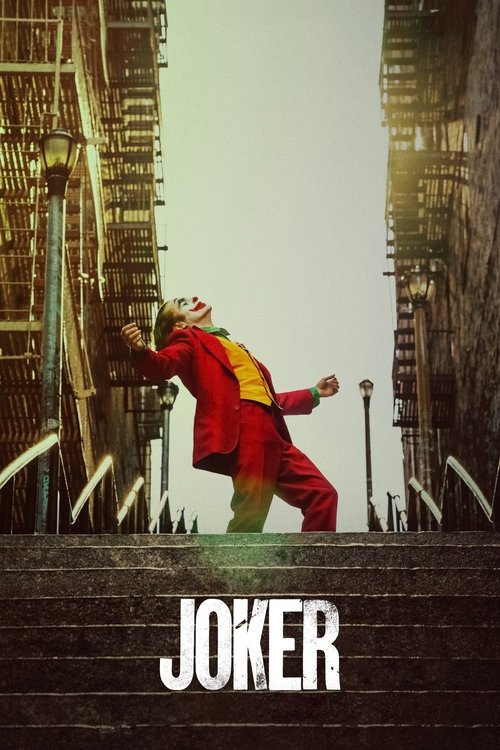
Joker - Review
A Descent into Madness: A Deep Dive into Todd Phillips' "Joker"
Todd Phillips' Joker, released in 2019, isn't just another comic book movie. It's a chilling character study, a disturbing exploration of mental illness, and a stark reflection of societal decay, all wrapped in a gritty, 1980s aesthetic. More than just a supervillain origin story, it's a psychological thriller that leaves you questioning the very nature of sanity and the circumstances that can drive a person to the brink. Prepare to be unsettled, disturbed, and ultimately, captivated by this controversial and unforgettable film.
Plot: A Slow Burn into Anarchy
The film meticulously traces the downward spiral of Arthur Fleck (Joaquin Phoenix), a struggling clown-for-hire living in a decaying Gotham City. Arthur suffers from a neurological condition that causes him to laugh uncontrollably at inappropriate times, a symptom that further isolates him from a society that already seems indifferent to his existence. He dreams of becoming a successful stand-up comedian, but his performances are met with ridicule and rejection. He cares for his ailing mother, Penny (Frances Conroy), in a dilapidated apartment, clinging to the hope that Thomas Wayne, a wealthy philanthropist and mayoral candidate, will recognize Penny's past connection to him and offer them assistance.
As Arthur faces constant setbacks – being mugged, fired from his job, and denied social services – his mental state deteriorates. A pivotal moment occurs when he is attacked on the subway by three Wayne Enterprises employees. In self-defense, Arthur shoots and kills them, an act that inadvertently sparks a wave of anti-establishment sentiment and inspires a clown-masked rebellion in Gotham. This act of violence, initially born out of desperation, becomes a catalyst for Arthur's transformation into the Joker, a symbol of chaos and anarchy.
The plot unfolds with a deliberate pace, allowing the audience to witness Arthur's gradual descent into madness. Phillips masterfully builds tension, creating a sense of unease and dread that permeates every scene. The film doesn't shy away from depicting Arthur's struggles with mental illness, portraying his therapy sessions, medication, and the constant battle he faces against his own mind. As Arthur's grip on reality loosens, the line between his delusions and the truth becomes increasingly blurred, leaving the audience questioning everything they see.
The climax of the film sees Arthur embrace his new identity as the Joker, appearing on a live talk show hosted by Murray Franklin (Robert De Niro), a comedian he idolized. During the show, Arthur confesses to the subway murders and delivers a chilling monologue about the hypocrisy and indifference of society. He then shoots Murray Franklin live on air, further fueling the chaos and violence that has engulfed Gotham City. The film ends with Arthur, now fully transformed into the Joker, being celebrated as a hero by the rioting masses, a disturbing image that leaves a lasting impression.
Characters: A Symphony of Broken Souls
Joker is driven by its complex and deeply flawed characters, each contributing to the film's overall themes and impact:
- Arthur Fleck/Joker (Joaquin Phoenix): Phoenix delivers a career-defining performance as Arthur Fleck. He embodies the character's vulnerability, desperation, and eventual madness with chilling authenticity. His physical transformation is remarkable, and his portrayal of Arthur's internal struggles is both heartbreaking and terrifying. Phoenix's performance is the heart and soul of the film.
- Penny Fleck (Frances Conroy): Penny, Arthur's mother, is a fragile and delusional woman who clings to the belief that Thomas Wayne is Arthur's father. Her own mental instability and past trauma have profoundly affected Arthur's life, contributing to his psychological struggles. Conroy portrays Penny with a quiet desperation that adds to the film's overall sense of unease.
- Murray Franklin (Robert De Niro): Murray Franklin, a popular talk show host, represents the superficiality and hypocrisy of the entertainment industry. He initially mocks Arthur's stand-up routine, further fueling his feelings of inadequacy and rejection. De Niro's performance is nuanced and effective, highlighting the character's self-serving nature.
- Sophie Dumond (Zazie Beetz): Sophie, Arthur's neighbor and love interest, provides a brief glimmer of hope in his bleak existence. However, the film later reveals that their relationship was largely a figment of Arthur's imagination, further emphasizing his isolation and detachment from reality. Beetz delivers a subtle and empathetic performance.
- Thomas Wayne (Brett Cullen): Thomas Wayne, a wealthy businessman and mayoral candidate, represents the elite and privileged class that Arthur feels alienated from. While presented as a stern and somewhat detached figure, the film raises questions about his true character and his potential connection to Arthur's past.
The supporting characters, though not as central as Arthur, are crucial in shaping his journey. They represent the various forces that contribute to his downfall: societal indifference, economic inequality, and the lack of adequate mental health support. Each character plays a role in pushing Arthur closer to the edge, ultimately transforming him into the Joker.
Direction and Cinematography: A Masterclass in Visual Storytelling
Todd Phillips' direction in Joker is a departure from his previous comedic works. He creates a dark and gritty atmosphere, drawing inspiration from classic films like Taxi Driver and The King of Comedy. Phillips masterfully uses camera angles, lighting, and music to create a sense of unease and tension, immersing the audience in Arthur's distorted perspective.
The cinematography, by Lawrence Sher, is equally impressive. Gotham City is depicted as a decaying and oppressive urban landscape, reflecting Arthur's internal state. The use of muted colors and harsh lighting creates a sense of realism and despair. The camera often focuses on Arthur's face, capturing his expressions of pain, confusion, and growing madness. Close-up shots emphasize his vulnerability and desperation, while wide shots highlight his isolation within the vast and indifferent city.
The film's visual style is not just aesthetically pleasing; it is integral to the storytelling. The cinematography and direction work together to create a visceral and immersive experience, drawing the audience into Arthur's world and allowing them to understand his perspective, even as he descends into madness.
Performances: Joaquin Phoenix's Tour de Force
Joaquin Phoenix's performance as Arthur Fleck/Joker is undoubtedly the highlight of the film. It's a performance that transcends mere acting; it's a complete embodiment of the character. Phoenix underwent a significant physical transformation for the role, losing a considerable amount of weight to emphasize Arthur's fragility and vulnerability. But it's his internal transformation that is truly remarkable.
Phoenix captures Arthur's awkwardness, his desperation for connection, and his growing rage with chilling accuracy. His portrayal of Arthur's uncontrollable laughter is particularly unsettling, highlighting the character's deep-seated pain and trauma. He uses his body language, facial expressions, and voice to convey Arthur's inner turmoil, creating a character that is both sympathetic and terrifying.
While Phoenix's performance is the centerpiece, the supporting cast also delivers strong performances. Frances Conroy portrays Penny Fleck with a quiet desperation that adds to the film's overall sense of unease. Robert De Niro is excellent as Murray Franklin, capturing the character's self-serving nature and the superficiality of the entertainment industry. Zazie Beetz delivers a subtle and empathetic performance as Sophie Dumond, providing a brief glimmer of hope in Arthur's bleak existence.
However, it is Phoenix's performance that elevates Joker from a good film to a great one. His portrayal of Arthur Fleck is a masterclass in acting, and it's a performance that will be remembered for years to come.
Themes and Messages: A Reflection of Societal Ills
Joker is not just a character study; it's also a commentary on societal ills. The film explores themes of mental illness, poverty, social inequality, and the consequences of neglect. It raises questions about the responsibility of society to care for its most vulnerable members and the potential for violence when people are pushed to the brink.
- Mental Illness: The film provides a raw and unflinching portrayal of mental illness, depicting Arthur's struggles with depression, anxiety, and psychosis. It highlights the lack of adequate mental health support and the stigma associated with mental illness.
- Poverty and Social Inequality: Gotham City is depicted as a city plagued by poverty and social inequality, creating a breeding ground for resentment and frustration. Arthur's experiences with poverty and social isolation contribute to his feelings of alienation and despair.
- The Consequences of Neglect: The film suggests that Arthur's descent into madness is a direct result of societal neglect. He is ignored, ridiculed, and denied the support he needs, ultimately leading him to embrace his darker impulses.
- The Nature of Violence: Joker explores the complex nature of violence, depicting it as both a symptom of societal problems and a catalyst for further chaos. The film raises questions about the motivations behind violence and the potential for it to be both destructive and transformative.
The film's themes are not always presented in a straightforward manner. Phillips leaves room for interpretation, allowing the audience to draw their own conclusions about the film's message. This ambiguity has sparked much debate and discussion, making Joker one of the most talked-about films of recent years.
Comparisons: Echoes of the Past
Joker draws heavily from classic films like Taxi Driver and The King of Comedy, both directed by Martin Scorsese. These films share similar themes of social alienation, mental instability, and the dark underbelly of urban life. Phillips acknowledges these influences, paying homage to Scorsese's work while also creating something unique and original.
The film also invites comparisons to previous portrayals of the Joker character. While Jack Nicholson's portrayal in Batman (1989) was more cartoonish and Heath Ledger's in The Dark Knight (2008) was more anarchic, Joaquin Phoenix's Joker is arguably the most psychologically complex and realistic. He delves into the character's origins, exploring the events that shaped him into the villain we know. Unlike previous iterations, Phoenix's Joker feels grounded in reality, making his descent into madness all the more disturbing.
However, Joker is not merely derivative. Phillips takes the familiar elements of these films and combines them with his own vision, creating a film that is both familiar and surprising. He uses the Joker character as a vehicle to explore contemporary social issues, making the film relevant and thought-provoking.
Positive Aspects: A Cinematic Triumph
Joker excels in several key areas:
- Joaquin Phoenix's Performance: As previously mentioned, Phoenix's performance is a tour de force. He completely embodies the character, delivering a performance that is both captivating and disturbing.
- Direction and Cinematography: Phillips' direction and Sher's cinematography create a dark and gritty atmosphere that perfectly complements the film's themes.
- Sound Design and Music: The film's sound design and music are equally effective, creating a sense of unease and tension that permeates every scene. Hildur Guðnadóttir's score is particularly haunting and memorable.
- Thematic Depth: Joker explores complex social issues, prompting viewers to reflect on the state of society and the treatment of its most vulnerable members.
- Originality: Despite drawing inspiration from other films, Joker is a unique and original work that stands on its own merits.
Constructive Criticism: Areas for Improvement
While Joker is a remarkable film, it is not without its flaws:
- Pacing: The film's deliberate pace may not appeal to all viewers. Some may find the first half of the film to be slow and uneventful.
- Violence: The film contains graphic violence that may be disturbing to some viewers. While the violence is not gratuitous, it is certainly unsettling.
- Ambiguity: The film's ambiguity may be frustrating to some viewers who prefer more straightforward narratives. The ending, in particular, is open to interpretation, which may leave some feeling unsatisfied.
- Potential for Misinterpretation: The film's themes and messages could be misinterpreted by some viewers, potentially leading to the glorification of violence or the justification of harmful ideologies.
It's important to note that these criticisms are subjective and may not apply to all viewers. However, they are worth considering when evaluating the film's overall impact.
Conclusion: A Controversial Masterpiece
Joker is a disturbing, thought-provoking, and ultimately unforgettable film. It's a character study that delves into the depths of madness, a reflection of societal ills, and a cinematic triumph. Joaquin Phoenix's performance is a masterclass in acting, and Todd Phillips' direction is masterful. While the film may not be for everyone, it is undoubtedly a significant work of art that will be debated and discussed for years to come. It's a film that stays with you long after the credits roll, forcing you to confront uncomfortable truths about yourself and the world around you.
Despite its potential for misinterpretation and its graphic violence, Joker is a powerful and important film that deserves to be seen. Just be prepared for a disturbing and unsettling experience.