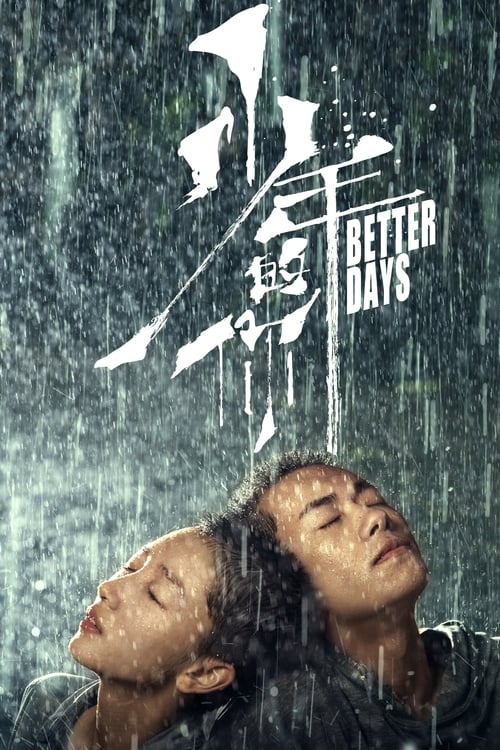
Better Days - Review
Better Days: A Harrowing and Heartrending Look at Bullying and Sacrifice
Better Days, directed by Derek Tsang, is not just another teen romance. Released in 2019, this gripping drama delves into the brutal realities of bullying in the Chinese education system, weaving a complex narrative of resilience, sacrifice, and unlikely love. It's a film that stays with you long after the credits roll, prompting uncomfortable but necessary conversations about societal pressures and the vulnerability of youth. From its stunning cinematography to its powerhouse performances, Better Days is a cinematic tour de force that demands attention.
Plot: A Descent into Darkness and a Glimmer of Hope
The film centers around Chen Nian (Zhou Dongyu), a diligent and ambitious high school student preparing for the all-important Gaokao, China's national college entrance exam. Her life takes a dark turn when a classmate, Hu Xiaodie, commits suicide after relentless bullying. Chen Nian, in a moment of empathy, covers Hu Xiaodie's body, making her a target for the bullies' next wave of torment. The bullying escalates from verbal abuse and physical assault to outright cruelty, leaving Chen Nian isolated and vulnerable.
Amidst this chaos, Chen Nian encounters Xiao Bei (Jackson Yee), a street-smart delinquent living on the fringes of society. Drawn to her quiet strength and desperate situation, Xiao Bei vows to protect her from her tormentors. Their relationship blossoms into an unlikely bond, a refuge from the harsh realities they face. Xiao Bei becomes Chen Nian's shadow, her protector, sacrificing his own well-being to ensure her safety and future. He understands the hopelessness she feels, having experienced his own share of hardship and neglect.
The plot takes several unexpected turns, escalating the tension and raising the stakes. A confrontation with the bullies leads to a violent incident, forcing Chen Nian and Xiao Bei into a desperate situation. They make choices that blur the lines between right and wrong, highlighting the desperate measures people take when pushed to the brink. The police investigation adds another layer of complexity, forcing Chen Nian to confront the consequences of her actions and the sacrifices Xiao Bei has made for her.
The film cleverly uses the Gaokao as a backdrop, highlighting the immense pressure placed on students in China. The exam represents their only chance for a better future, making the stakes incredibly high. Chen Nian's determination to succeed, despite the overwhelming obstacles she faces, is both inspiring and heartbreaking.
Characters: Portraits of Resilience and Vulnerability
Chen Nian (Zhou Dongyu): Zhou Dongyu delivers a captivating performance as Chen Nian. She portrays the character's vulnerability and resilience with remarkable nuance. Chen Nian is not a typical victim; she is intelligent, determined, and fiercely protective of her dreams. Zhou Dongyu masterfully conveys the character's internal struggles, her fear, and her unwavering hope for a better future. Her transformation from a shy, introverted student to a woman willing to fight for her survival is both powerful and believable.
Xiao Bei (Jackson Yee): Jackson Yee's portrayal of Xiao Bei is equally compelling. He embodies the character's tough exterior and hidden vulnerability. Xiao Bei is a product of his environment, hardened by the streets and abandoned by his family. Yet, beneath his rough exterior lies a deep sense of loyalty and compassion. He sees something special in Chen Nian, a kindred spirit who deserves a better life. Yee's performance is raw and authentic, capturing the character's internal conflict and his unwavering devotion to Chen Nian.
Wei Lai (Zhou Ye): Zhou Ye plays the role of Wei Lai, the main bully, with chilling effectiveness. She doesn't portray Wei Lai as a simple caricature of evil but as a complex character driven by her own insecurities and societal pressures. This nuanced portrayal adds depth to the film's exploration of bullying and its underlying causes. Wei Lai's actions are reprehensible, but the film also hints at the reasons behind her behavior, making her a more complex and disturbing figure.
Police Officer Zheng Yi (Yin Fang): Yin Fang delivers a solid performance as the police officer investigating the case. He represents the voice of reason and justice, but also highlights the limitations of the system in addressing the root causes of bullying. Zheng Yi becomes a sort of reluctant mentor to Chen Nian, recognizing her potential and her desire to do the right thing. He struggles with the moral complexities of the case, torn between upholding the law and understanding the circumstances that led to the tragic events.
Direction: A Masterful Blend of Tension and Emotion
Derek Tsang's direction is masterful, creating a palpable sense of tension and unease throughout the film. He skillfully uses close-ups to capture the characters' emotions, drawing the audience into their inner worlds. The pacing is deliberate, allowing the story to unfold gradually, building suspense and emotional resonance. Tsang doesn't shy away from depicting the brutality of bullying, but he also balances it with moments of tenderness and hope.
Tsang's use of symbolism is also noteworthy. The recurring motif of rain represents the characters' emotional turmoil and the cleansing power of forgiveness. The Gaokao hall, with its rows of desks and intense atmosphere, symbolizes the pressure and expectations placed on young people in China. The contrast between the crowded city streets and the quiet, intimate moments between Chen Nian and Xiao Bei highlights their isolation and their need for connection.
The film's direction never feels exploitative or gratuitous. Tsang handles the sensitive subject matter with care and respect, focusing on the emotional impact of the events on the characters. He avoids sensationalizing the violence, instead using it to underscore the devastating consequences of bullying.
Cinematography: A Visual Feast of Darkness and Light
The cinematography, by Yu Jing-Pin, is visually stunning, creating a world that is both gritty and beautiful. The film is shot in a realistic style, capturing the urban landscape of Chongqing with its towering buildings and narrow alleyways. The use of color is deliberate, with muted tones reflecting the characters' somber mood and brighter hues highlighting moments of hope and joy.
The lighting is particularly effective, creating a sense of atmosphere and drama. Dark shadows accentuate the characters' vulnerability, while bright sunlight symbolizes their resilience. The close-ups are intimate and revealing, capturing the nuances of the actors' performances. The wide shots showcase the vastness of the city, emphasizing the characters' isolation and their struggle to find their place in the world.
The cinematography also plays a crucial role in conveying the film's themes. The contrast between the polished, sterile environment of the school and the gritty, chaotic streets outside underscores the disconnect between the characters' aspirations and their reality. The use of slow motion during key moments heightens the emotional impact of the scenes, allowing the audience to fully absorb the characters' experiences.
Performances: A Triumph of Acting
The performances in Better Days are uniformly excellent. Zhou Dongyu and Jackson Yee deliver career-defining performances, showcasing their range and versatility. Their chemistry is undeniable, creating a believable and deeply moving bond between their characters. Their performances are raw, honest, and emotionally resonant, drawing the audience into their world and making them feel their pain, their fear, and their hope.
Zhou Ye is chillingly effective as the bully, Wei Lai. Her performance is nuanced and unsettling, adding depth to the character and making her more than just a simple antagonist. The supporting cast is also strong, delivering believable and memorable performances that enhance the film's overall impact.
The actors' ability to convey complex emotions with subtle gestures and expressions is particularly impressive. They bring a level of authenticity to their roles that elevates the film beyond mere entertainment, making it a powerful and thought-provoking experience.
Themes and Messages: A Call for Empathy and Understanding
Better Days explores several important themes, including bullying, social inequality, the pressure of academic achievement, and the power of resilience. The film shines a light on the devastating consequences of bullying, not only for the victims but also for the perpetrators and the society that allows it to persist.
The film also addresses the issue of social inequality, highlighting the disparities between the privileged and the marginalized. Chen Nian and Xiao Bei come from different worlds, but they are both victims of a system that favors the wealthy and powerful. Their struggles underscore the importance of empathy and understanding, urging viewers to look beyond superficial differences and recognize the shared humanity of all people.
The pressure of academic achievement is another key theme. The film portrays the Gaokao as a symbol of the immense pressure placed on young people in China, where success in the exam can determine their entire future. The film questions whether this pressure is worth the cost, highlighting the mental and emotional toll it takes on students.
Ultimately, Better Days is a story about resilience and the power of human connection. Despite the overwhelming obstacles they face, Chen Nian and Xiao Bei find strength in each other, offering each other support and hope in a world that seems determined to crush them. The film's message is clear: even in the darkest of times, hope can endure, and human connection can provide a lifeline.
Comparison to Other Films
Better Days shares thematic similarities with other films that explore the issue of bullying, such as Bully (2011) and Carrie (1976). However, Better Days distinguishes itself through its focus on the Chinese education system and its emphasis on the societal pressures that contribute to bullying. It also shares some similarities with films that explore the theme of unlikely love in the face of adversity, such as Leon: The Professional (1994). However, Better Days is unique in its portrayal of the specific cultural context and the unique challenges faced by young people in China.
Director Derek Tsang previously directed Soul Mate (2016), another coming-of-age drama that explores the complexities of female friendship. While Soul Mate is a lighter and more optimistic film, it shares Tsang's interest in exploring the emotional lives of young women and the challenges they face in navigating societal expectations.
Zhou Dongyu has starred in numerous films, including Under the Hawthorn Tree (2010) and Soul Mate. She is known for her ability to portray complex emotions with subtlety and nuance. Jackson Yee is a rising star in Chinese cinema, and Better Days marked a significant turning point in his career, showcasing his dramatic acting abilities. His performance in this film solidified his position as one of the most promising young actors in China.
Positive Aspects: A Masterpiece of Emotional Storytelling
Better Days excels in several key areas. The performances are outstanding, the direction is masterful, and the cinematography is visually stunning. The film's exploration of complex themes is thought-provoking and emotionally resonant. The pacing is deliberate, allowing the story to unfold gradually and build suspense. The film's ending is both satisfying and emotionally impactful, leaving the audience with a sense of hope and a renewed appreciation for the power of human connection.
The film's greatest strength lies in its ability to connect with the audience on an emotional level. The characters are relatable and believable, and their struggles resonate with viewers of all ages and backgrounds. The film's message of hope and resilience is particularly powerful in a world that often feels overwhelming and discouraging.
Constructive Criticism: Areas for Improvement
While Better Days is a highly accomplished film, there are a few areas where it could have been improved. Some critics have argued that the film's portrayal of violence is excessive and gratuitous. While the violence is undoubtedly disturbing, it is also essential to the film's overall message about the devastating consequences of bullying. However, it is possible that the film could have conveyed this message with less graphic imagery.
Another potential area for improvement is the film's pacing. While the deliberate pacing allows the story to unfold gradually, some viewers may find it slow at times. However, the pacing is also essential to building suspense and emotional resonance. Ultimately, the film's pacing is a matter of personal preference.
Finally, some critics have argued that the film's ending is too sentimental and unrealistic. While the ending is undoubtedly hopeful, it is also grounded in the characters' experiences and their unwavering belief in each other. Ultimately, the film's ending is a matter of interpretation.
Conclusion: A Must-See Cinematic Experience
Better Days is a powerful and unforgettable film that deserves to be seen by a wide audience. It is a masterpiece of emotional storytelling, exploring complex themes with sensitivity and nuance. The performances are outstanding, the direction is masterful, and the cinematography is visually stunning. While the film may be disturbing at times, it is also ultimately hopeful, reminding us of the importance of empathy, resilience, and human connection. Better Days is not just a film; it's an experience that will stay with you long after the credits roll.
Rating: 9.5/10