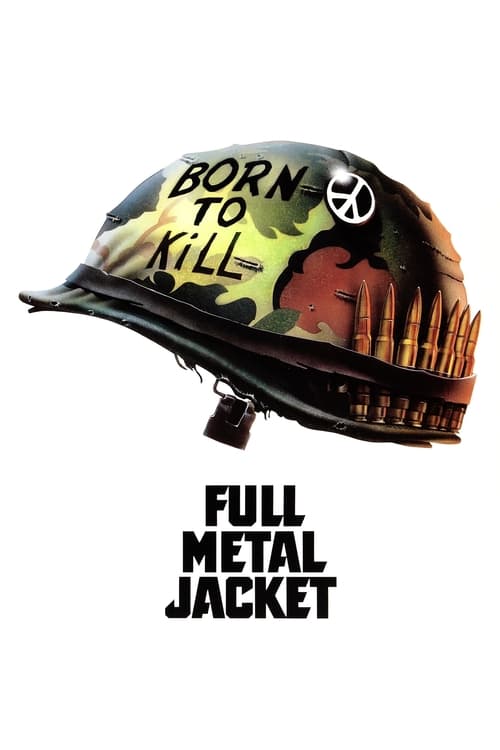
Full Metal Jacket - Review
Full Metal Jacket: A Descent into Madness and the Machinery of War
Stanley Kubrick's Full Metal Jacket, released in 1987, isn't just a war film; it's a stark, unflinching dissection of the dehumanizing process inherent in military training and the psychological toll of combat. More than three decades later, the film's power to shock, disturb, and provoke remains undiminished. It's a cinematic experience that burrows under your skin, leaving you questioning the very nature of patriotism, identity, and the cost of war. Prepare to have your preconceptions challenged and your senses assaulted, because Full Metal Jacket is a journey into the heart of darkness, American style.
Plot: Two Halves, One Devastating Whole
Full Metal Jacket is essentially divided into two distinct, yet interconnected, halves. The first act unfolds at Parris Island Marine Corps Recruit Depot, South Carolina, where we witness the brutal and relentless training of a platoon of recruits under the iron fist of Gunnery Sergeant Hartman (R. Lee Ermey). This section focuses primarily on the psychological destruction and reconstruction of these young men, stripping them of their individuality and molding them into killing machines. The narrative centers on two recruits: Private J.T. "Joker" Davis (Matthew Modine), an intelligent and cynical aspiring journalist, and Private Leonard "Gomer Pyle" Lawrence (Vincent D'Onofrio), an overweight, clumsy, and mentally fragile recruit who becomes the target of Hartman's relentless abuse.
The second half shifts the scene to Vietnam, where Joker, now a reporter for Stars and Stripes, experiences the realities of war firsthand. He witnesses the senseless violence, the moral ambiguity, and the psychological scars inflicted on the soldiers fighting in the conflict. This section culminates in a harrowing firefight in the ruins of Hue, where Joker and his unit are pinned down by a sniper, forcing them to confront their own mortality and the true nature of their mission.
While seemingly disparate, the two halves of Full Metal Jacket are thematically linked. The boot camp experience serves as a microcosm of the larger war, demonstrating how individuals are stripped of their humanity and transformed into instruments of violence. The Vietnam section then explores the consequences of this dehumanization, showing how the soldiers are forced to grapple with the moral and psychological implications of their actions.
Characters: Stripped Bare and Rebuilt as Machines
The characters in Full Metal Jacket are not romanticized heroes; they are flawed, vulnerable individuals struggling to survive in a brutal and unforgiving environment.
Gunnery Sergeant Hartman
Hartman is arguably the most memorable character in the film, and R. Lee Ermey's performance is nothing short of iconic. Hartman is the embodiment of the Marine Corps' relentless training regimen, a man who believes in breaking down recruits to build them back up as efficient killing machines. His constant barrage of insults, profanity, and psychological manipulation is both shocking and strangely compelling. While his methods are undeniably cruel, Hartman genuinely believes he is preparing these young men for the horrors of war. Ermey's performance is so convincing that it's easy to forget he's acting; he brings a level of authenticity and intensity to the role that is rarely seen in war films. It is said that much of his dialogue was improvised, drawing from his own experiences as a drill instructor.
Private "Joker" Davis
Joker serves as the audience's point of entry into the world of Full Metal Jacket. He is an intelligent and observant individual who is initially skeptical of the Marine Corps' ideology. However, as he progresses through boot camp and experiences the realities of war, he begins to question his own values and beliefs. Joker is not a typical war hero; he is conflicted, cynical, and ultimately unsure of his place in the world. His helmet, adorned with the slogan "Born to Kill" and a peace symbol, perfectly encapsulates the internal contradictions that plague him throughout the film. Matthew Modine delivers a nuanced and understated performance, capturing the character's intelligence and moral ambiguity.
Private "Gomer Pyle" Lawrence
Pyle is the tragic figure of the film. He is a gentle, well-meaning individual who is simply unable to adapt to the rigors of Marine Corps training. Hartman singles him out for relentless abuse, pushing him to the brink of mental breakdown. Pyle's transformation from a clumsy, innocent recruit into a psychotic killer is one of the most disturbing aspects of the film. Vincent D'Onofrio delivers a tour-de-force performance, capturing the character's vulnerability and descent into madness. His bulging eyes and stammering voice perfectly convey the character's inner turmoil.
Other Notable Characters
The supporting characters, such as Cowboy, Eightball, and Animal Mother, also contribute to the film's overall impact. They represent different facets of the American soldier, each struggling to cope with the psychological pressures of war in their own way. Cowboy is the level-headed and pragmatic leader, Eightball is the stoic and withdrawn African-American soldier, and Animal Mother is the aggressive and bloodthirsty warrior.
Direction: Kubrick's Masterful Control
Stanley Kubrick's direction is meticulous and uncompromising. He creates a visually stunning and emotionally powerful experience that is both realistic and surreal. Kubrick's attention to detail is legendary, and every aspect of the film, from the set design to the cinematography, is carefully crafted to create a specific mood and atmosphere.
Kubrick's use of long takes and slow zooms creates a sense of unease and tension, drawing the viewer into the characters' psychological states. He also employs a variety of cinematic techniques, such as montage and symbolism, to convey complex ideas and emotions. The film's pacing is deliberate and methodical, allowing the viewer to fully absorb the horrors of war. Some critics have noted the film's almost detached, clinical tone, which further enhances its impact. Kubrick doesn't judge his characters; he simply presents them as they are, forcing the audience to confront the uncomfortable truths about war and human nature.
Cinematography: A Visual Landscape of Dehumanization
The cinematography, by Douglas Milsome, is equally impressive. The film's visuals are stark and realistic, capturing the grim realities of boot camp and the devastation of war. The use of natural lighting and handheld cameras creates a sense of immediacy and authenticity. The film's color palette is muted and desaturated, reflecting the bleakness and despair of the characters' experiences. The imagery is often disturbing and unsettling, but it is also undeniably powerful. The scenes of boot camp are claustrophobic and oppressive, while the scenes in Vietnam are chaotic and disorienting. The visual contrast between these two settings further emphasizes the film's themes of dehumanization and the loss of innocence.
One particularly striking example of the film's cinematography is the sequence in Hue, where the city is depicted as a war-torn wasteland. The buildings are crumbling, the streets are deserted, and the air is thick with smoke and dust. This visual representation of destruction and decay perfectly reflects the psychological state of the soldiers fighting in the conflict.
Performances: A Cast of Unforgettable Faces
The performances in Full Metal Jacket are uniformly excellent. As mentioned earlier, R. Lee Ermey's performance as Gunnery Sergeant Hartman is a standout. His energy and authenticity are unmatched, and he dominates every scene he's in. Matthew Modine delivers a nuanced and understated performance as Joker, capturing the character's intelligence and moral ambiguity. Vincent D'Onofrio is equally impressive as Pyle, portraying the character's vulnerability and descent into madness with heartbreaking realism.
The supporting cast is also strong, with actors like Adam Baldwin (Animal Mother) and Dorian Harewood (Eightball) delivering memorable performances. The actors underwent extensive training to prepare for their roles, and their dedication is evident in their performances. They embody their characters with a level of realism and conviction that is rarely seen in war films.
Themes and Messages: War's Corrosive Impact
Full Metal Jacket explores a number of complex and disturbing themes, including:
- Dehumanization: The film argues that war is a dehumanizing process that strips individuals of their individuality and morality. The recruits are transformed into killing machines, trained to obey orders without question and to view the enemy as less than human.
- Loss of Innocence: The film depicts the loss of innocence that occurs when young men are exposed to the horrors of war. The recruits enter boot camp as naive and idealistic individuals, but they emerge as hardened and cynical veterans.
- The Nature of Violence: The film explores the nature of violence and its impact on the human psyche. The soldiers are forced to confront their own capacity for violence, and they struggle to reconcile their actions with their moral beliefs.
- The Absurdity of War: The film highlights the absurdity and futility of war. The soldiers are fighting for a cause they don't fully understand, and their efforts seem ultimately pointless.
- The Psychological Toll of War: The film depicts the psychological toll that war takes on soldiers. The characters suffer from PTSD, anxiety, and depression, and they struggle to readjust to civilian life after their experiences in Vietnam.
The film's message is not explicitly anti-war, but it is certainly critical of the military's dehumanizing practices and the devastating consequences of war. Kubrick doesn't offer any easy answers or solutions; he simply presents the brutal realities of war and leaves it to the audience to draw their own conclusions.
Comparison to Other Films and Kubrick's Oeuvre
Full Metal Jacket can be compared to other war films that explore the psychological impact of combat, such as Apocalypse Now (1979) and Platoon (1986). However, Kubrick's film is unique in its emphasis on the dehumanizing process of military training. While Apocalypse Now focuses on the descent into madness in the jungles of Vietnam, and Platoon emphasizes the moral ambiguities of the war, Full Metal Jacket delves into the systematic stripping away of individuality and the creation of efficient killing machines.
In terms of Kubrick's own filmography, Full Metal Jacket shares thematic similarities with his earlier film, Dr. Strangelove or: How I Learned to Stop Worrying and Love the Bomb (1964). Both films explore the absurdity of war and the dangers of unchecked military power. Both also employ a detached, satirical tone to highlight the irrationality of human behavior. However, Full Metal Jacket is a more grounded and realistic film than Dr. Strangelove, reflecting the changing attitudes towards war in the post-Vietnam era.
While Kubrick's films are often characterized by their coldness and detachment, Full Metal Jacket is surprisingly emotional and affecting. The characters are complex and relatable, and their struggles resonate with the audience. The film's ending, in which the soldiers march into the night singing the Mickey Mouse Club theme song, is both chilling and poignant, underscoring the loss of innocence and the enduring psychological scars of war.
Positive Aspects
- Powerful and Unflinching Depiction of War: The film doesn't shy away from the brutal realities of war, showing the physical and psychological toll it takes on soldiers.
- Excellent Performances: The cast delivers outstanding performances, particularly R. Lee Ermey, Matthew Modine, and Vincent D'Onofrio.
- Meticulous Direction and Cinematography: Kubrick's attention to detail and Milsome's stunning visuals create a visually arresting and emotionally powerful experience.
- Thought-Provoking Themes: The film explores complex and disturbing themes about dehumanization, loss of innocence, and the nature of violence.
- Memorable Dialogue: The film is filled with quotable lines, particularly Hartman's profanity-laced tirades.
Constructive Criticism
- Pacing Issues: Some viewers may find the film's pacing to be slow and deliberate, particularly in the second half. While this pacing is intentional, it may not appeal to all audiences.
- Detached Tone: Kubrick's detached and clinical tone can be off-putting to some viewers. While this tone enhances the film's impact, it may also create a sense of emotional distance.
- Stereotypical Characters: Some of the supporting characters, such as Animal Mother, can be seen as stereotypical representations of American soldiers.
- Lack of Vietnamese Perspective: The film focuses almost exclusively on the American perspective, neglecting the experiences of the Vietnamese people.
- Abrupt Ending: The film's ending, while powerful, can feel somewhat abrupt and unresolved.
Conclusion
Full Metal Jacket is a masterpiece of filmmaking, a brutal and unflinching exploration of the dehumanizing process of war. Stanley Kubrick's meticulous direction, coupled with stunning cinematography and unforgettable performances, creates a cinematic experience that is both disturbing and thought-provoking. While the film may not be for everyone, its power and impact are undeniable. It's a film that stays with you long after the credits roll, forcing you to confront the uncomfortable truths about war and human nature. Despite some minor pacing and tonal issues, Full Metal Jacket remains a seminal work in the war film genre and a testament to Kubrick's genius.