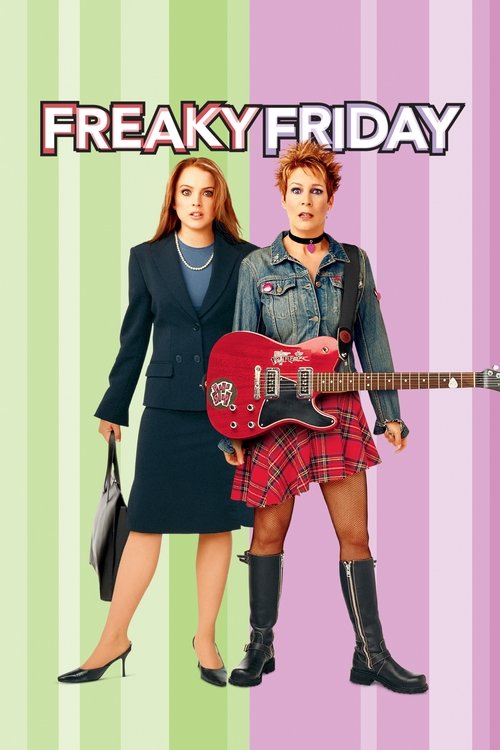
Freaky Friday - Review
Freaky Friday (2003): A Body-Swapping Symphony of Laughter and Understanding
In a world saturated with body-swap comedies, "Freaky Friday" (2003) might seem like just another rehash of a well-worn trope. However, this Disney rendition, starring Jamie Lee Curtis and Lindsay Lohan, transcends its familiar premise through sharp writing, stellar performances, and a surprisingly resonant exploration of family dynamics. More than just a laugh-out-loud comedy, "Freaky Friday" offers a heartwarming lesson in empathy and the challenges of bridging generational divides. This review delves into the film's various aspects, examining its plot, characters, direction, cinematography, performances, themes, and its place within the broader context of body-swap narratives, ultimately determining whether it stands the test of time as a genuinely enjoyable and meaningful cinematic experience.
Plot: More Than Just a Switch
The narrative of "Freaky Friday" centers around Dr. Tess Coleman (Jamie Lee Curtis), a recently widowed therapist on the verge of remarrying, and her rebellious teenage daughter, Anna (Lindsay Lohan), a budding guitarist with a penchant for punk rock. Their relationship is fraught with tension and misunderstandings. Tess disapproves of Anna's band, her fashion choices, and her boyfriend, Jake. Anna, in turn, resents Tess's impending marriage to Ryan and feels that her mother is controlling and insensitive to her needs.
The catalyst for the story is a fateful encounter at a Chinese restaurant. During a heated argument, both Tess and Anna grab for the same magical fortune cookie. The cookie's power, activated by their mutual discontent, causes them to swap bodies. Tess wakes up as Anna, a 16-year-old girl navigating the complexities of high school, band practice, and budding romance. Anna, conversely, finds herself trapped in her mother's body, facing the pressures of a high-profile wedding, demanding patients, and the expectations of adulthood.
The film then follows their hilarious and often cringe-worthy attempts to navigate each other's lives. Tess, as Anna, struggles to understand teenage slang, deal with school bullies, and perform adequately in Anna's band. Anna, as Tess, tries to maintain her mother's professional composure while dealing with her quirky patients and preparing for her wedding. The humor stems from the clash of personalities and the inevitable mishaps that occur as they fumble through unfamiliar situations.
The plot is not solely reliant on slapstick comedy. It cleverly weaves in moments of genuine emotional connection and self-discovery. Both Tess and Anna begin to understand each other's perspectives and appreciate the challenges they face. Tess sees the pressures and anxieties that Anna experiences as a teenager, while Anna realizes the responsibilities and emotional burdens that Tess carries as a single parent.
The resolution of the film involves a desperate race against time to reverse the body swap before Tess's wedding. They discover that the only way to undo the magic is to recreate the circumstances that caused it – another argument and another fortune cookie. The climax is a chaotic but ultimately heartwarming scene where they publicly reconcile their differences and reaffirm their love for each other, triggering the reversal and allowing them to return to their own bodies.
Characters: Beyond the Stereotypes
"Freaky Friday" benefits from well-developed characters that go beyond the typical stereotypes often found in teen comedies. The film portrays Tess and Anna as complex individuals with their own flaws, aspirations, and insecurities.
Dr. Tess Coleman (Jamie Lee Curtis)
Tess is not just a stereotypical uptight mother. She is a dedicated therapist, a loving (albeit sometimes overbearing) parent, and a woman grappling with grief and the challenges of starting a new chapter in her life. Curtis delivers a tour-de-force performance, convincingly portraying both Tess's initial control and the awkwardness and vulnerability she experiences when trapped in Anna's body. Her portrayal of a middle-aged woman trying to navigate the world of teenage angst is both hilarious and surprisingly touching.
Anna Coleman (Lindsay Lohan)
Anna is more than just a rebellious teenager. She is a talented musician, a loyal friend, and a young woman struggling to find her identity and assert her independence. Lohan perfectly captures Anna's teenage angst, her passion for music, and her growing understanding of her mother's sacrifices. Her performance as Tess trapped in Anna's body is equally impressive, showcasing her ability to mimic Curtis's mannerisms and convey the character's internal struggles.
Ryan (Mark Harmon)
Ryan, Tess's fiancé, is not portrayed as a villain or a plot device. He is a genuinely kind and understanding man who loves Tess and wants to be a good stepfather to Anna. Harmon brings a warmth and sincerity to the role, making Ryan a believable and likable character.
Jake (Chad Michael Murray)
Jake, Anna's boyfriend, is not just a stereotypical heartthrob. He is a supportive and understanding friend who encourages Anna's musical aspirations. Murray's performance is understated but effective, portraying Jake as a genuine and caring young man.
Supporting Characters
The supporting characters, including Anna's bandmates, Tess's patients, and the various figures in their lives, add depth and humor to the film. They are not merely background figures but contribute to the overall narrative and help to highlight the challenges and triumphs that Tess and Anna face.
Direction and Cinematography: A Polished Package
Mark Waters' direction in "Freaky Friday" is sharp and focused, effectively balancing the comedic and emotional elements of the story. He maintains a brisk pace, ensuring that the film remains engaging and entertaining throughout. Waters' experience with teen comedies, evident in films like "Mean Girls," is on full display here, as he expertly captures the nuances of teenage life and the dynamics of family relationships.
The cinematography, by Oliver Wood, is bright and vibrant, reflecting the film's lighthearted tone. The use of color and lighting is effective in creating a visually appealing and engaging experience. The camera work is dynamic, employing a variety of angles and movements to enhance the comedic timing and emphasize the characters' emotions.
The editing is tight and efficient, ensuring that the film flows smoothly and that the comedic moments land effectively. The soundtrack is well-chosen, featuring a mix of pop and rock songs that complement the film's themes and enhance the overall mood.
Performances: Curtis and Lohan Shine
The success of "Freaky Friday" hinges on the performances of Jamie Lee Curtis and Lindsay Lohan, and both actresses deliver career-defining performances. Their chemistry is palpable, and they convincingly portray both the initial animosity and the eventual understanding that develops between Tess and Anna.
Curtis's performance is particularly noteworthy. She fully embraces the physical comedy and captures the awkwardness of a middle-aged woman trapped in a teenager's body. Her portrayal of Anna's rebellious spirit and her attempts to navigate the world of teenage romance are hilarious and endearing.
Lohan's performance is equally impressive. She convincingly portrays Tess's professional demeanor and her attempts to maintain her composure while dealing with her mother's demanding patients and preparing for her wedding. Her ability to mimic Curtis's mannerisms and convey the character's internal struggles is remarkable.
The supporting cast also delivers strong performances, adding depth and humor to the film. Mark Harmon is charming and believable as Ryan, while Chad Michael Murray provides a solid and supportive presence as Jake.
Themes and Messages: Beyond the Laughter
"Freaky Friday" is more than just a lighthearted comedy. It explores several important themes, including:
Empathy and Understanding
The film's central theme is the importance of empathy and understanding. By literally walking in each other's shoes, Tess and Anna gain a new appreciation for the challenges and perspectives of the other. They learn to see beyond their own biases and to recognize the humanity in each other.
Communication and Reconciliation
The film highlights the importance of communication in resolving conflicts and strengthening relationships. Tess and Anna's initial animosity stems from a lack of communication and a failure to understand each other's needs. Through their shared experience, they learn to communicate more effectively and to reconcile their differences.
Family Dynamics
The film explores the complexities of family dynamics, particularly the challenges of parenting teenagers and navigating the transition from childhood to adulthood. It highlights the importance of love, support, and understanding in maintaining strong family relationships.
Self-Discovery
Both Tess and Anna undergo a process of self-discovery throughout the film. Tess learns to loosen up and embrace her inner child, while Anna learns to appreciate her mother's sacrifices and to take responsibility for her own actions.
Comparison to Other Films: A Body-Swap Lineage
"Freaky Friday" belongs to a long and storied tradition of body-swap comedies. Films like "Vice Versa" (1988), "Like Father Like Son" (1987), and even the original "Freaky Friday" (1976) explored similar themes of empathy and understanding through the comedic device of body swapping.
While "Freaky Friday" (2003) shares the same basic premise as these films, it distinguishes itself through its sharp writing, strong performances, and its focus on the mother-daughter relationship. Unlike some of the earlier films, which relied more heavily on slapstick comedy, "Freaky Friday" (2003) delves deeper into the emotional complexities of its characters and explores the underlying issues that contribute to their conflict.
The 2003 version also benefits from its contemporary setting and its use of music and fashion to reflect the changing cultural landscape. The film's soundtrack, featuring a mix of pop and rock songs, adds to its appeal and helps to connect with a younger audience.
Compared to other works by Mark Waters, "Freaky Friday" shares a similar sensibility to "Mean Girls" in its sharp wit and its ability to capture the nuances of teenage life. However, "Freaky Friday" is ultimately a more heartwarming and optimistic film, focusing on the importance of family and the power of empathy.
Positive Aspects: A Recipe for Success
"Freaky Friday" (2003) boasts several positive aspects that contribute to its enduring appeal:
- Strong Performances: Jamie Lee Curtis and Lindsay Lohan deliver career-defining performances, showcasing their comedic timing and their ability to connect with audiences on an emotional level.
- Sharp Writing: The script is witty, engaging, and insightful, exploring the complexities of family dynamics and the challenges of bridging generational divides.
- Effective Direction: Mark Waters' direction is focused and well-paced, balancing the comedic and emotional elements of the story effectively.
- Heartwarming Themes: The film explores important themes such as empathy, communication, and self-discovery, leaving audiences with a positive and uplifting message.
- Memorable Soundtrack: The soundtrack is well-chosen, featuring a mix of pop and rock songs that complement the film's themes and enhance the overall mood.
Constructive Criticism: Room for Improvement
While "Freaky Friday" (2003) is a highly enjoyable film, it is not without its flaws:
- Predictable Plot: The body-swap premise is familiar and predictable, and the film relies on many of the tropes associated with the genre.
- Some Over-the-Top Moments: Some of the comedic moments are exaggerated and unrealistic, which may detract from the film's overall credibility.
- Slightly Dated: While the film still holds up well, some of the fashion and cultural references feel slightly dated, reflecting the early 2000s era in which it was made.
- Ryan's Character: While Mark Harmon delivers a fine performance, the character of Ryan could have been given more depth and complexity. He sometimes feels like a secondary character rather than an integral part of the family dynamic.
Conclusion: A Timeless Family Comedy
"Freaky Friday" (2003) is a delightful and heartwarming comedy that transcends its familiar premise through sharp writing, stellar performances, and a surprisingly resonant exploration of family dynamics. Jamie Lee Curtis and Lindsay Lohan deliver career-defining performances, and Mark Waters' direction is focused and well-paced. While the plot may be predictable and some of the comedic moments are over-the-top, the film's positive themes, engaging characters, and memorable soundtrack make it a genuinely enjoyable and meaningful cinematic experience. It's a film that families can enjoy together, sparking conversations about understanding, empathy, and the importance of communication.
Rating: 8.5/10