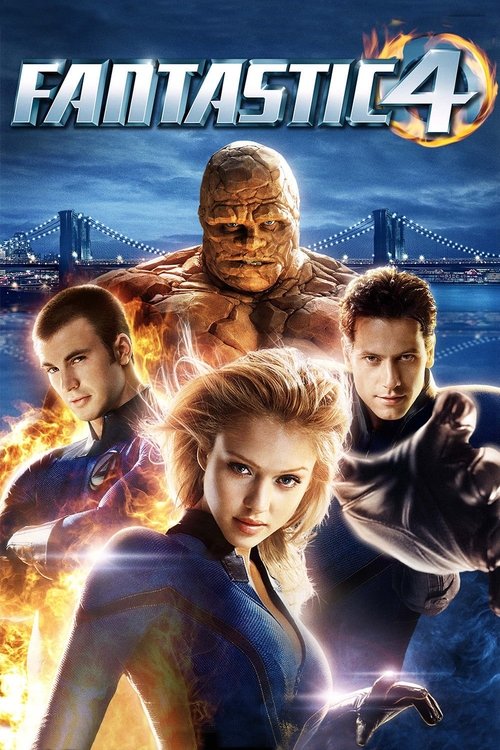
Fantastic Four - Review
Fantastic Four (2005): A Cosmic Mishap or a Superheroic Triumph?
Remember the pre-MCU days? Before Marvel became a cinematic juggernaut, studios were still figuring out how to translate comic book lore to the big screen. Enter 2005's Fantastic Four, a film that promised to bring Marvel's first family to life. But did it succeed? Or did it suffer a cosmic ray-induced mutation of its own, leaving audiences with a somewhat… stretchy experience? This review delves deep into the film, examining its plot, characters, direction, performances, and overall impact, to determine whether it deserves a place in the superhero movie pantheon or should be relegated to the Negative Zone of cinematic history.
Plot: A Formulaic Foundation with Fleeting Flair
The plot of Fantastic Four (2005) is undeniably straightforward, adhering closely to the origin story established in the comics. Reed Richards, a brilliant but financially struggling scientist, convinces his college friend, Ben Grimm, his ex-girlfriend Sue Storm, and her hot-headed brother Johnny Storm to join him on a mission to space. Their goal: to study a cosmic energy cloud that Reed believes holds the key to unlocking the secrets of human DNA. However, things go awry when the cloud's energy unexpectedly bombards the team, altering their genetic structure and granting them extraordinary abilities.
Meanwhile, Victor Von Doom, Reed's former benefactor and rival, is also affected by the cosmic rays, leading to a disfiguring transformation and the development of metallic skin. Driven by jealousy and a thirst for power, Doom becomes the film's antagonist, plotting to use his newfound abilities to wreak havoc on New York City and exact revenge on Reed and the others. The Fantastic Four must learn to control their powers, overcome their personal conflicts, and unite to stop Doom before he can carry out his destructive plans.
While the basic plot points are faithful to the source material, the execution feels somewhat rushed and lacking in depth. The development of the characters' powers is often glossed over, and the motivations of certain characters, particularly Victor Von Doom, feel underdeveloped. The film relies heavily on established comic book tropes and doesn't offer many surprises for seasoned fans. The pacing is uneven, with moments of exciting action interspersed with lengthy stretches of exposition and character drama that don't always land effectively. The simplicity of the plot, while accessible to a broad audience, ultimately prevents the film from reaching its full potential.
Characters: A Mixed Bag of Super-Powered Personalities
The success of any superhero team movie hinges on the strength of its characters and the dynamics between them. Fantastic Four attempts to capture the essence of the titular team, but the results are mixed.
Reed Richards/Mr. Fantastic (Ioan Gruffudd):
Ioan Gruffudd portrays Reed Richards as a brilliant but socially awkward scientist, more comfortable in a lab than in social situations. He captures Reed's intellect and determination, but his performance often feels subdued and lacks the charisma needed to fully embody the character's leadership qualities. His relationship with Sue is central to the film, but their chemistry feels somewhat forced and unconvincing.
Sue Storm/Invisible Woman (Jessica Alba):
Jessica Alba's portrayal of Sue Storm is arguably the most criticized aspect of the film. While visually appealing, her performance lacks the depth and intelligence that define the character in the comics. Her powers, while visually impressive, feel underutilized, and her motivations often seem unclear. The romantic tension between her and Reed feels contrived, and her overall character arc lacks significant development.
Johnny Storm/Human Torch (Chris Evans):
Chris Evans, pre-Captain America fame, injects much-needed energy and humor into the film as Johnny Storm. He embodies the character's youthful exuberance and recklessness, providing comic relief and a sense of levity to the otherwise serious proceedings. His character arc, involving learning to control his powers and accepting responsibility, is one of the more compelling aspects of the film. Evans' performance foreshadows his later success as Captain America, showcasing his natural charisma and ability to connect with audiences.
Ben Grimm/The Thing (Michael Chiklis):
Michael Chiklis delivers perhaps the strongest performance in the film as Ben Grimm. He captures the character's gruff exterior and underlying vulnerability, conveying the pain and frustration of being transformed into a monstrous creature. The visual effects used to create The Thing are impressive for their time, and Chiklis's performance shines through the prosthetics, making Ben a sympathetic and relatable character. His relationship with Reed, strained by the events of the space voyage, provides some of the film's most emotional moments.
Victor Von Doom/Dr. Doom (Julian McMahon):
Julian McMahon's portrayal of Victor Von Doom is one of the film's major weaknesses. While McMahon possesses the requisite arrogance and charisma, his character's transformation into Dr. Doom feels rushed and unconvincing. His motivations are poorly defined, and his plan to destroy New York City lacks a clear rationale. The visual design of Dr. Doom is also underwhelming, failing to capture the iconic look and menace of the comic book villain. McMahon's performance, while not entirely devoid of merit, ultimately falls short of expectations.
Direction: A Competent but Uninspired Vision
Tim Story's direction of Fantastic Four is competent but lacks a distinctive visual style or a strong sense of storytelling. He effectively manages the action sequences, but the film's overall tone feels uneven and inconsistent. The pacing is often sluggish, and the character development feels rushed and superficial. Story's direction prioritizes spectacle over substance, resulting in a film that is visually appealing but ultimately lacking in depth and emotional resonance.
Compared to other superhero films of the era, such as Sam Raimi's Spider-Man or Bryan Singer's X-Men, Fantastic Four lacks a clear directorial vision. Raimi and Singer brought a unique perspective and a strong sense of style to their respective films, elevating them beyond simple adaptations of comic book stories. Story's direction, in contrast, feels generic and uninspired, failing to capture the unique spirit and charm of the Fantastic Four.
Cinematography: A Standard Superhero Palette
The cinematography of Fantastic Four is functional but unremarkable. The film utilizes a standard superhero movie palette, with bright colors and crisp visuals. The special effects, while decent for their time, haven't aged particularly well, particularly the CGI used to create Reed's stretching abilities and Johnny's flame effects. The overall visual style of the film is clean and polished, but it lacks a distinctive aesthetic that would set it apart from other superhero films.
The camera work is generally straightforward, with few memorable shots or sequences. The action scenes are competently filmed, but they lack the visual flair and excitement of more accomplished superhero films. The lighting is generally flat and uninspired, failing to create a sense of atmosphere or mood. Overall, the cinematography of Fantastic Four is adequate but unexceptional, contributing little to the film's overall impact.
Performances: A Spectrum of Superhuman Efforts
The performances in Fantastic Four are a mixed bag, with some actors delivering strong performances while others struggle to bring their characters to life.
As mentioned earlier, Michael Chiklis stands out as Ben Grimm, imbuing the character with depth and emotional resonance. Chris Evans provides a welcome dose of humor and energy as Johnny Storm, showcasing his natural charisma and comedic timing. Ioan Gruffudd is adequate as Reed Richards, but his performance lacks the spark needed to fully embody the character's leadership qualities. Jessica Alba's portrayal of Sue Storm is widely considered the weakest link, lacking the depth and intelligence that define the character in the comics. Julian McMahon's performance as Victor Von Doom is underwhelming, failing to capture the iconic look and menace of the comic book villain.
Overall, the performances in Fantastic Four are uneven, with some actors shining while others fall short of expectations. The lack of strong chemistry between the cast members further detracts from the film's overall impact.
Themes and Messages: Family, Responsibility, and Overcoming Differences
Despite its flaws, Fantastic Four explores several important themes and messages. The film emphasizes the importance of family, both biological and chosen. The Fantastic Four, despite their personal conflicts and differences, ultimately come together as a family, supporting each other and working together to overcome adversity. The film also explores the theme of responsibility, as each member of the team must learn to control their powers and use them for the greater good. Johnny Storm's character arc, in particular, highlights the importance of accepting responsibility and growing up.
Another key theme of the film is overcoming differences. The Fantastic Four are a diverse group of individuals with different personalities, backgrounds, and perspectives. However, they learn to overcome their differences and work together as a team, demonstrating the power of unity and cooperation. The film also touches on the theme of redemption, as Victor Von Doom seeks to redeem himself after his transformation, albeit through ultimately villainous means.
While these themes are present in the film, they are not always explored with the depth and nuance they deserve. The film often relies on simplistic storytelling and predictable character arcs, preventing it from fully realizing its thematic potential.
Comparison to Other Films and Works
Fantastic Four (2005) can be compared to other superhero films of the early 2000s, such as Spider-Man (2002), X-Men (2000), and Daredevil (2003). While these films all share the common goal of adapting comic book stories to the big screen, they differ significantly in terms of tone, style, and execution.
Spider-Man, directed by Sam Raimi, is widely considered a landmark superhero film, praised for its compelling characters, engaging story, and distinctive visual style. X-Men, directed by Bryan Singer, is another influential film that helped pave the way for the modern superhero movie genre. Both Spider-Man and X-Men are considered superior to Fantastic Four in terms of storytelling, character development, and overall quality.
Daredevil, released in 2003, is another superhero film that faced criticism for its uneven tone and weak script. While Daredevil has its defenders, it is generally considered a lesser entry in the superhero movie canon. Fantastic Four shares some of the same flaws as Daredevil, including a rushed plot, underdeveloped characters, and a lack of a clear directorial vision.
In terms of previous works by the same director and actors, Tim Story had previously directed comedies such as Barbershop and Taxi before helming Fantastic Four. While Story demonstrated a competent ability to direct action sequences, his background in comedy may have contributed to the film's uneven tone and lack of seriousness. Chris Evans, as mentioned earlier, went on to achieve greater success as Captain America in the Marvel Cinematic Universe, showcasing his growth as an actor and his ability to embody a more complex and nuanced character.
Positive Aspects
Despite its flaws, Fantastic Four (2005) has some positive aspects. The film is generally entertaining, with engaging action sequences and moments of humor. Chris Evans' performance as Johnny Storm is a highlight, injecting much-needed energy and charisma into the film. Michael Chiklis' portrayal of Ben Grimm is also commendable, capturing the character's vulnerability and emotional depth. The film's special effects, while dated by today's standards, were impressive for their time, particularly the visual representation of The Thing.
The film also deserves credit for introducing the Fantastic Four to a wider audience, paving the way for future adaptations of the comic book series. While the 2005 film may not be a perfect representation of the Fantastic Four, it helped to establish the characters and their world in the minds of moviegoers.
Constructive Criticism
Fantastic Four (2005) suffers from several significant flaws that prevent it from reaching its full potential. The plot is rushed and underdeveloped, lacking the depth and complexity of more accomplished superhero films. The characters are often one-dimensional, and the performances are uneven, with some actors struggling to bring their characters to life. The direction is competent but uninspired, lacking a distinctive visual style or a strong sense of storytelling. The special effects, while decent for their time, haven't aged particularly well.
The film also suffers from a lack of strong chemistry between the cast members, which detracts from the overall impact of the team dynamic. The villain, Dr. Doom, is poorly developed and lacks a clear motivation, making him a less compelling antagonist. The film's tone is uneven, oscillating between serious action and lighthearted comedy without fully committing to either.
To improve the film, the filmmakers could have focused on developing the characters more fully, fleshing out the plot with more depth and complexity, and establishing a stronger sense of directorial vision. A more nuanced and compelling portrayal of Dr. Doom would have also significantly enhanced the film's overall impact.
Conclusion
Fantastic Four (2005) is a flawed but ultimately entertaining superhero film. While it suffers from a rushed plot, uneven performances, and uninspired direction, it also has moments of humor, engaging action sequences, and a few strong character portrayals. The film's thematic exploration of family, responsibility, and overcoming differences is commendable, but it is not always executed with the depth and nuance it deserves.
Compared to other superhero films of the era, Fantastic Four falls short of the mark. However, it is not without its merits, and it deserves credit for introducing the Fantastic Four to a wider audience. While it may not be a cosmic triumph, it's not a complete disaster either. It's more like a slightly mutated, but still recognizable, version of the Fantastic Four.
Rating: 5/10