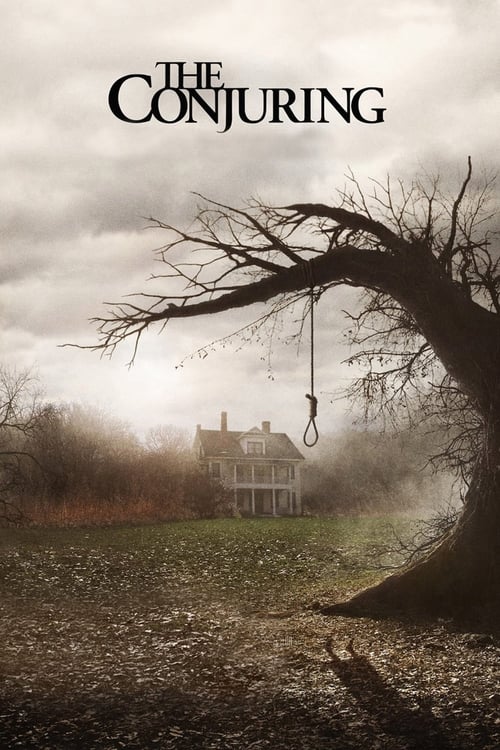
The Conjuring - Review
"The Conjuring": A Masterclass in Modern Horror
James Wan's The Conjuring, released in 2013, isn't just another jump-scare laden horror flick. It's a meticulously crafted, chillingly effective piece of cinematic terror that burrowed its way into the collective consciousness and reignited the paranormal horror subgenre. Based on the alleged real-life experiences of paranormal investigators Ed and Lorraine Warren, the film delivers a relentlessly suspenseful narrative, bolstered by stellar performances and Wan's masterful direction. But does it truly live up to its terrifying reputation, or is it simply a triumph of hype and jump scares? Let's delve into the darkness and dissect what makes The Conjuring such a potent and enduring horror experience.
Plot: A Family Under Siege
The film opens in 1971 with a group of young nurses recounting their horrifying experiences with a possessed doll named Annabelle to Ed and Lorraine Warren (Patrick Wilson and Vera Farmiga). This opening sequence, while seemingly detached from the main narrative, serves as a crucial introduction to the Warrens and their world, immediately establishing the stakes and the gravity of their work. It also provides a chilling prelude to the horrors that await the Perron family.
The main plot revolves around the Perron family – Roger (Ron Livingston), Carolyn (Lili Taylor), and their five daughters – who move into a dilapidated farmhouse in Harrisville, Rhode Island. Soon after settling in, strange occurrences begin to plague the family. Doors creak open on their own, objects move inexplicably, and the children are tormented by unseen forces. Carolyn, in particular, becomes increasingly disturbed and experiences terrifying visions.
Desperate for help, the Perrons contact Ed and Lorraine Warren, renowned demonologists and paranormal investigators. The Warrens, initially skeptical, are quickly convinced of the severity of the situation after witnessing the escalating paranormal activity firsthand. They begin their investigation, uncovering a dark and disturbing history of the farmhouse, revealing a series of tragic events and a malevolent entity that has been feeding off the land for generations.
As the Warrens delve deeper into the case, they uncover the presence of Bathsheba Sherman, a suspected witch who cursed the land in the 19th century after sacrificing her child. Bathsheba's spirit, fueled by hatred and vengeance, is the primary force terrorizing the Perron family. The Warrens must race against time to protect the Perrons from Bathsheba's wrath and find a way to exorcise the evil spirit before it completely consumes them.
The plot is tightly woven, building suspense gradually and effectively. Wan avoids relying solely on jump scares, instead focusing on creating a pervasive atmosphere of dread and unease. The pacing is deliberate, allowing the audience to become invested in the Perron family's plight and to feel the growing sense of terror alongside them. The film culminates in a harrowing climax, a desperate battle between good and evil that tests the Warrens' abilities and faith to their limits.
Characters: Depth and Believability
The Conjuring succeeds not only because of its scares but also because of its well-developed and believable characters. The Perron family feels genuinely relatable, making their suffering all the more impactful.
Roger Perron (Ron Livingston): Roger is the hardworking and devoted father trying to provide for his family. He's initially skeptical of the supernatural, but as the events escalate, he becomes increasingly desperate to protect his loved ones. Livingston portrays Roger with a quiet strength and vulnerability, making him a sympathetic and believable character.
Carolyn Perron (Lili Taylor): Carolyn is the heart of the Perron family. She's a loving mother who is fiercely protective of her children. Lili Taylor delivers a tour-de-force performance as Carolyn, capturing her gradual descent into madness with chilling realism. Her portrayal of possession is both terrifying and heartbreaking.
Ed Warren (Patrick Wilson): Ed is the strong and pragmatic half of the Warren duo. He's a dedicated demonologist and a devout Catholic, unwavering in his belief in the power of good. Wilson portrays Ed with a quiet confidence and a sense of unwavering resolve.
Lorraine Warren (Vera Farmiga): Lorraine is the psychic and sensitive half of the Warren team. She possesses the ability to see and communicate with the spirit world, but her gift comes at a great personal cost. Farmiga delivers a nuanced and emotionally resonant performance as Lorraine, capturing her vulnerability and her unwavering commitment to helping others.
The supporting characters, including the Perron daughters and the Warrens' assistants, also contribute to the film's overall sense of realism and believability. Each character is given enough screen time to establish their personality and motivations, making their reactions to the paranormal events feel genuine and earned.
Direction: Wan's Masterful Touch
James Wan's direction is arguably the film's greatest strength. He masterfully crafts a suspenseful and terrifying atmosphere, utilizing a variety of techniques to keep the audience on edge. His use of long takes, slow zooms, and subtle camera movements creates a sense of unease and anticipation, building tension gradually and effectively. He understands that the most effective horror comes not from gratuitous gore or jump scares, but from the anticipation of the unknown.
Wan's use of sound is also particularly noteworthy. The film is filled with unsettling noises – creaking doors, whispers, and the chilling sound of children's laughter – that contribute to the overall sense of dread. The score, composed by Joseph Bishara, is equally effective, creating a haunting and atmospheric backdrop for the film's events.
Furthermore, Wan's attention to detail is evident in every aspect of the film, from the set design to the costumes. The farmhouse feels authentically old and dilapidated, adding to the film's sense of realism. The costumes are also period-appropriate, further immersing the audience in the film's 1970s setting.
Wan's direction transcends the typical horror tropes, elevating The Conjuring above its contemporaries. He demonstrates a deep understanding of the genre, utilizing classic horror techniques while also adding his own unique stylistic flourishes.
Cinematography: Painting with Shadows
John R. Leonetti's cinematography is a crucial element in creating the film's unsettling atmosphere. He expertly utilizes light and shadow to create a sense of unease and to heighten the suspense. The film is often bathed in darkness, with only glimpses of the terrifying entities lurking in the shadows.
Leonetti's use of camera angles is also particularly effective. He often shoots from low angles, making the characters appear vulnerable and dwarfed by their surroundings. He also utilizes close-ups to emphasize the characters' fear and terror.
The cinematography is not just visually appealing; it's integral to the storytelling. It helps to create a sense of dread and anticipation, drawing the audience deeper into the film's terrifying world. The use of desaturated colors further enhances the film's unsettling atmosphere, creating a sense of bleakness and despair.
Performances: A Cast on Fire
The performances in The Conjuring are uniformly excellent. The cast delivers nuanced and believable portrayals of their characters, making the audience genuinely care about their fate.
As mentioned earlier, Lili Taylor is particularly outstanding as Carolyn Perron. Her portrayal of a mother slowly succumbing to demonic possession is both terrifying and heartbreaking. Vera Farmiga also delivers a compelling performance as Lorraine Warren, capturing her vulnerability and her unwavering commitment to helping others. Patrick Wilson provides a solid and dependable performance as Ed Warren, grounding the film in reality.
The child actors also deserve praise for their believable portrayals of the Perron daughters. They capture the innocence and fear of children caught in a terrifying situation.
The strong performances elevate the film beyond typical horror fare, making the characters feel like real people facing an unimaginable nightmare.
Themes and Messages: Faith, Family, and the Power of Good
Beyond its scares, The Conjuring explores several important themes, including faith, family, and the power of good. The film emphasizes the importance of faith in the face of evil, portraying the Warrens as devout Catholics who rely on their faith to combat demonic forces. The film also highlights the importance of family, showing how the Perron family's love and support for each other helps them to survive their ordeal.
The film ultimately suggests that good can triumph over evil, even in the darkest of circumstances. The Warrens' unwavering commitment to helping others and their belief in the power of God ultimately allows them to defeat Bathsheba and save the Perron family.
However, the film also acknowledges the limitations of good. The Warrens are not always successful in their battles against evil, and they often face personal sacrifices in their work. The film suggests that the fight against evil is a constant struggle, and that even the most devout individuals can be tested.
Comparison to Other Films
The Conjuring draws inspiration from several classic horror films, including The Exorcist (1973), The Amityville Horror (1979), and Poltergeist (1982). Like these films, The Conjuring explores the themes of demonic possession, haunted houses, and the impact of supernatural forces on families.
However, The Conjuring also distinguishes itself from these films in several ways. Unlike The Exorcist, which focuses primarily on the possession of a single individual, The Conjuring focuses on the haunting of an entire family. Unlike The Amityville Horror, which is based on a single family's alleged experiences, The Conjuring draws on the Warrens' extensive case files, suggesting a broader pattern of paranormal activity.
Compared to James Wan's previous works, such as Saw (2004) and Insidious (2010), The Conjuring represents a shift towards a more atmospheric and suspenseful style of horror. While Saw relied heavily on gore and violence, and Insidious featured more overt supernatural elements, The Conjuring focuses on creating a sense of dread and unease through subtle camera movements, unsettling sound design, and strong performances.
The success of The Conjuring has also spawned a franchise, including sequels, spin-offs, and prequels. While some of these films have been successful, none have quite captured the same level of critical acclaim or cultural impact as the original.
Positive Aspects
- Masterful direction by James Wan, creating a suspenseful and terrifying atmosphere.
- Excellent performances from the entire cast, particularly Lili Taylor and Vera Farmiga.
- Effective use of cinematography, sound design, and music to enhance the film's sense of dread.
- Well-developed and believable characters, making the audience genuinely care about their fate.
- Exploration of important themes such as faith, family, and the power of good.
- A tightly woven plot that builds suspense gradually and effectively.
Constructive Criticism
- Reliance on some familiar horror tropes, such as jump scares. While well-executed, they can feel predictable at times.
- The opening Annabelle sequence, while effective in setting the tone, feels somewhat disconnected from the main narrative.
- The historical accuracy of the events depicted in the film has been questioned by some critics and historians. While the film is presented as being based on real events, it's important to remember that it's ultimately a work of fiction.
- The depiction of Bathsheba Sherman as a purely evil figure could be seen as simplistic and lacking nuance. A more complex portrayal of her character might have added depth to the film.
Conclusion
The Conjuring is a truly terrifying and expertly crafted horror film that deserves its place among the genre's best. James Wan's masterful direction, coupled with stellar performances and a chillingly effective story, creates a cinematic experience that is both unsettling and unforgettable. While it relies on some familiar horror tropes, it does so with such skill and precision that they feel fresh and impactful. The film's exploration of themes such as faith, family, and the power of good adds depth and resonance to the narrative, making it more than just a simple scare-fest.
Despite some minor flaws, The Conjuring remains a benchmark for modern horror. It's a film that will stay with you long after the credits roll, reminding you of the power of fear and the enduring appeal of a well-told ghost story.
Rating: 9.5/10