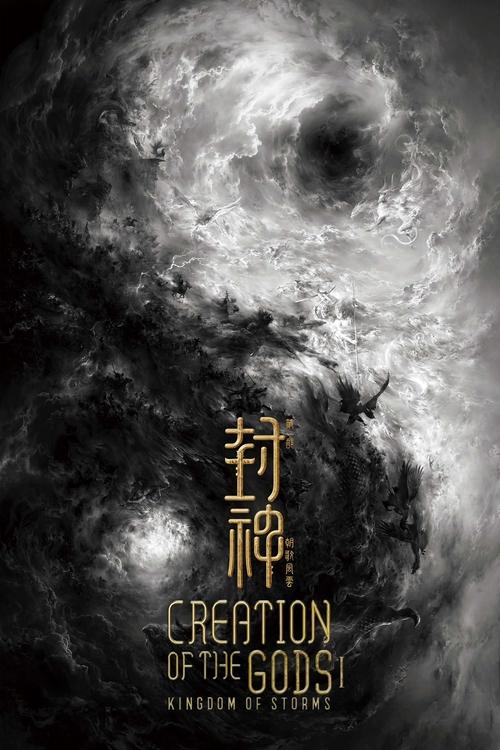
Creation of the Gods I: Kingdom of Storms - Review
Creation of the Gods I: Kingdom of Storms - A Mythical Masterpiece, Forged in Fire and Ambition
Prepare to be transported to a world of gods, demons, and mortals locked in a timeless struggle. Creation of the Gods I: Kingdom of Storms, the first installment in Wuershan's ambitious trilogy based on the classic Chinese fantasy novel *Fengshenyanyi* (Investiture of the Gods), is a visual spectacle and a narrative tapestry woven with intricate political intrigue, breathtaking action, and profound philosophical questions. This isn't just another fantasy film; it's a cinematic event, a bold attempt to bring one of China's most beloved and complex stories to life on a grand scale. But does it succeed? The answer, like the film itself, is multifaceted and deserving of a deep dive.
A Storm of Plot and Intrigue
The film plunges us into the waning years of the Shang dynasty, a kingdom teetering on the brink of collapse under the tyrannical rule of King Zhou (Fei Xiang). Corrupted by the seductive and malevolent fox spirit Daji (Naomi Wang), Zhou descends into madness, indulging in hedonistic excess and sacrificing innocent lives to appease his insatiable desires. Meanwhile, the four principalities, led by the Western Marquis Ji Chang (Li Xuejian), grow increasingly wary of Zhou's cruelty and contemplate rebellion. At the heart of the conflict lies the enigmatic and powerful artifact, the Dragon Bone, which grants its possessor unimaginable power, and the race to control it fuels the escalating tensions.
The narrative is dense and layered, introducing a vast cast of characters: the young and noble Ji Fa (Yu Shi), son of Ji Chang, grappling with his loyalty and moral compass; the stoic and unwavering Jiang Ziya (Huang Bo), a Taoist immortal tasked with finding a true leader to usher in a new era; and the conflicted Prince Yin Jiao (Chen Muyi), torn between his duty to his father and the growing realization of Zhou's depravity. The film masterfully juggles these storylines, creating a compelling web of alliances, betrayals, and prophecies that keeps the audience engaged despite its lengthy runtime.
However, the sheer scale of the source material presents a challenge. The film, in its attempt to lay the groundwork for the trilogy, occasionally feels rushed, with certain character arcs and plot points underdeveloped. Those unfamiliar with *Fengshenyanyi* might find themselves struggling to keep track of the numerous characters and their motivations, especially in the early stages. A more streamlined approach to character introductions and a slower pacing in certain sections would have benefited the film's overall clarity.
Characters: A Symphony of Virtue and Vice
The strength of Creation of the Gods I lies in its compelling characters, each grappling with their own internal conflicts and moral dilemmas. Ji Fa's journey from a naive prince to a courageous leader is particularly captivating, showcasing his growth and resilience in the face of unimaginable adversity. Yu Shi delivers a nuanced performance, capturing Ji Fa's vulnerability and determination with equal measure. Li Xuejian as Ji Chang embodies wisdom and restraint, serving as a moral anchor in a world consumed by chaos. His calm demeanor and strategic mind provide a stark contrast to the impulsive and destructive nature of King Zhou.
Fei Xiang's portrayal of King Zhou is a standout performance. He masterfully embodies the character's descent into madness, showcasing his initial charisma and power before succumbing to the corrupting influence of Daji. His performance is both terrifying and mesmerizing, capturing the essence of a ruler consumed by ego and lust for power. Naomi Wang's Daji is equally captivating, portraying the fox spirit as a seductive and manipulative force, capable of bending even the strongest wills to her desires. While her character is somewhat stereotypical in its portrayal of female villainy, Wang's performance elevates it beyond mere caricature, adding layers of complexity and intrigue.
Huang Bo's Jiang Ziya provides a much-needed dose of humor and levity amidst the grim atmosphere. His portrayal of the immortal sage is unconventional, eschewing the traditional image of a wise and stoic figure in favor of a more mischievous and pragmatic approach. While some might find his interpretation jarring, it adds a unique and refreshing dimension to the character.
Despite the compelling performances, some characters feel underdeveloped. The supporting cast, while numerous, often lack the depth and complexity of the main characters, serving primarily as plot devices rather than fully realized individuals. This is understandable given the film's focus on establishing the main narrative threads, but it does leave room for improvement in subsequent installments.
Wuershan's Vision: A Directorial Triumph
Wuershan's direction is nothing short of masterful. He skillfully blends epic scale with intimate character moments, creating a visually stunning and emotionally resonant experience. His attention to detail is evident in every frame, from the intricate costumes and set designs to the breathtaking landscapes and meticulously choreographed action sequences. The film's visual language is rich and evocative, drawing inspiration from traditional Chinese art and mythology while incorporating modern cinematic techniques.
Wuershan's ability to create a believable and immersive world is particularly commendable. The Kingdom of Storms feels real, with its bustling cities, imposing fortresses, and sprawling battlefields. The director's use of practical effects and CGI is seamless, creating a visually stunning and believable world. The battle sequences are particularly impressive, showcasing the brutality and chaos of war while maintaining a sense of clarity and coherence.
However, Wuershan's ambition occasionally leads to moments of excess. The film's reliance on CGI, while generally impressive, sometimes feels overwhelming, detracting from the film's overall realism. A more restrained approach to visual effects in certain scenes would have enhanced the film's impact and allowed the practical elements to shine.
Cinematography: A Feast for the Eyes
The cinematography by Peter Pau is breathtaking. Every shot is meticulously composed, showcasing the film's stunning visuals and creating a sense of grandeur and scale. Pau's use of light and shadow is particularly effective, creating a dramatic and atmospheric mood that enhances the film's emotional impact. The color palette is rich and vibrant, drawing inspiration from traditional Chinese art and creating a visually stunning and immersive experience.
Pau's ability to capture the beauty and majesty of the Chinese landscape is particularly commendable. The film's sweeping aerial shots of mountains, rivers, and forests are breathtaking, showcasing the natural beauty of China and creating a sense of awe and wonder. The close-up shots of the actors' faces are equally effective, capturing their emotions and conveying their inner turmoil.
The cinematography is not without its flaws. The use of slow-motion in certain action sequences feels somewhat gratuitous, detracting from the film's overall momentum. A more judicious use of slow-motion would have enhanced its impact and avoided the feeling of overindulgence.
Performances: A Stellar Ensemble Cast
The performances in Creation of the Gods I are uniformly excellent. The cast is comprised of both seasoned veterans and rising stars, each delivering a nuanced and compelling performance. As mentioned earlier, Fei Xiang's portrayal of King Zhou is a standout, capturing the character's descent into madness with chilling accuracy. Yu Shi's portrayal of Ji Fa is equally impressive, showcasing his growth from a naive prince to a courageous leader. Li Xuejian's portrayal of Ji Chang embodies wisdom and restraint, serving as a moral compass in a world consumed by chaos.
The supporting cast also delivers strong performances. Huang Bo's Jiang Ziya provides a much-needed dose of humor and levity, while Naomi Wang's Daji is both seductive and manipulative. Chen Kun's performance as Yuan Shi Tianzun, though brief, is memorable, imbuing the character with a sense of power and mystery.
The film's success is largely due to the chemistry between the actors. The relationships between the characters feel authentic and believable, enhancing the film's emotional impact. The camaraderie between Ji Fa and his fellow warriors is particularly compelling, showcasing their loyalty and dedication to one another.
Themes and Messages: A Timeless Struggle
Creation of the Gods I: Kingdom of Storms explores a number of profound themes, including the corrupting influence of power, the importance of loyalty and sacrifice, and the eternal struggle between good and evil. The film also raises questions about the nature of leadership and the responsibilities that come with it. King Zhou's descent into tyranny serves as a cautionary tale, highlighting the dangers of unchecked power and the importance of moral leadership. Ji Fa's journey from a naive prince to a courageous leader underscores the importance of standing up for what is right, even in the face of overwhelming adversity.
The film also explores the theme of destiny versus free will. The characters are constantly grappling with their predetermined fates, struggling to break free from the chains of prophecy and forge their own destinies. This theme is particularly evident in Ji Fa's arc, as he questions his role in the upcoming conflict and seeks to define his own path.
The film's message is ultimately one of hope. Despite the darkness and chaos that pervade the Kingdom of Storms, the film suggests that good will ultimately triumph over evil, and that a new era of peace and prosperity will eventually dawn. This message is particularly relevant in today's world, offering a glimmer of hope in the face of seemingly insurmountable challenges.
Comparisons: Echoes of the Past, Visions of the Future
Creation of the Gods I inevitably draws comparisons to other epic fantasy films, such as *The Lord of the Rings* and *Game of Thrones*. While the film shares certain similarities with these works, it also possesses its own unique identity, rooted in Chinese mythology and culture. The film's visual style is distinct, drawing inspiration from traditional Chinese art and creating a visually stunning and immersive experience.
The film also bears similarities to previous adaptations of *Fengshenyanyi*, but Wuershan's vision is arguably the most ambitious and visually impressive to date. Previous adaptations have often focused on specific aspects of the story, while Wuershan's trilogy aims to encompass the entire epic in all its sprawling complexity.
In terms of Wuershan's previous work, Creation of the Gods I represents a significant step up in scale and ambition. His earlier films, such as *Painted Skin: The Resurrection*, showcased his talent for visual storytelling and his ability to create compelling characters, but Creation of the Gods I demonstrates his mastery of the epic fantasy genre.
Positive Aspects: A Triumph of Visual Storytelling
Creation of the Gods I: Kingdom of Storms is a visual masterpiece, boasting stunning cinematography, breathtaking set designs, and meticulously choreographed action sequences. The performances are uniformly excellent, with Fei Xiang's portrayal of King Zhou being a particular standout. Wuershan's direction is masterful, blending epic scale with intimate character moments and creating a truly immersive and engaging experience. The film's themes are profound and thought-provoking, exploring the corrupting influence of power, the importance of loyalty and sacrifice, and the eternal struggle between good and evil.
Constructive Criticism: Room for Improvement
Despite its many strengths, Creation of the Gods I is not without its flaws. The film's narrative can feel rushed at times, with certain character arcs and plot points underdeveloped. The reliance on CGI, while generally impressive, occasionally feels overwhelming. Some characters, particularly in the supporting cast, lack the depth and complexity of the main characters. A more streamlined approach to character introductions and a slower pacing in certain sections would have benefited the film's overall clarity.
Conclusion: A Promising Start to an Epic Journey
Creation of the Gods I: Kingdom of Storms is a bold and ambitious film that successfully brings one of China's most beloved stories to life on a grand scale. While the film is not without its flaws, its strengths far outweigh its weaknesses. It's a visual feast, a compelling narrative, and a thought-provoking exploration of timeless themes. This is just the first chapter, and the foundation laid here promises an even more spectacular journey ahead. I eagerly await the next installment in this epic trilogy.
Rating: 8.5/10