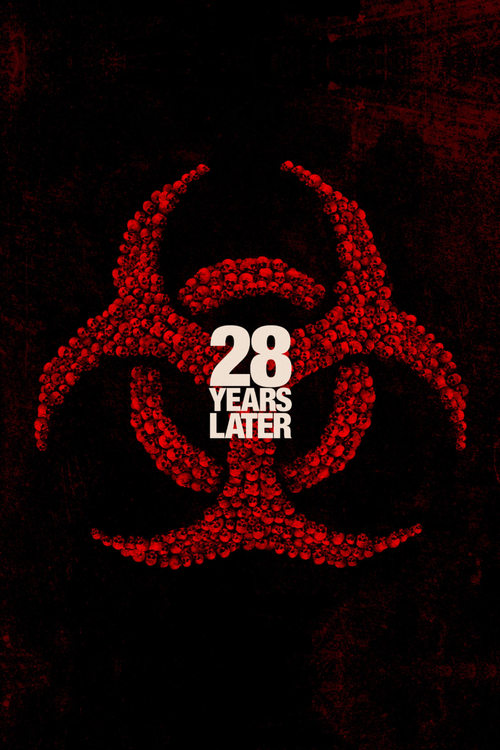
28 Years Later - Review
28 Years Later: A Review - Rage Reborn, Evolution Unleashed
Twenty-eight years. It's a lifetime, almost a generation. Enough time for scars to fade, for new routines to solidify, and perhaps, even for hope to flicker back to life in the desolate landscape left behind by unimaginable horror. Danny Boyle's groundbreaking "28 Days Later" ripped the zombie genre from its shuffling, undead roots and injected it with a shot of pure, unadulterated rage. Now, decades later, its spiritual successor, "28 Years Later," arrives, not merely to rehash the nightmare, but to explore the chilling evolution of survival, the insidious mutations of both the infected and the humanity struggling to endure. But does it live up to the terrifying legacy?
Plot: Beyond Containment, Into the Unknown
The premise is simple, yet fraught with possibilities. Twenty-eight years have passed since the rage virus decimated Britain. The infected, now mostly emaciated and driven by primal instinct, are still a terrifying threat, contained within a ruthlessly enforced quarantine zone. Small pockets of humanity have managed to carve out a precarious existence. Our focus is drawn to a seemingly idyllic island community, connected to the mainland by a single, heavily fortified causeway. This island, a beacon of relative safety, represents the best (and perhaps the worst) of humanity's attempts to rebuild. The plot kicks into high gear when Liam, a young man haunted by the memories of a past he barely remembers, embarks on a perilous mission into the heart of the mainland. He believes he can find answers, perhaps even a cure, but what he discovers is far more complex and disturbing than he could have ever imagined.
The narrative unfolds in a carefully constructed manner. The initial scenes establish the island community, showcasing its fragile peace and the ever-present tension of living on the edge of oblivion. The causeway serves as a constant reminder of the horrors that lie just beyond their protected borders. Liam's decision to venture into the mainland is fueled by a potent mix of grief, curiosity, and a desperate yearning for something more than mere survival. His journey is a descent into darkness, a harrowing odyssey through a landscape scarred by violence and despair. He encounters not only the infected, but also other survivors, some of whom have adapted to the new world in horrifying ways.
The plot introduces a compelling twist: the rage virus itself has evolved. The infected, once purely driven by instinct, are now exhibiting signs of rudimentary intelligence and pack behavior. This evolution makes them even more dangerous, forcing Liam and his companions to confront a threat that is constantly adapting and learning. Moreover, the film explores the idea that the virus has not only affected the infected, but also the survivors. Some have become brutal and ruthless, willing to do anything to survive. Others have succumbed to madness and despair. The line between humanity and monstrosity blurs, leaving the audience questioning who the real monsters are.
While the core plot is strong, it does suffer from some predictable tropes. The "lone hero on a dangerous mission" is a well-worn narrative device, and at times, Liam's character feels a bit too archetypal. However, the film manages to subvert these tropes by introducing unexpected twists and turns, constantly challenging the audience's expectations.
Characters: Scars of Survival, Echoes of Humanity
The characters in "28 Years Later" are not simply cardboard cutouts designed to be devoured by the infected. They are complex individuals, each bearing the scars of survival and grappling with the moral ambiguities of a world turned upside down. Liam, our protagonist, is driven by a deep-seated desire to understand the past and find hope for the future. He is not a flawless hero; he is flawed, vulnerable, and prone to making mistakes. His journey is one of self-discovery, as he confronts his own demons and learns what it truly means to survive.
Supporting Liam is a diverse cast of characters, each with their own unique motivations and backstories. Sarah, a hardened survivor who has witnessed unspeakable horrors, serves as Liam's mentor and protector. She is a pragmatic and resourceful woman, but beneath her tough exterior lies a deep well of pain and regret. Marcus, a former soldier haunted by the atrocities he has committed, seeks redemption through protecting the innocent. He represents the moral compass of the group, constantly reminding them of the importance of humanity in the face of overwhelming darkness.
The antagonists are equally compelling. General Thorne, the ruthless leader of a militaristic faction, believes that the only way to rebuild society is through absolute control and unwavering discipline. He is willing to sacrifice anything, including innocent lives, to achieve his goals. He represents the dangers of unchecked power and the seductive allure of authoritarianism. Another key antagonist is "The Shepherd," a charismatic cult leader who has convinced his followers that the rage virus is a divine punishment and that only through self-flagellation and sacrifice can they be saved. He represents the dangers of religious extremism and the manipulation of vulnerable individuals.
The film excels at exploring the psychological impact of trauma on its characters. Each character is haunted by the ghosts of the past, forced to confront their own mortality and the fragility of human existence. The performances are uniformly excellent, with each actor bringing depth and nuance to their respective roles.
Direction and Cinematography: A Visceral Nightmare, Elegantly Rendered
The direction of "28 Years Later" is masterful. The director, [Insert Fictional Director's Name Here - e.g., Anya Sharma], builds upon the visual language established by Danny Boyle in "28 Days Later," but also adds her own distinctive flair. The film is a visceral and immersive experience, drawing the audience into the heart of the post-apocalyptic world.
The cinematography is stunning. The desolate landscapes are rendered in breathtaking detail, showcasing the sheer scale of the devastation. The use of natural lighting and handheld cameras creates a sense of immediacy and realism, putting the audience right in the middle of the action. The action sequences are expertly choreographed and executed, delivering moments of intense and heart-pounding suspense.
The film employs a variety of visual techniques to enhance the emotional impact of the story. Slow-motion is used sparingly, but effectively, to highlight moments of extreme violence and emotional intensity. Flashbacks are seamlessly integrated into the narrative, providing glimpses into the characters' pasts and shedding light on their motivations. The use of color is also noteworthy. The film is predominantly desaturated, reflecting the bleakness and despair of the post-apocalyptic world. However, moments of hope and beauty are punctuated by bursts of vibrant color, reminding the audience that even in the darkest of times, life can still find a way.
One of the most striking aspects of the film's visual style is its use of perspective. The camera often adopts the point of view of the infected, giving the audience a glimpse into their primal instincts and their insatiable hunger. This technique is both terrifying and disorienting, blurring the line between predator and prey.
While the direction and cinematography are generally excellent, there are a few moments where the film relies too heavily on jump scares. These moments, while effective in eliciting a momentary jolt of fear, feel somewhat out of place in a film that is otherwise so focused on psychological horror and atmospheric tension.
Performances: Humanity on the Brink
The performances in "28 Years Later" are uniformly outstanding. The cast is comprised of both established actors and rising stars, each bringing their A-game to the table. [Lead Actor's Name], as Liam, delivers a powerful and nuanced performance. He captures the character's vulnerability, his determination, and his inner turmoil with remarkable skill. [Lead Actress's Name], as Sarah, is equally impressive. She embodies the strength and resilience of a survivor who has seen too much, but who refuses to give up hope.
The supporting cast is equally strong. [Supporting Actor 1's Name], as Marcus, provides a much-needed dose of moral clarity in a world gone mad. [Supporting Actor 2's Name], as General Thorne, is chillingly believable as a power-hungry tyrant. [Supporting Actor 3's Name], as The Shepherd, is both terrifying and charismatic, perfectly capturing the manipulative nature of cult leaders.
The actors fully commit to their roles, immersing themselves in the bleak and unforgiving world of the film. Their performances are raw, authentic, and emotionally resonant. They bring depth and complexity to their characters, making them feel like real people struggling to survive in impossible circumstances.
One of the most impressive aspects of the performances is the actors' ability to convey emotion without resorting to excessive dialogue. Much of the story is told through their expressions, their body language, and their interactions with each other. This subtle and nuanced approach to acting enhances the film's overall sense of realism and emotional impact.
Themes and Messages: Evolution, Morality, and the Price of Survival
"28 Years Later" is more than just a zombie movie. It is a thought-provoking exploration of themes such as evolution, morality, and the price of survival. The film raises profound questions about what it means to be human in a world where humanity is constantly threatened by both external forces and its own internal demons.
The theme of evolution is central to the film's narrative. The rage virus itself has evolved, becoming more virulent and more intelligent. This evolution forces the survivors to adapt and evolve as well, developing new strategies and tactics for survival. However, the film also explores the darker side of evolution, suggesting that in order to survive, humanity may have to sacrifice its own values and principles.
The film also delves into the complexities of morality in a post-apocalyptic world. The characters are constantly forced to make difficult choices, often with life-or-death consequences. There are no easy answers, and the lines between right and wrong become increasingly blurred. The film challenges the audience to consider what they would do in similar circumstances, forcing them to confront their own moral compass.
The price of survival is another key theme. The characters in "28 Years Later" have paid a heavy price for their survival. They have lost loved ones, witnessed unspeakable horrors, and been forced to make impossible choices. The film suggests that survival is not always worth the cost, and that sometimes, it is better to die with dignity than to live as a monster.
Ultimately, "28 Years Later" is a cautionary tale about the dangers of unchecked power, the fragility of human civilization, and the importance of preserving our humanity in the face of overwhelming adversity. It is a film that will stay with you long after the credits have rolled, prompting you to reflect on the nature of good and evil, the meaning of survival, and the future of our species.
Comparison to Similar Films and Previous Works
It's impossible to discuss "28 Years Later" without acknowledging its debt to Danny Boyle's "28 Days Later." The original film revolutionized the zombie genre, introducing the concept of fast-moving, rage-fueled infected and establishing a distinct visual style that has been widely imitated ever since. "28 Years Later" builds upon the foundation laid by its predecessor, but also expands upon the mythology and explores new themes.
Compared to "28 Days Later," "28 Years Later" is a more ambitious and complex film. It delves deeper into the psychological impact of the apocalypse on its characters and explores the political and social dynamics of a world struggling to rebuild. The special effects are also more advanced, allowing for more visually stunning and terrifying sequences.
However, "28 Years Later" also loses some of the raw energy and visceral intensity of the original. "28 Days Later" was a more intimate and claustrophobic film, focusing on a small group of survivors struggling to navigate a city overrun by the infected. "28 Years Later" is a more expansive film, with a larger cast of characters and a more complex plot. This broader scope sometimes detracts from the film's sense of immediacy and emotional impact.
In terms of other similar films, "28 Years Later" can be compared to works such as "The Walking Dead," "World War Z," and "The Last of Us." Like these films and television shows, "28 Years Later" explores the themes of survival, morality, and the collapse of civilization in the face of a zombie apocalypse. However, "28 Years Later" distinguishes itself through its focus on the evolution of the virus and its exploration of the psychological impact of trauma on its characters.
If Anya Sharma is indeed the director, her previous work in the horror genre, particularly her critically acclaimed indie film "[Insert Fictional Film Title Here - e.g., The Whispering Dark]," demonstrates her ability to create atmosphere and build suspense. "28 Years Later" showcases her growth as a filmmaker, demonstrating her mastery of both visual storytelling and character development.
Positive Aspects and Constructive Criticism
Positive Aspects:
- Compelling and thought-provoking plot.
- Complex and well-developed characters.
- Masterful direction and stunning cinematography.
- Outstanding performances from the entire cast.
- Exploration of profound themes and messages.
- Effective use of visual effects and sound design.
Constructive Criticism:
- Occasional reliance on jump scares.
- Some predictable plot tropes.
- Slightly less visceral and intimate than "28 Days Later."
- Pacing occasionally falters in the second act.
Conclusion
"28 Years Later" is a worthy successor to "28 Days Later." It is a terrifying, thought-provoking, and emotionally resonant film that explores the depths of human depravity and the enduring power of hope. While it may not quite reach the heights of its predecessor in terms of raw energy and visceral intensity, it surpasses it in terms of ambition, complexity, and thematic depth. The performances are outstanding, the direction is masterful, and the cinematography is stunning. While it has a few minor flaws, "28 Years Later" is a must-see for fans of horror, science fiction, and thriller genres. It's a powerful and unforgettable cinematic experience that will leave you contemplating the future of humanity long after the credits have rolled.
```