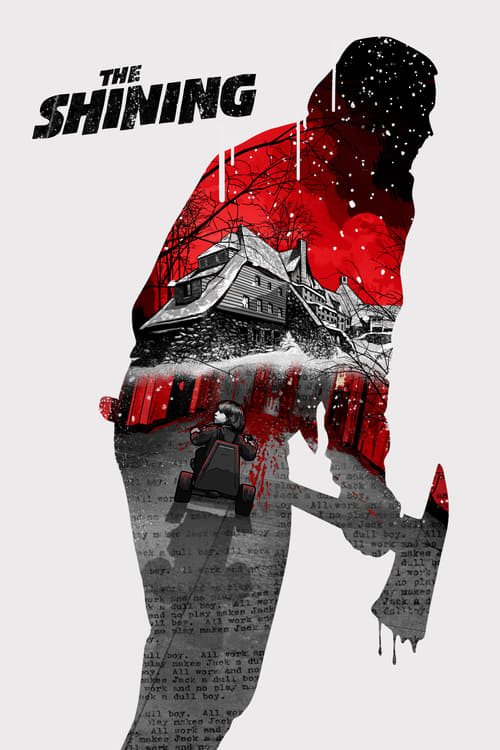
The Shining - Review
A Descent into Madness: A Review of Stanley Kubrick's "The Shining"
Stanley Kubrick's "The Shining," released in 1980, isn't just a horror film; it's a meticulously crafted psychological thriller that burrows deep under your skin and lingers long after the credits roll. More than just jump scares and gore, it's a slow-burn exploration of isolation, madness, and the dark recesses of the human psyche. It's a film that invites interpretation, encourages debate, and fundamentally redefines what it means to be scared. Decades after its release, "The Shining" remains a cinematic landmark, a testament to Kubrick's genius, and a chilling reminder of the horrors that can reside within us all. This review delves into the film's intricate layers, exploring its plot, characters, direction, cinematography, performances, and themes, while also acknowledging its controversial aspects and legacy.
Plot: A Winter of Discontent and Descent
The plot of "The Shining" is deceptively simple. Jack Torrance (Jack Nicholson), a struggling writer and recovering alcoholic, accepts a position as the winter caretaker of the isolated Overlook Hotel in the Colorado Rockies. He hopes the solitude will provide the perfect environment to overcome his writer's block and mend his fractured relationship with his wife, Wendy (Shelley Duvall), and their son, Danny (Danny Lloyd), who possesses psychic abilities, referred to as "the shining."
As the winter progresses, the Overlook's isolation and the lingering echoes of its dark past begin to unravel Jack's sanity. He becomes increasingly agitated, withdrawn, and eventually, violently unstable. Danny, plagued by terrifying visions of the hotel's spectral inhabitants and the gruesome events that transpired within its walls, becomes increasingly withdrawn and frightened. Wendy, caught between her husband's unraveling mind and her son's growing terror, struggles to maintain her sanity and protect her family.
The plot unfolds with a deliberate pace, building tension slowly but inexorably. Kubrick masterfully uses the vast, empty spaces of the Overlook to amplify the characters' isolation and vulnerability. The seemingly mundane tasks of daily life – chopping wood, typing, exploring the hotel – become increasingly fraught with unease as the supernatural forces within the Overlook begin to exert their influence.
The film's climax is a terrifying chase through the snow-covered maze, culminating in a chilling revelation about Jack's fate and the cyclical nature of violence within the Overlook. The ending, while ambiguous in some interpretations, reinforces the film's themes of predestination and the enduring power of the past.
Characters: A Study in Psychological Breakdown
The characters in "The Shining" are not simply protagonists and antagonists; they are complex individuals grappling with their own internal demons, which are then amplified and distorted by the malevolent forces of the Overlook.
Jack Torrance
Jack Torrance is arguably one of cinema's most iconic and terrifying characters. He is a man burdened by his past failures, his anger issues, and his dependence on alcohol. The isolation of the Overlook acts as a catalyst, exacerbating his existing vulnerabilities and allowing the hotel's malevolent influence to take hold. Nicholson's performance is nothing short of masterful, seamlessly transitioning from a seemingly normal, if somewhat irritable, husband and father to a raving, homicidal maniac. He embodies the descent into madness with chilling authenticity.
Wendy Torrance
Wendy Torrance is often a point of contention among viewers. Some criticize her perceived weakness and passivity, while others see her as a resilient survivor fighting to protect her son in impossible circumstances. Shelley Duvall's performance is undeniably raw and emotionally charged. She portrays Wendy's fear, desperation, and unwavering love for Danny with a palpable intensity. While her portrayal might not conform to traditional notions of female strength, it is a realistic depiction of a woman trapped in an abusive and terrifying situation. Her increasing hysteria, driven by the constant fear and isolation, is a crucial element in the film's overall unsettling atmosphere. Her portrayal is not one of weakness, but of a desperate struggle for survival in the face of overwhelming odds.
Danny Torrance
Danny Torrance, played by Danny Lloyd, is the innocent victim caught in the middle of his parents' turmoil and the Overlook's supernatural forces. His "shining" ability makes him both vulnerable and perceptive, allowing him to see the horrors that lurk within the hotel. Lloyd's performance is remarkably nuanced for a child actor, conveying Danny's fear, confusion, and growing understanding of the danger he and his family face. His interactions with Tony, his imaginary friend, provide crucial insights into the Overlook's past and foreshadow the events to come.
Dick Hallorann
Dick Hallorann (Scatman Crothers), the Overlook's head chef, is a crucial character in the film. He is the only other person who understands Danny's "shining" ability and provides him with guidance and support. Hallorann serves as a mentor figure, warning Danny about the dangers of the Overlook and offering him a means of protection. His eventual return to the Overlook, driven by his concern for Danny, is a pivotal moment in the film, albeit a tragic one.
Direction: Kubrick's Masterful Control
Stanley Kubrick's direction is the driving force behind "The Shining's" enduring power. He exercises meticulous control over every aspect of the film, from the set design and cinematography to the performances and sound design. His deliberate pacing, unsettling imagery, and masterful use of suspense create an atmosphere of unrelenting dread. Kubrick's direction is not simply about telling a story; it's about immersing the viewer in a psychological landscape of fear and paranoia.
Kubrick's famous perfectionism is evident in every frame of the film. He reportedly subjected the actors to numerous takes, pushing them to their emotional limits to achieve the desired effect. While his methods were controversial, the results are undeniable. The performances in "The Shining" are raw, visceral, and deeply unsettling.
Furthermore, Kubrick's willingness to deviate from Stephen King's source material sparked considerable controversy, but ultimately contributed to the film's unique and enduring appeal. He transformed a relatively straightforward ghost story into a complex and ambiguous exploration of the human psyche.
Cinematography: A Visual Symphony of Dread
The cinematography in "The Shining," helmed by John Alcott, is nothing short of breathtaking. The use of Steadicam technology, pioneered by Garrett Brown, allows for fluid and unsettling tracking shots that immerse the viewer in the Overlook's vast and labyrinthine spaces. The long, unbroken shots through the hotel's corridors create a sense of unease and claustrophobia, while the sweeping aerial shots of the Torrances' car driving through the mountainous landscape emphasize their isolation.
The lighting is equally masterful, creating a stark contrast between the bright, sterile interiors of the Overlook and the dark, shadowy corners where the hotel's horrors lurk. The use of color is also significant, with the recurring motif of red symbolizing danger, violence, and the hotel's bloody past.
The composition of each shot is carefully considered, creating a visual language that reinforces the film's themes of isolation, madness, and the cyclical nature of violence. The iconic image of Danny riding his tricycle through the Overlook's corridors, with the Steadicam following closely behind, is a prime example of Kubrick's visual storytelling prowess.
Performances: A Cast Pushed to the Limit
The performances in "The Shining" are uniformly excellent, but Jack Nicholson and Shelley Duvall deserve particular praise. Nicholson's portrayal of Jack Torrance is a tour de force, capturing the character's descent into madness with chilling realism. His manic energy, unsettling smile, and iconic line deliveries ("Here's Johnny!") have become ingrained in popular culture.
Shelley Duvall's performance as Wendy Torrance is equally compelling, albeit in a different way. She portrays Wendy's fear, desperation, and unwavering love for Danny with a raw and emotionally charged intensity. Her performance is often criticized as being overly hysterical, but it is a realistic depiction of a woman trapped in an abusive and terrifying situation. Kubrick reportedly subjected Duvall to grueling working conditions, pushing her to her emotional limits to achieve the desired effect. While his methods were controversial, the results are undeniable. Duvall's performance is a crucial element in the film's overall unsettling atmosphere.
Danny Lloyd's performance as Danny Torrance is also noteworthy. He conveys Danny's fear, confusion, and growing understanding of the danger he and his family face with remarkable nuance for a child actor.
Scatman Crothers delivers a memorable performance as Dick Hallorann, providing a sense of warmth and compassion in an otherwise cold and terrifying film.
Themes and Messages: Delving into the Darkness
"The Shining" is a film rich in themes and messages, exploring the dark recesses of the human psyche and the cyclical nature of violence.
Isolation and Madness
The film explores the corrosive effects of isolation on the human mind. The Overlook Hotel, cut off from the outside world, becomes a breeding ground for madness, amplifying the characters' existing vulnerabilities and allowing the hotel's malevolent influence to take hold. Jack's descent into madness is a direct result of his isolation and his inability to cope with the pressures of his writing career and his strained family life.
The Supernatural and the Psychological
The film blurs the line between the supernatural and the psychological, leaving the viewer to question whether the horrors of the Overlook are real or simply manifestations of the characters' own inner demons. The ghosts and visions that Danny experiences could be interpreted as supernatural entities or as psychological projections of his own fears and anxieties. Similarly, Jack's descent into madness could be attributed to the hotel's malevolent influence or to his own pre-existing psychological problems.
The Cycle of Violence
The film explores the cyclical nature of violence, suggesting that the past is never truly dead and that the sins of the fathers are often visited upon their sons. The Overlook Hotel is haunted by the ghosts of its violent past, and Jack Torrance becomes a victim of this cycle, repeating the same acts of violence that occurred within the hotel's walls before him. The film suggests that violence is not simply an individual act but a recurring pattern that can be passed down through generations.
Predestination vs. Free Will
The film raises questions about predestination and free will. Is Jack destined to become a violent madman, or does he have the power to choose his own path? The film offers no easy answers, leaving the viewer to grapple with the complex relationship between fate and agency.
The Dangers of Alcoholism
The film subtly explores the dangers of alcoholism and its impact on families. Jack's struggles with alcohol are a significant factor in his descent into madness, and his alcoholism contributes to the strained relationship with his wife and son. The film suggests that alcoholism can be a destructive force, leading to violence, isolation, and ultimately, self-destruction.
Comparison to Other Films and Works
"The Shining" can be compared to other films that explore themes of isolation, madness, and the supernatural, such as "The Haunting" (1963), "The Innocents" (1961), and "Session 9" (2001). However, "The Shining" stands apart due to its unique visual style, its complex characters, and its ambiguous exploration of the supernatural.
In terms of Kubrick's own filmography, "The Shining" shares thematic similarities with "2001: A Space Odyssey" (1968) and "A Clockwork Orange" (1971), both of which explore the darker aspects of human nature and the potential for violence and madness. However, "The Shining" is arguably Kubrick's most explicitly horror-oriented film, pushing the boundaries of the genre and challenging viewers' expectations.
Stephen King, the author of the novel upon which the film is based, famously disliked Kubrick's adaptation, criticizing its deviations from the source material and its perceived lack of character development. However, many critics and viewers consider Kubrick's "The Shining" to be a superior work of art, transcending the limitations of the genre and offering a profound and unsettling exploration of the human psyche.
Positive Aspects
- Masterful Direction: Kubrick's meticulous attention to detail and his ability to create an atmosphere of unrelenting dread are unparalleled.
- Stunning Cinematography: The use of Steadicam technology and the masterful lighting and composition create a visually stunning and unsettling experience.
- Exceptional Performances: Jack Nicholson and Shelley Duvall deliver unforgettable performances that capture the characters' descent into madness and desperation.
- Rich Themes and Messages: The film explores complex themes of isolation, madness, violence, and predestination, leaving the viewer with much to ponder.
- Enduring Legacy: "The Shining" remains a cinematic landmark, influencing countless horror films and continuing to captivate and terrify audiences decades after its release.
Constructive Criticism
- Pacing: The film's deliberate pace may not appeal to all viewers, and some may find it to be too slow.
- Deviation from the Source Material: Stephen King's fans may be disappointed by the film's deviations from the novel.
- Shelley Duvall's Performance: Some viewers may find Shelley Duvall's performance to be overly hysterical or unsympathetic.
- Ambiguity: The film's ambiguity may be frustrating for some viewers who prefer more straightforward narratives.
- Kubrick's Methods: Kubrick's controversial methods on set, particularly his treatment of Shelley Duvall, have been criticized.
Conclusion
"The Shining" is a cinematic masterpiece, a chilling and unforgettable exploration of the human psyche. Stanley Kubrick's masterful direction, the stunning cinematography, and the exceptional performances combine to create a truly terrifying and thought-provoking experience. While the film's deliberate pace and ambiguity may not appeal to all viewers, its enduring legacy and its profound themes make it a must-see for any serious film enthusiast. It's a film that stays with you long after the credits roll, prompting reflection on the nature of fear, madness, and the darkness that resides within us all. It is more than just a horror film; it is a work of art.
Rating: 10/10