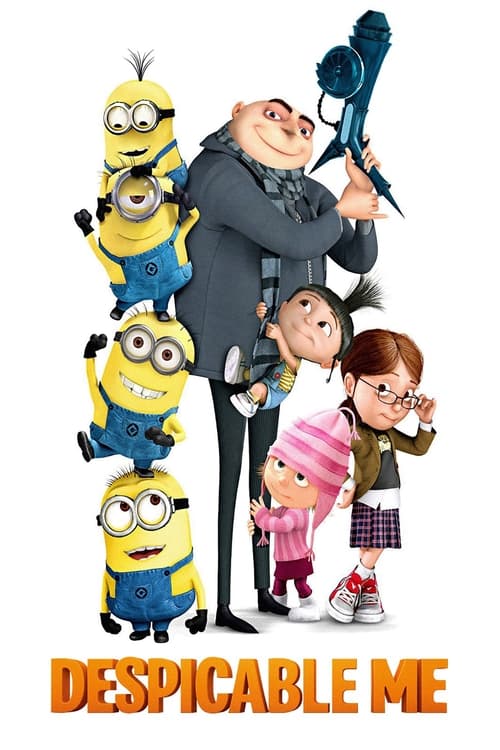
Despicable Me - Review
Despicable Me: A Hilariously Heartwarming Heist Gone Right
In a world saturated with animated features, it takes something truly special to stand out from the crowd. Despicable Me, released in 2010, not only managed to do that but also spawned a global phenomenon, captivating audiences of all ages with its blend of villainy, heart, and an army of adorable, gibberish-speaking Minions. But beyond the yellow hordes and catchy tunes, does Despicable Me hold up as a genuinely good film? Let's delve into the depths of Gru's lair and find out.
Plot: From Moon Thief to Modern Dad
The plot of Despicable Me is deceptively simple: Gru, a self-proclaimed supervillain whose glory days are seemingly behind him, is infuriated when a younger, flashier villain named Vector steals the Great Pyramid of Giza. Determined to reclaim his title as the world's greatest villain, Gru hatches a scheme even more audacious: to steal the moon.
To execute this grand plan, Gru needs a shrink ray, currently in Vector's possession. His initial attempts to infiltrate Vector's fortress fail miserably, until he stumbles upon three orphaned girls – Margo, Edith, and Agnes – who regularly sell cookies to Vector and are thus able to bypass his security. Gru adopts the girls, intending to use them as pawns in his nefarious scheme. However, as he spends more time with them, Gru finds himself unexpectedly bonding with the trio, his icy heart slowly thawing under their innocent affection.
The central conflict arises from Gru's struggle to balance his villainous aspirations with his burgeoning paternal instincts. He needs to steal the moon to prove himself, but he also wants to be a good father to the girls. This internal conflict provides the emotional core of the film and drives the narrative forward. The climax sees Vector kidnapping the girls and Gru having to choose between his grand plan and their safety. Predictably, he chooses the girls, leading to a thrilling rescue sequence and a complete transformation of Gru's character.
While the overall plot structure is fairly standard for a family film, with a clear hero's journey (albeit a villain's journey to becoming a hero), the execution is what sets Despicable Me apart. The film is paced well, with a good balance of humor, action, and emotional moments. The plot is engaging and easy to follow, making it accessible to younger audiences, while still offering enough depth and complexity to entertain adults.
Characters: More Than Just Minions
The strength of Despicable Me lies not only in its plot but also in its memorable and well-developed characters.
Gru
Gru, voiced with perfect deadpan delivery by Steve Carell, is the heart of the film. He begins as a caricature of a supervillain – grumpy, cynical, and obsessed with proving his evil genius. However, as the story progresses, we see glimpses of vulnerability and a deep-seated need for love and acceptance. Carell's performance is masterful, conveying both Gru's comedic absurdity and his underlying humanity. His transformation from a cold-hearted villain to a loving father is believable and heartwarming, making him a truly compelling protagonist.
The Orphans: Margo, Edith, and Agnes
The three orphans – Margo, Edith, and Agnes – are not just plot devices; they are fully realized characters with distinct personalities. Margo, the eldest, is the responsible and protective sister, voiced with maturity and wisdom beyond her years. Edith is the mischievous and rebellious middle child, always up for a prank. Agnes, the youngest, is the adorable and innocent heart of the group, obsessed with unicorns and showering Gru with unconditional love. The dynamic between the three sisters is believable and endearing, and their individual personalities add depth and humor to the film.
Vector
Vector, voiced by Jason Segel, serves as the primary antagonist, a young and technologically advanced villain who represents the new generation of evil. He is arrogant, impulsive, and driven by a need to outdo Gru. While Vector isn't a particularly complex character, he serves his purpose as a foil to Gru, highlighting the older villain's insecurities and motivations. Segel's energetic performance captures Vector's youthful exuberance and adds to the film's comedic appeal.
Dr. Nefario
Dr. Nefario, Gru's elderly and slightly senile scientist, provides much of the film's comedic relief. Voiced by Russell Brand, Dr. Nefario is responsible for inventing Gru's gadgets and weapons, often with unexpected and hilarious results. He is a loyal friend and confidant to Gru, despite his eccentricities and occasional incompetence.
The Minions
No discussion of Despicable Me characters would be complete without mentioning the Minions. These small, yellow, pill-shaped creatures are Gru's loyal and often inept assistants. They speak in a gibberish language that is surprisingly understandable, and their slapstick antics provide much of the film's humor. While they initially appear to be just comic relief, the Minions also represent Gru's need for companionship and his ability to inspire loyalty. Their popularity eventually led to their own spin-off films, solidifying their status as iconic animated characters.
Direction and Cinematography: A Visually Appealing World
Despicable Me was directed by Pierre Coffin and Chris Renaud, and their direction is a key factor in the film's success. They create a visually appealing world that is both stylized and believable. The animation is vibrant and detailed, with a distinctive art style that sets it apart from other animated films. The character designs are expressive and memorable, and the backgrounds are rich and imaginative.
The film's cinematography is also noteworthy. The use of camera angles and lighting is effective in creating a sense of scale and drama. The action sequences are well-choreographed and visually exciting, and the emotional moments are handled with sensitivity and care. The directors effectively use visual cues to enhance the storytelling and create a cohesive and engaging cinematic experience.
The film's use of 3D (in its original theatrical release) was also well-integrated, adding depth and dimension to the animation without feeling gimmicky. The 3D effects were used to enhance the visual experience rather than distract from the story.
Performances: A Stellar Voice Cast
The voice acting in Despicable Me is exceptional, with each actor perfectly capturing the personality and nuances of their character. Steve Carell's performance as Gru is a standout, but the entire cast delivers strong and memorable performances.
As mentioned earlier, Jason Segel is excellent as Vector, bringing a youthful energy and arrogance to the role. Russell Brand's portrayal of Dr. Nefario is both funny and endearing, and the voice actresses for the three orphans – Miranda Cosgrove (Margo), Dana Gaier (Edith), and Elsie Fisher (Agnes) – are all perfectly cast. Their performances are natural and believable, making the audience genuinely care about the girls' well-being.
The supporting cast also includes notable voice actors such as Kristen Wiig as Miss Hattie, the owner of the orphanage, and Danny McBride as one of Gru's Minions. The quality of the voice acting contributes significantly to the film's overall success.
Themes and Messages: More Than Just a Laugh
Beneath the surface humor and slapstick antics, Despicable Me explores several important themes and messages. The most prominent theme is the power of love and family to transform even the most hardened hearts. Gru's transformation from a cold-hearted villain to a loving father demonstrates the profound impact that love and acceptance can have on an individual. The film also emphasizes the importance of compassion, empathy, and second chances.
Another important theme is the idea that true happiness comes from genuine connection and meaningful relationships, rather than material possessions or external validation. Gru initially seeks happiness through villainy and recognition, but he ultimately finds fulfillment in his relationships with the girls. The film also subtly critiques the superficiality of fame and the dangers of prioritizing ambition over personal connection.
Furthermore, the film promotes the idea of embracing individuality and celebrating differences. The Minions, with their unique language and quirky personalities, represent the beauty of diversity and the importance of accepting others for who they are. The film encourages viewers to embrace their own unique qualities and to celebrate the differences that make them special.
Comparisons: Standing Out in a Crowd
Despicable Me can be compared to other animated films that feature villains as protagonists, such as Megamind (released the same year) and The Incredibles. However, Despicable Me distinguishes itself through its focus on family and its heartwarming portrayal of a villain's redemption. While Megamind explores similar themes of villainy and redemption, it does so with a more satirical and self-aware tone. The Incredibles, while featuring a supervillain as an antagonist, focuses primarily on the dynamics of a superhero family.
Despicable Me also shares some similarities with films like Big Daddy and Three Men and a Baby, which feature unlikely caregivers suddenly thrust into the role of parenthood. However, Despicable Me adds a unique twist by making the caregiver a supervillain with a penchant for elaborate schemes.
In terms of Pierre Coffin and Chris Renaud's previous work, Despicable Me marked a significant step up in terms of both animation quality and storytelling complexity. While they had previously worked on smaller animated projects, Despicable Me established them as major players in the animation industry.
Positive Aspects: A Delightful Package
Despicable Me boasts a multitude of positive aspects that contribute to its enduring appeal:
- Engaging Plot: The story is well-paced, easy to follow, and filled with humor and heart.
- Memorable Characters: Gru, the orphans, and the Minions are all well-developed and endearing characters.
- Excellent Voice Acting: The voice cast delivers stellar performances, bringing the characters to life.
- Visually Appealing Animation: The animation is vibrant, detailed, and stylistically unique.
- Heartwarming Themes: The film explores important themes of love, family, and redemption.
- Humor for All Ages: The film's humor appeals to both children and adults.
- Iconic Minions: The Minions have become a cultural phenomenon, adding to the film's overall appeal.
Constructive Criticism: Minor Imperfections
While Despicable Me is a highly enjoyable film, it is not without its minor imperfections:
- Predictable Plot Points: Some of the plot points, such as Gru's inevitable transformation, are somewhat predictable.
- Vector's Underdevelopment: Vector could have been a more complex and compelling villain.
- Reliance on Slapstick: While the slapstick humor is generally effective, it occasionally feels overused.
- Slightly Formulaic Structure: The film follows a fairly standard animated film formula.
These criticisms are relatively minor and do not significantly detract from the film's overall enjoyment.
Conclusion: A Modern Animated Classic
Despicable Me is a delightful and heartwarming animated film that has earned its place as a modern classic. Its engaging plot, memorable characters, excellent voice acting, and visually appealing animation combine to create a truly enjoyable cinematic experience. The film's themes of love, family, and redemption resonate with audiences of all ages, and the Minions have become a cultural phenomenon. While the film has some minor imperfections, its positive aspects far outweigh its shortcomings.
Despicable Me is a must-watch for families and animation enthusiasts alike. It's a film that can be enjoyed time and time again, offering laughter, tears, and a heartwarming message about the power of love.