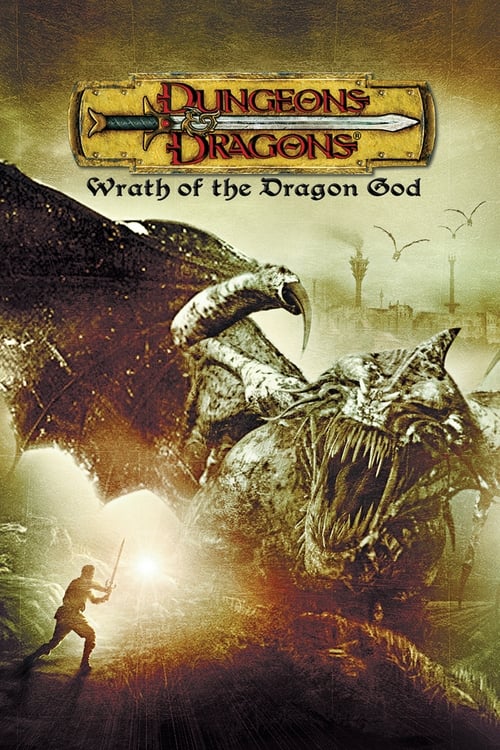
Dungeons & Dragons: Wrath of the Dragon God - Review
Dungeons & Dragons: Wrath of the Dragon God - A Nostalgic Dive into Low-Budget Fantasy
Fantasy films, especially those based on beloved tabletop games, often carry the weight of immense expectations. Dungeons & Dragons: Wrath of the Dragon God, a 2005 TV movie sequel to the much-maligned 2000 theatrical release, bravely steps into this arena. While it doesn't achieve the epic grandeur of a Peter Jackson production, it offers a surprisingly engaging, albeit flawed, adventure for fans of the genre. Let's delve into the depths of this low-budget fantasy flick and see if it manages to roll a critical hit.
Plot: A Familiar Quest with a Familiar Villain
The plot, at its core, is a standard fantasy quest narrative. Years after the events of the first film (which, thankfully, this sequel largely ignores), the undead sorcerer Damodar, played with gleeful villainy by Damian Kindler, returns. Cursed by his former master Profion and resurrected by dark magic, Damodar seeks to unleash a powerful black dragon god named Falazure upon the land of Izmir. His motivation is simple: revenge against the descendants of those who thwarted his original plans.
To stop him, a new band of heroes must rise. This group includes Berek, a paladin haunted by his past (played by Mark Dymond); Lux, a nimble and resourceful rogue (played by Clemency Burton-Hill); Ormaline, a dedicated cleric (played by Lucy Gaskell); and Nim, a powerful sorcerer with a mysterious connection to the dragon god (played by Bruce Payne). They are tasked with finding an artifact capable of defeating Falazure and preventing the world from being plunged into eternal darkness.
The narrative follows a predictable, yet comfortable, structure. The heroes embark on a perilous journey, facing various obstacles, battling monsters, and uncovering secrets along the way. They must overcome their individual weaknesses and learn to work together as a team to succeed. While the plot lacks originality, it provides a solid foundation for the action and adventure that follow.
Criticism: The plot's simplicity is both a strength and a weakness. While it makes the film accessible, it also lacks depth and complexity. The motivations of some characters, particularly Damodar, feel somewhat underdeveloped. The reliance on established fantasy tropes, while familiar, can also feel uninspired at times. The pacing, particularly in the middle act, suffers from some noticeable lulls.
Characters: Archetypes with Fleeting Depth
The characters in Wrath of the Dragon God are, for the most part, archetypal fantasy heroes and villains. Berek, the brooding paladin, embodies the classic hero's journey, grappling with past failures and striving for redemption. Lux, the rogue, provides the necessary wit and agility, often serving as the group's voice of reason. Ormaline, the cleric, offers unwavering faith and healing magic, while Nim, the sorcerer, adds a layer of mystery and power to the group.
Damodar, the main antagonist, is a more compelling character. Kindler portrays him with a delightful combination of malice and arrogance. His undead state and thirst for revenge make him a formidable and entertaining foe. However, even Damodar's character could have benefited from further exploration of his backstory and motivations.
Criticism: The characters, while serviceable, lack significant depth. Their backstories are often hinted at but rarely fully explored. This prevents the audience from truly connecting with them on an emotional level. Furthermore, the character development throughout the film is minimal. They largely remain the same individuals they were at the beginning, with only minor shifts in their perspectives or abilities.
Direction: Competent but Unremarkable
Gerry Lively directs Wrath of the Dragon God with a competent, but ultimately unremarkable, style. He effectively manages the action sequences and maintains a consistent tone throughout the film. However, he doesn't bring any unique visual flair or directorial flourishes to the project. The film feels very much like a made-for-TV movie, lacking the cinematic scope and ambition of a big-budget fantasy production.
Criticism: The direction is functional but lacks artistry. The film's visual style is rather generic, and the pacing can be uneven at times. There's a missed opportunity to elevate the film through more creative camerawork, editing, and visual storytelling.
Cinematography: Limited Resources, Decent Execution
The cinematography, given the film's budget constraints, is surprisingly decent. The locations, while not always visually stunning, are well-chosen and effectively create a sense of a fantasy world. The lighting is generally well-handled, although some scenes suffer from a lack of depth and contrast. The special effects, while dated by modern standards, are passable and don't detract too much from the overall experience.
Criticism: The cinematography is limited by the film's budget. The lack of visual polish is noticeable at times, and the special effects are clearly dated. However, given the resources available, the cinematographers did a commendable job of creating a believable fantasy world.
Performances: A Mixed Bag
The performances in Wrath of the Dragon God are a mixed bag. Mark Dymond delivers a solid performance as Berek, portraying the paladin's inner turmoil and determination with conviction. Clemency Burton-Hill shines as Lux, bringing wit and energy to the role. Lucy Gaskell provides a steady presence as Ormaline, while Bruce Payne's portrayal of Nim adds a touch of enigmatic power.
Damian Kindler, as Damodar, steals the show. He embraces the villainous role with relish, delivering a memorable and entertaining performance. His over-the-top portrayal adds a much-needed dose of camp to the film.
Criticism: Some of the performances feel wooden or uninspired. The actors struggle at times to elevate the material, particularly in scenes with heavy exposition or emotional weight. However, Kindler's performance as Damodar is a definite highlight.
Themes and Messages: Good vs. Evil, Redemption, and Teamwork
Wrath of the Dragon God explores several familiar themes. The most prominent is the classic battle between good and evil. The heroes represent the forces of light, striving to protect the world from the darkness embodied by Damodar and Falazure. The film also explores the theme of redemption. Berek, haunted by his past mistakes, seeks to atone for his failures and prove himself worthy of being a hero. Finally, the film emphasizes the importance of teamwork. The heroes must overcome their individual differences and learn to work together to defeat the common enemy.
Criticism: The themes are rather simplistic and lack nuance. The film doesn't delve deeply into the complexities of morality or the nature of good and evil. The messages are delivered in a straightforward and somewhat predictable manner.
Comparison to Other Films and Works
Wrath of the Dragon God inevitably draws comparisons to other fantasy films, particularly those based on the Dungeons & Dragons franchise. It's a significant improvement over the 2000 theatrical release, offering a more coherent plot, better pacing, and more engaging characters. However, it falls short of the epic scope and visual grandeur of films like The Lord of the Rings or Harry Potter. It also lacks the originality and depth of more sophisticated fantasy works like Game of Thrones. In terms of quality, it sits comfortably alongside other made-for-TV fantasy films such as the Earthsea miniseries or the various Hercules and Xena spin-offs.
Positive Aspects
- Engaging Plot: Despite its simplicity, the plot provides a solid foundation for the action and adventure.
- Entertaining Villain: Damian Kindler's portrayal of Damodar is a definite highlight.
- Competent Direction: Gerry Lively manages the action sequences and maintains a consistent tone.
- Decent Cinematography: The cinematography, given the budget constraints, is surprisingly decent.
- Nostalgic Appeal: The film offers a nostalgic trip back to the era of low-budget fantasy adventures.
Constructive Criticism
- Simplistic Plot: The plot lacks depth and originality.
- Underdeveloped Characters: The characters lack significant depth and development.
- Unremarkable Direction: The direction is functional but lacks artistry.
- Dated Special Effects: The special effects are clearly dated by modern standards.
- Lack of Nuance: The themes and messages are rather simplistic and lack nuance.
Conclusion and Rating
Dungeons & Dragons: Wrath of the Dragon God is not a cinematic masterpiece. It's a low-budget fantasy film with its fair share of flaws. However, it's also a surprisingly enjoyable and entertaining adventure. It offers a nostalgic trip back to a time when fantasy films didn't need massive budgets to capture the imagination. If you're a fan of the Dungeons & Dragons franchise or simply enjoy lighthearted fantasy adventures, you might find something to appreciate in this flawed gem. Just don't expect a critical hit.
Rating: 6.0/10