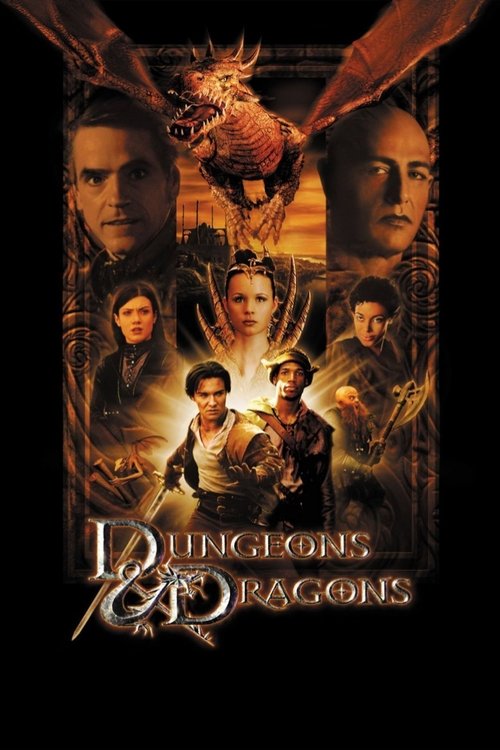
Dungeons & Dragons - Review
Dungeons & Dragons (2000): A Critical Retrospective – A Roll of the Dice Gone Wrong?
In the annals of fantasy film adaptations, few have sparked as much debate, disappointment, and outright derision as the 2000 release of Dungeons & Dragons. Attempting to translate the sprawling, imaginative world of the iconic tabletop role-playing game to the big screen was always going to be a Herculean task. The question isn't whether it succeeded perfectly – because it unequivocally didn't – but rather, whether it offered any redeeming qualities amidst its numerous flaws. Two decades later, let's delve into the Empire of Izmer and see if this film deserves its notoriety or if it has been unfairly judged by the critical dice.
Plot: A Simplistic Quest in a Complex World
The film's plot, at its core, is a fairly standard fantasy quest. In the divided land of Izmer, ruled by powerful mages and populated by downtrodden commoners, Empress Savina (played by the radiant Marlon Wayans...wait, no, it's Thora Birch) seeks to bring equality and prosperity. Standing in her way is the nefarious mage Profion (Jeremy Irons, chewing scenery with gusto), who plots to usurp the throne. Our heroes, Ridley Freeborn (Justin Whalin), a thief, and Marina Pretensa (Zoe McLellan), a novice mage, are thrust into a race against time to find a magical artifact, the Rod of Savrille, before Profion can use it to summon an army of dragons and solidify his power.
While the basic premise is serviceable, the execution is where the problems begin. The plot feels rushed and underdeveloped, failing to adequately explore the nuances of Izmer and its political landscape. The motivations of certain characters, particularly Profion’s henchman Damodar (Bruce Payne, clearly enjoying his villainous role), are often unclear or contradictory. Subplots feel tacked on, and the pacing is uneven, jumping from one action sequence to another without sufficient breathing room for character development or world-building.
The reliance on generic fantasy tropes – the chosen one (sort of), the magical artifact, the evil sorcerer – further diminishes the film's originality. While these tropes are fundamental to the fantasy genre, Dungeons & Dragons utilizes them in a predictable and uninspired manner, failing to add any fresh perspectives or subvert expectations. The script is riddled with clunky dialogue and exposition dumps, further hindering the narrative flow. Characters often state the obvious, rather than demonstrating their emotions or intentions through their actions.
Characters: Stereotypes and Missed Opportunities
The characters in Dungeons & Dragons are a mixed bag, ranging from bland archetypes to over-the-top caricatures. Ridley Freeborn, the roguish thief, lacks the charisma and wit necessary to make him a compelling protagonist. He comes across as more annoying than charming, and his motivations are often unclear. Marina Pretensa, the novice mage, fares slightly better, but her character arc is underdeveloped. She possesses latent magical abilities but receives minimal training or guidance, making her sudden bursts of power feel contrived.
Snails (Marlon Wayans), Ridley's partner in crime, is a particularly egregious example of racial stereotyping. His character is relegated to comic relief, relying on slapstick humor and exaggerated mannerisms that feel both outdated and offensive. His presence detracts from the film's overall tone and reinforces harmful stereotypes.
However, not all the characters are complete failures. Jeremy Irons delivers a memorably campy performance as Profion, embracing the villainous role with gleeful abandon. While his character is one-dimensional, Irons's over-the-top portrayal provides some much-needed entertainment. Bruce Payne as Damodar also provides a menacing presence, even if his motivations remain somewhat obscure. The introduction of Elwood Gutman (Tom Baker), an Elven tracker, adds a touch of gravitas and wisdom to the group, but his role is ultimately limited.
The film's failure to create compelling and relatable characters is a significant weakness. The audience struggles to connect with the protagonists or invest in their journey. Their motivations are often unclear, and their relationships lack depth and complexity. This lack of character development undermines the emotional impact of the story and diminishes the film's overall effectiveness.
Direction: A Lack of Vision and Cohesion
Courtney Solomon, making his directorial debut with Dungeons & Dragons, struggles to create a cohesive and visually engaging film. The direction lacks a clear vision, resulting in a disjointed and uneven viewing experience. The film feels like a collection of disparate scenes rather than a unified narrative.
Solomon's inexperience is evident in the film's inconsistent tone. It vacillates between lighthearted adventure and dark fantasy without finding a comfortable balance. The humor often feels forced and out of place, while the darker elements lack the necessary gravitas. This tonal inconsistency undermines the film's credibility and makes it difficult to take seriously.
The action sequences are poorly choreographed and edited, lacking the dynamism and excitement necessary to engage the audience. The special effects, particularly the dragon designs, are dated and unconvincing, further detracting from the film's visual appeal. The lack of practical effects contributes to the film's artificial and underwhelming feel.
Overall, the direction of Dungeons & Dragons lacks the skill and artistry necessary to bring the world of the game to life. Solomon's inexperience and lack of vision result in a film that feels rushed, underdeveloped, and ultimately unsatisfying.
Cinematography: A Bland and Uninspired Visual Palette
The cinematography of Dungeons & Dragons, helmed by Douglas Milsome, is largely unremarkable. The film's visual palette is bland and uninspired, failing to capture the richness and vibrancy of the fantasy world. The lighting is often flat and uninteresting, and the camera work is pedestrian.
The film's production design is equally underwhelming. The sets feel artificial and unconvincing, lacking the detail and authenticity necessary to immerse the audience in the world of Izmer. The costumes are similarly generic and uninspired, failing to reflect the unique cultures and social hierarchies of the film's setting.
The visual effects, as previously mentioned, are dated and poorly executed. The dragons, in particular, look cartoonish and unconvincing, undermining the film's sense of realism. The CGI blends poorly with the live-action footage, further detracting from the film's visual appeal.
The cinematography and production design of Dungeons & Dragons contribute to the film's overall lack of visual appeal. The film fails to create a believable and immersive fantasy world, hindering the audience's ability to connect with the story and its characters.
Performances: A Spectrum of Overacting and Underacting
The performances in Dungeons & Dragons are a mixed bag, ranging from Jeremy Irons's gleefully over-the-top portrayal of Profion to Justin Whalin's wooden and uninspired performance as Ridley Freeborn. The actors struggle to elevate the weak script and underdeveloped characters, resulting in a generally underwhelming ensemble performance.
Jeremy Irons, as mentioned previously, is the standout performer. He embraces the villainous role with gusto, delivering a memorably campy and entertaining performance. While his character is one-dimensional, Irons's enthusiasm and charisma inject some much-needed energy into the film.
Bruce Payne also delivers a solid performance as Damodar, Profion's loyal henchman. He brings a menacing presence to the role, even if his motivations remain somewhat obscure. Tom Baker, as Elwood Gutman, provides a touch of gravitas and wisdom, but his role is ultimately limited.
However, the performances of the younger cast members are less impressive. Justin Whalin lacks the charisma and wit necessary to make Ridley Freeborn a compelling protagonist. Zoe McLellan, as Marina Pretensa, fares slightly better, but her character arc is underdeveloped. Marlon Wayans's portrayal of Snails is particularly problematic, relying on outdated and offensive stereotypes.
Overall, the performances in Dungeons & Dragons are uneven and uninspired. The actors struggle to overcome the film's weak script and underdeveloped characters, resulting in a generally underwhelming ensemble performance. Jeremy Irons's over-the-top portrayal of Profion is a notable exception, providing some much-needed entertainment.
Themes and Messages: A Superficial Exploration of Good vs. Evil
Dungeons & Dragons attempts to explore themes of good versus evil, equality, and the importance of courage and friendship. However, these themes are presented in a superficial and heavy-handed manner, lacking the depth and nuance necessary to resonate with the audience.
The film's portrayal of good versus evil is particularly simplistic. Profion is depicted as an unambiguously evil villain, motivated solely by a desire for power. Empress Savina, on the other hand, is portrayed as an idealized figure of virtue, committed to bringing equality and prosperity to her people. This lack of moral ambiguity undermines the film's credibility and makes it difficult to engage with the characters on a deeper level.
The film's exploration of equality is similarly shallow. The conflict between the mages and the commoners is presented as a simple power struggle, without adequately exploring the underlying social and economic factors that contribute to the inequality. The film's resolution, in which Empress Savina promises to bring equality to Izmer, feels rushed and unconvincing.
The themes of courage and friendship are also presented in a clichéd and predictable manner. The protagonists learn to overcome their fears and work together to defeat the evil forces, but their journey lacks the emotional depth and complexity necessary to make it truly meaningful. The film's message of the importance of friendship feels forced and contrived.
Overall, the themes and messages of Dungeons & Dragons are presented in a superficial and heavy-handed manner. The film fails to explore these themes with the depth and nuance necessary to resonate with the audience, resulting in a ultimately forgettable and uninspired narrative.
Comparison to Similar Films and Previous Works
Dungeons & Dragons inevitably draws comparisons to other fantasy films such as The Lord of the Rings trilogy, Willow, and Legend. Compared to these films, Dungeons & Dragons falls short in terms of its visual effects, character development, and overall storytelling. The Lord of the Rings, in particular, set a new standard for fantasy film adaptations, showcasing a level of detail and artistry that Dungeons & Dragons simply cannot match.
The film also suffers in comparison to previous works by its actors. Jeremy Irons, known for his nuanced and complex performances in films such as Reversal of Fortune and The Lion King, delivers a memorably campy but ultimately one-dimensional performance as Profion. Similarly, Bruce Payne, known for his villainous roles in films such as Passenger 57 and Highlander: Endgame, delivers a solid performance but fails to elevate the weak material.
Courtney Solomon's previous work, primarily consisting of low-budget horror films, provides little indication of his ability to handle a large-scale fantasy production. His inexperience is evident in the film's inconsistent tone, poor pacing, and underwhelming visual effects. Compared to other directors who have successfully adapted fantasy properties, such as Peter Jackson and Guillermo del Toro, Solomon lacks the vision and artistry necessary to bring the world of Dungeons & Dragons to life.
Positive Aspects and Constructive Criticism
Despite its many flaws, Dungeons & Dragons does possess a few redeeming qualities. Jeremy Irons's over-the-top performance as Profion is undeniably entertaining, providing some much-needed energy and humor to the film. Bruce Payne also delivers a solid performance as Damodar, and Tom Baker adds a touch of gravitas as Elwood Gutman. The film's basic premise, while derivative, is serviceable, and the action sequences, while poorly executed, provide some moments of excitement.
However, the film's numerous flaws far outweigh its positive aspects. The script is weak and underdeveloped, the characters are bland and uninspired, the direction lacks vision and cohesion, the cinematography is unremarkable, and the visual effects are dated and unconvincing. The film's reliance on generic fantasy tropes and its superficial exploration of themes further detract from its overall quality.
Constructive criticism would focus on the need for a stronger script, more compelling characters, a more experienced director, improved visual effects, and a more nuanced exploration of themes. The film could have benefited from a greater emphasis on world-building and character development, as well as a more consistent tone and a more engaging narrative.
Conclusion and Rating
Dungeons & Dragons (2000) is a flawed and ultimately disappointing adaptation of the beloved tabletop role-playing game. While Jeremy Irons's performance provides some entertainment value, the film's numerous weaknesses outweigh its positive aspects. The weak script, uninspired characters, and poor direction result in a disjointed and underwhelming viewing experience. The film fails to capture the richness and complexity of the Dungeons & Dragons universe, leaving fans and casual viewers alike feeling disappointed.
Ultimately, Dungeons & Dragons is a roll of the dice that went horribly wrong. It's a cautionary tale of how not to adapt a beloved franchise to the big screen. While it may hold some nostalgic value for those who saw it in their youth, it is unlikely to appeal to modern audiences.
Rating: 3/10