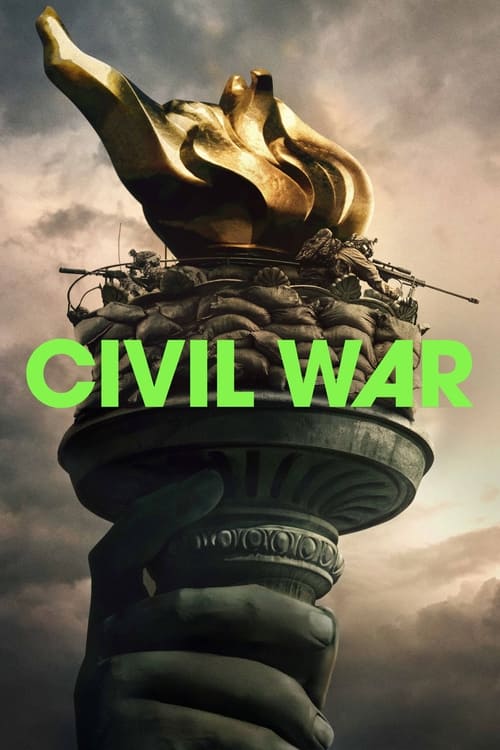
Civil War - Review
"Civil War": A Harrowing Portrait of a Fractured America
Alex Garland’s "Civil War" isn't just a war film; it's a chillingly plausible near-future dystopia painted with unflinching realism and a hauntingly detached perspective. It throws us headfirst into the chaos of a divided America, forcing us to confront the fragility of democracy and the brutal cost of conflict. This isn't a film that offers easy answers or patriotic fervor; it's a stark, unsettling examination of how easily society can unravel, and the role of journalism in bearing witness to the apocalypse.
Plot: A Road Trip Through Hell
The narrative follows a group of seasoned war journalists as they embark on a perilous journey from New York City to Washington D.C., aiming to interview the increasingly isolated and authoritarian President of the United States. The team consists of Lee Smith (Kirsten Dunst), a hardened and emotionally detached photojournalist; Joel (Wagner Moura), a thrill-seeking reporter; Sammy (Stephen McKinley Henderson), an aging veteran journalist; and Jessie (Cailee Spaeny), an aspiring photographer eager to learn from Lee. The film wastes no time in establishing the fractured state of the nation. The "Florida Alliance" and the "Western Forces" (California and Texas), two powerful secessionist groups, are locked in a bloody conflict with the federal government. Loyalties are blurred, and the landscape is littered with the wreckage of a nation tearing itself apart.
The journey itself is the core of the plot. Each mile traveled brings the journalists face-to-face with the horrors of war: roadside executions, refugee camps, and towns controlled by trigger-happy militias. The narrative is largely episodic, presenting a series of vignettes that illustrate the breakdown of law and order and the descent into barbarity. While the overall goal is clear – reaching Washington D.C. – the film excels in showcasing the unpredictable and often senseless violence that permeates this new American reality. The destination becomes less important than the experiences encountered along the way, forcing the characters (and the audience) to grapple with the moral and ethical implications of their profession in the face of unimaginable brutality.
One point of contention might be the lack of detailed exposition regarding the political and social causes of the war. Garland deliberately avoids providing a clear-cut explanation for the conflict, choosing instead to focus on the visceral experience of living through it. This ambiguity, while effective in creating a sense of disorientation and unease, may leave some viewers wanting more context. However, this choice ultimately serves the film's thematic purpose: to highlight the human cost of conflict regardless of its origins.
Characters: Witnesses to the End
The strength of "Civil War" lies in its compelling and nuanced characters. Lee Smith, played with remarkable restraint by Kirsten Dunst, is the emotional anchor of the film. A veteran of countless war zones, she is haunted by the trauma she has witnessed, manifesting as a cold, almost robotic detachment. Her primary focus is capturing the truth through her lens, even at the expense of her own well-being. Dunst delivers a career-defining performance, conveying the character's inner turmoil through subtle gestures and expressions.
Joel, portrayed by Wagner Moura, is a more outwardly enthusiastic and reckless reporter, driven by the adrenaline rush of covering the conflict. His impulsiveness often clashes with Lee's cautious approach, creating a dynamic tension within the group. Stephen McKinley Henderson provides a grounding presence as Sammy, the experienced mentor figure who offers wisdom and guidance to the younger journalists. His character serves as a reminder of the importance of ethical reporting and the responsibility that comes with bearing witness to history.
Cailee Spaeny shines as Jessie, the young and impressionable photographer who idolizes Lee. Her character arc is perhaps the most compelling, as she gradually sheds her naiveté and learns the harsh realities of war through firsthand experience. Spaeny's performance is both vulnerable and resilient, capturing the character's transformation from an eager student to a hardened observer. The relationship between Lee and Jessie is central to the film, exploring the mentorship dynamic and the passing of the torch to a new generation of journalists.
While the main characters are well-developed, the supporting characters are often fleeting and enigmatic, reflecting the chaotic and unpredictable nature of the war. This deliberate lack of backstory adds to the sense of realism, as the journalists encounter individuals whose motivations and loyalties remain largely unknown.
Direction and Cinematography: A Visceral Experience
Alex Garland's direction is masterful, creating a sense of immersive realism that is both captivating and disturbing. He avoids sensationalism, opting instead for a documentary-style approach that emphasizes the human cost of war. The pacing is deliberate, allowing the tension to build gradually and creating a sense of mounting dread.
The cinematography, by Rob Hardy, is stunning. The film is visually striking, capturing the beauty and desolation of the American landscape. The use of natural light and handheld cameras adds to the sense of realism, placing the viewer directly in the midst of the action. The battle sequences are particularly impressive, conveying the chaos and brutality of war without resorting to gratuitous violence. The film’s visual language is incredibly effective, utilizing stark imagery and contrasting landscapes to underscore the fractured state of the nation.
One notable aspect of the cinematography is its focus on the journalists' perspectives. The camera often mimics the gaze of Lee and Jessie, forcing the audience to see the world through their eyes. This technique creates a sense of empathy and understanding, allowing viewers to connect with the characters on a deeper level. The film also makes effective use of sound design, immersing the audience in the cacophony of war: the roar of gunfire, the screams of the wounded, and the silence that follows. The combination of visuals and sound creates a truly visceral and unforgettable cinematic experience.
Themes and Messages: A Warning for Our Time
"Civil War" is a film rich in thematic depth, exploring the dangers of political polarization, the importance of objective journalism, and the fragility of democracy. The film serves as a cautionary tale, warning against the erosion of civil liberties and the rise of authoritarianism. It highlights the importance of critical thinking and the need to resist the forces that seek to divide us.
One of the central themes of the film is the role of journalism in a time of crisis. The journalists in "Civil War" are not simply reporters; they are witnesses to history, risking their lives to document the truth. The film celebrates the courage and dedication of these individuals, while also acknowledging the ethical dilemmas they face. The film raises important questions about the responsibility of journalists to remain objective in the face of overwhelming suffering and the potential for their work to be used for propaganda purposes.
Another key theme is the dehumanizing effect of war. The film shows how easily individuals can be transformed into killers, and how quickly society can descend into barbarity. The characters in "Civil War" are forced to confront the darkest aspects of human nature, and the film offers a bleak and unsettling vision of what happens when the social contract breaks down. It is a powerful reminder of the importance of empathy, compassion, and the rule of law.
The film also explores the concept of American identity and the meaning of patriotism. In a nation divided by ideology and geography, what does it mean to be an American? The characters in "Civil War" struggle with this question, as they witness the destruction of the country they once knew. The film challenges viewers to consider their own values and beliefs, and to reflect on the future of American democracy.
Comparisons: Echoes of the Past, Warnings for the Future
"Civil War" draws comparisons to other dystopian war films, such as "Children of Men" and "The Road," in its depiction of a society on the brink of collapse. However, unlike those films, "Civil War" is grounded in a more plausible near-future scenario, making it all the more unsettling. The film also echoes themes found in classic war films like "Apocalypse Now" and "Platoon," in its exploration of the psychological toll of war and the moral ambiguities of combat.
Compared to Alex Garland's previous works, such as "Ex Machina" and "Annihilation," "Civil War" is less focused on philosophical questions and more concerned with visceral realism. While his earlier films explored themes of artificial intelligence and the nature of consciousness, "Civil War" is a more direct and unflinching commentary on contemporary American society. However, Garland's signature style – characterized by sharp dialogue, compelling characters, and thought-provoking themes – is still evident in this film.
The performances of the actors also invite comparisons to their previous roles. Kirsten Dunst's portrayal of Lee Smith is reminiscent of her performance in "Melancholia," in its depiction of a woman struggling with deep-seated emotional trauma. Wagner Moura brings a similar intensity to his role as Joel as he did in "Narcos," while Cailee Spaeny's performance is reminiscent of her breakout role in "Mare of Easttown," in its portrayal of a young woman navigating difficult circumstances.
Positive Aspects: A Masterpiece of Tension and Realism
"Civil War" is a triumph of filmmaking, excelling in nearly every aspect. The direction is masterful, the cinematography is stunning, the performances are exceptional, and the themes are thought-provoking. The film creates a sense of immersive realism that is both captivating and disturbing, leaving a lasting impact on the viewer.
The film's greatest strength is its ability to create tension. From the opening scene to the climactic showdown, the audience is kept on the edge of their seat, never knowing what will happen next. The unpredictable nature of the war and the constant threat of violence create a palpable sense of dread that permeates the entire film.
The performances of the actors are another major highlight. Kirsten Dunst delivers a career-defining performance as Lee Smith, conveying the character's inner turmoil with remarkable restraint. Wagner Moura, Stephen McKinley Henderson, and Cailee Spaeny also deliver exceptional performances, bringing depth and complexity to their respective roles. The chemistry between the actors is palpable, creating a believable and engaging ensemble.
Constructive Criticism: A Few Minor Quibbles
While "Civil War" is a remarkable film, it is not without its minor flaws. As mentioned earlier, the lack of detailed exposition regarding the political and social causes of the war may leave some viewers wanting more context. While the ambiguity serves the film's thematic purpose, it could have been balanced with a bit more background information.
Additionally, the film's ending may be somewhat divisive. While the climactic sequence is undeniably powerful and impactful, some viewers may find it abrupt or unsatisfying. The film leaves many questions unanswered, and the fate of the characters is left somewhat ambiguous. However, this ambiguity may also be seen as a strength, forcing viewers to confront the uncertainty and unpredictability of war.
Finally, some viewers may find the film's detached perspective to be emotionally distancing. The journalists in "Civil War" are primarily observers, documenting the events around them without becoming directly involved. While this detachment is intentional, it may prevent some viewers from fully connecting with the characters on an emotional level.
Conclusion: A Must-See, But Be Prepared
"Civil War" is a powerful and unsettling film that will stay with you long after the credits roll. It is a chillingly plausible depiction of a fractured America, forcing us to confront the fragility of democracy and the brutal cost of conflict. While the film is not without its minor flaws, its strengths far outweigh its weaknesses. The direction is masterful, the cinematography is stunning, the performances are exceptional, and the themes are thought-provoking.
This is not a film for the faint of heart. It is violent, disturbing, and emotionally challenging. However, it is also a deeply important film that deserves to be seen and discussed. "Civil War" is a warning for our time, urging us to resist the forces that seek to divide us and to protect the values of democracy, empathy, and compassion.
Rating: 9.5/10