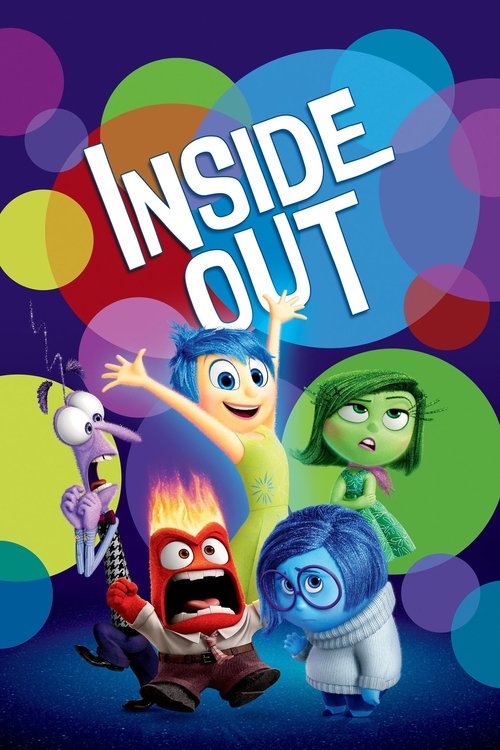
Inside Out - Review
Inside Out: A Masterpiece of Emotion and Imagination
Pixar's Inside Out isn't just another animated film; it's a profound exploration of the human psyche, disguised as a vibrant and hilarious adventure. Released in 2015, it dared to delve into the complex world of emotions, personifying them in a way that was both scientifically informed and deeply relatable. More than just a kids' movie, Inside Out is a film that speaks to the core of what it means to be human, reminding us that even sadness plays a vital role in our lives. Prepare to have your heartstrings tugged, your funny bone tickled, and your understanding of emotions forever changed.
Plot: A Journey Through the Mind
The story centers on Riley Andersen, an 11-year-old girl whose world is turned upside down when her family moves from Minnesota to San Francisco. Within Riley's mind, five personified emotions – Joy, Sadness, Fear, Disgust, and Anger – work tirelessly in Headquarters, controlling her actions and reactions. Joy, the ever-optimistic leader, strives to keep Riley happy by suppressing Sadness and focusing on positive core memories. These core memories power Islands of Personality, representing key aspects of Riley's identity: Family, Friendship, Hockey, Goofball, and Honesty.
The move throws Riley's emotional equilibrium into chaos. Sadness, despite Joy's best efforts, begins to touch Riley's core memories, tinging them with melancholy. An accident during a struggle between Joy and Sadness leads to both emotions being sucked out of Headquarters and into the vast, unexplored landscape of Riley's mind. Stranded in Long-Term Memory, Joy and Sadness must navigate the treacherous terrain of Abstract Thought, Imagination Land, Dream Productions, and the dreaded Memory Dump to return to Headquarters and restore balance to Riley's emotional state.
Meanwhile, Fear, Anger, and Disgust are left in charge of Headquarters, attempting to control Riley's emotions and behavior. Their efforts, however well-intentioned, lead to disastrous results, causing Riley to withdraw, become increasingly irritable, and ultimately make a rash decision to run away back to Minnesota. The race against time is on for Joy and Sadness to return and prevent Riley from making a mistake that could irrevocably damage her emotional well-being.
The plot is ingeniously structured, using the external journey of Joy and Sadness through Riley's mind to mirror the internal journey of Riley as she grapples with the challenges of adolescence and the loss of her childhood innocence. The film masterfully balances the fantastical elements of the mental landscape with the very real and relatable emotional struggles of a young girl.
Characters: Embodiments of Emotion
The brilliance of Inside Out lies not just in its concept but in its execution, particularly in the design and portrayal of its characters.
Joy
Voiced with infectious energy by Amy Poehler, Joy is the embodiment of happiness and optimism. She's determined to keep Riley happy at all costs, sometimes to the detriment of other emotions. Her unwavering positivity, while admirable, is also portrayed as somewhat naive and ultimately unsustainable. Joy's arc involves learning to appreciate the value of sadness and recognizing that true happiness isn't about suppressing negative emotions but about accepting them as part of the human experience.
Sadness
Phyllis Smith delivers a wonderfully understated performance as Sadness, the often-underestimated emotion. Initially portrayed as a burden and a hindrance to Riley's happiness, Sadness gradually reveals her true purpose. She is the source of empathy, connection, and ultimately, healing. It is Sadness who can connect with others in their pain and offer comfort, and it is Sadness who allows Riley to process her grief and move forward. Her transformation is perhaps the most profound and impactful of all the characters.
Fear
Bill Hader voices Fear with a nervous energy that perfectly captures the anxiety and apprehension that comes with the unknown. Fear is responsible for keeping Riley safe by identifying potential dangers and reacting accordingly. While often comical in his overreactions, Fear's role is essential in protecting Riley from harm.
Disgust
Mindy Kaling brings a sharp wit and sassy attitude to Disgust, the emotion responsible for protecting Riley from physical and social contamination. Disgust is fiercely protective of Riley's well-being and isn't afraid to voice her disapproval of anything she deems unsavory or unacceptable.
Anger
Lewis Black provides the perfect voice for Anger, the fiery and impulsive emotion that reacts to injustice and unfairness. Anger is quick to rage and often acts before thinking, but his passion and intensity are also a reflection of Riley's own sense of right and wrong.
Riley Andersen
Kaitlyn Dias voices Riley, the young girl whose emotional journey is at the heart of the film. Riley is a relatable and sympathetic character, struggling to adapt to a new environment and navigate the complexities of adolescence. Her initial optimism and enthusiasm slowly give way to sadness and withdrawal as she grapples with the loss of her familiar life. Riley's character arc highlights the importance of emotional expression and the need to allow oneself to feel a range of emotions, even the uncomfortable ones.
Bing Bong
Richard Kind's portrayal of Bing Bong, Riley's imaginary friend, is one of the most heartbreaking aspects of the film. Bing Bong represents the innocence and imagination of childhood, and his eventual sacrifice is a poignant reminder of the bittersweet nature of growing up. He is a testament to the power of imagination and the enduring impact of childhood friendships.
Each character is meticulously crafted, not just in their design and voice acting, but also in their interactions with one another. The dynamic between Joy and Sadness is particularly compelling, as they represent two seemingly opposing forces that ultimately learn to work together to achieve a common goal.
Direction and Cinematography: Visualizing the Abstract
Pete Docter, the director of Inside Out, masterfully translates the abstract concept of emotions into a visually stunning and emotionally resonant film. The direction is confident and precise, guiding the audience through the complex landscape of Riley's mind with clarity and purpose. The film never feels overwhelming or confusing, despite the intricate world-building and the nuanced exploration of emotional psychology.
The cinematography is equally impressive, utilizing a vibrant color palette and dynamic camera movements to bring the emotions and the mental landscape to life. The emotions themselves are designed with distinct visual characteristics that reflect their personalities: Joy glows with a radiant yellow light, Sadness shimmers with a melancholic blue hue, Anger radiates a fiery red glow, Disgust emanates a toxic green aura, and Fear flickers with a nervous purple energy. The use of color is not just aesthetically pleasing but also serves to reinforce the emotional themes of the film.
The design of Riley's mind is equally imaginative and visually captivating. Long-Term Memory is depicted as a vast labyrinth of shelves filled with glowing orbs, each representing a memory. Imagination Land is a whimsical playground filled with fantastical creatures and bizarre landscapes. Dream Productions is a chaotic studio where dreams are created and manipulated. The attention to detail in the visual design is remarkable, creating a world that feels both familiar and utterly unique.
The film also utilizes subtle visual cues to convey emotional states. The way Riley's eyes light up when she's happy, or the way her shoulders slump when she's sad, are just a few examples of how the filmmakers use visual storytelling to enhance the emotional impact of the film.
Performances: Bringing Emotions to Life
The voice acting in Inside Out is exceptional, with each actor perfectly capturing the essence of their respective emotion. Amy Poehler's performance as Joy is particularly noteworthy, conveying both the character's unwavering optimism and her underlying vulnerability. Phyllis Smith's understated portrayal of Sadness is equally impressive, bringing a quiet dignity and depth to a character that could have easily been dismissed as a simple caricature.
The supporting cast is equally strong, with Bill Hader, Mindy Kaling, and Lewis Black delivering memorable performances as Fear, Disgust, and Anger, respectively. Richard Kind's portrayal of Bing Bong is particularly heartbreaking, adding a layer of emotional depth to the film that resonates long after the credits roll.
Kaitlyn Dias's voice acting as Riley is also commendable, capturing the character's emotional journey with authenticity and vulnerability. She effectively conveys the range of emotions that Riley experiences, from joy and excitement to sadness and frustration.
The success of Inside Out hinges on the ability of the voice actors to bring the emotions to life, and they deliver in spades. Their performances are not just technically proficient but also deeply emotionally resonant, allowing the audience to connect with the characters on a profound level.
Themes and Messages: The Importance of Sadness
Inside Out is more than just a fun and entertaining animated film; it's a profound exploration of several important themes, including:
The Importance of Emotions
The film emphasizes the importance of all emotions, even the negative ones. It challenges the notion that happiness is the only desirable emotion and highlights the value of sadness, fear, disgust, and anger in navigating life's challenges. Sadness, in particular, is portrayed as an essential emotion that allows us to process grief, connect with others, and ultimately, heal.
The Value of Emotional Expression
Inside Out encourages emotional expression and emphasizes the importance of allowing oneself to feel a range of emotions. It shows how suppressing emotions can lead to negative consequences, such as withdrawal, irritability, and ultimately, emotional breakdown. The film advocates for open communication and the acceptance of all emotions as valid and important.
The Complexity of the Human Mind
The film provides a fascinating glimpse into the complexity of the human mind, illustrating how memories, emotions, and personality traits interact to shape our thoughts, feelings, and behaviors. It highlights the interconnectedness of different mental processes and the importance of maintaining a healthy balance between them.
The Challenges of Growing Up
Inside Out explores the challenges of growing up and the emotional turmoil that often accompanies adolescence. It portrays the transition from childhood innocence to the complexities of adulthood with sensitivity and understanding, acknowledging the loss of childhood joys while also celebrating the potential for growth and self-discovery.
The Power of Memory
The film emphasizes the power of memory in shaping our identities and experiences. Core memories are portrayed as the foundation of our personalities, and the film illustrates how memories can be both positive and negative, and how they can influence our emotions and behaviors.
The overarching message of Inside Out is that it's okay to feel sad, and that sadness is an essential part of the human experience. The film encourages viewers to embrace all of their emotions, to express them openly and honestly, and to recognize the value of emotional vulnerability.
Comparison to Other Films and Works
Inside Out shares thematic similarities with other animated films that explore complex emotional themes, such as Up (also directed by Pete Docter) and Coco. Like Up, Inside Out deals with themes of loss, grief, and the importance of memory. Like Coco, it explores the importance of family and the enduring power of love. However, Inside Out stands out for its unique approach to personifying emotions and its scientific grounding in psychological research.
The film also draws inspiration from classic works of literature and philosophy that explore the nature of emotions, such as Plato's allegory of the chariot and the works of William James and other prominent psychologists. However, Inside Out presents these complex ideas in a way that is accessible and engaging for audiences of all ages.
Pete Docter's previous work, including Monsters, Inc. and Up, demonstrates his ability to create emotionally resonant stories with memorable characters and visually stunning animation. Inside Out represents a culmination of his artistic vision, showcasing his mastery of storytelling, character development, and visual design.
Positive Aspects
- Original Concept: The premise of personifying emotions is incredibly creative and provides a unique lens through which to explore the human psyche.
- Emotional Depth: The film tackles complex emotional themes with sensitivity and understanding, resonating with audiences of all ages.
- Visual Design: The animation is stunning, with vibrant colors and imaginative world-building.
- Voice Acting: The voice cast delivers exceptional performances, bringing the emotions to life with authenticity and humor.
- Thought-Provoking: The film encourages viewers to think about their own emotions and the importance of emotional expression.
- Humor: The film is genuinely funny, with witty dialogue and memorable comedic moments.
- Heartwarming: The film is ultimately a heartwarming story about the importance of family, friendship, and self-acceptance.
Constructive Criticism
- Simplified Psychology: While the film is based on psychological research, it necessarily simplifies complex concepts for the sake of storytelling. Some critics have argued that the film's portrayal of emotions is overly simplistic and may not accurately reflect the nuances of human experience.
- Predictable Plot Points: While the overall concept is original, some of the plot points in Inside Out are somewhat predictable, particularly the resolution of the conflict between Joy and Sadness.
- Overreliance on Sentimentality: At times, the film veers into sentimentality, relying on emotionally manipulative scenes to elicit tears from the audience. While these scenes are effective, they can also feel somewhat contrived.
- Limited Exploration of Other Emotions: While Joy and Sadness are the primary focus of the film, the other emotions (Fear, Disgust, and Anger) are not as fully developed. Exploring their roles in greater depth could have added another layer of complexity to the story.
Conclusion
Inside Out is a cinematic triumph, a film that seamlessly blends entertainment with profound emotional insight. It's a testament to Pixar's storytelling prowess and their ability to create films that resonate with audiences on multiple levels. While not without its minor flaws, the film's originality, emotional depth, and visual brilliance far outweigh any shortcomings. Inside Out is a must-see for anyone who has ever experienced the joys and sorrows of being human. It's a film that will stay with you long after the credits roll, prompting you to reflect on your own emotions and the importance of embracing the full spectrum of human experience.