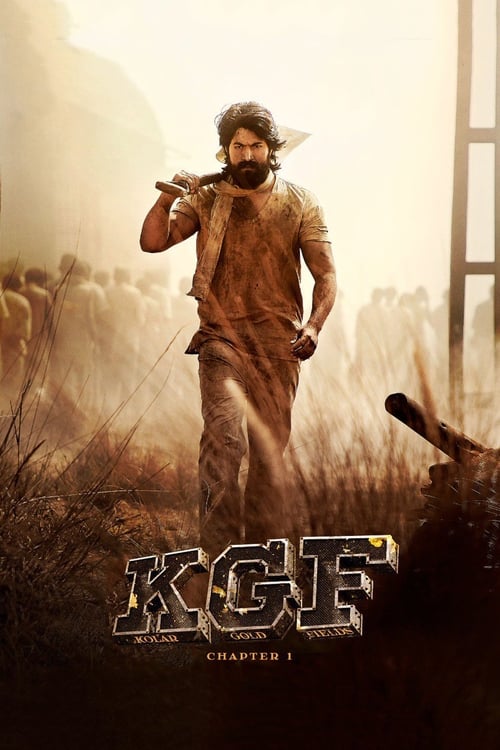
K.G.F: Chapter 1 - Review
K.G.F: Chapter 1 - A Golden Saga of Rebellion and Brutality
In the annals of Indian cinema, few films have managed to capture the raw energy, unbridled ambition, and sheer visual spectacle quite like K.G.F: Chapter 1. Released in 2018, this Kannada-language action thriller, dubbed and released in multiple languages, wasn't just a box office sensation; it was a cultural phenomenon. Director Prashanth Neel crafted a world of grit, gold, and unyielding power, drawing audiences into a narrative that felt both epic and deeply personal. But beyond the stylized violence and larger-than-life protagonist, lies a story of oppression, hope, and the enduring human spirit. Is K.G.F: Chapter 1 truly a golden masterpiece, or does its shine obscure certain imperfections? Let's delve into the depths of this cinematic gold mine.
Plot Analysis: A Quest for Power and Redemption
The story of K.G.F: Chapter 1 is deceptively simple, yet intricately layered. Set primarily in the 1970s, it follows the journey of Raja Krishnappa Bairya, or Rocky (played by Yash), a young man born into poverty and driven by an insatiable hunger for power. His childhood is marked by hardship and a promise to his dying mother: to become wealthy and powerful, even if it means walking a path of darkness. This promise becomes the driving force behind his relentless ambition.
Rocky's quest takes him to Mumbai, where he quickly rises through the ranks of the criminal underworld, becoming a feared and respected figure. He is then tasked with assassinating Garuda, the heir apparent to the Kolar Gold Fields (K.G.F.), a vast and brutal mining operation ruled by the ruthless Suryavardhan. The K.G.F. is not just a gold mine; it's a prison, a kingdom built on the backs of enslaved laborers who toil under inhumane conditions.
Once Rocky infiltrates the K.G.F., the film truly takes off. He witnesses firsthand the extreme oppression and suffering of the workers, and his initial motives of personal gain slowly evolve. He becomes a symbol of hope, a savior to the downtrodden, and his fight against Garuda transforms into a rebellion against the entire system of exploitation. The plot is punctuated by explosive action sequences, tense political maneuvering, and a gradual reveal of the K.G.F.'s history and the power struggles within its ruling families.
However, the plot isn't without its flaws. The first act, while establishing Rocky's character, can feel somewhat rushed. The transitions between his childhood and his ascent in Mumbai could have been smoother, allowing for a deeper connection with his motivations. Additionally, some plot points, particularly those involving the political intrigue and rivalries within the K.G.F., can be confusing for viewers unfamiliar with Indian history and socio-political dynamics.
Character Development: From Anti-Hero to Savior
K.G.F: Chapter 1 thrives on its larger-than-life characters, each with their own distinct motivations and complexities. The central figure, Rocky, is undoubtedly the film's strongest asset.
Rocky (Yash)
Yash delivers a career-defining performance as Rocky. He embodies the character's raw power, unwavering determination, and underlying vulnerability with remarkable conviction. Rocky is not a typical hero; he's an anti-hero, driven by ambition and willing to use violence to achieve his goals. However, his transformation from a self-serving mercenary to a reluctant savior is compelling. He is a man of few words, but his actions speak volumes. Yash's portrayal is iconic, capturing Rocky's swagger, intensity, and surprising moments of compassion.
Garuda (Ramachandra Raju)
Garuda, the primary antagonist, is a formidable presence. He is the embodiment of brutality and oppression, a monster who rules the K.G.F. with an iron fist. Ramachandra Raju effectively portrays Garuda's ruthlessness and unwavering belief in his own power. While Garuda's motivations are relatively straightforward – maintaining control of the K.G.F. – his sheer presence is enough to instill fear and create a palpable sense of danger.
Suryavardhan (Rao Ramesh)
Suryavardhan, the mastermind behind the K.G.F., is a more nuanced antagonist. He is a shrewd and calculating strategist who manipulates events from the shadows. Rao Ramesh delivers a subtle yet powerful performance, portraying Suryavardhan as a man driven by greed and a thirst for power. He is the puppet master, pulling the strings of the K.G.F.'s intricate power structure.
Anand Ingalagi (Anant Nag) & Vijayendra Ingalagi (Prakash Raj)
The characters of Anand Ingalagi (played by Anant Nag) and, later, his son Vijayendra Ingalagi (played by Prakash Raj), serve as narrators, piecing together Rocky's story for the audience. They provide context and perspective, adding depth to the narrative. While their roles are primarily expository, both actors deliver compelling performances, conveying the weight of history and the significance of Rocky's actions.
While the main characters are well-developed, some of the supporting characters feel underdeveloped and lack significant depth. This is a minor criticism, as the focus remains firmly on Rocky and the central conflict, but fleshing out some of the supporting roles could have added further richness to the world of K.G.F.
Direction and Cinematography: A Visual Spectacle
Prashanth Neel's direction is the driving force behind K.G.F: Chapter 1's success. He creates a visually stunning and immersive world, characterized by its dark, gritty aesthetic and stylized action sequences. Neel's vision is bold and uncompromising, and he expertly blends action, drama, and suspense to create a truly captivating cinematic experience.
Bhuvan Gowda's cinematography is equally impressive. The film is visually striking, with its desaturated color palette, dramatic lighting, and dynamic camera movements. The use of slow-motion during action sequences is particularly effective, emphasizing the impact of each blow and creating a sense of heightened reality. The wide shots of the K.G.F., with its vast expanse of mines and oppressed workers, are breathtaking and convey the scale of the operation and the depth of the suffering.
The production design is meticulous, creating a believable and immersive world. The costumes, set pieces, and props all contribute to the film's overall aesthetic, transporting the audience to the 1970s and the harsh realities of the K.G.F. The attention to detail is evident in every frame, from the dust-covered faces of the miners to the opulent interiors of the K.G.F.'s ruling families.
However, the heavy reliance on slow-motion, while visually appealing, can occasionally feel excessive and detract from the film's pacing. A more balanced approach could have enhanced the impact of the action sequences without sacrificing momentum.
Themes and Messages: Oppression, Hope, and the Price of Power
Beyond its action-packed exterior, K.G.F: Chapter 1 explores several important themes and messages.
Oppression and Exploitation
The film vividly depicts the brutal oppression and exploitation of the workers in the K.G.F. They are treated as slaves, forced to toil in inhumane conditions for the benefit of a select few. The film exposes the dark side of capitalism and the devastating consequences of unchecked power.
Hope and Rebellion
Despite the bleakness of their situation, the workers in the K.G.F. never lose hope. Rocky's arrival ignites a spark of rebellion, giving them the courage to fight for their freedom. The film celebrates the power of collective action and the enduring human spirit.
The Price of Power
Rocky's quest for power comes at a cost. He is forced to make difficult choices and commit acts of violence. The film explores the moral complexities of power and the sacrifices one must make to achieve it. It questions whether the ends justify the means and whether true power can be attained without compromising one's values.
Motherhood and Sacrifice
The relationship between Rocky and his mother is a recurring motif throughout the film. His promise to her serves as his primary motivation, and her memory guides him on his journey. The film highlights the sacrifices mothers make for their children and the enduring power of maternal love.
The film's message is ultimately one of hope and redemption. Even in the darkest of circumstances, the human spirit can triumph over adversity. However, it also serves as a cautionary tale about the dangers of unchecked power and the importance of fighting for justice and equality.
Performances: Yash's Tour de Force
The performances in K.G.F: Chapter 1 are uniformly strong, but Yash's portrayal of Rocky is undoubtedly the standout. He embodies the character's physicality, intensity, and vulnerability with remarkable skill. His performance is both captivating and believable, making Rocky a truly iconic figure.
Ramachandra Raju delivers a menacing performance as Garuda, effectively portraying the character's ruthlessness and unwavering belief in his own power. Rao Ramesh is equally impressive as Suryavardhan, conveying the character's cunning and manipulative nature. Anant Nag and Prakash Raj provide valuable context and perspective as the narrators, adding depth to the narrative.
The supporting cast also delivers solid performances, although their roles are less prominent. The actors effectively portray the suffering and resilience of the K.G.F. workers, adding to the film's overall impact.
Comparison to Similar Films and Previous Works
K.G.F: Chapter 1 draws inspiration from various sources, including classic Westerns, gangster films, and Indian epics. Its visual style and action sequences are reminiscent of films like Mad Max: Fury Road and 300, while its themes of oppression and rebellion echo those of films like Spartacus and The Shawshank Redemption.
Prashanth Neel's previous work, Ugramm (2014), shares similarities with K.G.F. in terms of its action-oriented narrative, stylized visuals, and strong protagonist. However, K.G.F. is a much more ambitious and visually impressive film, showcasing Neel's growth as a director.
Yash's performance in K.G.F. is a significant departure from his previous roles, which were often more lighthearted and comedic. He demonstrates his versatility as an actor, proving that he is capable of delivering both action-packed performances and nuanced character portrayals.
Positive Aspects
- Yash's performance as Rocky: A career-defining performance that solidifies his status as a superstar.
- Prashanth Neel's direction: Bold, visionary, and expertly crafted.
- Bhuvan Gowda's cinematography: Visually stunning and immersive.
- Thematic depth: Explores important themes of oppression, hope, and the price of power.
- Production design: Meticulous and believable, creating a truly immersive world.
- Action sequences: Thrilling, stylized, and visually impressive.
Constructive Criticism
- Pacing: The first act can feel somewhat rushed, and the heavy reliance on slow-motion can occasionally detract from the film's momentum.
- Plot complexity: Some plot points, particularly those involving the political intrigue within the K.G.F., can be confusing for some viewers.
- Supporting characters: Some of the supporting characters feel underdeveloped and lack significant depth.
- Over-the-top elements: While adding to the film's grandeur, some elements can border on unrealistic, potentially alienating viewers seeking a more grounded narrative.
Conclusion
K.G.F: Chapter 1 is a cinematic triumph, a visually stunning and emotionally resonant action thriller that transcends language barriers and cultural differences. While it has its flaws, its strengths far outweigh its weaknesses. Yash's iconic performance, Prashanth Neel's visionary direction, and Bhuvan Gowda's breathtaking cinematography combine to create a truly unforgettable cinematic experience. It's a film that stays with you long after the credits roll, prompting reflection on the themes of oppression, hope, and the enduring human spirit. It's a must-watch for fans of action, thriller, and adventure genres, and a testament to the power of Indian cinema.