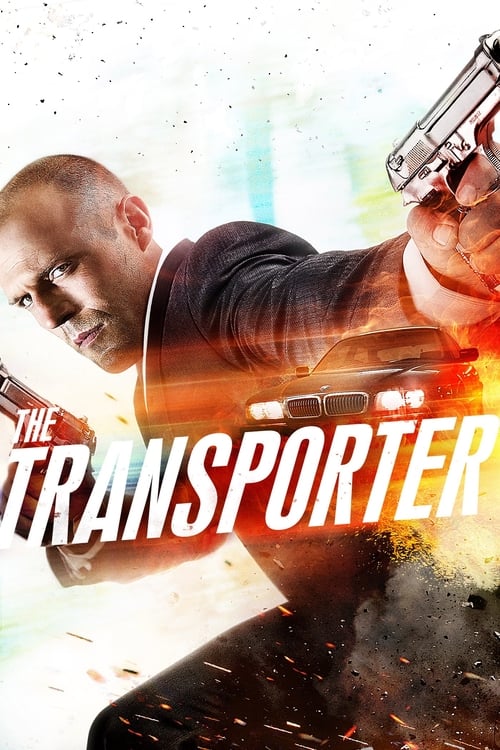
The Transporter - Review
"The Transporter" (2002): A Gritty, Stylish Action Ride That Delivered the Goods
In the early 2000s, the action genre was ripe for a fresh injection of adrenaline. "The Transporter," starring Jason Statham as the stoic and highly skilled Frank Martin, arrived not just to fill that void, but to redefine it with its balletic fight choreography, breakneck pacing, and a healthy dose of self-aware cool. Released in 2002, the film, directed by Louis Leterrier and Corey Yuen, wasn't just another shoot-'em-up; it was a finely tuned machine of action cinema, showcasing Statham's burgeoning star power and setting a new standard for stylish, martial arts-infused action thrillers. But does "The Transporter" still hold up today, or has the relentless advancement of the genre left it in the dust? Let's delve into the details and find out.
Plot: Rules, Consequences, and a Whole Lot of Kicking
The plot of "The Transporter" is deceptively simple, a classic setup that allows the action to take center stage. Frank Martin is a "transporter" – a highly skilled driver for hire who abides by a strict set of rules: never change the deal, no names, and never open the package. These rules are the foundation of his professional code, ensuring his anonymity and minimizing risk. However, when Frank breaks his own rule and peeks inside his latest cargo, he discovers a bound and gagged woman named Lai (Shu Qi). This single act of curiosity sets off a chain of events that throws Frank's carefully constructed life into chaos.
The narrative then unfolds as Frank tries to protect Lai from the ruthless and corrupt American businessman, Wall Street (Matt Schulze), who is smuggling her and other illegal immigrants into France. As Frank delves deeper into the conspiracy, he finds himself not only battling Wall Street's henchmen but also evading the suspicions of Inspector Tarconi (François Berléand), a French detective who is both a comedic foil and a surprisingly insightful character. The plot, while straightforward, provides ample opportunity for elaborate action sequences and character development, particularly in the dynamic between Frank and Lai.
One of the strengths of the plot is its efficient use of exposition. We learn about Frank's background and skills through his actions rather than lengthy monologues. The rules he lives by, initially presented as a quirky detail, become crucial plot points as he is forced to break them, highlighting the moral dilemma he faces. The simplicity of the plot also allows the filmmakers to focus on the execution of the action, ensuring that each fight and car chase is meticulously crafted and visually stunning.
However, the plot isn't without its weaknesses. The motivations of Wall Street, while clear in their general greed and exploitation, could have been explored in greater depth. The character feels somewhat one-dimensional, lacking the nuance that could have elevated him from a generic villain to a truly memorable antagonist. Additionally, the romantic subplot between Frank and Lai, while providing emotional grounding, feels somewhat rushed and underdeveloped. Their connection, while believable in the context of their shared experiences, could have benefited from more subtle and nuanced development.
Characters: Stoicism, Vulnerability, and a Touch of French Charm
The characters in "The Transporter" are a mix of archetypes and surprisingly nuanced individuals. Frank Martin, the protagonist, is the quintessential stoic action hero. He's a man of few words, but his actions speak volumes. Statham's portrayal perfectly captures Frank's cold exterior, hiding a sense of honor and a willingness to do what's right, even if it means breaking his own rules. He's not just a brute; he's a highly skilled strategist and tactician, always thinking several steps ahead of his opponents.
Lai, played by Shu Qi, is more than just a damsel in distress. While she initially appears vulnerable and helpless, she quickly proves to be resourceful and resilient. Her relationship with Frank is the emotional core of the film, as she challenges his detached lifestyle and forces him to confront his own humanity. Shu Qi's performance is subtle yet powerful, conveying Lai's fear, determination, and growing affection for Frank.
Inspector Tarconi, portrayed by François Berléand, provides much of the film's comedic relief. He's a bumbling but ultimately competent detective who suspects Frank's involvement in illegal activities but is never quite able to catch him red-handed. Tarconi's presence adds a layer of levity to the otherwise intense action, and his interactions with Frank are often humorous and surprisingly insightful. He represents the "normal" world, contrasting sharply with Frank's dangerous and unconventional lifestyle.
Wall Street, the antagonist, is perhaps the weakest character in the film. He's a stereotypical corrupt businessman, motivated solely by greed and power. While Matt Schulze delivers a competent performance, the character lacks depth and complexity. His motivations are clear, but his personality is bland and unmemorable. A more nuanced portrayal of Wall Street could have significantly elevated the film's overall impact.
Overall, the characters in "The Transporter" are well-defined and serve their purpose within the narrative. Frank and Lai's dynamic is particularly compelling, providing emotional depth and driving the plot forward. Tarconi's comedic presence adds levity and contrast, while Wall Street, though somewhat generic, serves as a suitable antagonist. The strength of the characters lies in their interactions and their ability to elicit emotional responses from the audience.
Direction and Cinematography: Stylish Action with a European Flair
The direction of "The Transporter," helmed by Louis Leterrier and Corey Yuen (credited as action director), is one of its greatest strengths. Leterrier brings a stylish and energetic visual flair to the film, while Yuen's expertise in martial arts choreography ensures that the action sequences are both thrilling and believable. The combination of these two talents results in a film that is visually stunning and physically engaging.
The action sequences are meticulously crafted, showcasing Statham's fighting skills and athleticism. The choreography is a blend of martial arts, acrobatics, and brutal hand-to-hand combat, creating a unique and visually dynamic style. The camera work is equally impressive, capturing the action from various angles and perspectives, enhancing the sense of speed and impact. The use of slow motion is judicious, highlighting key moments and adding dramatic weight to the fight scenes.
The cinematography, by Pierre Morel, is equally impressive. The film is shot in a vibrant and saturated color palette, emphasizing the beauty of the French Riviera. The use of natural lighting adds a sense of realism to the film, while the carefully composed shots create a visually appealing and dynamic aesthetic. The cinematography also plays a crucial role in conveying the mood and atmosphere of the film, shifting from bright and sunny during the daytime scenes to dark and gritty during the nighttime sequences.
The editing, by Nicolas Trembasiewicz, is fast-paced and energetic, contributing to the film's overall sense of urgency and excitement. The cuts are sharp and precise, keeping the action moving at a brisk pace and ensuring that the audience is constantly engaged. The use of montage sequences is particularly effective, condensing large amounts of information into short, visually compelling segments.
One of the standout aspects of the direction is its ability to blend the action with the European setting. The French Riviera provides a stunning backdrop for the film, and the filmmakers make excellent use of the locations, incorporating them seamlessly into the action sequences. The film also features a distinct European sensibility, evident in the humor, the characters, and the overall tone. This combination of action and European flair sets "The Transporter" apart from other action films of its era.
However, the direction isn't without its flaws. Some of the action sequences, particularly the car chases, rely heavily on CGI, which occasionally looks dated by today's standards. Additionally, the film's visual style, while generally effective, can sometimes feel overly stylized, sacrificing realism for aesthetic appeal. Despite these minor criticisms, the direction and cinematography of "The Transporter" are overall impressive, contributing significantly to the film's enduring appeal.
Performances: Statham's Star-Making Turn and a Solid Supporting Cast
The performances in "The Transporter" are generally strong, with Jason Statham delivering a star-making turn as Frank Martin. Statham embodies the character perfectly, conveying Frank's stoicism, skill, and underlying sense of honor. His physicality is undeniable, and he performs many of his own stunts, adding a sense of authenticity to the action sequences. "The Transporter" solidified Statham's status as a leading man and launched him into the upper echelons of action movie stars.
Shu Qi delivers a compelling performance as Lai, balancing vulnerability with resilience. She effectively portrays Lai's fear and determination, and her chemistry with Statham is believable and engaging. Shu Qi's performance elevates Lai beyond the typical "damsel in distress" trope, making her a strong and sympathetic character.
François Berléand provides excellent comedic relief as Inspector Tarconi. His portrayal of the bumbling but ultimately competent detective is both humorous and endearing. Berléand's performance adds a layer of levity to the film and provides a welcome contrast to the intense action.
Matt Schulze, as Wall Street, delivers a competent performance, but the character itself is somewhat underdeveloped. Schulze effectively portrays Wall Street's greed and ruthlessness, but the character lacks the nuance and complexity that could have made him a truly memorable villain.
The supporting cast, including Ric Young as Mr. Kwai and Doug Rand as Leader, also delivers solid performances, contributing to the overall believability of the film. The actors effectively portray their respective characters, adding depth and texture to the narrative.
Overall, the performances in "The Transporter" are strong, with Statham leading the way with his charismatic and physically commanding portrayal of Frank Martin. The supporting cast provides solid support, and Shu Qi delivers a particularly compelling performance as Lai. The strength of the performances contributes significantly to the film's overall success.
Themes and Messages: Rules, Morality, and the Cost of Freedom
"The Transporter" explores several themes, including the importance of rules, the complexities of morality, and the cost of freedom. Frank Martin's adherence to his strict set of rules is initially presented as a quirk, but it quickly becomes clear that these rules are essential to his survival and his sense of order in a chaotic world. However, as the film progresses, Frank is forced to break his own rules, highlighting the limitations of rigid adherence to principles and the importance of adapting to changing circumstances.
The film also explores the complexities of morality. Frank is not a hero in the traditional sense; he's a mercenary who is willing to transport anything for the right price. However, when he discovers that his latest cargo is a human being, he is forced to confront his own moral compass. He ultimately chooses to protect Lai, even at great personal risk, demonstrating that even the most hardened individuals are capable of compassion and empathy.
The theme of freedom is also prevalent throughout the film. Lai and the other illegal immigrants are seeking freedom from oppression and poverty, while Frank is seeking freedom from the constraints of a normal life. The film suggests that freedom is not always easy to attain and often comes at a great cost. Both Frank and Lai must fight for their freedom, both literally and figuratively, and they ultimately find a sense of liberation in their shared experiences.
Beyond these overt themes, the film also touches upon the dangers of unchecked capitalism and the exploitation of vulnerable populations. Wall Street's ruthless pursuit of profit at the expense of human lives serves as a cautionary tale about the dark side of greed and the importance of ethical business practices.
While "The Transporter" is primarily an action film, it also offers a surprisingly thoughtful exploration of these themes, adding depth and resonance to the narrative. The film's ability to blend action with meaningful themes contributes to its enduring appeal and its status as a cult classic.
Comparison to Similar Films and Previous Works
"The Transporter" arrived at a time when the action genre was evolving, moving away from the muscle-bound heroes of the 1980s and towards more agile and skilled protagonists. In this context, "The Transporter" can be seen as a bridge between the old and the new, blending the raw physicality of classic action films with the stylish choreography and visual flair of contemporary action cinema.
Comparisons can be drawn to other films featuring skilled drivers, such as "Ronin" (1998) and "Drive" (2011), but "The Transporter" distinguishes itself with its emphasis on martial arts and its more lighthearted tone. While "Ronin" is a gritty and realistic thriller, and "Drive" is a brooding and atmospheric neo-noir, "The Transporter" is a more straightforward and entertaining action film.
Jason Statham's previous work in films like "Lock, Stock and Two Smoking Barrels" (1998) and "Snatch" (2000) showcased his charisma and physicality, but "The Transporter" was the film that truly established him as an action star. His performance in "The Transporter" paved the way for his roles in other action franchises, such as "Crank," "Death Race," and "The Expendables."
Director Louis Leterrier went on to direct other action films, including "The Incredible Hulk" (2008) and "Clash of the Titans" (2010), but "The Transporter" remains one of his most critically acclaimed and commercially successful films. The film's blend of action, style, and humor is a hallmark of Leterrier's directorial style.
Corey Yuen's expertise in martial arts choreography is evident throughout "The Transporter," and his influence can be seen in other action films he has worked on, such as "Lethal Weapon 4" (1998) and "X-Men" (2000). Yuen's contributions to "The Transporter" were crucial in creating the film's unique and visually dynamic action style.
Positive Aspects and Constructive Criticism
Positive Aspects:
- Jason Statham's Performance: Statham's portrayal of Frank Martin is iconic and helped solidify his status as an action star.
- Action Choreography: The fight sequences are creative, stylish, and well-executed.
- Pacing: The film maintains a brisk pace, keeping the audience engaged from beginning to end.
- Cinematography: The visuals are stunning, capturing the beauty of the French Riviera and enhancing the action sequences.
- Humor: The film incorporates humor effectively, providing moments of levity and contrast.
Constructive Criticism:
- One-Dimensional Villain: Wall Street lacks depth and complexity, making him a less memorable antagonist.
- Rushed Romantic Subplot: The relationship between Frank and Lai could have been developed more subtly and gradually.
- Dated CGI: Some of the CGI effects, particularly in the car chases, look dated by today's standards.
- Overly Stylized Visuals: The film's visual style can sometimes feel overly stylized, sacrificing realism for aesthetic appeal.
- Predictable Plot: The plot is relatively straightforward and predictable, lacking major twists or surprises.
Conclusion: A Stylish Action Classic That Still Delivers
"The Transporter" remains a highly entertaining and influential action film. While it may show its age in certain aspects, such as the CGI and the somewhat predictable plot, its strengths far outweigh its weaknesses. Jason Statham's iconic performance, the stylish action choreography, and the brisk pacing make it a thoroughly enjoyable cinematic experience. The film's blend of action, humor, and European flair sets it apart from other action films of its era, and its exploration of themes such as rules, morality, and freedom adds depth and resonance to the narrative.
Despite its flaws, "The Transporter" has earned its place as a modern action classic. It's a film that can be enjoyed on multiple levels, whether you're looking for a thrilling action ride or a thoughtful exploration of complex themes. It's a testament to the power of good direction, strong performances, and a well-executed action concept.
Rating: 8.5/10