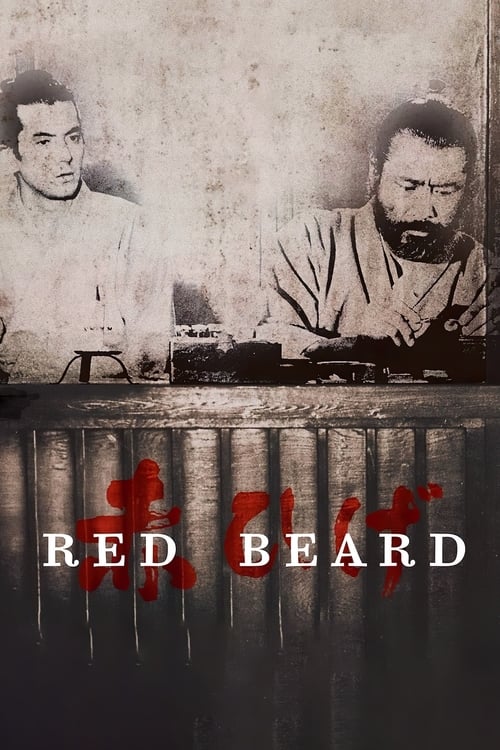
Red Beard - Review
Red Beard: A Masterclass in Humanism and Healing
Akira Kurosawa's Red Beard, released in 1965, is far more than just a period drama; it's a profound exploration of empathy, societal responsibility, and the true meaning of medicine. Clocking in at a hefty three hours, it demands patience, but rewards viewers with a deeply moving and intellectually stimulating experience. This isn't a film for those seeking instant gratification; it's a slow burn, a character study that meticulously peels back layers of societal injustice and the human condition, leaving a lasting impact long after the credits roll.
Plot: A Journey from Arrogance to Understanding
The narrative centers around Noboru Yasumoto (Yuzo Kayama), a young, ambitious doctor fresh out of medical school. Yasumoto dreams of a comfortable life as a personal physician to a wealthy family, envisioning a future filled with prestige and ease. He's understandably crestfallen when he's assigned to the Koishikawa Medical Clinic, a grim institution serving the poor and marginalized in Edo-era Japan. The clinic is run by Dr. Kyojō Niide, nicknamed "Red Beard" (Toshiro Mifune) for his fiery temper and unwavering dedication to his patients.
Yasumoto's initial reaction is one of disdain and rebellion. He refuses to wear the clinic's uniform, questions Red Beard's methods, and generally sulks about his perceived misfortune. He sees the patients as beneath him, their ailments as a distraction from his grand ambitions. The film masterfully depicts Yasumoto's gradual transformation, a process triggered by Red Beard's unwavering patience, his insightful guidance, and the stark realities he encounters within the clinic walls. He witnesses firsthand the suffering caused by poverty, disease, and societal neglect. He learns that medicine is not just about treating physical ailments, but about addressing the underlying social and economic factors that contribute to human suffering.
The film isn't solely focused on Yasumoto's journey. We are introduced to a diverse cast of patients, each with their own compelling story. There's the young, traumatized girl (Terumi Niki) rescued from a brothel, a victim of unspeakable abuse. Yasumoto is tasked with caring for her, a challenge that initially overwhelms him. Through his interactions with her, he begins to understand the depth of human suffering and the importance of compassion. We also meet a young boy suffering from a debilitating illness, a former thief trying to atone for his past, and a host of other characters who highlight the clinic's role as a sanctuary for the vulnerable.
The plot unfolds at a deliberate pace, allowing the characters and their relationships to develop organically. Kurosawa avoids sensationalism, choosing instead to focus on the quiet moments of human connection and the slow, painstaking process of healing. While the film is episodic in nature, with each patient presenting a unique challenge, these episodes are seamlessly woven together to form a cohesive narrative that underscores the film's central themes.
Characters: A Symphony of Human Complexity
Red Beard boasts a cast of richly drawn and unforgettable characters. At the heart of the film are the two central figures: Yasumoto and Red Beard.
Noboru Yasumoto
Yasumoto is initially presented as an arrogant and self-centered individual. He's blinded by his own ambition and unwilling to acknowledge the suffering of those less fortunate than himself. However, beneath his haughty exterior lies a genuine desire to do good. He's simply misguided, lacking the experience and understanding necessary to navigate the complexities of the world. His transformation is gradual and believable, driven by his interactions with Red Beard and the patients he encounters. He learns to shed his prejudices, to embrace empathy, and to find fulfillment in serving others. Kayama's performance is nuanced and compelling, capturing both the character's initial arrogance and his eventual humility.
Red Beard (Kyojō Niide)
Red Beard is the moral compass of the film, a towering figure of unwavering integrity and compassion. He's a gruff and demanding man, but his actions are always motivated by a deep concern for his patients and a desire to alleviate suffering. He's a brilliant doctor, but he also understands the importance of addressing the social and economic factors that contribute to illness. He's a father figure to Yasumoto, guiding him with patience and wisdom, challenging his assumptions, and ultimately shaping him into a better doctor and a better human being. Mifune's portrayal of Red Beard is iconic, a testament to his incredible range as an actor. He embodies the character's strength, compassion, and unwavering dedication to his principles.
Other Supporting Characters
The supporting characters are equally well-developed and contribute significantly to the film's overall impact. The traumatized girl, the former thief, and the other patients each offer a glimpse into the lives of the marginalized and forgotten. Their stories are heartbreaking, but they also serve as a reminder of the resilience of the human spirit.
Direction and Cinematography: Kurosawa's Masterful Touch
Akira Kurosawa's direction is masterful, showcasing his unparalleled ability to create a visually stunning and emotionally resonant film. He employs a variety of cinematic techniques to enhance the storytelling, including dynamic camera movements, expressive close-ups, and carefully composed shots. The film's visual style is both realistic and poetic, capturing the beauty and harshness of Edo-era Japan.
The cinematography, by Takao Saito and Asakazu Nakai, is breathtaking. The use of natural light creates a sense of realism, while the carefully chosen color palette enhances the film's emotional impact. The scenes within the clinic are often dimly lit, reflecting the grim reality of the patients' lives. In contrast, the outdoor scenes are filled with vibrant colors, showcasing the beauty of the natural world. Kurosawa uses these visual contrasts to emphasize the disparity between the privileged and the underprivileged, highlighting the film's social commentary.
Kurosawa's use of sound is also noteworthy. The film's score, composed by Masaru Sato, is both haunting and uplifting, perfectly complementing the film's emotional tone. The sound design is meticulously crafted, creating a realistic and immersive soundscape. The sounds of the city, the clinic, and the natural world are all carefully integrated into the film, adding to its overall sense of authenticity.
Performances: A Showcase of Acting Prowess
The performances in Red Beard are universally excellent. Toshiro Mifune delivers one of the finest performances of his career as Red Beard, embodying the character's strength, compassion, and unwavering dedication to his principles. Yuzo Kayama is equally impressive as Yasumoto, capturing the character's transformation from arrogance to humility with nuance and sensitivity. The supporting cast is also outstanding, bringing depth and authenticity to their respective roles.
Mifune's Red Beard is a force of nature, a whirlwind of energy and righteous indignation. He commands the screen with his presence, delivering his lines with conviction and passion. Kayama's Yasumoto is a more subtle and understated performance, but equally effective. He allows the audience to witness the character's internal struggles, his doubts, and his eventual acceptance of his role as a healer. The chemistry between Mifune and Kayama is palpable, creating a dynamic and engaging relationship that drives the film's narrative.
Themes and Messages: A Timeless Exploration of Humanity
Red Beard is a film rich in themes and messages, exploring complex issues such as social justice, poverty, disease, and the importance of empathy. The film critiques the social and economic inequalities of Edo-era Japan, highlighting the plight of the poor and marginalized. It also examines the role of medicine in society, arguing that doctors have a responsibility to address the underlying social and economic factors that contribute to illness.
At its core, Red Beard is a film about empathy. It encourages viewers to look beyond superficial differences and to connect with others on a human level. It reminds us that everyone is worthy of compassion and respect, regardless of their social status or their past mistakes. The film also celebrates the power of human connection, showing how even the most damaged individuals can find healing and redemption through meaningful relationships.
The film's message is timeless and universal, resonating with audiences across cultures and generations. It reminds us of the importance of compassion, social justice, and the pursuit of a more equitable world. It's a film that challenges us to examine our own prejudices and to strive to be better human beings.
Comparison to Other Films and Kurosawa's Oeuvre
Red Beard shares thematic similarities with other films that explore social injustice and the plight of the poor, such as Vittorio De Sica's Bicycle Thieves and Ken Loach's Kes. However, Red Beard distinguishes itself through its focus on the medical profession and its emphasis on the transformative power of empathy.
Within Kurosawa's own filmography, Red Beard is often compared to Ikiru, another film that explores the meaning of life and the importance of making a difference in the world. Both films feature protagonists who undergo a significant transformation, learning to find purpose and fulfillment in serving others. However, Red Beard is arguably more optimistic and hopeful than Ikiru, offering a more positive vision of human potential.
Red Beard also marks a departure from Kurosawa's earlier samurai films, such as Seven Samurai and Yojimbo. While those films are action-packed and visually stunning, Red Beard is more introspective and character-driven. It's a film that prioritizes human drama over spectacle, focusing on the inner lives of its characters and the complexities of their relationships. This shift in focus reflects Kurosawa's growing interest in exploring social and psychological themes.
Positive Aspects
- Powerful Storytelling: The film's narrative is compelling and emotionally resonant, drawing viewers into the lives of its characters and leaving a lasting impact.
- Exceptional Performances: The cast delivers outstanding performances, particularly Toshiro Mifune as Red Beard and Yuzo Kayama as Yasumoto.
- Masterful Direction: Akira Kurosawa's direction is impeccable, showcasing his unparalleled ability to create a visually stunning and emotionally resonant film.
- Profound Themes: The film explores complex and important themes such as social justice, empathy, and the meaning of life.
- Timeless Message: The film's message of compassion and social responsibility resonates with audiences across cultures and generations.
Constructive Criticism
- Pacing: The film's length (over three hours) may be daunting for some viewers, and the deliberate pacing may not appeal to those seeking a faster-paced narrative.
- Melodrama: At times, the film veers into melodrama, particularly in its depiction of the suffering of the patients. While these moments are emotionally powerful, they can also feel somewhat contrived.
- Simplistic Portrayal of Wealthy Individuals: While the film champions the cause of the poor, it sometimes depicts wealthy individuals as inherently selfish or uncaring. This portrayal could be seen as overly simplistic and lacking nuance.
Conclusion
Red Beard is a cinematic masterpiece, a powerful and moving exploration of humanism and healing. While its length and deliberate pacing may not appeal to all viewers, those who are willing to invest the time will be rewarded with a deeply enriching and thought-provoking experience. The film's exceptional performances, masterful direction, and profound themes make it a timeless classic that continues to resonate with audiences today. It's a film that challenges us to examine our own values and to strive to be better human beings. Despite some minor flaws, Red Beard remains a towering achievement in cinematic history.