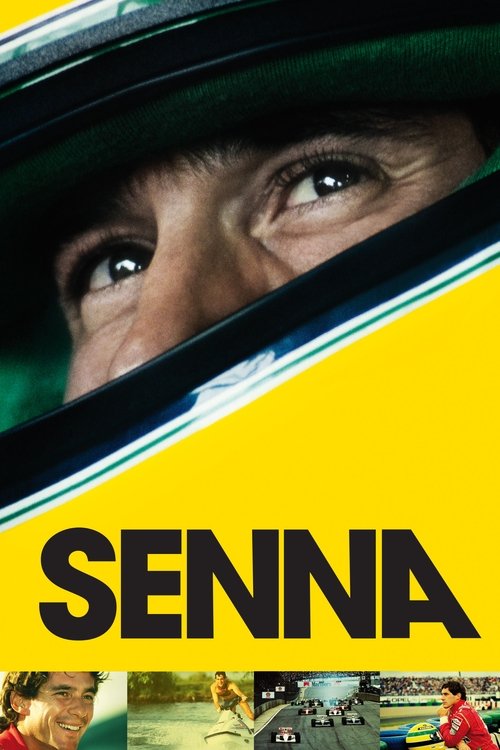
Senna - Review
Senna: A Thrilling and Tragic Ode to a Racing Legend
Senna, Asif Kapadia's 2010 documentary, isn't just a film about Formula One; it's a visceral, emotionally charged portrait of a man driven by an insatiable hunger for victory, a deep spiritual connection to his craft, and an unwavering belief in his own destiny. It's a story of triumph, controversy, and ultimately, tragedy, all woven together with breathtaking archival footage and insightful commentary. Even for those with little to no interest in motorsport, Senna offers a compelling and deeply human narrative that transcends the confines of the racetrack.
Plot and Narrative Structure
The film meticulously chronicles Ayrton Senna's Formula One career, from his debut season with Toleman in 1984 to his shocking death at the San Marino Grand Prix in 1994. Kapadia eschews traditional talking-head interviews for a more immersive approach, relying almost entirely on archival footage – race footage, press conferences, behind-the-scenes moments, and even home video – to tell Senna's story. This decision is crucial to the film's success, allowing the audience to feel as though they are witnessing Senna's journey unfold in real-time.
The narrative structure is largely chronological, but Kapadia expertly interweaves thematic elements to create a more nuanced and compelling narrative. We see Senna's rapid ascent through the ranks of Formula One, his fierce rivalry with Alain Prost, his unwavering dedication to his faith, and his growing concern for safety within the sport. The film doesn't shy away from controversial moments, such as the Prost collisions in Japan in 1989 and 1990, presenting them with a degree of objectivity that allows the audience to draw their own conclusions.
The final act of the film, leading up to Senna's death at Imola, is particularly poignant. The documentary skillfully builds tension, highlighting the growing safety concerns within Formula One and the premonitions of danger that seemed to plague Senna in the days leading up to the race. The footage of Roland Ratzenberger's fatal crash the day before Senna's further amplifies the sense of impending doom. The aftermath of Senna's accident is handled with sensitivity and respect, focusing on the grief and disbelief that gripped the world.
Character Analysis
Senna is, at its core, a character study. Ayrton Senna is presented as a complex and multifaceted individual, a man of immense talent and unwavering ambition, but also a man grappling with internal conflicts and external pressures.
- Ayrton Senna: The film portrays Senna as a driven and intensely competitive individual. His relentless pursuit of perfection is evident in every race, every practice lap, and every interview. However, the documentary also reveals his vulnerability and his deep spiritual beliefs. He is shown praying before races, attributing his success to God, and expressing a genuine concern for the well-being of others. This duality makes him a compelling and relatable protagonist.
- Alain Prost: Senna's arch-rival, Alain Prost, is depicted as a more calculated and pragmatic driver. The film doesn't demonize Prost, but it does highlight the contrasting approaches of the two drivers. Prost is portrayed as being more willing to play the political game, while Senna is shown as being more outspoken and principled. Their rivalry is a central theme of the film, and it provides a fascinating insight into the dynamics of competition and the clash of different personalities.
- Jean-Marie Balestre: The then-president of the FIA, Jean-Marie Balestre, emerges as a somewhat antagonistic figure. The film suggests that Balestre favored Prost and often made decisions that were detrimental to Senna. While the documentary doesn't explicitly accuse Balestre of bias, it presents enough evidence to raise serious questions about his impartiality.
- The Supporting Cast: While Senna and Prost dominate the narrative, the film also features appearances from other key figures in Formula One, such as Ron Dennis, Frank Williams, and Gerhard Berger. These individuals provide valuable insights into Senna's personality and his impact on the sport.
Direction and Cinematography
Asif Kapadia's direction is masterful. His decision to rely almost entirely on archival footage is a stroke of genius. It gives the film a raw and authentic feel that would have been impossible to achieve with traditional interviews. The footage is carefully selected and edited to create a seamless and engaging narrative. The use of slow-motion and dramatic music enhances the emotional impact of key moments.
The cinematography, while consisting entirely of pre-existing footage, is surprisingly effective. The film showcases the beauty and danger of Formula One racing. The camera captures the speed, the intensity, and the sheer skill of the drivers. The close-up shots of Senna in his car reveal his focus and determination. The aerial shots of the races provide a breathtaking perspective on the sport.
Kapadia's ability to weave together these disparate elements into a cohesive and compelling narrative is a testament to his skill as a filmmaker. He doesn't simply present the facts; he tells a story that is both informative and emotionally resonant.
Themes and Messages
Senna explores several important themes, including:
- The Pursuit of Perfection: Senna's relentless pursuit of perfection is a central theme of the film. He was never satisfied with mediocrity; he always strived to be the best. This dedication to excellence is both inspiring and cautionary.
- The Nature of Competition: The rivalry between Senna and Prost highlights the complexities of competition. The film explores the ethical dilemmas that can arise when individuals are driven by a desire to win at all costs.
- Faith and Spirituality: Senna's deep faith played a significant role in his life and his racing career. The film explores the relationship between faith, ambition, and destiny.
- The Importance of Safety: The film serves as a stark reminder of the dangers of Formula One racing. Senna's death, and the death of Roland Ratzenberger the day before, prompted significant changes to safety regulations within the sport.
- The Price of Glory: Senna's story is a cautionary tale about the price of fame and glory. The pressures of being a world champion, the constant scrutiny of the media, and the relentless pursuit of success took a toll on him.
The film's message is ultimately one of inspiration and remembrance. Senna celebrates the life and career of a remarkable individual, while also reminding us of the importance of safety and the fragility of life.
Comparison to Other Films
Senna shares similarities with other sports documentaries, such as Hoop Dreams and Murderball, in its ability to transcend the specific sport it depicts and tell a broader human story. Like those films, Senna uses its subject matter to explore themes of ambition, perseverance, and the human condition.
Kapadia's later documentary, Amy (2015), about the life and death of singer Amy Winehouse, shares a similar stylistic approach to Senna, relying heavily on archival footage and voiceover narration. Both films explore the pressures of fame and the tragic consequences of unchecked ambition. However, Senna is arguably a more uplifting film, focusing on the positive aspects of Senna's life and his lasting legacy.
Compared to traditional Formula One documentaries, Senna stands out for its intimate and personal approach. It doesn't simply recount the events of Senna's career; it delves into his personality, his motivations, and his inner struggles. This makes it a far more compelling and emotionally engaging film.
Positive Aspects
- Immersive Storytelling: The use of archival footage creates a truly immersive and captivating viewing experience.
- Compelling Character Study: The film provides a nuanced and insightful portrait of Ayrton Senna.
- Masterful Direction: Asif Kapadia's direction is both stylish and effective.
- Emotional Impact: The film is deeply moving and emotionally resonant.
- Universal Appeal: Even those with little interest in Formula One can appreciate the film's universal themes.
Constructive Criticism
- Potential Bias: While the film strives for objectivity, it is difficult to avoid a certain degree of bias when dealing with a complex and controversial figure like Ayrton Senna. Some viewers may feel that the film portrays Prost and Balestre in a somewhat negative light.
- Limited Perspective: The reliance on archival footage means that the film is limited by the available material. There are certain aspects of Senna's life and career that are not fully explored.
- Pacing Issues: While the film is generally well-paced, there are certain sections that could have been trimmed or condensed.
Despite these minor criticisms, Senna remains a remarkable achievement in documentary filmmaking.
Conclusion
Senna is more than just a sports documentary; it's a powerful and moving tribute to a racing legend. Asif Kapadia's masterful direction, combined with the wealth of archival footage, creates a truly immersive and unforgettable viewing experience. The film explores themes of ambition, faith, and the fragility of life, making it a compelling and thought-provoking work. While some may argue about potential biases or limited perspective, the film's overall impact and emotional resonance are undeniable. Senna is a must-see for racing fans and anyone who appreciates a well-crafted and deeply human story.