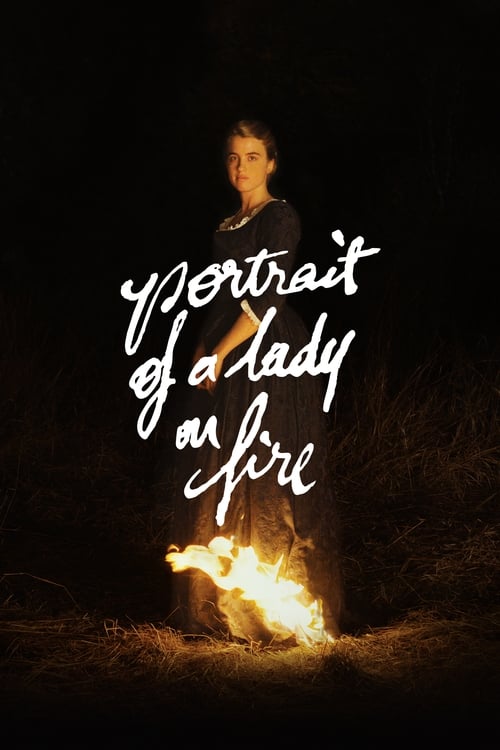
Portrait of a Lady on Fire - Review
A Gaze Returned: A Review of "Portrait of a Lady on Fire"
Céline Sciamma's "Portrait of a Lady on Fire" isn't just a film; it's an experience. It's a slow burn that ignites into a passionate, intellectual, and deeply moving exploration of female desire, artistic collaboration, and the power of seeing and being seen. Set against the stark beauty of 18th-century Brittany, the film eschews the typical tropes of historical romance, offering instead a nuanced and revolutionary gaze that lingers long after the credits roll. It's a film that demands attention, rewards patience, and leaves an indelible mark on the viewer's soul. Prepare to be captivated, challenged, and ultimately, changed.
Plot: A Dance of Observation and Revelation
The film opens with Marianne (Noémie Merlant), a painter, teaching a class. A student uncovers a canvas, revealing a portrait of a woman engulfed in flames. This image serves as a haunting prelude to the story she is about to recount. We are transported back to a windswept island in Brittany, where Marianne has been commissioned to paint the portrait of Héloïse (Adèle Haenel), a young woman reluctant to marry the Milanese nobleman chosen for her. Héloïse refuses to pose, so Marianne is tasked with observing her under the guise of a companion, committing her features to memory during walks along the rugged coastline.
Initially, Marianne's role is one of deception. She is a spy, meticulously studying Héloïse's every move, every expression, to capture her likeness without her knowledge. However, as they spend time together, a connection begins to form. Marianne finds herself drawn to Héloïse's intelligence, her spirit, and her quiet defiance. Héloïse, in turn, starts to reciprocate Marianne's gaze, intrigued by the woman who sees her not as a commodity to be bartered, but as an individual worthy of observation and understanding.
The central conflict arises when Marianne is forced to reveal her true purpose. Héloïse, initially hurt and betrayed, agrees to pose for the portrait, but only if Marianne paints her as she truly is, not as a mere representation of her beauty. This marks a turning point in their relationship, transforming it from one of observation and deception to one of collaboration and mutual respect. As they work together, sharing their thoughts, feelings, and vulnerabilities, their connection deepens into a profound and passionate love affair.
The narrative unfolds with a deliberate pace, allowing the emotional nuances of their relationship to simmer and build. There are no grand declarations of love, no dramatic confrontations, but rather a series of subtle gestures, stolen glances, and shared moments of understanding that speak volumes. The film culminates in a heartbreaking farewell, leaving both women forever changed by their brief but intense encounter.
Characters: Beyond the Canvas
"Portrait of a Lady on Fire" is a masterclass in character development. Each character, even those with limited screen time, is imbued with depth, complexity, and a palpable sense of humanity.
Marianne (Noémie Merlant)
Marianne is more than just a painter; she is an artist striving for authenticity in a world that demands conformity. She is intelligent, observant, and fiercely independent, navigating the male-dominated art world with a quiet determination. Merlant delivers a nuanced performance, conveying Marianne's inner turmoil and growing affection for Héloïse with subtle gestures and expressive eyes. We see her struggle with the ethical implications of her initial deception, and her eventual commitment to portraying Héloïse with honesty and respect.
Héloïse (Adèle Haenel)
Héloïse is a woman trapped by societal expectations, forced into a marriage she doesn't desire. However, beneath her reserved exterior lies a fierce intelligence and a yearning for freedom. Haenel's performance is nothing short of breathtaking. She portrays Héloïse's initial resistance, her gradual awakening to Marianne's gaze, and her eventual embrace of her own desires with remarkable subtlety and grace. Her eyes are a window to her soul, conveying a range of emotions from sorrow and resignation to joy and passion.
Sophie (Luàna Bajrami)
Sophie, the young servant, provides a crucial counterpoint to the privileged lives of Marianne and Héloïse. She is a reminder of the social inequalities that existed in 18th-century France. Bajrami delivers a poignant performance, capturing Sophie's vulnerability, her resilience, and her quiet wisdom. Her storyline, which involves an unwanted pregnancy and a collective decision to perform an abortion, highlights the film's feminist themes and the importance of female solidarity.
Direction: A Painterly Approach
Céline Sciamma's direction is masterful. She approaches the film with a painterly eye, meticulously crafting each scene with a keen attention to detail. The film's visual language is rich and evocative, using light, shadow, and color to create a sense of atmosphere and to convey the emotional states of the characters.
Sciamma's use of long takes allows the actors to fully inhabit their roles, creating a sense of intimacy and authenticity. She avoids melodrama and sentimentality, instead opting for a more restrained and nuanced approach that allows the emotions to resonate more deeply. Her decision to focus on the female gaze is revolutionary, challenging the traditional male perspective that dominates historical romance films. She gives her characters agency and allows them to be seen as complex, multifaceted individuals.
The film's pacing is deliberate, allowing the audience to immerse themselves in the world of the characters and to fully appreciate the nuances of their relationship. Sciamma trusts her audience to be patient and attentive, rewarding them with a deeply moving and thought-provoking experience.
Cinematography: Light, Shadow, and the Female Form
Claire Mathon's cinematography is simply stunning. She uses light and shadow to create a sense of intimacy and mystery, capturing the beauty of the rugged Breton coastline and the interiors of the isolated manor house with remarkable skill. The film is filled with breathtaking compositions that evoke the paintings of the era, particularly those of Caravaggio and Rembrandt.
Mathon's camera lingers on the faces of the actors, capturing every nuance of their expressions. She pays particular attention to the female form, portraying it with a sense of reverence and respect. The film's use of natural light creates a sense of authenticity and immediacy, drawing the viewer into the world of the characters. The color palette is muted and earthy, reflecting the natural environment and the simplicity of the characters' lives.
The framing of the shots is often deliberate and symbolic, reflecting the power dynamics between the characters and the constraints of their society. The use of close-ups allows the audience to connect with the characters on a deeper emotional level, while the wide shots emphasize their isolation and vulnerability.
Performances: A Symphony of Subtlety
The performances in "Portrait of a Lady on Fire" are uniformly excellent. Noémie Merlant and Adèle Haenel deliver career-defining performances, embodying their characters with remarkable depth, nuance, and emotional intelligence. Their chemistry is palpable, creating a sense of intimacy and authenticity that is both captivating and heartbreaking.
Merlant's portrayal of Marianne is both strong and vulnerable. She captures the character's intelligence, her independence, and her growing affection for Héloïse with subtle gestures and expressive eyes. Haenel's performance is equally impressive. She portrays Héloïse's initial resistance, her gradual awakening to Marianne's gaze, and her eventual embrace of her own desires with remarkable subtlety and grace. Her eyes are a window to her soul, conveying a range of emotions from sorrow and resignation to joy and passion.
Luàna Bajrami delivers a poignant performance as Sophie, the young servant. She captures the character's vulnerability, her resilience, and her quiet wisdom with remarkable skill. The supporting cast is equally strong, contributing to the film's overall sense of authenticity and emotional depth.
Themes and Messages: Seeing and Being Seen
"Portrait of a Lady on Fire" explores a multitude of themes, including:
The Female Gaze
The film subverts the traditional male gaze, offering instead a female perspective on love, desire, and art. Marianne's act of painting Héloïse becomes an act of seeing her, truly seeing her, beyond the societal expectations and constraints that define her. This act of seeing is reciprocated by Héloïse, creating a mutual gaze that empowers both women.
Art and Representation
The film raises questions about the nature of art and representation. What does it mean to capture someone's likeness? Can a portrait ever truly reflect the inner self? Marianne struggles with these questions throughout the film, ultimately realizing that the most authentic portraits are those that are created in collaboration with the subject.
Female Solidarity
The film celebrates female solidarity and the importance of women supporting each other in a patriarchal society. The decision to perform an abortion for Sophie highlights the film's feminist themes and the power of women working together to overcome adversity.
Love and Loss
The film explores the fleeting nature of love and the pain of loss. Marianne and Héloïse's love affair is intense but brief, ultimately ending due to the societal constraints that prevent them from being together. However, the memory of their love remains, shaping their lives and inspiring their art.
Memory and Time
The film is a meditation on memory and the way that time shapes our perceptions of the past. Marianne's recollection of her love affair with Héloïse is filtered through the lens of time, creating a sense of nostalgia and longing.
Comparison to Other Films
"Portrait of a Lady on Fire" shares thematic similarities with other films that explore female desire and artistic expression, such as "The Piano" (1993) and "Frida" (2002). However, Sciamma's film distinguishes itself through its focus on the female gaze and its nuanced portrayal of the relationship between Marianne and Héloïse.
In terms of Sciamma's own filmography, "Portrait of a Lady on Fire" can be seen as a culmination of her previous work, which often explores themes of female adolescence, identity, and sexuality. Her earlier films, such as "Water Lilies" (2007) and "Tomboy" (2011), share a similar sensitivity to the emotional lives of young women.
Adèle Haenel, who has collaborated with Sciamma on several previous projects, brings a depth and understanding to her role as Héloïse that is truly remarkable. Her performance is a testament to their long-standing creative partnership.
Positive Aspects
- Stunning cinematography and visual storytelling
- Nuanced and powerful performances by Noémie Merlant and Adèle Haenel
- Thought-provoking exploration of themes such as the female gaze, art and representation, and female solidarity
- Masterful direction by Céline Sciamma
- Evocative and atmospheric score
Constructive Criticism
- The film's deliberate pace may not appeal to all viewers
- Some may find the lack of explicit emotional outbursts to be too restrained
- The ending, while poignant, may leave some viewers wanting more closure
Conclusion
"Portrait of a Lady on Fire" is a masterpiece of contemporary cinema. It's a film that stays with you long after you've seen it, prompting you to reflect on the nature of love, art, and the power of seeing and being seen. Céline Sciamma has created a truly remarkable work of art that is both visually stunning and emotionally resonant. While its slow pace might not be for everyone, those who embrace its deliberate rhythm will be rewarded with a deeply moving and unforgettable experience. It's a film that deserves to be seen and discussed for years to come.