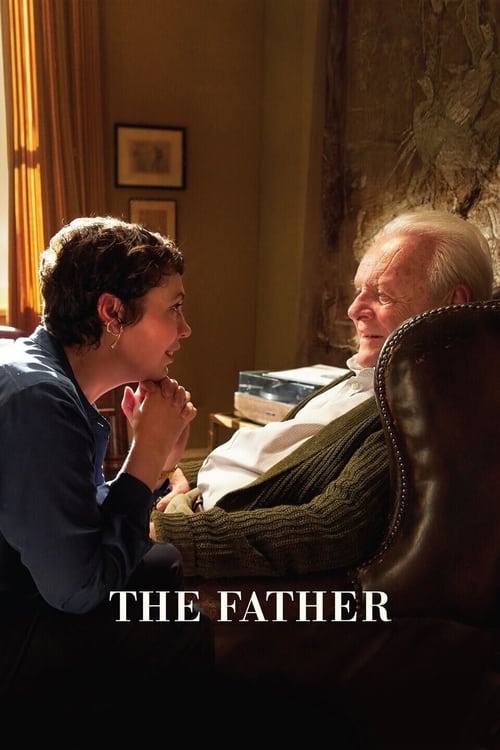
The Father - Review
A Mind Unraveling: A Deep Dive into Florian Zeller's "The Father"
The Father, Florian Zeller's directorial debut based on his own play Le Père, is not just a film; it's an experience. It's a visceral, unsettling, and profoundly moving journey into the fragmented reality of a man battling dementia. Released in 2020, the film transcends the typical cinematic portrayal of cognitive decline, instead plunging the audience directly into the disorienting and terrifying world as perceived by Anthony, the protagonist. This isn't a passive observation; it's an active participation in Anthony's loss of control, a harrowing descent into the labyrinth of his own mind. Prepare to be challenged, disturbed, and ultimately, deeply touched by this masterful exploration of memory, identity, and the devastating impact of dementia on both the afflicted and their loved ones.
Plot: A Labyrinth of Shifting Realities
The plot of The Father isn't linear; it's deliberately fractured, mirroring the protagonist's deteriorating mental state. We meet Anthony (Anthony Hopkins), an aging, stubborn, and fiercely independent man living in his lavish London apartment. His daughter, Anne (Olivia Colman), is desperately trying to find a caretaker for him, as his increasingly erratic behavior has driven away several previous candidates. Anthony vehemently resists any help, convinced he's perfectly capable of taking care of himself. He accuses Anne of plotting against him, stealing his possessions, and even questions her identity.
As the film progresses, the apartment itself becomes a source of confusion. Furniture changes, rooms shift, and familiar faces are replaced by strangers. Anne's appearance alters, sometimes portrayed by Olivia Colman, other times by Olivia Williams. A man, first introduced as Anne's husband Paul (played by Mark Gatiss, then Rufus Sewell), further complicates matters, offering conflicting accounts of events and exhibiting both patience and exasperation towards Anthony. These inconsistencies aren't plot holes; they are deliberate choices designed to disorient the viewer, forcing us to experience Anthony's confusion firsthand.
The narrative structure eschews traditional storytelling conventions, opting for a cyclical and repetitive approach. Scenes replay with subtle variations, conversations loop back on themselves, and Anthony's grip on reality loosens with each passing moment. We are never given a clear, objective perspective; everything is filtered through Anthony's increasingly unreliable perception. This ambiguity is crucial to the film's power, as it forces us to question everything we see and hear, mirroring the protagonist's own struggle to make sense of his world. The film doesn't offer easy answers or sentimental resolutions; it leaves us grappling with the harsh realities of dementia and the profound challenges it presents.
Characters: Portraits of Loss and Love
The characters in The Father are not merely plot devices; they are deeply complex and emotionally resonant individuals grappling with extraordinary circumstances. Anthony, portrayed with breathtaking vulnerability and ferocity by Anthony Hopkins, is the heart and soul of the film. He is a man fiercely protective of his independence, clinging to his memories and identity as they slip away. Hopkins masterfully captures the character's stubbornness, wit, and underlying fear, conveying the profound tragedy of a man losing control of his own mind. His performance is a masterclass in acting, showcasing the subtle nuances of emotion and the devastating impact of cognitive decline.
Anne, played with heartbreaking sensitivity by Olivia Colman (and later Olivia Williams), is the film's emotional anchor. She is torn between her love for her father and the immense burden of caring for him. Colman brilliantly portrays Anne's exhaustion, frustration, and unwavering devotion, capturing the complex emotions of a caregiver watching a loved one slowly disappear. Her performance is a testament to the strength and resilience of the human spirit, showcasing the sacrifices and compromises required to navigate the challenges of dementia.
The character of Paul, played by both Mark Gatiss and Rufus Sewell, adds another layer of complexity to the narrative. His fluctuating portrayal reflects Anthony's distorted perception and raises questions about his true intentions. Is he a caring son-in-law or a resentful husband? The ambiguity surrounding his character contributes to the film's overall sense of unease and reinforces the idea that nothing is as it seems within Anthony's fragmented reality.
The supporting characters, including the caregivers played by Imogen Poots and Olivia Williams, are also crucial to the film's emotional impact. They represent the different approaches to caring for someone with dementia, highlighting the challenges and frustrations involved. Their interactions with Anthony are often fraught with tension, reflecting the difficulty of communicating with someone whose perception of reality is constantly shifting.
Direction: A Masterful Descent into Disorientation
Florian Zeller's direction is nothing short of masterful. As a first-time filmmaker, he demonstrates a remarkable understanding of cinematic language, using visual and auditory cues to create a deeply immersive and disorienting experience. He avoids the clichés of traditional dementia narratives, opting instead for a more subjective and visceral approach. His direction is characterized by its subtlety, precision, and unwavering commitment to portraying the world through Anthony's eyes.
Zeller's use of mise-en-scène is particularly effective. The changing furniture, the shifting rooms, and the fluctuating appearances of the characters all contribute to the film's overall sense of unease and disorientation. He creates a visual labyrinth that mirrors Anthony's mental state, trapping the audience within his fragmented reality. The apartment itself becomes a character, a physical manifestation of Anthony's deteriorating mind.
The pacing of the film is also deliberately unsettling. Zeller allows scenes to linger, creating a sense of unease and anticipation. He uses repetition to emphasize Anthony's confusion and frustration, highlighting the cyclical nature of his cognitive decline. The film's slow burn creates a growing sense of dread, culminating in a deeply emotional and cathartic climax.
Zeller's greatest achievement is his ability to convey the subjective experience of dementia without resorting to didacticism or sentimentality. He trusts the audience to interpret the film's ambiguities and draw their own conclusions. He doesn't offer easy answers or pat resolutions; he simply presents the reality of dementia in all its complexity and heartbreak.
Cinematography: Painting a Picture of Fragmented Reality
Ben Smithard's cinematography is crucial to the film's overall effectiveness. He uses a variety of techniques to create a visual language that reflects Anthony's deteriorating mental state. The camera often lingers on Anthony's face, capturing his confusion, fear, and vulnerability. Close-ups emphasize his emotional turmoil, while wider shots highlight his isolation and disorientation.
Smithard's use of lighting is also particularly noteworthy. He employs a muted color palette, creating a sense of melancholy and unease. Shadows play a prominent role, symbolizing the fading of Anthony's memories and the encroaching darkness of his dementia. The lighting shifts throughout the film, reflecting Anthony's changing perception of reality.
The camera movement is often subtle and understated, but it is always purposeful. Smithard avoids flashy or distracting techniques, instead opting for a more observational approach. He allows the camera to linger on details, drawing attention to the subtle changes in the environment and the characters' expressions. This understated approach enhances the film's realism and allows the audience to connect with the characters on a deeper level.
The cinematography perfectly complements Zeller's direction, creating a seamless and immersive visual experience. Smithard's work is not merely aesthetically pleasing; it is integral to the film's storytelling, conveying the emotional and psychological complexities of dementia in a visually compelling way.
Performances: A Masterclass in Acting
The performances in The Father are uniformly excellent, but Anthony Hopkins' portrayal of Anthony is nothing short of legendary. He delivers a career-defining performance, capturing the character's stubbornness, wit, and underlying fear with breathtaking vulnerability and nuance. Hopkins masterfully conveys the subtle shifts in Anthony's mental state, allowing the audience to witness his gradual descent into dementia. His performance is a masterclass in acting, showcasing the power of subtle gestures, facial expressions, and vocal inflections to convey complex emotions.
Olivia Colman's portrayal of Anne is equally compelling. She brings a heartbreaking sensitivity to the role, capturing the character's exhaustion, frustration, and unwavering devotion to her father. Colman's performance is a testament to the strength and resilience of the human spirit, showcasing the sacrifices and compromises required to navigate the challenges of dementia. Her chemistry with Hopkins is palpable, creating a deeply moving and believable portrayal of a father-daughter relationship under immense strain.
The supporting cast also delivers strong performances, adding depth and complexity to the narrative. Mark Gatiss and Rufus Sewell both bring a sense of ambiguity to the role of Paul, leaving the audience to question his true intentions. Imogen Poots and Olivia Williams provide nuanced portrayals of the caregivers, highlighting the challenges and rewards of working with someone with dementia. Each actor contributes to the film's overall realism and emotional impact.
The performances in The Father are not merely technically proficient; they are deeply human and emotionally resonant. The actors embody their characters with empathy and understanding, allowing the audience to connect with them on a profound level. The film's success is largely due to the exceptional performances of its cast.
Themes and Messages: Exploring Memory, Identity, and Loss
The Father explores a multitude of complex themes, including memory, identity, loss, and the nature of reality. At its core, the film is a meditation on the devastating impact of dementia on both the afflicted and their loved ones. It challenges us to confront our own mortality and to consider the fragility of human memory and identity.
The film raises profound questions about the nature of reality. As Anthony's grip on reality loosens, the audience is forced to question everything they see and hear. The film suggests that reality is not a fixed and objective entity, but rather a subjective and fluid construct that is shaped by our perceptions and memories. This theme is particularly relevant in the context of dementia, where the individual's perception of reality is constantly shifting and distorted.
The Father also explores the themes of loss and grief. Anne experiences the slow and agonizing loss of her father, while Anthony experiences the loss of his memories, his identity, and his independence. The film portrays the profound grief that accompanies these losses, highlighting the emotional toll on both the afflicted and their caregivers.
Despite its bleak subject matter, The Father also offers a message of hope and resilience. The film celebrates the enduring power of love and the importance of human connection in the face of adversity. It reminds us that even in the darkest of times, there is still room for compassion, empathy, and understanding.
Comparison to Similar Films and Previous Works
While The Father is a unique and original work, it shares thematic similarities with other films that explore the experience of dementia and cognitive decline. Films like Away From Her (2006), Amour (2012), and Still Alice (2014) also offer intimate and moving portrayals of individuals grappling with memory loss and the challenges of caregiving. However, The Father distinguishes itself through its subjective and disorienting narrative structure, which plunges the audience directly into the protagonist's fragmented reality.
Florian Zeller's background as a playwright is evident in the film's tight focus on character and dialogue. The film's theatrical origins are also reflected in its limited settings and its emphasis on intimate interactions between the characters. However, Zeller successfully translates his stage play into a compelling cinematic experience, utilizing visual and auditory cues to enhance the film's emotional impact.
Anthony Hopkins has previously delivered memorable performances in films that explore themes of aging and decline, such as The Remains of the Day (1993) and King Lear (2018). However, his performance in The Father is arguably his most nuanced and emotionally resonant to date. He brings a lifetime of experience to the role, delivering a performance that is both heartbreaking and deeply human.
Olivia Colman has also demonstrated her versatility in a wide range of roles, from comedic to dramatic. Her performance in The Favourite (2018) earned her an Academy Award for Best Actress, and she has consistently delivered strong performances in films and television series. Her portrayal of Anne in The Father is a testament to her talent and her ability to connect with audiences on an emotional level.
Positive Aspects and Constructive Criticism
The Father is a deeply moving and thought-provoking film that excels in several key areas. The performances, particularly those of Anthony Hopkins and Olivia Colman, are exceptional. Florian Zeller's direction is masterful, creating a visually and emotionally compelling experience. The cinematography is evocative, capturing the film's themes of memory, loss, and disorientation. The film's narrative structure is innovative and challenging, forcing the audience to confront the subjective experience of dementia.
However, the film is not without its flaws. Some viewers may find the non-linear narrative structure confusing or frustrating. The film's ambiguity may also leave some viewers feeling unsatisfied, as it doesn't offer easy answers or pat resolutions. While the film's focus on Anthony's perspective is its greatest strength, it also limits our understanding of the other characters' experiences. We see Anne primarily through Anthony's eyes, which can sometimes make it difficult to fully appreciate her struggles and sacrifices.
Additionally, the film's ending, while emotionally resonant, may feel somewhat abrupt to some viewers. The final scene leaves many questions unanswered, which may leave some feeling unresolved. While this ambiguity is intentional, it may not appeal to all audiences.
Despite these minor criticisms, The Father remains a powerful and important film that deserves to be seen. Its strengths far outweigh its weaknesses, and its exploration of dementia is both insightful and deeply moving.
Conclusion and Rating
The Father is a cinematic triumph, a harrowing and deeply moving exploration of dementia that transcends the typical cinematic tropes. It's a film that stays with you long after the credits roll, prompting reflection on the fragility of memory, the importance of human connection, and the challenges of caring for loved ones in the face of cognitive decline. Anthony Hopkins delivers a performance for the ages, supported by a stellar cast and Florian Zeller's masterful direction. While its non-linear narrative may not be for everyone, its emotional impact is undeniable. The Father is not just a movie; it's an experience, a visceral and unforgettable journey into the labyrinth of the human mind.
Rating: 9.5/10